

By: Global Arts & Culture Desk
Main Facts
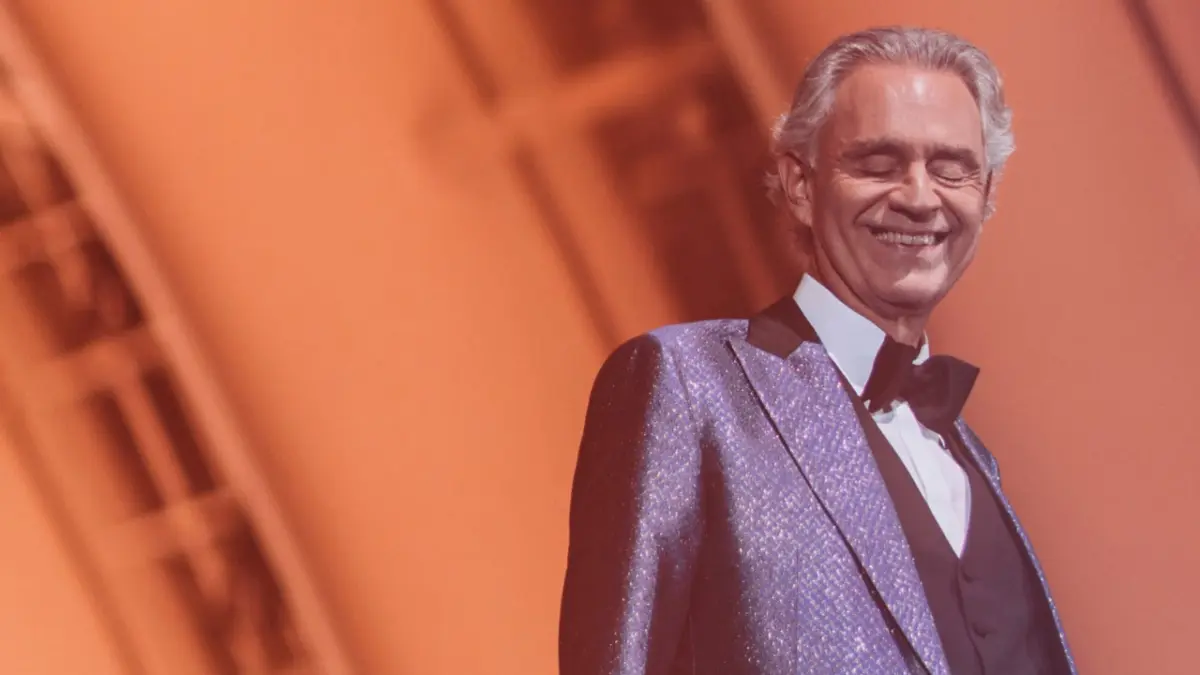
Today, September 22, the world celebrates the 68th birthday of Andrea Bocelli, the iconic Italian tenor whose soaring vocals and emotive interpretations have redefined classical crossover music for generations. Born in 1958 in the picturesque agricultural village of Lajatico, nestled in the heart of Tuscany, Italy, Bocelli’s journey has been defined by an extraordinary juxtaposition: a lifelong battle with congenital glaucoma—which severely impaired his sight from infancy and led to total blindness at the age of 12—and an incandescent artistic gift that has made him one of the most recognizable and beloved voices on the planet.
With a career spanning over three decades, Bocelli has shattered boundaries between classical and contemporary pop, selling more than 90 million records worldwide. He has performed for US Presidents, popes, and royalty, packed the world’s most prestigious concert halls, and received a star on the Hollywood Walk of Fame. On the anniversary of his birth, we examine the resilience, rigorous training, and timeless masterpieces that built his legendary status, detailing the monumental trajectory of an artist who proved that true vision emanates from the soul.
Chronology: From the Tuscan Countryside to Global Stardom
1958–1970: Early Childhood, Musical Awakening, and the Loss of Sight
Andrea Bocelli was born on September 22, 1958, to parents Alessandro and Edi Bocelli, who ran a farm and agricultural machinery business in La Sterza, a hamlet near Lajatico. From his earliest days, music saturated his environment. Demonstrating an innate affinity for sound, he began taking piano lessons at the tender age of six. Soon, his curiosity expanded to a diverse array of instruments, including the flute, saxophone, trumpet, trombone, guitar, and drums.
However, a pivotal turning point arrived when his nanny, Oriana, gifted him a record featuring the legendary Italian tenor Franco Corelli. Captivated by the power and passion of operatic expression, young Bocelli began intensely studying the craft. By age seven, he could instantly identify the voices of the era’s greatest opera stars and spent hours attempting to mimic masters such as Enrico Caruso, Giacomo Lauri-Volpi, and Aureliano Pertile.
Parallel to his musical development, Bocelli faced escalating physical challenges. Born with congenital glaucoma, his eyesight steadily deteriorated through childhood. In 1970, at the age of 12, a tragic accident on a soccer field—where he was struck in the head by a football—triggered a hemorrhage that plunged him into permanent, irreversible total darkness. Far from breaking his spirit, the tragedy reinforced his inner resolve. He channeled his energies into his education and his art, ultimately graduating from high school and enrolling at the University of Pisa to study law.
1970–1993: Balancing the Bar and the Score
While navigating university life, Bocelli refused to abandon his true calling. He earned his Doctor of Law degree from the University of Pisa and even practiced briefly as a court-appointed attorney. Yet, music remained his true north. To fund his vocal training, he spent his evenings playing piano and singing in local piano bars across Tuscany.
Crucially, this period marked the realization of a lifelong dream: Bocelli finally met and studied under his childhood idol, Franco Corelli. Under Corelli’s rigorous mentorship, Bocelli refined his vocal technique, mastering the delicate balance between breath control, emotional resonance, and classical discipline. These formative years in smoky piano bars and intimate Italian venues provided him with invaluable stage presence, teaching him how to connect intimately with an audience—a skill that would later translate effortlessly to massive stadium tours.
1994–Present: The Breakthrough and Global Legacy
The watershed moment of Bocelli’s career arrived in 1994. Entering the newcomer section of the prestigious Sanremo Music Festival, he performed "Il mare calmo della sera." His breathtaking rendition won first place, instantly capturing the imagination of the Italian public and catapulting him into national prominence.
International stardom quickly followed. In 1996, his duet with English songstress Sarah Brightman on "Time to Say Goodbye" (an English-language adaptation of his Italian hit "Con te partirò") became a global phenomenon, selling over 12 million copies and setting records across charts worldwide. Throughout the late 1990s and 2000s, Bocelli collaborated with iconic artists spanning pop, opera, and Latin genres—including Céline Dion, Christina Aguilera, Giorgia, and later, his own son, Matteo Bocelli. Today, at 68, he remains an unstoppable creative force, continually releasing new material, headlining global stadium tours, and mentoring the next generation of musical talent.
Supporting Data & Discography: Five Defining Tracks
To understand the scope of Andrea Bocelli’s artistic impact, one must examine the landmark recordings that cemented his legacy across multiple genres and languages:
1. "Time to Say Goodbye" (Con te partirò — 1996)
Originally performed solo at the 1995 Sanremo Festival, the song transformed into a global juggernaut when re-recorded as a bilingual duet with Sarah Brightman. Serving as the musical backdrop for boxer Henry Maske’s farewell match in Germany, it shattered European sales records, selling more than 12 million copies worldwide and standing as one of the best-selling physical singles of all time.
2. "Vivo per lei" (1995)
First recorded with Italian pop star Giorgia for his album Bocelli, this heartfelt ode to music was subsequently adapted into multiple languages for international markets—featuring collaborations with Marta Sánchez in Spanish, Hélène Ségara in French, and Sandy Leah Lima in Portuguese. The track showcased Bocelli’s unique ability to make operatic pop feel deeply personal and universally accessible.
3. "The Prayer" (1999)
Recorded as a duet with Canadian powerhouse Céline Dion for the animated film Quest for Camelot, "The Prayer" became a defining spiritual anthem of the turn of the millennium. The transcendent collaboration won a Golden Globe Award for Best Original Song and received nominations for both the Academy Award (Oscar) and the Grammy Award, permanently etching Bocelli’s name into Hollywood history.
4. "Fall on Me" (2018)
Marking a deeply emotional milestone in his career, Bocelli teamed up with his son, Matteo Bocelli, for this poignant ballad featured on the album Sì. The song explores the tender, complex bond between parent and child, offering fans an intimate glimpse into the tenor’s family life and passing the torch to the next generation of the Bocelli musical dynasty.
5. "Somos Novios" (It’s Impossible — 2006)
Originally composed in 1968 by Mexican maestro Armando Manzanero and later adapted into English for artists like Elvis Presley and Perry Como, this classic bolero received a masterclass in modern interpretation when Bocelli recorded it alongside pop superstar Christina Aguilera for his critically acclaimed album Amore. The track highlighted Bocelli’s stylistic versatility, proving his mastery over Latin romantic standards.
Official Responses and Cultural Recognition
Over a career spanning more than three decades, cultural institutions, world leaders, and global entertainment bodies have repeatedly honored Andrea Bocelli’s immense contributions to music and humanity.
Upon receiving his star on the Hollywood Walk of Fame, industry leaders praised him not merely for his commercial success—which includes numerous World Music Awards, Billboard Latin Music Awards, and multiple Grammy and Latin Grammy nominations—but for his tireless philanthropic efforts. Through the Andrea Bocelli Foundation (ABF), established in 2011, the tenor has spearheaded global initiatives to empower people and communities suffering from poverty, illiteracy, and illness, focusing heavily on medical research and educational access.
In official statements released by cultural ministries across Europe and the Americas, Bocelli has frequently been cited as "Italy’s cultural ambassador to the world." During his historic, empty-cathedral Easter Sunday performance Music for Hope from the Duomo of Milan in 2020—watched by millions globally during the height of the COVID-19 pandemic—world leaders and international media outlets lauded his performance as a vital beacon of spiritual comfort and human resilience.
Furthermore, academic institutions have recognized his profound influence. Bocelli has been awarded multiple honorary doctorates in music and modern letters from prestigious universities worldwide, cementing his status as both an academic scholar of his craft and a populist icon.
Implications: The Enduring Legacy of a Maestro
As Andrea Bocelli marks his 68th birthday, the implications of his life and career extend far beyond impressive chart statistics, sold-out arenas, and prestigious accolades. Bocelli has fundamentally altered the landscape of classical music by proving that high art does not need to be sequestered within elite opera houses; rather, when delivered with emotional authenticity, it can resonate powerfully in stadiums, living rooms, and digital screens across the globe.
Moreover, Bocelli’s journey serves as a profound cultural narrative regarding disability and triumph. By refusing to let congenital blindness define the boundaries of his ambition—successfully navigating law school, mastering multiple instruments, and conquering the most demanding operatic repertoires in history—he has challenged societal perceptions of ability. He has consistently demonstrated that physical limitation is no match for relentless discipline, emotional intelligence, and unwavering passion.
Ultimately, as Bocelli’s voice continues to fill airwaves and inspire new generations—bolstered by collaborations with young artists like his son Matteo—his legacy is secure. He is remembered not only as a once-in-a-generation tenor endowed with golden vocal cords, but as a cultural unifier who taught the world how to listen, how to feel, and above all, how to find light in the deepest darkness.

Leave a Reply