

Main Facts
The contemporary Colombian music scene continues to expand its sonic boundaries through the creative synthesis of traditional coastal rhythms and avant-garde global idioms. At the forefront of this movement is Diego Barrios, an accomplished saxophonist and composer originally from Bucaramanga, Colombia. His latest artistic statement, the bullerengue-infused composition titled “Una vez más” (“Once Again”), represents a meticulous sonic bridge linking the rich, ancestral heritage of the Colombian Caribbean with the sophisticated, improvisational language of modern jazz.
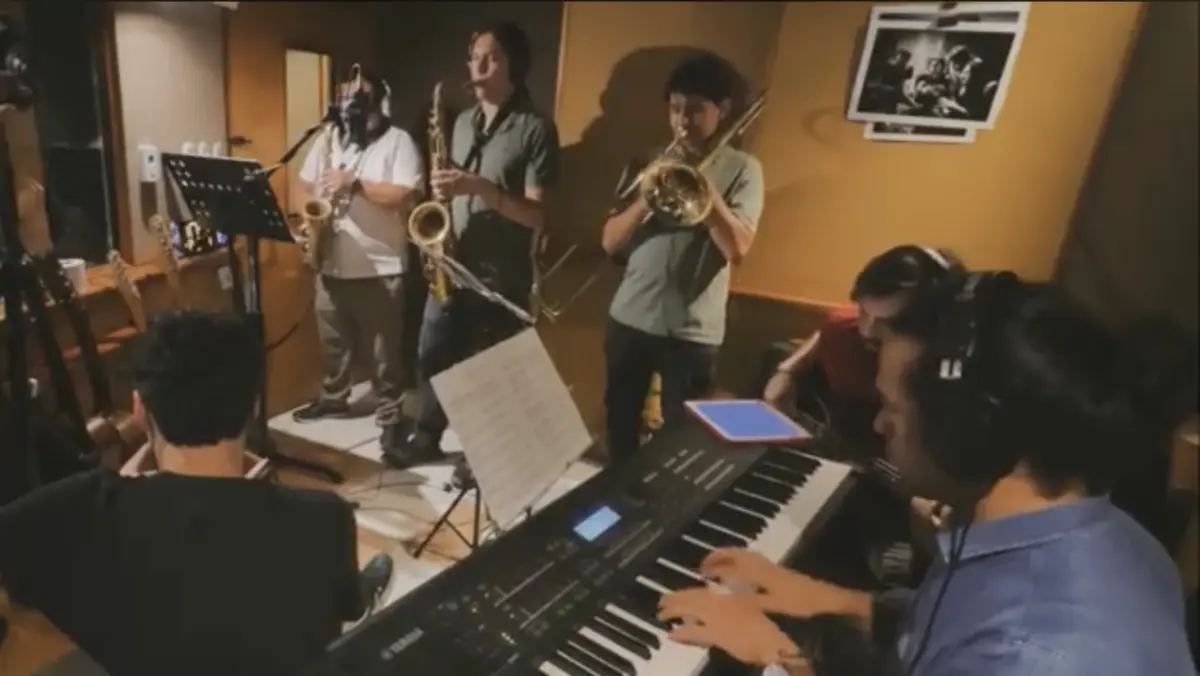
Barrios, whose career has spanned both Colombia and Mexico, leads the Diego Barrios Sextet—a dynamic ensemble that has been turning heads across the national circuit since the formalization of its current format. The group features an elite roster of instrumentalists:
- Daniel Poveda on trombone
- Camilo Torres and Diego Barrios on saxophones
- Santiago Esguerra on electric bass
- Leo Parra on drums
- Jorge Ortiz on keyboards
The collective’s signature sound relies on original compositions and intricate arrangements where post-bop harmonic concepts converse fluidly with traditional polyrhythms. "Una vez más" stands out as a prime example of this methodology. By taking the bullerengue—a traditional Afro-descendant rhythm rooted in the Caribbean coast of Colombia, historically characterized by call-and-response vocals, heavy percussion, and a profound communal spirit—and filtering it through the lens of a modern jazz sextet, Barrios creates a dialogue that respects historical roots while pushing aesthetic boundaries.
The track first captured public attention through Demo Estéreo, Radio Nacional de Colombia’s premier digital platform dedicated to uncovering and promoting emerging musical talent. Following its debut on the airwaves, the track has steadily gained traction, solidifying Barrios and his ensemble as vital architects in the ongoing modernization of Colombian roots music.
Chronology: The Artistic Evolution of Diego Barrios
To understand the sophisticated architecture of "Una vez más," one must trace the trajectory of its creator. Diego Barrios’s musical journey is a testament to perseverance, academic rigor, and transnational exploration.
Phase One: Foundations in Bucaramanga
Born and raised in Bucaramanga, the capital of Colombia’s Santander department, Barrios was surrounded by a diverse auditory landscape. While the Andean regions of Colombia often lean toward torbellinos and bambucos, the interconnectedness of modern Colombian youth culture exposed Barrios to everything from rock and pop to traditional Caribbean coastal styles and American jazz. Choosing the saxophone as his primary vehicle of expression, Barrios immersed himself in local music scenes, developing an early appreciation for the technical demands of wind instruments and the improvisational freedom inherent in jazz.
Phase Two: The Transnational Crucible (Colombia and Mexico)
Seeking to refine his craft, Barrios embarked on a migratory artistic journey, dividing his professional and academic life between Colombia and Mexico. This cross-border movement exposed him to the vibrant, highly competitive Latin American jazz scene. Mexico, with its massive cultural infrastructure and deep appreciation for avant-garde and folkloric fusions, provided a fertile ground for Barrios to experiment with compositional structures. It was during these years of transit that he began conceptualizing a musical identity that refused to choose between academic jazz training and the visceral, earthy energy of his homeland’s folkloric heritage.
Phase Three: The Formation of the Sextet (2025)
A major turning point in Barrios’s career arrived in 2025, when he consolidated his artistic vision by launching and leading his current sextet format. By bringing together a carefully curated group of kindred instrumentalists—Poveda, Torres, Esguerra, Parra, and Ortiz—Barrios established a stable laboratory for his ideas. This ensemble was not merely assembled for a single project; it became a cohesive unit capable of executing complex metric modulations, dense harmonic voicings, and sudden dynamic shifts without losing the groove essential to tropical and Caribbean forms.
Phase Four: Festival Circuits and the Digital Breakthrough
With the sextet fully operational, the band began taking its high-octane live show to major cultural hubs, including notable appearances at prestigious gatherings such as the Voces del Jazz Festival in Cartagena. These live performances tested the viability of fusing cerebral jazz arrangements with danceable coastal rhythms in front of diverse audiences.
The culmination of this phase occurred when "Una vez más" was selected and broadcast on Demo Estéreo by Radio Nacional de Colombia. This milestone transitioned the sextet from a respected insider secret within academic and festival circuits to a recognized name among contemporary Colombian music enthusiasts, culminating in widespread digital engagement and critical praise.
Supporting Data: Anatomy of the Sextet and the Bullerengue Tradition
To appreciate the weight of "Una vez más," one must examine the technical and cultural components that make up the track’s DNA.
The Ensemble Lineup and Instrumentation
The power of the Diego Barrios Sextet lies in its balanced instrumentation, which allows for a rich harmonic texture underpinned by a robust rhythm section:
| Musician | Instrument | Role within the Sextet |
|---|---|---|
| Diego Barrios | Saxophone / Composer | Lead melodic voice, conceptual architect, and primary composer. |
| Camilo Torres | Saxophone | Harmonic counterpoint, twin-horn arrangements, and textural depth. |
| Daniel Poveda | Trombone | Mid-register warmth, punchy counter-melodies, and tonal bridge between reeds and rhythm. |
| Jorge Ortiz | Keyboards | Harmonic foundation, chordal extensions, and modern textural washes. |
| Santiago Esguerra | Electric Bass | Low-end groove anchor, bridging traditional percussion syncopation with jazz walking lines. |
| Leo Parra | Drums | Polyrhythmic driving force, translating folkloric percussion patterns into a modern drum-kit vocabulary. |
Deconstructing the Bullerengue
Historically, the bullerengue is a genre born from the descendants of enslaved Africans in the Caribbean region of Colombia, specifically regions like Bolívar, Urabá, and Córdoba. Traditionally performed by women (bullerengueras) accompanied by drums (tambor alegre, tambor llamador) and handclaps (palmas), it is a music of resistance, celebration, and spiritual release.
In "Una vez más," Barrios respects the cyclical, hypnotic groove of the bullerengue while recontextualizing it:
- The Harmonic Layer: Instead of traditional modal or diatonic folkloric accompaniment, the rhythm is subjected to extended jazz harmonies introduced by Jorge Ortiz’s keyboards and anchored by Santiago Esguerra’s electric bass.
- The Horn Arrangements: The interplay between Barrios, Torres, and Poveda mimics the call-and-response patterns of traditional vocal choruses, but translates them into sophisticated three-part horn counterpoint reminiscent of modern post-bop writing.
- The Percussive Translation: Leo Parra does not merely play a standard jazz beat; he meticulously adapts the syncopated, driving accents of the coastal drums onto a standard drum kit, creating an organic fusion that keeps dancers moving while satisfying jazz purists.
Official Responses and Cultural Context
The emergence of "Una vez más" has not occurred in a vacuum; it arrives at a time of profound introspection and transformation within the Colombian cultural ecosystem. Musicologists, cultural institutions, and media outlets have increasingly turned their attention toward projects that defy traditional commercial categorization.
Radio Nacional de Colombia and the Support for Emerging Talent
Platforms like Radio Nacional de Colombia—through initiatives such as Demo Estéreo—play an indispensable role in vetting and elevating the work of independent artists. In statements accompanying the rotation of "Una vez más," cultural curators have highlighted the track as an example of how young Colombian musicians are successfully decolonizing their repertoires. Rather than viewing jazz and folkloric music as mutually exclusive binaries—one "foreign and academic," the other "local and authentic"—artists of Barrios’s generation view them as complementary dialects of a shared emotional language.
Critical Reception within the Jazz Community
Jazz critics and festival organizers across Colombia have praised the Diego Barrios Sextet for its technical rigor. During their showcase at events like the Voces del Jazz Festival in Cartagena, reviewers noted that the group avoids the common pitfall of "fusions" that sound forced or overly academic. Instead, the transition from blistering saxophone solos to deep, swaying Caribbean grooves feels entirely natural.
One anonymous festival critic noted:
"Many try to dress up folkloric rhythms in jazz suits, making the music stiff and lifeless. Diego Barrios and his sextet do something entirely different: they invite the bullerengue into the jazz club, pour it a drink, and let it completely transform the room from the inside out."
Implications: The Future of Modern Colombian Jazz
The success of "Una vez más" carries significant implications for the future of Colombian musical identity, regional artistic mobility, and the global jazz landscape.
1. Expanding the Boundaries of National Folklore
For decades, Colombian musical identity on the global stage was heavily dominated by a few commercial heavyweights—cumbia, vallenato, and more recently, urban reggaeton. While these genres are vital, they represent only a fraction of the nation’s immense sonic diversity. By choosing the bullerengue—a genre historically marginalized due to its rural and Afro-descendant roots—as the foundation for a modern jazz composition, Barrios helps rescue and validate ancestral traditions for urban and international audiences. This approach encourages younger generations of conservatory-trained musicians to look inward toward their own regional heritages rather than blindly imitating North American or European models.
2. Transnational Artistic Mobility
Barrios’s career, split between Colombia and Mexico, illustrates a growing trend among contemporary Latin American jazz musicians: the creation of transnational creative corridors. As artists move fluidly across Latin America, absorbing different urban scenes, academic traditions, and local folkloric idioms, the resulting music becomes stateless yet deeply rooted. "Una vez más" is a product of this borderless mindset. It suggests that Colombian music does not need to dilute its identity to appeal to international jazz audiences; rather, its complexity is precisely what makes it globally competitive.
3. The Digital Democratization of Niche Genres
The pathway of "Una vez más"—from a composer’s studio in Bucaramanga, through live festival stages, to digital discovery via Demo Estéreo—underscores the changing mechanics of the music industry. Independent artists no longer rely solely on legacy record labels to break through. Digital platforms, public radio curation, and specialized streaming ecosystems allow highly sophisticated, niche instrumental music to find its targeted audience globally.
As Diego Barrios and his sextet continue to perform and record, "Una vez más" stands as a milestone in this journey. It proves that the conversation between the mountains of the Andes, the breezes of the Caribbean, and the modern jazz clubs of Latin America is only just beginning, promising a rich and unpredictable future for contemporary Colombian composition.


Leave a Reply