
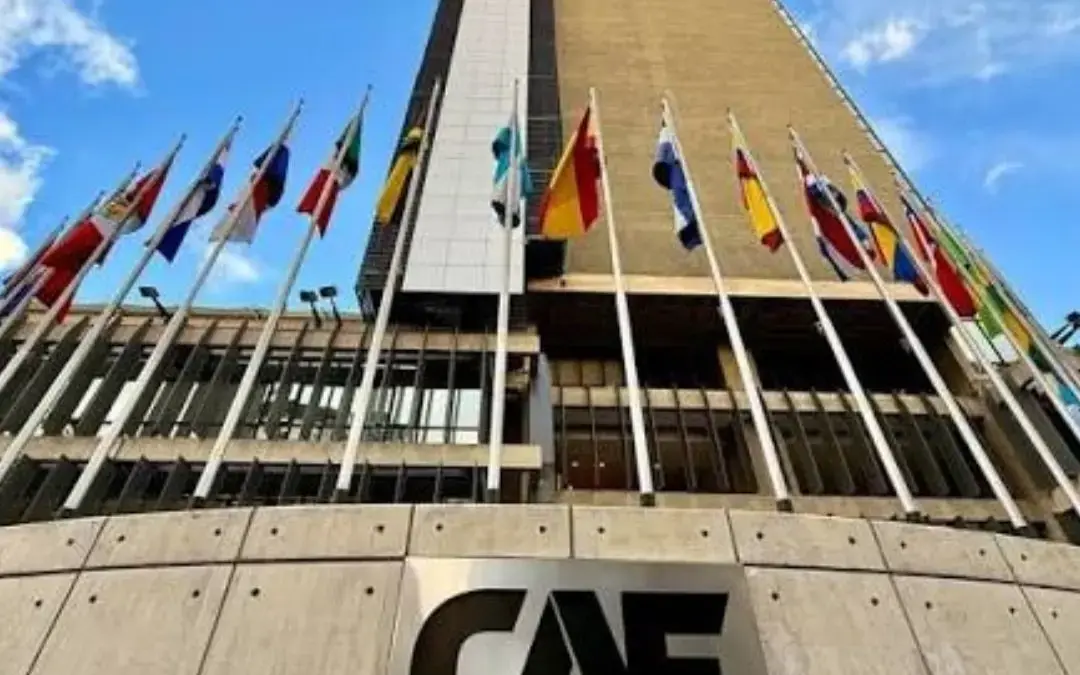
MONTEVIDEO, Uruguay — In a major move to accelerate sustainable development and climate resilience across Latin America and the Caribbean, the Board of Directors of the Development Bank of Latin America and the Caribbean (CAF) has approved a comprehensive financial package totaling $3.5 billion. The massive capital injection will fund 15 key operations spanning 10 countries in the region.
In addition to this core financing package, the board approved an extraordinary $1 billion contingency fund specifically earmarked to help member states prepare for and mitigate the devastating economic and environmental impacts of the El Niño weather phenomenon.
This dual-track financial intervention, totaling $4.5 billion, represents one of the most significant coordinated multilateral financing efforts in the region’s recent history. The announcement was made following a high-level board meeting in Montevideo, Uruguay, attended by top regional leaders, including Uruguayan President Yamandú Orsi and Uruguayan Minister of Economy and Finance Gabriel Oddone, who presided over the session.
1. Main Facts: A Multidimensional Push for Regional Development
The newly approved $3.5 billion financing framework is strategically targeted at resolving some of Latin America and the Caribbean’s most deep-seated structural challenges. Rather than focusing on a single sector, CAF’s board has designed a diversified allocation model to ensure balanced regional growth. The approved funds are directed toward several critical pillars:
- Infrastructure and Sustainable Mobility: Upgrading regional transport networks, expanding urban transit systems, and modernizing logistics corridors to lower trade costs and improve regional integration.
- Energy Transition and Climate Action: Financing renewable energy projects, grid modernization, and decarbonization initiatives, aligning with CAF’s stated goal of becoming the "green bank" of Latin America and the Caribbean.
- Social Development and Education: Building and upgrading educational institutions, improving digital connectivity in schools, and enhancing public health infrastructure.
- Disaster Recovery and Productive Development: Providing rapid-disbursement mechanisms for disaster reconstruction and strengthening small and medium-sized enterprises (SMEs) through targeted credit lines.
The $1 Billion El Niño Contingency Fund
Compounding the $3.5 billion baseline allocation is a dedicated $1 billion fund designed to address the threats posed by the El Niño Southern Oscillation (ENSO). El Niño has historically caused severe macroeconomic disruptions in the region, triggering intense droughts in northern South America and Central America while causing catastrophic flooding and infrastructure destruction along the Pacific and Atlantic coasts. This proactive fund will allow member nations to access swift, flexible financing to build preventive infrastructure, secure agricultural supply chains, and deploy emergency humanitarian responses.
2. Chronology: From Regional Consultations to the Montevideo Summit
The approval of this historic capital package is the culmination of months of intense bilateral negotiations, technical assessments, and strategic planning between CAF’s leadership and its 21 member countries.
[Phase 1: Project Identification & Country Diagnostics]
                       │
                       ▼
[Phase 2: Bilateral Technical and Environmental Appraisals]
                       │
                       ▼
[Phase 3: Integration of the El Niño Contingency Strategy]
                       │
                       ▼
[Phase 4: CAF Board Summit in Montevideo (Uruguay)]
                       │
                       ▼
[Phase 5: Implementation, Disbursement, and Monitoring (2025–2028)]
Phase 1: Project Identification and Country Diagnostics
Throughout the preceding fiscal quarters, CAF’s technical teams worked alongside national planning ministries and local government bodies to identify high-impact projects. These diagnostics prioritized projects with high social returns, strong environmental safeguards, and the capacity to mobilize co-financing from private investors.
Phase 2: Bilateral Appraisals and Risk Management
Before reaching the board, each of the 15 selected operations underwent rigorous financial, technical, and environmental appraisals. CAF aligned these projects with international climate standards, ensuring that infrastructure projects incorporate climate-adaptation designs capable of withstanding extreme weather events.
Phase 3: Integration of the El Niño Contingency Strategy
As meteorological models warned of intensifying climate volatility, CAF’s executive leadership fast-tracked the creation of a specialized contingency mechanism. This led to the drafting of the $1 billion El Niño facility, designed to bypass traditional bureaucratic bottlenecks to ensure rapid liquidity during environmental crises.
Phase 4: The Board Summit in Montevideo
The process culminated in the high-profile Board of Directors meeting in Montevideo, Uruguay. Presided over by Uruguay’s Minister of Economy and Finance, Gabriel Oddone, and attended by newly inaugurated President Yamandú Orsi, the board debated the final allocations. Following a series of presentations by CAF Executive President Sergio Díaz-Granados, the board voted unanimously to approve both the $3.5 billion project portfolio and the $1 billion climate fund.
Phase 5: Implementation and Disbursement (2025–2028)
With the board’s green light, the program now shifts to the implementation phase. Disbursements are scheduled to begin immediately, with projects expected to roll out over the next three to four years. CAF will employ strict oversight and auditing mechanisms to monitor execution timelines and ensure transparent fund utilization.
3. Supporting Data: Quantifying the Capital Allocation and Regional Needs
To understand the scale of CAF’s $4.5 billion intervention, it is necessary to examine both the financial structure of the package and the broader macroeconomic realities of Latin America and the Caribbean.
| Category / Sector | Approved Financing | Primary Objectives |
|---|---|---|
| Core Project Portfolio (15 Operations) | $3.5 Billion | Infrastructure, Energy Transition, Mobility, Education, Productive Development |
| El Niño Contingency Facility | $1.0 Billion | Preventive Infrastructure, Agricultural Security, Emergency Response |
| Total Approved Package | $4.5 Billion | Comprehensive Regional Development and Climate Resilience |
The Regional Infrastructure Deficit
According to data from the Economic Commission for Latin America and the Caribbean (ECLAC), the region needs to invest approximately 4% to 6% of its annual GDP in infrastructure to close the existing development gap. Currently, average investment hovers around 1.5% to 2%. CAF’s $3.5 billion allocation targets this deficit directly, focusing on projects that offer high economic multipliers.
The Financial Impact of El Niño
Historically, extreme El Niño cycles have cost Latin American economies billions of dollars in lost GDP. The 2015–2016 El Niño event, for instance, caused an estimated $20 billion in damages across the Andean region due to crop failures, damaged road networks, and energy shortages caused by depleted hydroelectric reservoirs. CAF’s proactive $1 billion facility represents a structural shift from reactive disaster aid to proactive risk management.
Institutional Growth of CAF
This financing package is supported by CAF’s strong financial position. Following a historic $7 billion capital increase approved by its shareholders in 2022, CAF has expanded its lending capacity significantly. The bank maintains high credit ratings (AA- by S&P Global and Aa3 by Moody’s), allowing it to raise cost-effective funds on international capital markets and pass those favorable borrowing terms on to its member countries in the region.
4. Official Responses: Leadership Aligned on a Shared Vision
The Montevideo summit brought together key political and financial leaders, all of whom emphasized that multilateral cooperation is vital to overcoming the region’s structural bottlenecks.
Sergio Díaz-Granados, Executive President of CAF, emphasized the bank’s evolving role as a catalyst for both public and private investment:
"We are expanding our financial reach by utilizing innovative instruments that mobilize more resources. Our goal is clear: to stand shoulder-to-shoulder with national and local governments, while simultaneously strengthening the private sector. By doing so, we are not just funding projects; we are building the foundation for long-term, sustainable, and inclusive development across Latin America and the Caribbean."
Gabriel Oddone, Uruguay’s Minister of Economy and Finance, who presided over the board meeting, highlighted the strategic importance of hosting this session in Montevideo and the role of CAF in supporting fiscal stability:
"For Uruguay, hosting this meeting is a testament to our commitment to regional integration. In an era of global economic uncertainty and high borrowing costs, institutions like CAF provide vital financial stability. This approved package demonstrates that when our countries collaborate, we can secure the resources needed to address both our immediate climate vulnerabilities and our long-term structural needs."
Yamandú Orsi, President of Uruguay, welcomed the international delegates and stressed the social impact of these financial allocations:
"Economic growth is meaningless if it does not translate into better living conditions for our citizens. The resources approved today by CAF will build safer roads, cleaner energy systems, and better schools. Moreover, the proactive fund for the El Niño phenomenon shows a deep understanding of the real-world threats our communities face daily. This is the kind of practical, human-centered multilateralism that our region needs."
5. Implications: What This Means for Latin America’s Future
The approval of this $4.5 billion package has far-reaching implications for the economic, environmental, and social landscape of Latin America and the Caribbean.
                     ┌──────────────────────────────────────┐
                     │   CAF $4.5 Billion Approved Funds    │
                     └──────────────────┬───────────────────┘
                                        │
                ┌───────────────────────┴───────────────────────┐
                ▼                                               ▼
┌───────────────────────────────┐               ┌───────────────────────────────┐
│  $3.5B Core Project Portfolio │               │ $1.0B El Niño Emergency Fund  │
└───────────────┬───────────────┘               └───────────────┬───────────────┘
                │                                               │
  - Grid Decarbonization                          - Drought-Resilient Agriculture
  - High-Speed Transit & Logistics                - Flood Mitigation Infrastructure
  - Modernized Schools & Classrooms               - Rapid Contingency Liquidity
                │                                               │
                └───────────────────────┬───────────────────────┘
                                        │
                                        ▼
                     ┌──────────────────────────────────────┐
                     │ - Reduced Infrastructure Gap         │
                     │ - Enhanced Sovereign Credit Ratings  │
                     │ - Climate-Resilient Communities      │
                     └──────────────────────────────────────┘
Accelerating the Green Transition
With a significant portion of the $3.5 billion earmarked for climate action, CAF is positioning itself to lead the region’s energy transition. Latin America already boasts one of the greenest electricity grids in the world, largely due to hydropower. However, diversifying this mix with solar, wind, and green hydrogen is essential to ensuring grid reliability amid shifting rainfall patterns. CAF’s investments will help de-risk these clean energy projects, making them highly attractive to international private investors.
Mitigating Sovereign Credit Risks
By providing long-term, low-interest financing, CAF helps its member nations manage their public debt profiles. Many countries in the region are grappling with tight fiscal space and high debt-to-GDP ratios. Accessing multilateral credit lines rather than issuing high-yield sovereign bonds on international markets reduces debt servicing costs, allowing governments to allocate more domestic resources to social programs.
Crowding In Private Capital
A key element of CAF’s strategy under Sergio Díaz-Granados is "crowding in" private sector investment. Through co-financing structures, credit guarantees, and public-private partnerships (PPPs), CAF plans to use its $3.5 billion baseline to mobilize billions more in private capital. This approach is particularly critical for large-scale infrastructure and mobility projects, where public funds alone are insufficient to meet total investment needs.
Strengthening Climate Adaptation and Regional Integration
The $1 billion El Niño fund sets a new standard for climate adaptation finance in the developing world. By shifting from a reactive "disaster relief" model to a proactive "resilience and preparation" model, CAF is helping member states protect lives and critical economic assets before disaster strikes.
Furthermore, by funding projects across 10 different countries simultaneously, CAF is fostering deeper regional integration. Shared infrastructure corridors, interconnected energy grids, and collaborative climate action strategies will strengthen economic ties within Latin America and the Caribbean, making the entire region more resilient to global economic shocks.