

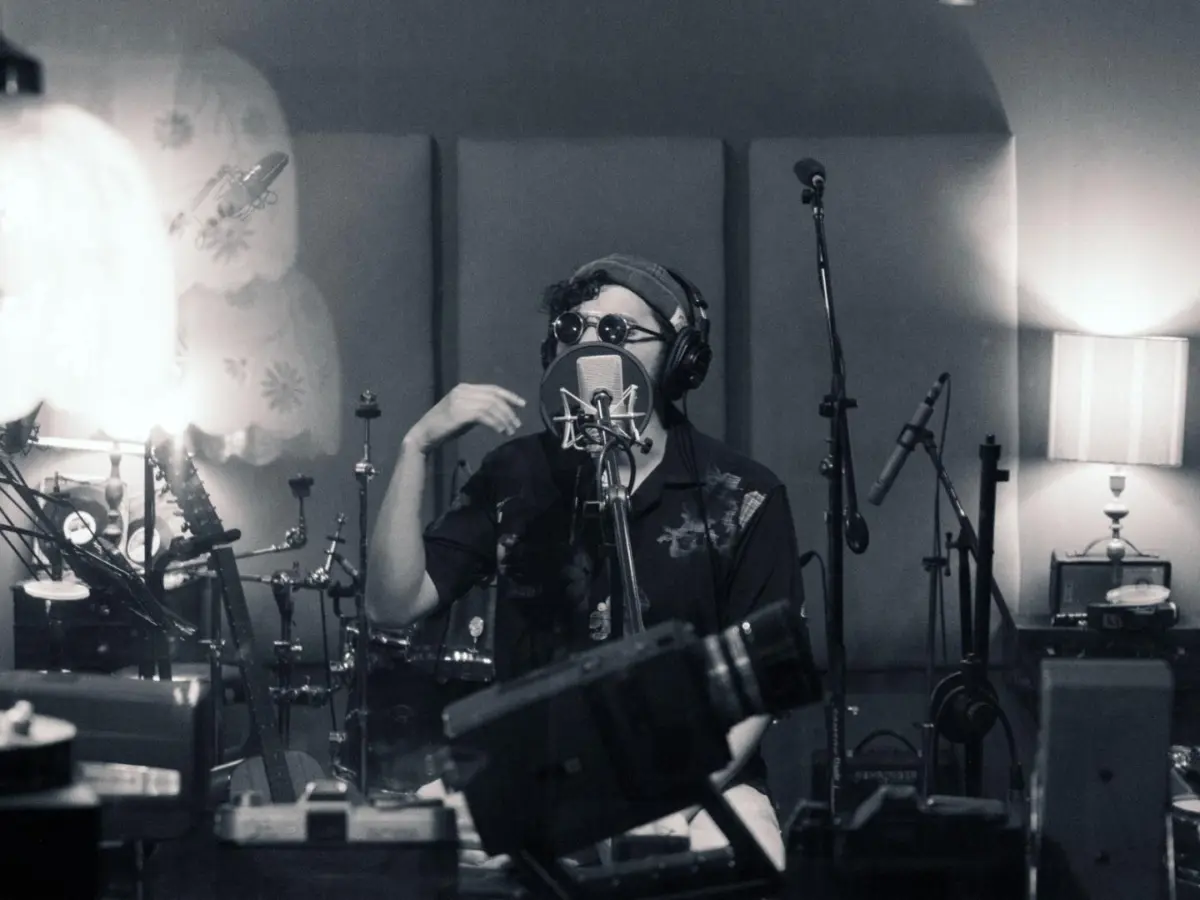
BOGOTÁ / MEXICO CITY — In an era where cultural boundaries are increasingly fluid, Colombian-born philosopher and musician Camilo León has emerged as a compelling voice for the Latin American musical diaspora. His latest single, "Azabache"—a vibrant fusion of traditional Cuban son and the native Colombian tiple—has officially been selected as the featured "Demo of the Week" on Demo Estéreo, the premier digital showcase for emerging independent talent hosted by Radio Nacional de Colombia.
Extracted from his upcoming eight-track studio album, La Guachafita, "Azabache" is both a deeply personal love letter to the artist’s wife and a culmination of a lifelong, multi-continental migration story. Through a sonic blend he terms "Inditropical," León bridges the gap between traditional Afro-Caribbean rhythms, indigenous South American instrumentation, and the avant-garde sensibilities of modern independent music.
Main Facts: The Intersection of Heritage, Migration, and ‘Inditropical’ Sound
The recognition of "Azabache" by Radio Nacional de Colombia marks a pivotal milestone in Camilo León’s artistic journey. Broadcast via Demo Estéreo—the state broadcaster’s specialized platform for discoverability among non-mainstream musical acts—the track introduces national and international audiences to a soundscape forged across continents.
+-----------------------------------------------------------------------+
|                         CAMILO LEÓN AT A GLANCE                       |
+-----------------------------------------------------------------------+
|  Origin:             Bucaramanga, Colombia                            |
|  Current Residency:  Mexico City, Mexico                              |
|  Academic Background: Philosophy and Humanities                       |
|  Key Musical Style:  Inditropical (Fusion of Latin Folk, Rock & Jazz) |
|  Featured Single:    "Azabache" (Cuban Son featuring Colombian Tiple) |
|  Parent Album:       "La Guachafita" (8-track project)                |
|  Media Recognition:  Demo of the Week (Radio Nacional de Colombia)    |
+-----------------------------------------------------------------------+
Key Highlights of the Release
- Cultural Fusion: "Azabache" merges the rhythmic foundation of traditional son cubano with the delicate, twelve-string harmonic texture of the Colombian tiple, creating a vibrant dialogue between Caribbean and Andean folk traditions.
- Thematic Core: Written as a direct dedication to his wife, the song narrates a chance encounter that blossomed into profound, sincere romantic devotion.
- Album Context: The single serves as the cornerstone for La Guachafita, an eight-track album designed as a musical tapestry reflecting León’s lived experiences across Europe, North America, and Latin America.
- Genre Innovation: The release showcases León’s proprietary concept of "Inditropical," an aesthetic framework that juxtaposes Latin American roots genres—such as vallenato, cumbia, and son—with indie rock, jazz, groove metal, and classical harmonic structures.
For Radio Nacional de Colombia, featuring León highlights the institution’s ongoing commitment to archiving and promoting the work of Colombian creators living abroad, ensuring that global migration does not obscure cultural lineage.
Chronology: The Geographic and Musical Odyssey of Camilo León
Camilo León’s musical identity is inseparable from his nomadic biography. Born in Bucaramanga, the capital of Colombia’s Santander department, his life was reshaped early by migration, academic exploration, and artistic discovery.
CHRONOLOGICAL TIMELINE OF CAMILO LEÓN'S CAREER

1990s          Born in Bucaramanga, Colombia.
  │
2000s (Early)  Leaves Colombia at age 10, beginning a global migratory journey.
  │
2004           Discovers the piano and keyboards in Zaragoza, Spain;
  │            initiates formal studies in harmony and music theory.
  │
2005–2018      Academic and artistic expansion across Europe and the Americas;
  │            pursues studies in Hungary, the United States, and Mexico.
  │            Explores diverse genres: Groove Metal, Jazz, Rock, Cumbia, Vallenato.
  │
2019–2023      Establishes permanent residency in Mexico; formulates the concept
  │            of "Inditropical" sound and begins recording "La Guachafita."
  │
Present        "Azabache" is selected as "Demo of the Week" on
               Radio Nacional de Colombia's Demo Estéreo platform.
1. Childhood and Departure from Colombia
Raised in Bucaramanga, León was exposed to regional Colombian music from an early age. However, at the age of ten, his family migrated from Colombia, launching a period of intense geographic mobility that profoundly shaped his worldview and cultural identity.
2. European Awakening (Zaragoza, 2004)
León’s formal relationship with music began in 2004 in Zaragoza, Spain. It was here that he first sat down at the piano and electronic keyboards, embarking on rigorous training in classical harmony and repertoire. This European stay laid the technical groundwork for his understanding of counterpoint and melodic structure.
3. Global Academic and Genre Exploration
Over the following decade, León lived, studied, and performed across a series of international artistic hubs, including Hungary, the United States, and Mexico. Alongside his musical trajectory, he completed higher education studies in philosophy, an academic background that deeply informs his lyricism and conceptual approaches to song architecture.
During this period, León immersed himself in radically divergent musical movements. He performed and experimented within high-energy genres like groove metal and alternative rock, while simultaneously studying the improvisational structures of modern jazz. Yet, despite his immersion in global modernism, he continually returned to the traditional sounds of his homeland—analyzing the rhythmic syncopation of vallenato accordion lines and the hypnotic bass grooves of traditional cumbia.
4. Convergence in Mexico and ‘La Guachafita’
Now permanently based in Mexico City—a historical epicenter for Latin American artistic synthesis—León unified his disparate influences into a single, cohesive project. The culmination of this multi-decade odyssey is La Guachafita, an album that celebrates the chaos, beauty, and resilience of the Latin diaspora.
Supporting Data and Musical Context: Deciphering the ‘Inditropical’ Ethos
To understand the significance of "Azabache" and La Guachafita, one must dissect both the technical construction of the music and the broader ecosystem of independent Latin music broadcasting.
+---------------------------------------------------------------------------+
|                     SONIC ANATOMY OF "AZABACHE"                           |
+---------------------------------------------------------------------------+
|  Rhythmic Core:      Son Cubano (Clave rhythm, syncopated basslines)      |
|  Melodic Lead:       Colombian Tiple (12-string plucked chordophone)       |
|  Harmonic Structure: European Classical Keyboard Harmony meets Jazz Chords|
|  Vocal Aesthetic:    Narrative storytelling, warmth, romantic indie delivery|
|  Lyrical Theme:      Serendipity, migration, enduring love, intimacy     |
+---------------------------------------------------------------------------+
The Instrument Mechanics of "Azabache"
At its core, "Azabache" is a structural hybrid. Traditional son cubano relies heavily on specific percussion patterns—the 2-3 or 3-2 clave, tresillo rhythms, and the steady drive of the bongo and maracas. León honors these Afro-Cuban foundations while introducing a distinctly Colombian element: the tiple.
The tiple, a iconic instrument of the Colombian Andes featuring twelve steel strings arranged in four triple-courses, brings a bright, resonant timbre to the track. Typically associated with traditional regional formats like bambuco and pasillo, the tiple replaces or complements the traditional Cuban tres in León’s arrangement. This subtle shift transforms the sonic texture, creating a warm bridge between South American mountain folk traditions and Caribbean island rhythms.
The Philosophy Behind "La Guachafita"
In Colombian vernacular, the word guachafita translates loosely to a boisterous gathering, a joyous commotion, or a playful disruption of order. For León, naming his eight-track album La Guachafita serves a dual purpose:
- Cultural Nostalgia: It reclaims a beloved piece of Colombian slang, grounding the project in the informal, celebratory atmosphere of social gatherings back home.
- Genre Disruption: It describes the creative "commotion" of breaking genre barriers. By throwing groove metal intensity, jazz complexity, and tropical warmth into the same recording session, León creates a festive, uninhibited musical environment.
The Role of ‘Demo Estéreo’ in Independent Music
Radio Nacional de Colombia operates Demo Estéreo as a strategic incubator for non-commercial and emerging artists. In an ecosystem dominated by algorithmic streaming playlists and major-label distribution, public radio initiatives like Demo Estéreo serve a vital archival and promotional function.
+---------------------------------------------------------------------------+
|              THE ECOSYSTEM OF RADIO NACIONAL'S DEMO ESTÉREO               |
+---------------------------------------------------------------------------+
|  Objective:     Elevate unsigned and independent Colombian musicians.     |
|  Scope:         Includes both domestic talent and diaspora artists.       |
|  Curation:      Focuses on genre innovation, cultural preservation, and   |
|                 artistic authenticity over purely commercial metrics.     |
|  Impact:        Provides nationwide digital exposure and historical       |
|                 archival within Colombia's public media network (RTVC).  |
+---------------------------------------------------------------------------+
By featuring "Azabache," Demo Estéreo highlights how independent artists can craft sophisticated, cross-border music without sacrificing cultural authenticity or relying on major-label production budgets.
Official Responses and Artist Perspectives: Love, Philosophy, and Migration
Reflecting on the selection of "Azabache" as the Demo of the Week, media curators and artistic commentary around the release emphasize the song’s emotional sincerity and conceptual clarity.
"My musical journey was never about abandoning my roots;
 it was about discovering how those roots sing when exposed
 to the rest of the world."
 — Conceptual perspective of Camilo León
A Love Story Captured in Son
In commentary surrounding the release, the inspiration behind "Azabache" is highlighted as inherently intimate. Unlike abstract or highly commercialized pop tracks, the song was composed as a personal tribute to León’s wife, recounting the unexpected, genuine moment their lives intersected.
The choice of son cubano as the vehicle for this narrative was intentional. The warm, measured pace of the son allows the lyrics to take center stage, offering a story of chance, commitment, and romance amidst a life lived across different borders.
The Philosophical Prism
León’s formal training in philosophy directly informs his songwriting process. Rather than viewing music as mere entertainment, he approaches composition as an intellectual inquiry into identity, memory, and belonging.
- On Migration: León views the migrant experience not as a loss of identity, but as an additive process. Living in Spain, Hungary, the United States, and Mexico expanded his palette without erasing his origin in Bucaramanga.
- On "Inditropical": The artist describes the subgenre not as a marketing gimmick, but as an honest reflection of modern Latin American identity—where youth raised on global rock and indie pop simultaneously carry the ancestral rhythms of cumbia and vallenato.
Implications and Cultural Impact: The Evolving Landscape of Diaspora Music
The spotlight cast on Camilo León by Radio Nacional de Colombia highlights broader shifts within the Latin American music industry and the cultural narrative of the migrant creator.
+---------------------------------------------------------------------------+
|                    BROADER IMPLICATIONS FOR LATIN MUSIC                   |
+---------------------------------------------------------------------------+
|  1. Diaspora Visibility:                                                  |
|     Public platforms are actively tracking and celebrating musicians      |
|     creating work outside national borders.                               |
|                                                                           |
|  2. Rise of Hybrid Subgenres:                                             |
|     Terms like "Inditropical" signify a movement away from rigid genre    |
|     pigeonholing toward fluid aesthetic expressions.                      |
|                                                                           |
|  3. Folk Modernization:                                                   |
|     Instruments like the Colombian tiple are finding new life within      |
|     contemporary, international arrangements rather than remaining confined|
|     to historical archives.                                               |
+---------------------------------------------------------------------------+
1. Reimagining National Music Identity Beyond Borders
Historically, national radio networks focused predominantly on artists residing within domestic borders. However, the rise of global digital distribution and state-supported platforms like Demo Estéreo reflects a broader recognition: Colombian culture is global. Artists like León, who have spent decades abroad, remain central to the nation’s evolving musical heritage.
2. The Commercial and Artistic Rise of ‘Inditropical’
León’s "Inditropical" designation aligns with a growing global trend where independent artists blend regional folk music with modern production values. Artists across Latin America are increasingly looking inward to local traditions—whether Afro-Colombian percussion, Andean strings, or Mexican ranchera harmonies—and fusing them with indie rock, synth-pop, and jazz. This movement caters to an audience that values both organic acoustic textures and contemporary songwriting approaches.
3. Preserving Traditional Instrumentation for Future Generations
By foregrounding the tiple in a modern son cubano track, "Azabache" performs a valuable pedagogical function. It demonstrates to younger musicians and international listeners that traditional instruments are not static museum pieces. Instead, they are dynamic, flexible tools capable of driving contemporary pop and indie compositions.
What Lies Ahead for Camilo León
With "Azabache" gaining momentum on Radio Nacional de Colombia and the full release of La Guachafita on the horizon, Camilo León stands at an exciting crossroads. His journey from Bucaramanga to the global stage demonstrates that true musical innovation often happens at the intersections—between nations, between genres, and between the head and the heart.
As La Guachafita prepares to reach broader international audiences, León’s work serves as a testament to the enduring power of Latin American roots—proving that no matter how far an artist travels, the rhythms of home remain near.


Leave a Reply