

By Global Defense & Maritime Correspondent
Cartagena, Colombia
Main Facts: The Dawn of a New Era for the Colombian Navy
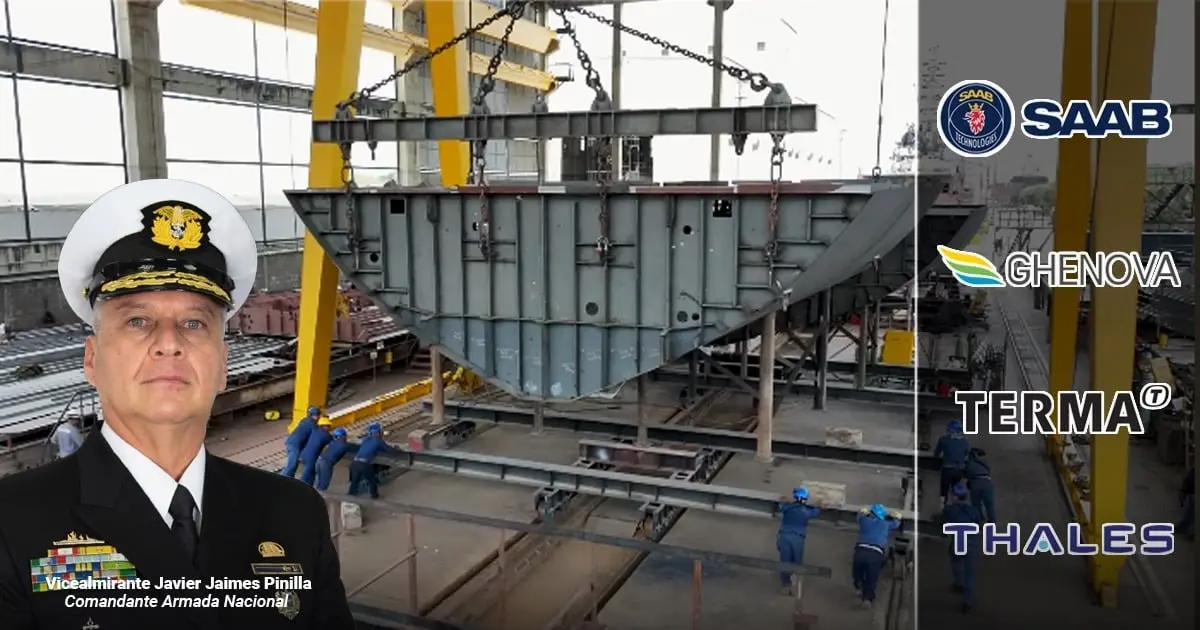
In a landmark achievement that propels the nation into an elite tier of naval manufacturing, Colombia has officially transitioned from the planning phase to the active construction of its first locally built warship. Under the leadership of the Commander of the Colombian Navy, Vice Admiral Javier Alfonso Jaimes Pinilla, work is well underway at the Mamonal and Bocagrande shipyards in Cartagena.
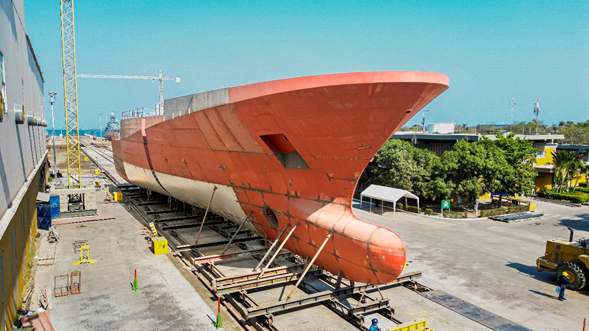
The vessel, provisionally designated as the PES 10714 CO (Plataforma Estratégica de Superficie, or Strategic Surface Platform), represents the single most ambitious defense procurement and manufacturing project in modern Colombian history. Backed by an authorized budget of COP $1.6 trillion (approximately USD $460 million), the initiative is being executed by Cotecmar (Corporación de Ciencia y Tecnología para el Desarrollo de la Industria Naval, Marítima y Fluvial).
This highly complex combat vessel will boast a displacement of between 3,000 and 5,000 tons, span 107.5 meters in length, and feature cutting-edge defense technology designed to project power and protect sovereignty across Colombia’s Caribbean and Pacific maritime domains.
The primary catalyst for this massive undertaking is the urgent need to modernize the nation’s surface fleet. Much of the current naval inventory—most notably the aging Almirante Padilla-class frigates—has accumulated several decades of continuous service. By designing and constructing these platforms domestically, the Colombian government aims to systematically reduce its historical reliance on foreign defense suppliers while fostering sovereign technological capabilities tailored specifically to the unique operational challenges of local seas and riverine networks.
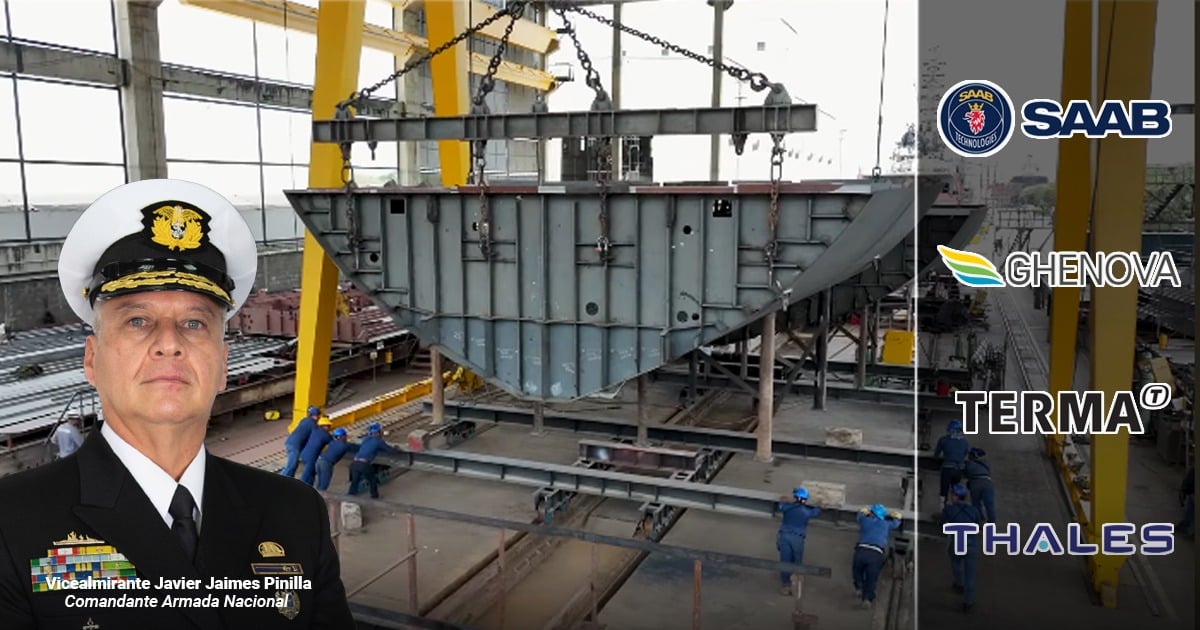
However, realizing a project of this magnitude requires world-class collaboration. To ensure the PES matches international standards of lethality, survivability, and systems integration, the Colombian Navy and Cotecmar have partnered with a formidable coalition of international defense giants: Damen Naval (Netherlands), Saab (Sweden), Ghenova Ingeniería (Spain), Thales (France), and Terma (Denmark).
Chronology: Five Presidential Administrations Shaping Naval Sovereignty
The genesis of the PES 10714 CO cannot be attributed to a single administration. Instead, it is the culmination of a long-term state policy outlined in the Naval Development Plan 2042, a visionary roadmap forged across five successive presidential terms that gradually built the industrial foundation required to construct a modern warship.
1. The Foundation (Late 1990s – Early 2000s)
The journey toward naval self-sufficiency initially took root during the administration of President Andrés Pastrana. While the state was heavily focused on internal security challenges, strategic planners recognized that a sovereign nation requires an independent industrial base to maintain and repair its maritime assets.
2. Industrial Consolidation (2002–2018)
During the consecutive administrations of Álvaro Uribe and Juan Manuel Santos, Colombia’s naval ambitions shifted from mere maintenance to active manufacturing. Cotecmar expanded its capabilities exponentially, successfully designing and building everything from nimble river patrol boats to large Logistics Support Vessels (BAL) and the highly regarded OPV-80 series of offshore patrol vessels. These years proved vital in training a specialized local workforce and gaining the institutional confidence necessary for more complex shipbuilding tasks.
3. Technological Realization and Execution (2020–2026)
Under the administration of President Gustavo Petro, the program reached critical milestones. This period witnessed the finalization of the PES advanced engineering designs, the launch of the ocean-going patrol vessel ARC 24 de Julio, the commissioning of the advanced scientific research vessel ARC Simón Bolívar, and the successful deployment of the Benkos Biohó hospital ship—the first hospital vessel built entirely at the Mamonal shipyard. Crucially, it was during this timeframe that the budget was secured and construction of the first historic frigate officially commenced.

4. Future Horizon (Post-2026)
If current construction schedules hold, the PES 10714 CO is projected to be completed and formally inaugurated during the upcoming presidential term. This milestone will cement Colombia’s position as a regional hub for high-end naval architecture and maintenance.
Supporting Data: The Global Industrial Coalition Behind the PES
Building a modern frigate is an exercise in complex systems integration. Because Colombia is constructing its first warship of this scale, the project relies on a carefully curated ecosystem of multinational defense partners, each contributing specialized intellectual property, hardware, and engineering expertise.
Damen Naval (Netherlands): The Technological Anchor
Serving as the primary technological partner, Dutch shipbuilder Damen Naval is providing critical technical assistance and core components. Damen is supplying the foundational naval architecture and engineering derived from its proven SIGMA 10514 model (Ship Integrated Geometrical Modularity Approach), tailoring the blueprints to meet the exact tactical requirements of the Colombian Navy.
Founded in October 1927 (with roots stretching back to the late 19th century) and controlled by the Damen family, the company is globally renowned for its modular shipbuilding philosophy and seamless technology transfer frameworks.
Saab (Sweden): Sensors and Combat Systems
Swedish defense powerhouse Saab has been contracted to supply, manufacture, integrate, and test vital elements of the frigate’s combat management system, advanced sensors, and operational suites.

Saab is widely recognized globally—not only for its naval electronics and submarine technology, but also as the manufacturer of the Gripen fighter jets selected by Colombia under the Petro administration. Headquartered in Sweden and led by CEO Micael Johansson, Saab’s primary controlling stakeholder is the prestigious Swedish investment firm Investor AB, closely linked to the influential Wallenberg family.
Ghenova Ingeniería (Spain): Advanced Naval Architecture
Spanish consultancy Ghenova Ingeniería has played a pivotal role in drafting both the basic and detailed engineering designs for the PES. Established in 1984 and specializing heavily in naval architecture, Ghenova brings decades of expertise forged through major projects with Spanish state-owned shipbuilder Navantia. The firm is guided by key stakeholders including Carlos Alejo García (via Aleyra5, S.L.), Francisco Cuervas García, and Raúl Arévalo Grillo, providing cutting-edge digital solutions and engineering support for complex defense programs.
Thales (France): Command and Control
French multinational Thales is integrating its state-of-the-art TACTICOS Combat Management System (CMS) into the frigate. TACTICOS acts as the digital nervous system of the ship, coordinating weaponry, radar data, and tactical data links in real time. Led by CEO Patrice Caine, Thales is a global leader in critical software, aerospace electronics, military communications, and advanced radar architectures.
Terma (Denmark): Electronic Warfare and Countermeasures
Danish defense firm Terma contributes the CGuard system, a sophisticated decoy-launching architecture designed to protect the ship against incoming anti-ship missiles and electronic threats. Led by President Thomas B. Thrige and controlled via the Thomas B. Thrige Foundation, Terma provides elite electronic warfare capabilities essential for modern naval survivability.
Official Responses and Strategic Vision
The leadership of the Colombian Navy has emphasized that the PES project is much more than a routine military procurement; it is a vital pillar of national sovereignty and technological emancipation.
Vice Admiral Javier Alfonso Jaimes Pinilla has repeatedly highlighted that building these vessels on domestic soil ensures that critical maintenance knowledge, specialized engineering talent, and logistical readiness remain within the country. Rather than depending on foreign shipyards for overhauls or emergency repairs during times of geopolitical tension, Colombia will possess the sovereign industrial capacity to sustain its own blue-water fleet.
Cotecmar echoes this official stance. Company executives have stressed that the true challenge of the PES project lies not merely in welding steel hulls or assembling modular blocks, but in the master-level integration of disparate technologies—merging Dutch naval architecture, Swedish sensors, French combat software, and Danish countermeasures into a single, cohesive, highly lethal fighting machine.
Implications: Economic, Industrial, and Geopolitical Impact
The construction of the PES 10714 CO carries profound long-term implications for Colombia across multiple dimensions:
1. Technological Spillover and Industrial Growth
The transfer of knowledge facilitated by Damen, Saab, Ghenova, Thales, and Terma will permanently upgrade Colombia’s industrial baseline. Engineers, metallurgists, software technicians, and shipyard workers trained on the PES project will form a highly skilled labor pool capable of servicing subsequent frigates, auxiliary vessels, and commercial maritime projects. This positions Cotecmar to potentially compete for international export contracts within Latin America and beyond.
2. Strategic Deterrence and Blue-Water Power Projection
For decades, the Colombian Navy has excelled in littoral combat, counter-narcotics interdiction, and riverine security. However, the acquisition of a true multi-role frigate with advanced air-defense, anti-submarine, and anti-surface warfare capabilities significantly upgrades the nation’s deterrent posture. The vessel will allow Colombia to project stability not only within its immediate territorial waters but also across broader regional security frameworks, including multinational combined naval exercises (such as UNITAS).
3. Economic Multiplier Effect
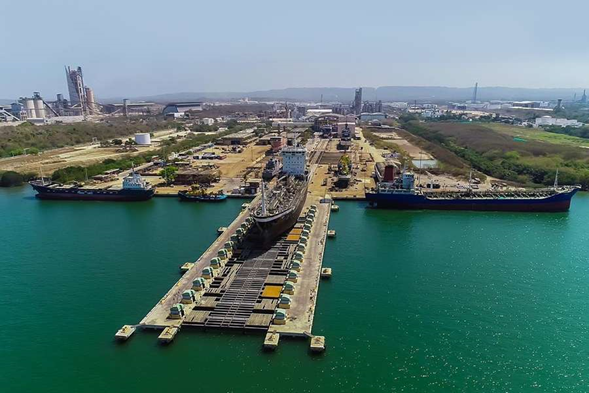
With a USD $460 million investment injected largely into the local economy of Cartagena and associated national supply chains, the project generates thousands of direct and indirect jobs. It stimulates steel fabrication, electronics, logistics, and higher education sectors, proving that defense spending can serve as an effective engine for high-tech industrial policy.
By bridging national ambition with elite international partnerships, Colombia is officially shedding its historic status as a passive consumer of foreign military hardware, stepping boldly into the global arena as a capable builder of modern warships.




Leave a Reply