

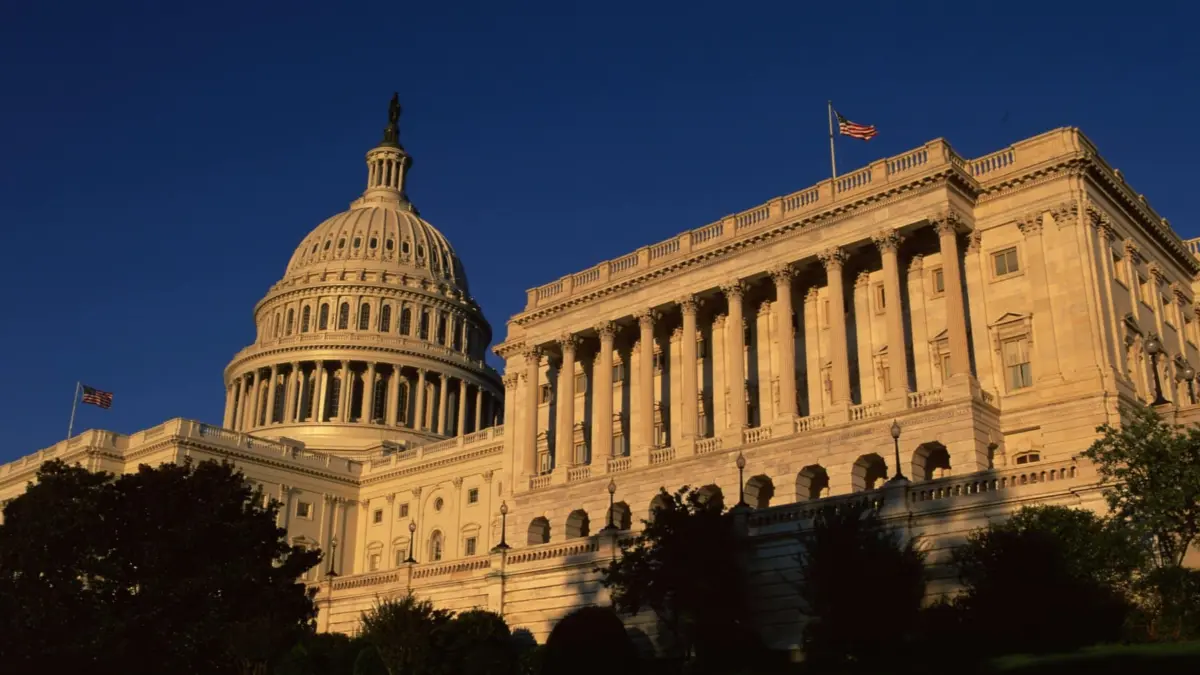
WASHINGTON — In a high-stakes legislative showdown that highlights the widening partisan chasm on Capitol Hill, negotiations over the multi-billion-dollar United States Farm Bill have collapsed indefinitely. Following a tense, closed-door markup session held this Thursday within the Senate Committee on Agriculture, Nutrition, and Forestry, efforts to greenlight sweeping modernizations to the 2018 agricultural legislation hit a brick wall.
The breakdown of talks leaves the future of the nation’s primary food, farm, and conservation policy suspended in limbo, raising urgent concerns among agricultural producers, anti-hunger advocates, and federal policymakers alike. At the heart of the deadlock is a fierce ideological battle over the Supplemental Nutrition Assistance Program (SNAP), previously known as food stamps, exposing deep disagreements over federal oversight, state accountability, and fiscal conservatism versus social safety net protections.
Main Facts
The legislative impasse crystallized during a Thursday committee hearing led by Senator John Boozman (R-AR), the ranking Republican driving the push to overhaul the aging 2018 Farm Bill. Despite months of mounting pressure from stakeholders facing unprecedented macroeconomic pressures, inflationary strains, and escalating climate-related agricultural disasters, the committee’s Democratic bloc firmly rejected the Republican-backed reform package.
The core dispute centers on administrative accountability and financial penalties tied to error rates within the SNAP program. Specifically, lawmakers clashed over how much time state governments should be granted to modernize their legacy digital infrastructure and administrative systems before bearing the financial brunt of distribution error margins.
- The Republican Proposal: Led by Boozman, the GOP caucus pushed for a strict one-year grace period, arguing that tighter timelines are essential to curb rampant bureaucratic waste and protect taxpayer dollars.
- The Democratic Proposal: The opposition countered with a mandatory two-year implementation window, asserting that rushed modernization timelines would unfairly penalize states struggling to upgrade complex welfare distribution systems, thereby risking benefits for vulnerable populations.
The conflict ultimately came to a head during a formal committee vote. Operating in a tight partisan formation, Democratic members successfully blocked the measure, resulting in a narrow 11–10 defeat for the package. Citing the insurmountable divide, Senator Boozman immediately moved to recess the committee indefinitely, effectively halting all legislative momentum on the Farm Bill for the foreseeable future.
Chronology of a Collapse: How the Negotiations Unraveled
To understand how the comprehensive agricultural package derailed so abruptly, it is necessary to examine the timeline of events leading up to this week’s fateful committee session.
The 2018 Baseline and Post-Pandemic Pressures
The current agricultural framework, the Agriculture Improvement Act of 2018, was originally designed as a five-year omnibus package intended to expire in 2023. However, due to hyper-partisan polarization, shifting congressional majorities, and pandemic-era extensions, the legislation has repeatedly rolled over via short-term continuations.
By late 2023 and throughout 2024, agricultural stakeholders—ranging from Midwestern corn growers to Southern cotton producers—began sounding alarm bells. Surging input costs, volatile global fertilizer prices, persistent supply chain disruptions, and devastating weather events eroded farm margins. Lawmakers across the aisle acknowledged that the 2018 baseline was dangerously outdated and inadequate for modern agricultural realities.
The Spring and Summer Markups
Drafting a Farm Bill is notoriously difficult because it marries two massive, seemingly disparate policy worlds: agricultural subsidies (traditionally favored by Republicans) and nutrition assistance programs (historically championed by Democrats). Together, these programs account for nearly a trillion dollars in federal spending over a decade.
Throughout the spring, committee leadership attempted to cobble together a bipartisan compromise. While broad agreement was reached on several non-controversial titles—including research funding, forestry management, and rural broadband expansion—negotiators repeatedly stumbled over commodity safety nets, crop insurance adjustments, and, most contentiously, nutrition assistance.
The Thursday Showdown
The tension culminated this week inside the Senate Agriculture Committee hearing room. Anticipation had run high that a compromise could be forged, given the impending expiration of previous stopgap measures. Instead, negotiations devolved into a technical yet fierce debate over state-level SNAP error-rate penalties.
When the compromise text failed to bridge the gap between a one-year and a two-year compliance window, the committee moved to an immediate vote. The disciplined Democratic bloc held firm, outvoting the Republican initiative 11 to 10. Recognizing that the numbers were not on his side and refusing to water down the accountability measures, Boozman terminated the session, leaving the multi-year legislative effort paralyzed.
Supporting Data: The Scale and Stakes of the Farm Bill
To fully grasp the gravity of the Senate impasse, one must examine the immense economic footprint of the legislation and the specific metrics driving the current debate over the Supplemental Nutrition Assistance Program.
The Macroeconomic Weight of the Farm Bill
The Farm Bill is unique among federal legislative packages because it acts as an omnibus vehicle funding two fundamentally different sectors of American society:
- The Nutrition Title (SNAP): Accounting for roughly 80% of the entire Farm Bill’s baseline spending (often exceeding $100 billion annually), SNAP provides critical food assistance to more than 40 million low-income Americans. Because of its massive financial scale, any debate over nutrition funding invariably dictates the political feasibility of the entire bill.
- The Agricultural Comprising the remaining 20% of funding, this section governs commodity price supports, federal crop insurance, agricultural trade promotion, conservation incentives, and sustainable farming research.
The SNAP Error-Rate Controversy
The technical crux of Thursday’s failure revolves around how the federal government handles administrative errors in state-level SNAP distribution. Under federal guidelines, states are held accountable for maintaining low payment error rates (overpayments or underpayments to eligible participants). States exceeding federally mandated thresholds can face significant financial penalties.
- State Disparities: Many states rely on outdated, legacy mainframe computer systems that struggle to process rapidly fluctuating income verifications, particularly in the wake of post-pandemic economic shifts.
- The Financial Burden: Shifting the cost of these administrative errors back onto state budgets without adequate transition time creates severe fiscal strains for local governments.
- The Partisan Divide on Waste: Republicans argue that lax enforcement encourages systemic carelessness, resulting in billions of dollars in misallocated taxpayer funds. Democrats counter that punishing states without providing sufficient time and resources to overhaul complex digital infrastructure is punitive and counterproductive.
Official Responses and Political Fallout
The indefinite suspension of the markup session has triggered immediate, sharp reactions from key congressional leaders, laying bare the deep political fault lines that continue to paralyze Capitol Hill.
Senator John Boozman’s Condemnation
Stepping out of the committee room, Senator John Boozman did not hide his frustration with the opposition’s stance, placing direct blame on his Democratic colleagues for prioritizing partisan optics over fiscal responsibility and agricultural relief.
"I am profoundly disappointed that the Democrats have voted in contravention of common-sense fiscal oversight," Boozman declared during a post-session press briefing.
"Our farmers and ranchers are facing unprecedented economic headwinds, yet the members of the opposition remain stubbornly fixated on a partisan policy that enables states to continue an incredible, unchecked derroche [waste] of taxpayer dollars. By turning a blind eye to administrative accountability, they are ignoring the urgent demands of thousands of hard-working agricultural producers who rely on a functional, modernized Farm Bill."
The Democratic Defense: Senator Amy Klobuchar’s Perspective
Conversely, Democratic leaders defended their unified vote, framing the refusal to back the one-year timeline not as an obstruction of agriculture, but as a defense of fairness and administrative reality for state agencies.
Senator Amy Klobuchar (D-MN), who has previously broken with her party on select agricultural initiatives and collaborated with Boozman on several provisions, reiterated her steadfast commitment to ultimately passing a comprehensive Farm Bill. However, she staunchly defended her caucus’s insistence on the two-year grace period.
"We are simply requesting a reasonable, two-year runway to ensure that all states are placed on an absolute footing of equality as they work diligently to reduce their error rates," Klobuchar stated following the vote.
"A rushed, one-year deadline is entirely unrealistic for state agencies grappling with complex administrative overhauls. While I remain fully committed to working across the aisle to get a comprehensive Farm Bill across the finish line, we cannot support a framework that sets states up for failure and jeopardizes the administrative stability of critical safety-net programs."
Broader Implications for American Agriculture and Economy
The indefinite stalling of the Farm Bill carries profound ramifications that stretch far beyond the Beltway, impacting everyone from Wall Street commodity traders to rural Main Street merchants and families struggling with food insecurity.
1. Uncertainty for Agricultural Producers
Farmers across the United States rely on the multi-year certainty provided by the Farm Bill to plan crop rotations, secure seasonal operating loans, and invest in long-term soil conservation practices. Without a reauthorized bill—or a substantial, long-term extension—producers face a return to permanent law provisions dating back to the 1940s (the so-called "cliff"), which would drastically spike price supports for basic commodities like dairy and wheat, creating utter chaos in agricultural markets.
2. Crop Insurance and Climate Resilience
Modern agricultural policy is heavily reliant on federal crop insurance subsidies to protect farmers against catastrophic weather events, droughts, and floods. With climate change accelerating extreme weather patterns across the American breadbasket, delaying updates to risk-management tools leaves millions of acres of farmland vulnerable to uninsured losses.
3. Nutrition Insecurity and Economic Strain
With inflation continuing to strain household budgets, the stability of the SNAP program is paramount for tens of millions of low-income Americans, including children, seniors, and disabled veterans. The partisan stalemate injects severe uncertainty into the administration of the safety net, potentially complicating state-level distribution and sparking anxiety among advocacy groups.
4. The Broader Congressional Outlook
Politically, the collapse of the Senate Agriculture Committee markup signals that major, bipartisan legislative achievements will remain exceptionally difficult to secure in an era of heightened polarization. As lawmakers eye the legislative calendar and incoming political shifts, the prospect of passing a comprehensive Farm Bill before the conclusion of the current congressional session grows increasingly dim, forcing leaders to weigh whether yet another stopgap extension will be necessary to prevent a total legislative default.




Leave a Reply