
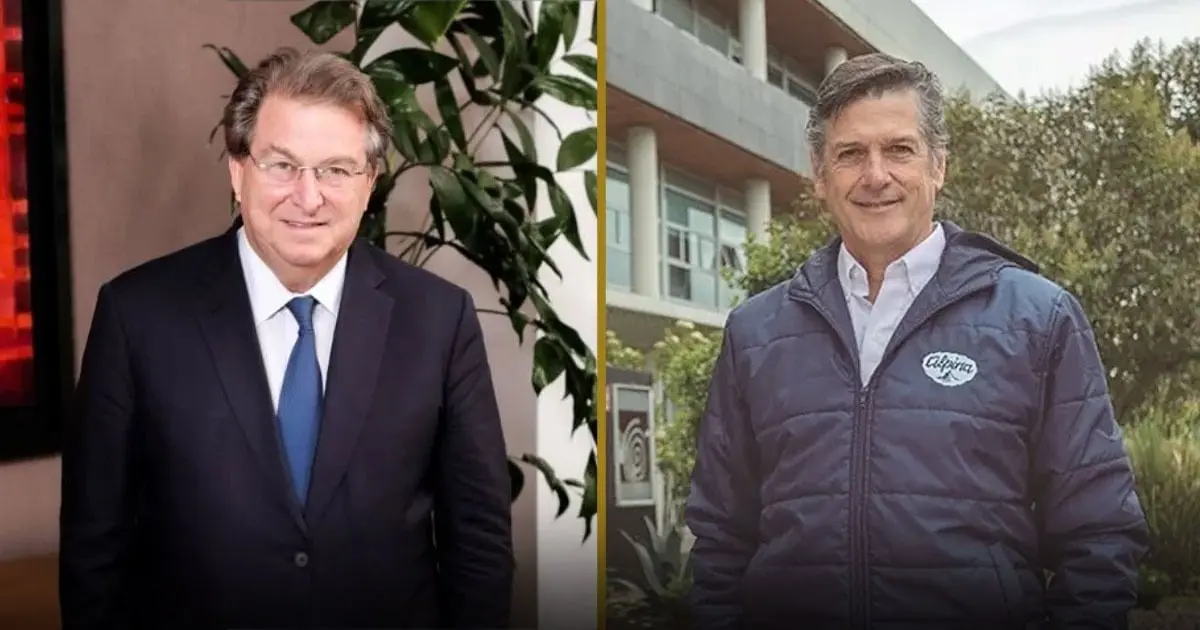
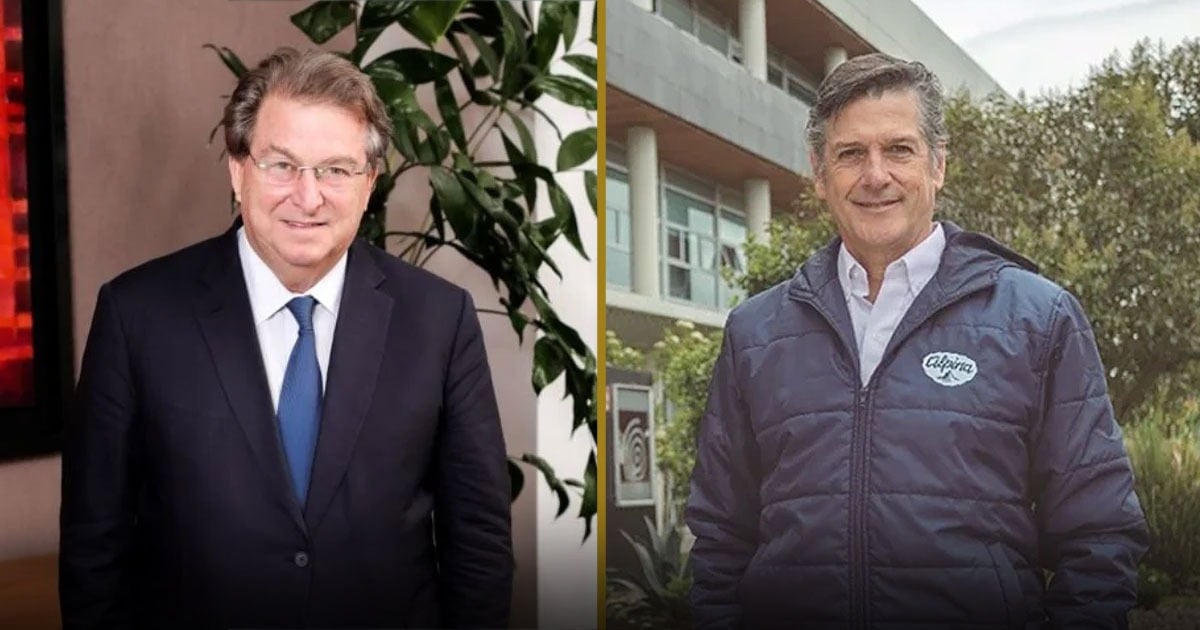
BOGOTÁ, Colombia — In a high-stakes corporate showdown that pits two of Latin America’s most influential food and beverage conglomerates against one another, the Superintendence of Industry and Commerce (SIC) has delivered a decisive ruling. The Colombian regulatory body sided with dairy and refreshment giant Alpina, dismissing a formal opposition filed by Grupo Nutresa—backed by billionaire Jaime Gilinski—over the registration of the trademark "Soka."
The legal battle highlights more than just a bureaucratic trademark dispute; it reflects a fierce, ongoing war for market share in the lucrative non-alcoholic beverage sector. As consumer preferences shift away from traditional heavy dairy toward healthier, low-calorie, and refreshing alternatives, legacy brands are drawing hard lines around their intellectual property.
Main Facts: The Battle for "Soka"
The core of the legal controversy centers on Alpina’s efforts to officially register and protect its refreshment brand, Soka, under the watchful eye of the SIC, currently led by María Rocío Cortés Vargas.
Alpina, under the leadership of President Ernesto Fajardo, has set an ambitious target of reaching $4 billion in sales by 2026. To achieve this, the company is aggressively consolidating its international operations—including the control of the U.S.-based Clover Sonoma—while heavily investing in domestic growth drivers. Among these is Soka, a brand originally launched in 2002 as a strategic pivot to diversify Alpina’s revenue streams beyond its traditional dairy stronghold.
However, when Alpina moved to solidify its trademark rights for Soka, it ran into a brick wall: Grupo Nutresa.
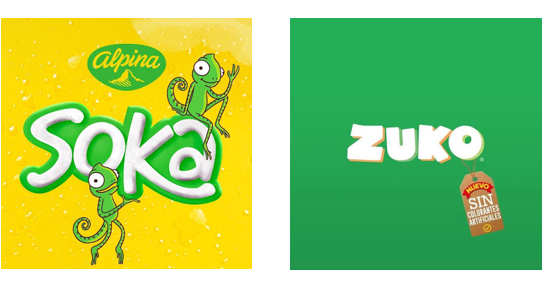
Nutresa formally opposed the registration through its legal representatives, arguing that Soka bore too close a resemblance to Zuko, an iconic brand of instant powdered beverages in Nutresa’s portfolio. Nutresa acquired Zuko globally through its blockbuster 2013 purchase of Chile’s Tresmontes Lucchetti (TMLUC) for $758 million—a strategic acquisition intended to cement Nutresa’s footprint in instant cold beverages across the continent. Following Jaime Gilinski’s acquisition of a controlling stake in Nutresa, the conglomerate has taken an increasingly aggressive approach to protecting its market assets.
Despite Nutresa’s claims that the registration of Soka would create a high risk of consumer confusion in the marketplace, the SIC ultimately ruled in favor of Alpina, allowing the dairy giant to secure its intellectual property and continue its push into the refreshment category.
Chronology of the Conflict
To fully understand how a beverage brand launched over two decades ago culminated in a regulatory clash between two corporate heavyweights, it is necessary to examine the timeline of events:

- 2002: Alpina officially launches Soka into the Colombian market. Conceived as a refreshing alternative for younger demographics, the brand adopts a chameleon as its mascot, relies on vibrant, youthful messaging (epitomized by the slogan "Flúyelo con Soka"), and positions itself as an antidote to daily cravings.
- July 18, 2013: Grupo Nutresa executes a major cross-border acquisition, purchasing the Chilean food and beverage company Tresmontes Lucchetti (TMLUC) for US$758 million. This acquisition brings iconic regional brands like Zuko and Livean under the Nutresa umbrella, vastly expanding its footprint in instant powdered drinks.
- 2017: Recognizing changing consumer habits, Alpina revitalizes the Soka brand by introducing a half-liter presentation. This move is designed to capture higher value within the rapidly growing ready-to-drink refreshing beverage segment. Over subsequent years, the brand expands its flavor profile to include mandarin orange, passion fruit (maracuyá), and mango, emphasizing low calorie and low sugar content to align with modern health trends.
- Late 2023 – 2024: Changes in corporate governance at Nutresa—highlighted by the entrance of billionaire Jaime Gilinski as a dominant shareholder—usher in a more aggressive corporate strategy focused on safeguarding core brands and maximizing profitability across all business units.
- 2026: Alpina sets its sights on a monumental $4 billion sales milestone by the end of the year. As part of this corporate sprint, the company files paperwork with the Superintendence of Industry and Commerce (SIC) to renew and legally solidify the registration of the Soka trademark.
- Mid-2026: Upon publication of the trademark request, Nutresa’s legal team files a formal opposition before the SIC, asserting that Soka threatens to dilute or confuse consumers familiar with its heavyweight powdered juice brand, Zuko.
- Late 2026: The SIC, headed by María Rocío Cortés Vargas, issues a first-instance administrative ruling. The agency dismisses Nutresa’s arguments, validates Alpina’s defense that the marks are sufficiently distinct, and officially grants the Soka trademark registration to Alpina.
Supporting Data: Brands, Portfolios, and Market Weight
The clash between Soka and Zuko is fundamentally a collision between two different eras and formats of the Latin American refreshment market.
Alpina and the Evolution of Soka
Alpina’s strategy with Soka has always been intentional. Built from its inception to reduce the company’s reliance on dairy, Soka represents a masterclass in demographic pivoting. According to historical company data, the brand was engineered to speak directly to Gen Z and millennial consumers through vibrant visuals and casual marketing.
As consumer health consciousness surged in the late 2010s and 2020s, Alpina adapted Soka’s formulas. The brand shifted toward lower sugar matrices, catering to regulatory pressures (such as front-of-package warning labels in Colombia) and consumer demands for guilt-free beverages. The 2017 introduction of the 500ml format transformed Soka from a niche pocket-drink into a serious competitor in the ready-to-drink (RTD) retail cooler space.
Nutresa, TMLUC, and the Legacy of Zuko
On the other side of the ring stands Zuko, a brand with deep cultural roots across South America. Originating in Chile in the late 1970s under Tresmontes, Zuko revolutionized household consumption by popularizing individual powder sachets capable of yielding a full liter of juice. It democratized flavored beverages across working- and middle-class households.
When Nutresa acquired TMLUC in 2013 for nearly $760 million, Zuko was crowned as the jewel of the instant beverage division. For Nutresa—historically dominant in chocolates, processed meats, cookies (through Noel), and coffee (Cafú/Colcafé)—Zuko provided an indispensable vehicle for geographic and categorical diversification. Protecting Zuko is, therefore, an existential priority for Nutresa’s management, who view any phonetically or conceptually similar competitor as a direct threat to their market equity.
Official Responses and Legal Arguments
The legal sparring before the Superintendence of Industry and Commerce laid bare contrasting commercial visions and legal interpretations of trademark law.
Nutresa’s Position: Protecting Brand Equity
Nutresa’s legal representatives approached the SIC with a protective shield wrapped tightly around Zuko. Their primary argument rested on the premise of consumer confusion.
In trademark law, companies can block the registration of new signs if they bear visual, phonetic, or conceptual similarities to pre-existing, registered brands, provided both operate in overlapping or adjacent commercial spaces. Nutresa argued that Soka and Zuko share structural similarities—short, punchy, two-syllable names starting with a consonant and ending with an open vowel sound—which could theoretically cause a shopper to misidentify one for the other in a busy supermarket aisle. Furthermore, given the immense equity Nutresa invested in Zuko post-TMLUC acquisition, the conglomerate argued that allowing a rival food giant to secure exclusive rights to a similar-sounding brand name diluted their intellectual property.

Alpina’s Defense: Distinct Commercial Identities
Alpina’s defense team countered that Nutresa’s claims lacked both legal foundation and commercial reality.
Alpina maintained that Soka and Zuko are entirely distinct when evaluated in their totality—taking into account their visual presentation, logo typography, mascot (the iconic Soka chameleon), and product delivery format. While Zuko is predominantly sold as a dry powder mix requiring preparation by the consumer, Soka is marketed primarily as a ready-to-drink liquid refreshment packaged in bottles. Alpina argued that consumers exercise a reasonable degree of attention when purchasing beverages, and the coexistence of the two brands for over two decades without widespread legal friction or actual market confusion proved that no risk existed.
Implications: What This Means for the Market
While the immediate headline of the SIC’s ruling is a victory for Alpina and Ernesto Fajardo, the broader implications of this case extend far beyond a single trademark certificate.
- Heightened Scrutiny in the Beverage Sector: As major conglomerates like Alpina and Nutresa diversify past their historical core products (dairy for Alpina; processed foods and chocolates for Nutresa), the battleground for consumer throat-share in non-alcoholic beverages is intensifying. Every square inch of retail shelf space—and every phonetic variation of a brand name—will be fiercely contested.
- The Gilinski Factor at Nutresa: Under the strategic direction of Jaime Gilinski, Nutresa has adopted a noticeably more assertive posture across all its business verticals. While this particular trademark battle was lost at the first-instance level at the SIC, it signals to the market that Nutresa will not cede ground easily and is prepared to challenge competitors aggressively to protect its multi-million-dollar multinational portfolios.
- A Win for Brand Longevity: For Alpina, securing the Soka trademark removes a regulatory cloud over one of its key non-dairy assets just as the company presses toward its 2026 financial targets. It validates two decades of brand-building for a product that started as a modest diversification experiment and has matured into an essential pillar of the company’s refreshment portfolio.
As the dust settles at the Superintendence of Industry and Commerce, the ruling serves as a stark reminder: in Latin America’s fiercely competitive consumer goods market, a brand name is not merely a label—it is a heavily guarded corporate asset worth fighting for to the bitter end.