

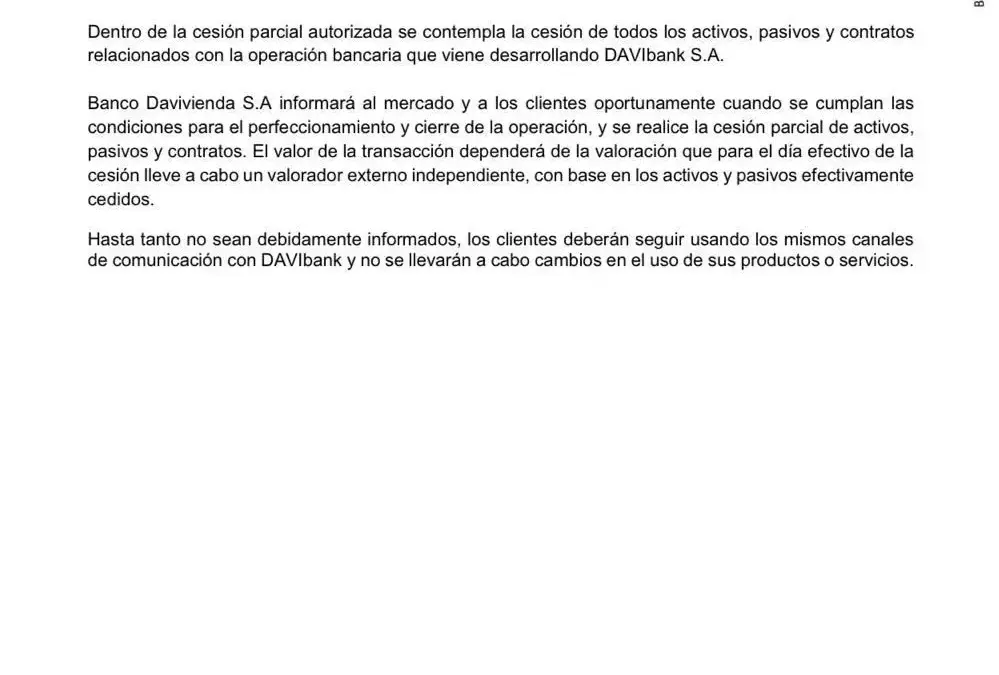
BOGOTÁ, COLOMBIA — In a major strategic realignment within the Latin American financial sector, Banco Davivienda has officially announced that it has secured regulatory authorization from the Superintendencia Financiera de Colombia (Financial Superintendency) to proceed with the partial cession of assets, liabilities, and contracts from DAVIbank.
The transaction, formally greenlit under Resolution 1505 on October 2, 2026, marks a pivotal juncture in Davivienda’s ongoing corporate consolidation strategy. While the regulatory hurdle has been cleared, the definitive closure of the operation remains subject to standard procedural conditions and subsequent valuations. As market analysts closely monitor the implications of this corporate restructuring, both institutions have emphasized that customer operations will remain uninterrupted during the transition phase.
Main Facts
The core of the transaction revolves around a structured corporate restructuring wherein DAVIbank acts as the cedent (the entity transferring the assets and obligations) and Banco Davivienda steps in as the cesionaria (the receiving entity).
According to the official disclosures released by Banco Davivienda, the operational scope of the cession is comprehensive. It encompasses all assets, liabilities, and contractual agreements tied directly to the banking operations currently executed by DAVIbank. This means that a significant pool of financial instruments, client accounts, operational contracts, and associated financial obligations will migrate from DAVIbank’s balance sheet to that of Banco Davivienda.
Despite the issuance of Resolution 1505, the transaction is not yet finalized. In accordance with Colombian financial regulations, the operation must still satisfy a series of precedent conditions necessary for its formal perfection and ultimate closing. Banco Davivienda has committed to issuing timely updates to the market, its shareholders, and its customer base as soon as these operational and legal milestones are successfully achieved.
Furthermore, the precise monetary value of the transaction has not yet been definitively established. Rather than relying on a static, pre-negotiated figure, the final financial valuation of the transferred portfolio will be determined by an independent external appraiser. This valuation will be executed dynamically, taking as its baseline the precise volume and market value of the assets and liabilities that are effectively transferred on the exact date the cession becomes legally effective.
For the millions of consumers and corporate clients currently utilizing DAVIbank’s services, the immediate takeaway is one of stability and continuity. Both institutions have issued explicit directives assuring clients that, until the process reaches its official conclusion, no action is required on their part. Customers must continue using their existing communication channels, access methods, and digital platforms exactly as they have done previously, ensuring zero friction in their day-to-day financial management.
Chronology of Events
To fully understand the weight of Resolution 1505 and the trajectory of this corporate maneuver, it is essential to examine the chronological progression that led to the October 2026 announcement. While public announcements regarding regulatory approvals often appear sudden, transactions of this magnitude are the culmination of months—and frequently years—of strategic planning, corporate restructuring, and regulatory compliance.
Phase 1: Internal Strategic Alignment and Structuring
Long before the filing reached the desks of the Superintendencia Financiera, the leadership teams at Banco Davivienda and DAVIbank engaged in comprehensive internal audits and feasibility studies. Recognizing the synergies, operational efficiencies, and market positioning advantages inherent in absorbing DAVIbank’s operational portfolio, legal and financial advisors began drafting the framework for a partial asset, liability, and contract cession.
Phase 2: Regulatory Submission and Scrutiny
The formal application was submitted to the Superintendencia Financiera de Colombia, the nation’s premier banking and financial watchdog. The Superintendency’s mandate involves rigorous scrutiny of any movement involving consumer assets, systemic stability, capital adequacy ratios, and market competition. Over a protracted review period, regulatory officials evaluated the solvency of Banco Davivienda, the contractual integrity of the assets being moved, and the potential impact on consumers, ensuring that the transaction complied strictly with Colombian banking law and consumer protection statutes.
Phase 3: Issuance of Resolution 1505 (October 2, 2026)
The process reached a critical milestone when the Superintendencia Financiera formally issued Resolution 1505. Dated October 2, 2026, this resolution formally granted the administrative permission required for Banco Davivienda to absorb the designated assets, liabilities, and contracts of DAVIbank. This authorization served as the legal foundation enabling the institutions to transition from planning to execution.
Phase 4: Public Disclosure and Market Notification (October 2026)
Following the receipt of the resolution, Banco Davivienda fulfilled its corporate governance and transparency obligations by releasing formal communications to the public, the Colombian Stock Exchange (BVC), and its client base. This disclosure outlined the parameters of the resolution, clarified the mechanics of the pending independent valuation, and established clear operational guidelines for existing customers.
Phase 5: Pending Closing and Operational Integration (Upcoming)
As of the current writing, the transaction sits in its penultimate phase. The institutions are actively working to fulfill the remaining conditions precedent required for final perfection. Once these criteria are met, the independent external valuation will be finalized, the legal closing will be executed, and the final migration of accounts and operational frameworks will commence.
Supporting Data and Financial Mechanics
Transactions within the banking sector are governed by stringent economic parameters, accounting standards, and regulatory ratios. Analyzing the underlying financial mechanics of the Davivienda-DAVIbank cession sheds light on why the transaction is structured the way it is—particularly regarding the delayed valuation and the transfer of liabilities.
The Role of the Independent External Valuer
One of the most notable aspects of Banco Davivienda’s disclosure is that the total monetary value of the transaction remains unquantified at this stage. In corporate finance, when dealing with fluid portfolios—such as loan books, variable interest-bearing assets, and shifting liability structures—assigning a fixed historical cost is often impractical and economically inaccurate.
By mandating an independent external appraiser to evaluate the portfolio on the effective date of the cession, Davivienda and DAVIbank ensure absolute transparency and fairness. This third-party valuation model protects both the acquiring institution from overpaying for depreciated or volatile assets and the cedent from undervaluing its operational output. The valuation will look strictly at the net asset value (NAV) and risk-weighted assets (RWA) of the specific ledger entries that successfully cross the threshold upon closing.
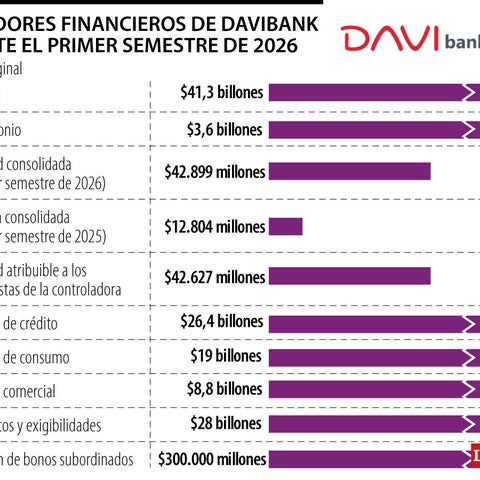
Balance Sheet Implications
For Banco Davivienda, absorbing DAVIbank’s operational assets and liabilities represents a strategic expansion of its balance sheet.
- Assets: Typically include performing and non-performing loan portfolios, commercial credits, consumer financing instruments, and cash equivalents associated with the cedent’s operational footprint.
- Liabilities: Generally comprise client deposits, savings accounts, institutional obligations, and operational debts tied to the contracts being transferred.
- Contracts: Encompass service level agreements (SLAs), vendor contracts, and technological integration frameworks that allow the continuous servicing of the transferred client base.
The Financial Superintendency closely monitors these transfers to ensure that Banco Davivienda maintains healthy Solvency Ratios (Capital Adequacy) post-absorption. Colombian banking regulations dictate that Tier 1 and Tier 2 capital requirements must remain robustly above the regulatory minimums mandated by the Basel III frameworks adopted in the country, even after absorbing a substantial influx of new risk-weighted assets.
Official Responses and Stakeholder Communications
In the wake of Resolution 1505, corporate communications have focused heavily on maintaining market confidence, regulatory compliance, and consumer trust. Financial institutions undergoing structural changes face the dual challenge of satisfying regulatory bodies while keeping retail and corporate clients calm and informed.
Banco Davivienda’s Official Stance
Through its official corporate channels, Banco Davivienda has maintained a measured and transparent tone. Leadership emphasized that the authorization granted by the Superintendencia Financiera is a testament to the institutional strength and regulatory compliance of Davivienda as a premier regional banking entity.
Crucially, Davivienda’s communications have prioritized consumer reassurance. Recognizing that banking integrations can frequently cause anxiety among retail account holders—who often fear frozen accounts, altered account numbers, or inaccessible digital platforms—the bank explicitly stated:
"While the process is being completed, DAVIbank clients must continue using the same communication channels and should not make any changes to the way they use their products or services."
This proactive messaging is designed to prevent operational disruption, curb unnecessary customer service inquiries, and maintain business-as-usual continuity until the exact closing date is formally announced.
Regulatory Oversight by the Superintendencia Financiera
While the regulatory body does not typically issue promotional commentary regarding corporate cessions, the issuance of Resolution 1505 itself speaks volumes about the strict oversight applied to the process. The Superintendencia Financiera functions as the ultimate guardian of consumer rights and systemic stability in Colombia. By vetting the transaction, the Superintendency has implicitly verified that:
- Banco Davivienda possesses the institutional, technological, and financial capacity to absorb DAVIbank’s operational load.
- Consumer rights, data privacy, and existing financial contracts will be legally respected and protected throughout the migration.
- The stability of the broader national financial system will remain uncompromised by the structural shift.
Strategic Implications for the Colombian Financial Sector
The partial cession of assets, liabilities, and contracts between DAVIbank and Banco Davivienda is more than a routine administrative adjustment; it is a symptom of broader macroeconomic and structural trends shaping the Latin American and Colombian banking ecosystems.
1. Market Consolidation and Economies of Scale
The global banking sector has increasingly favored consolidation as a mechanism to achieve critical mass, optimize technological expenditures, and spread regulatory compliance costs over a larger asset base. In Colombia, where the financial sector is sophisticated and highly regulated, institutions are continually looking for ways to streamline operations. By absorbing DAVIbank’s operational portfolio, Banco Davivienda further cements its status as one of the dominant financial powerhouses in the country, capturing greater market share and enhancing its competitive edge against both traditional rivals and emerging fintech disruptors.
2. Technological and Operational Synergies
Modern banking is heavily reliant on technological infrastructure—ranging from core banking systems and mobile applications to advanced cybersecurity protocols and artificial intelligence-driven risk assessment models. Managing separate banking entities under a single corporate umbrella often leads to redundant technological expenditures. While the immediate focus of Resolution 1505 is the legal cession of assets and contracts, the long-term strategic implication almost certainly involves the migration of DAVIbank’s technological infrastructure and client base into Davivienda’s unified digital ecosystem. This integration stands to deliver significant operational cost savings (synergies) over the medium to long term.
3. Consumer Experience and Digital Transformation
For the end consumer, structural realignments of this nature frequently herald a transition toward more advanced digital platforms. Banco Davivienda has long positioned itself as a regional leader in digital banking innovation, spearheading initiatives in mobile payments, digital onboarding, and ecosystem banking. As DAVIbank’s operations are fully integrated into Davivienda following the independent valuation and final closing, former DAVIbank clients are anticipated to gain access to Davivienda’s broader suite of digital tools, enhanced loyalty programs, and expansive physical and digital service networks.
4. Investor Sentiment and Market Confidence
For institutional investors, shareholders, and credit rating agencies, the handling of this transaction serves as a litmus test for Banco Davivienda’s corporate governance and operational execution. The commitment to transparently disclosing that the final price depends on an independent valuation—rather than speculative internal estimations—demonstrates financial rigor and adherence to best practices in corporate reporting. Provided that the remaining conditions precedent are met without regulatory friction, the transaction is expected to be viewed favorably by the market as a disciplined, strategic growth initiative.
Conclusion and Next Steps
The authorization granted by the Superintendencia Financiera de Colombia via Resolution 1505 on October 2, 2026, represents a definitive step forward in the strategic realignment between Banco Davivienda and DAVIbank. By structuring the transaction as a partial cession of assets, liabilities, and contracts, the institutions have laid the groundwork for a streamlined operational integration.
As the process moves toward its final stages, attention will shift to the fulfillment of the remaining precedent conditions and the delivery of the independent external valuation report. Until those benchmarks are met and officially communicated, the operational directive for clients remains clear and unwavering: business as usual.
Banco Davivienda has pledged to keep the market, its shareholders, and its customers fully informed as the definitive closing date approaches. For the Colombian financial sector, this transaction stands as a prime example of proactive corporate restructuring, regulatory compliance, and strategic market consolidation designed to foster long-term stability and enhanced service delivery in an evolving economic landscape.



Leave a Reply