

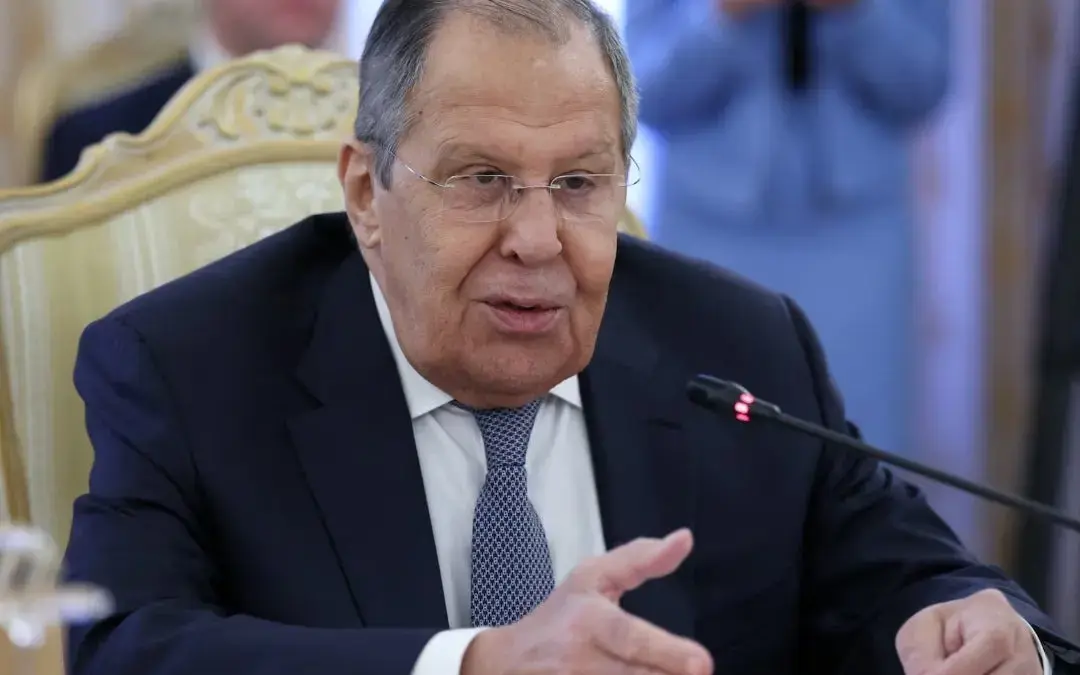
NEW YORK — On the sidelines of the United Nations General Assembly in New York, the foreign ministers of Russia and Germany held their first face-to-face bilateral meeting since the full-scale invasion of Ukraine in February 2022. The highly anticipated encounter between Russian Foreign Minister Sergey Lavrov and German Foreign Minister Johann Wadephul did little to thaw the deeply chilled relations between Moscow and Berlin. Instead, the discussions underscored the profound diplomatic chasm that remains, characterized by mutual recriminations, concerns over hybrid warfare, and a deadlock over critical global food supply chains.
The meeting took place against a backdrop of severely strained ties. Germany, once one of Russia’s primary economic partners in Europe, has transformed into one of Ukraine’s most resolute military and financial allies. This geopolitical realignment, combined with recent security incidents on German soil, ensured that the atmosphere in the meeting room was exceptionally cold.
Main Facts of the Bilateral Encounter
The New York meeting represented a rare and highly sensitive diplomatic contact between a core NATO member and the Russian Federation. Despite the opportunity for direct engagement, the discussions yielded no breakthroughs, with both sides maintaining rigid, well-established positions.
The primary agenda items included bilateral relations, the ongoing war in Ukraine, and the critical issue of shipping security in the Black Sea. However, the post-meeting remarks from both delegations revealed that the dialogue was marked more by diplomatic posturing than constructive negotiation.
Lavrov’s Dismissive Assessment
Following the talks, Russian Foreign Minister Sergey Lavrov did not hide his disdain for the encounter. Speaking at a press conference, Lavrov stated that he had received no new proposals or insights from his German counterpart that had not already been made public through official German government communiqués.
"I told him, frankly… you could have simply called me and said, ‘read my statement,’" Lavrov remarked to reporters, highlighting what Moscow characterized as a redundant and performative diplomatic exercise by Berlin.
The Focus on Black Sea Grain Exports
Despite the frosty reception, German Foreign Minister Johann Wadephul used the session to press Russia on global humanitarian concerns. According to sources within the German delegation, Wadephul urged Lavrov to do "everything possible to reach an agreement on grain exports through the Black Sea."
The German representative emphasized the urgency of the situation, noting that acute food shortages in the Global South require all parties to act constructively. Wadephul suggested that a "pragmatic solution" on grain corridor security could serve as a confidence-building measure, potentially "paving the way for further concrete steps" toward de-escalation.
Chronology of Deterioration: From Economic Partnership to Hybrid Conflict
To understand the weight of the New York meeting, it is necessary to trace the rapid decline of German-Russian relations over the past thirty months.
[Pre-Feb 2022]  --> [Feb 2022]       --> [Aug 2024]           --> [Sept 2024]
Nord Stream II/     Invasion of          Leipzig Drone            First Tense Bilateral
Energy Dependency   Ukraine; Relations   Incident; Diplomatic     Meeting at UNGA in
& Trade Ties        Freeze               Expulsions               New York
1. Pre-February 2022: Economic Interdependence
For decades, German-Russian relations were anchored by deep economic ties, most notably symbolized by the Nord Stream natural gas pipelines. Germany relied heavily on cheap Russian energy to fuel its industrial sector, while Moscow viewed Berlin as its primary diplomatic and economic gateway to Western Europe.
2. February 2022: The "Zeitenwende" (Turning Point)
The Russian invasion of Ukraine shattered this framework overnight. German Chancellor Olaf Scholz declared a Zeitenwende—a historic turning point in German foreign and defense policy. Berlin halted the certification of the Nord Stream 2 pipeline, joined sweeping Western sanctions against Moscow, and began phasing out Russian fossil fuels. Germany quickly transitioned into a major supplier of heavy weaponry to Kyiv, including Leopard tanks and sophisticated air defense systems.
3. August 2024: The Leipzig/Halle Airport Drone Incident
Tensions reached a dangerous new high in August 2024 following a security incident at the Leipzig/Halle airport in eastern Germany. A drone incursion disrupted airport operations and targeted sensitive infrastructure.
Following a thorough investigation, the German government concluded that the Russian state was responsible for the attempted drone strike. In retaliation, Berlin ordered the closure of a Russian consulate and a Russian cultural center in Germany. Moscow rejected the allegations, calling them a "fabricated provocation" designed to fuel "anti-Russian hysteria."
4. September 2024: The UNGA Sidelines Meeting
Against this highly volatile backdrop, the two foreign ministers agreed to meet in New York. Recognizing the extreme sensitivity of the encounter, Wadephul took the precaution of immediately briefing Germany’s European allies via a secure message detailing the substance of the talks.
Supporting Data and Contextual Analysis
The diplomatic gridlock between Berlin and Moscow has direct, measurable consequences for global stability, security, and economics.
The Black Sea Grain Crisis and the Global South
Prior to the war, Russia and Ukraine collectively accounted for nearly 30% of global wheat exports. The conflict has severely disrupted these shipments, causing food prices to spike globally and disproportionately affecting vulnerable nations in Africa, the Middle East, and parts of Asia.
| Metric / Detail | Before the Conflict | Current Status (Post-Initiative Collapse) |
|---|---|---|
| Global Wheat Export Share | Combined ~30% (Russia & Ukraine) | Highly restricted; subject to military threats |
| Primary Shipping Route | Black Sea deep-water ports | Alternative land routes & restricted coastal corridors |
| Impact on Global South | Stable supply, predictable pricing | High volatility, severe food insecurity in East Africa & Middle East |
| Military Targets | Civilian commercial shipping unhindered | Frequent missile/drone strikes on port infrastructure |
The Black Sea Grain Initiative, originally brokered by the UN and Turkey, temporarily eased the crisis by guaranteeing safe passage for agricultural vessels. However, since the collapse of the agreement, commercial shipping has faced constant danger from sea mines, naval blockades, and targeted airstrikes on port infrastructure.
Germany’s Pivot to Hybrid Defense
The drone incident at Leipzig/Halle airport is not an isolated event. Security agencies across Europe have warned of an escalation in Russian hybrid activities, including sabotage, cyberattacks, GPS jamming, and disinformation campaigns designed to weaken Western resolve.
According to German security reports, the frequency of unauthorized drone sightings over critical military and civilian infrastructure has increased by over 40% since late 2022, necessitating a robust counter-intelligence and physical defense response.
Official Responses and Perspectives
The public statements issued by the respective delegations after the meeting illustrate the irreconcilable narratives that continue to define the conflict.
                       ┌─────────────────────────┐
                       │   UNGA Sidelines Meeting│
                       └────────────┬────────────┘
                                    │
         ┌──────────────────────────┼──────────────────────────┐
         ▼                          ▼                          ▼
┌──────────────────┐       ┌──────────────────┐       ┌──────────────────┐
│  RUSSIA (Lavrov) │       │ GERMANY(Wadephul)│       │     UKRAINE      │
├──────────────────┤       ├──────────────────┤       ├──────────────────┤
│• Demands on Kyiv │       │• Immediate Cease-│       │• Open to accords │
│• Bilateral deals │       │  fire & Grain    │       │• Russia bears    │
│  with partners   │       │  corridor access │       │  full war guilt  │
│• Dismisses drone │       │• Warns against   │       │• Defends sovereign│
│  claims as myth  │       │  escalation      │       │  shipping rights │
└──────────────────┘       └──────────────────┘       └──────────────────┘
The Russian Federation’s Stance
Lavrov made it clear that Moscow is not interested in appealing to Kyiv for concessions. Instead, Russia intends to dictate terms.
"It is necessary to maintain separate conversations with the Ukrainians, and not in the tone of a request, but rather of a demand," Lavrov asserted. He went on to accuse Ukraine of carrying out attacks on commercial vessels in the Black Sea, thereby justifying Russia’s aggressive naval posture.
Furthermore, Lavrov highlighted that Russia is bypasssing Western-led frameworks by pursuing alternative, bilateral shipping security agreements with key regional partners, including India, Egypt, and Turkey.
The Federal Republic of Germany’s Position
Wadephul used the meeting to deliver a firm warning to Moscow regarding its aggressive posturing toward Europe and NATO. According to delegation sources, the German Foreign Minister urged Russia to "abandon the dangerous path of escalation."
Addressing the hybrid threats directly, Wadephul made it clear that provocations such as the Leipzig drone incident would not compromise Berlin’s foreign policy. "Such incidents or further hybrid attacks will not shake Germany’s determination to support Ukraine," Wadephul reportedly told Lavrov.
In his message to European allies, Wadephul reiterated that he had demanded an "immediate and complete ceasefire" and emphasized the protection of critical energy and agricultural infrastructure.
The Ukrainian Response
While not present at the bilateral table, Kyiv closely monitored the proceedings. Ukrainian officials reiterated their openness to fair and structured agreements that respect Ukraine’s sovereignty and territorial integrity. However, Kyiv firmly rejected Lavrov’s accusations regarding shipping attacks, attributing the entire humanitarian and economic fallout of the war directly to Russia’s unprovoked invasion.
"Ukraine remains open to constructive arrangements, but the sole cause of the global food crisis and the devastation in the Black Sea is Russia’s illegal war of aggression," a Ukrainian diplomatic spokesperson stated.
Implications for Global Security and Diplomacy
The outcome of the Lavrov-Wadephul talks indicates that the diplomatic path to resolving the conflict remains blocked, with several key implications for the near future:
- Fragmentation of Global Trade Agreements: Russia’s strategy of pursuing bilateral deals with countries like India, Egypt, and Turkey suggests a shift away from comprehensive, UN-brokered multilateral agreements. This fragmentation could lead to a highly unstable and politicized global food market, where access to grain is used as geopolitical leverage.
- Escalation of Hybrid Warfare in Europe: Germany’s firm stance on the Leipzig drone incident, coupled with Russia’s dismissive response, indicates that hybrid confrontations will likely intensify. European nations will need to invest heavily in securing physical and digital infrastructure against deniable, state-sponsored sabotage.
- NATO-Russia Tensions: Wadephul’s explicit warning to Lavrov to avoid escalating tensions with Germany, Europe, and NATO underscores the very real danger of a direct military confrontation. As Germany continues to supply sophisticated weaponry to Ukraine, the margin for error along NATO’s eastern flank remains dangerously thin.
- The Limits of Sideline Diplomacy: The failure of this first high-level meeting to produce even a minor consensus suggests that sideline diplomacy at forums like the UN General Assembly is currently insufficient to bridge the gap. Without a fundamental shift in strategic objectives from either Moscow or Kyiv, future talks are likely to remain performative.


Leave a Reply