

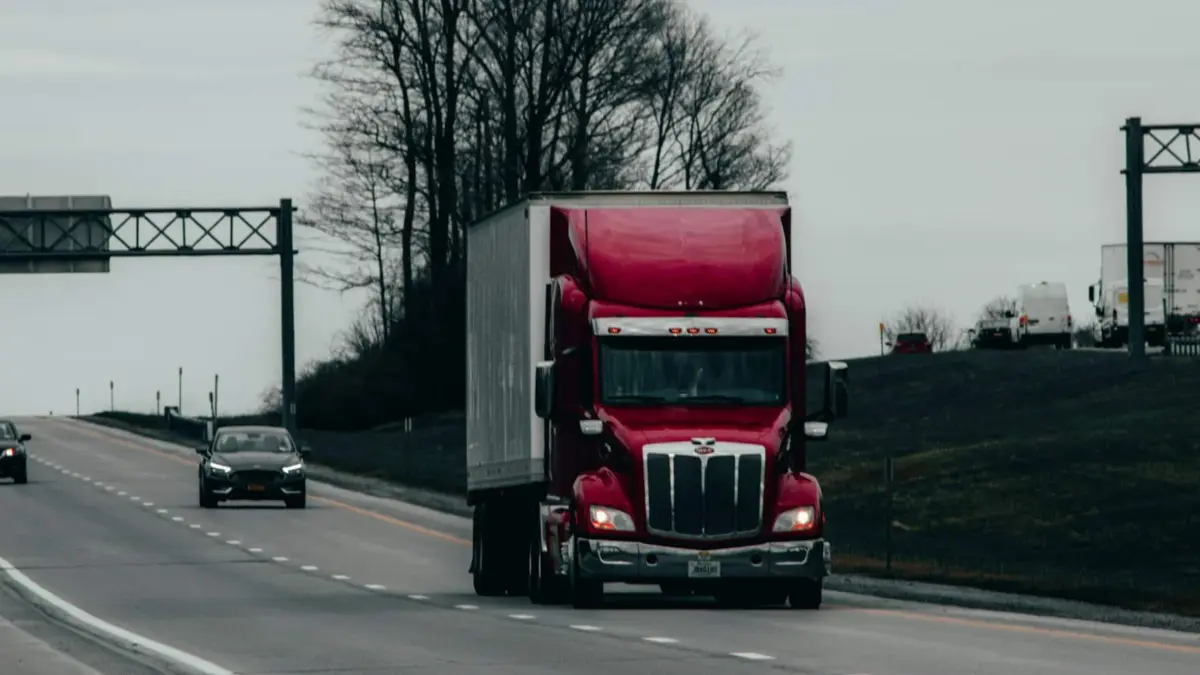
WASHINGTON — In a sweeping policy initiative aimed at overhauling commercial transportation and highway safety, the incoming administration, spearheaded by Transportation Secretary-designate Sean Duffy alongside President Donald Trump, is advancing a stringent federal mandate: full English proficiency will soon become a strict, non-negotiable prerequisite for operating heavy commercial vehicles across the United States.
The policy seeks to codify and permanently enforce long-standing federal guidelines that require commercial motor vehicle (CMV) operators to read, speak, and comprehend English. By eliminating enforcement loopholes that have persisted for decades, the administration hopes to dramatically transform national transit safety. However, the proposal has immediately ignited a fierce debate, drawing sharp lines between highway safety advocates and economic stakeholders who warn of potential supply chain disruptions, cross-border trade friction, and a severe aggravation of existing labor shortages within the trucking industry.
1. Main Facts: The Core of the New Federal Mandate
At its heart, the proposed regulation targets the operational communication skills of drivers operating multi-ton commercial trucks on U.S. interstate highways and local roadways. Under the framework developed by the Department of Transportation (DOT), English proficiency is no longer viewed merely as an administrative preference or a professional asset; it is being classified as an essential safety equipment standard, akin to functioning brakes or properly secured cargo.
The key components of the mandate include:
- Mandatory Language Comprehension: Drivers must demonstrate the ability to read and interpret complex highway traffic signs, construction warnings, and regulatory notices written in English.
- Effective Communication: Commercial drivers must possess the verbal skills necessary to converse with law enforcement officials, weigh station operators, and emergency personnel during routine traffic stops or roadside inspections.
- Zero-Tolerance Enforcement: Drivers who fail to meet the codified standards during roadside evaluations will face immediate out-of-service orders, effectively halting their ability to operate commercial vehicles until compliance—or repatriation—is achieved.
- Universal Federal Application: The rule is designed to supersede any state-level leniency, creating a uniform national standard that applies across all fifty states, with heightened scrutiny slated for major international trade corridors and border zones.
Secretary Duffy has defended the initiative by framing it as a matter of fundamental public safety. "The federal law is clear: drivers who cannot read or speak English, our national language, nor comprehend traffic signals are simply not qualified to drive 36-ton heavy-duty trucks on American highways," Duffy stated. "By making these English proficiency standards permanent and enforceable, we are closing a dangerous legal loophole that has cost the lives of too many Americans."
2. Chronology: From 1937 Regulations to Modern Enforcement
To understand the weight of the Trump administration’s current initiative, it is necessary to examine the historical trajectory of federal language requirements within the American commercial trucking sector.
The Origins: 1937–1970s
The requirement that interstate commercial drivers possess a working knowledge of the English language is not an entirely novel legal concept. The baseline regulation was originally established in 1937 under the Interstate Commerce Commission, later being transferred to the Federal Highway Administration (FHWA) and eventually the Federal Motor Carrier Safety Administration (FMCSA). For decades, federal regulations stipulated that a person shall not drive a commercial motor vehicle unless they can read and speak the English language sufficiently to converse with the general public, understand highway traffic signs and signals, respond to official inquiries, and make entries on reports and records.
The Enforcement Vacuum: 1980s–2020s
Despite the statutory existence of the rule since the era of the New Deal, enforcement has historically been fragmented, weak, and subject to shifting administrative priorities. Over the decades, various legal interpretations, civil rights considerations, and pressure from labor and logistics advocates created practical loopholes. Crucially, many past administrations discouraged law enforcement agencies from pulling commercial drivers off the road solely for failing English competency assessments, unless the driver had committed a concurrent, serious moving violation. This enforcement gap allowed thousands of non-English-speaking or limited-English-proficient drivers to integrate into the domestic and cross-border freight supply chains.
The 2024–2025 Policy Shift
Following Donald Trump’s return to the political forefront and the appointment of Sean Duffy to lead the Department of Transportation, the regulatory posture shifted dramatically. Rather than treating language comprehension as an ancillary qualification, the administration prioritized the codification of permanent rules. Through coordinated efforts involving the DOT, the FMCSA, and targeted roadside enforcement operations (such as specialized initiatives targeting undocumented and non-compliant commercial operators), the administration began drafting rigid administrative code to ensure that the 1937 mandate is transformed into an active, aggressively enforced operational barrier.
3. Supporting Data and Practical Implementation
The administration’s argument relies heavily on statistical assessments of highway risk, logistical data, and the mechanics of roadside inspections. While commercial trucking is the backbone of the American economy—moving roughly 70% of all domestic freight by weight—it is also an industry where heavy machinery poses catastrophic risks during accidents.
Risk Factors and Traffic Safety Data
According to safety advocates and federal traffic safety databases, misunderstanding highway signs or failing to comprehend verbal instructions from state troopers during critical maneuvers can lead to catastrophic multi-vehicle accidents. The DOT points to several operational vulnerabilities associated with language barriers:
- Delayed Response Times: A driver who cannot instantly decode dynamic messaging signs regarding lane closures, accident warnings, or hazardous weather conditions is significantly more likely to be involved in a rear-end collision or rollover event.
- Weigh Station and Inspection Failures: Commercial vehicles are subject to rigorous safety checks at state borders and weigh stations. Communication breakdowns between drivers and inspectors hamper the detection of mechanical failures, overweight loads, or falsified hours-of-service logs.
- Emergency Miscommunication: In the event of a roadside fire, hazardous material spill, or medical emergency, the inability to clearly relay location data and crisis specifics to 911 dispatchers can turn manageable incidents into major disasters.
The Mechanics of Evaluation
Under the proposed enforcement protocols, compliance will not be determined by a self-certified questionnaire or a basic conversational test. Instead, commercial drivers will face structured evaluations during routine and targeted roadside inspections:
- Comprehension Tests: Inspectors may present standard road signs or written regulatory scenarios to verify reading comprehension.
- Verbal Interaction: Routine traffic interviews will be used to assess whether the driver can respond intelligently and accurately to questions regarding their cargo, destination, vehicle registration, and hours of service.
- Documentation Audit: Logbooks, bills of lading, and inspection reports must reflect an understanding of English-language regulatory frameworks.
4. Official Responses and Stakeholder Reactions
The announcement of the mandatory English proficiency enforcement has provoked polarized reactions from across the political, industrial, and labor spectrum.
Government and Safety Advocates
Proponents of the policy argue that public safety supersedes all economic conveniences. Law enforcement organizations and highway safety groups have largely praised the move, arguing that uniformity on the nation’s roadways is long overdue. State troopers and highway patrol unions have frequently cited the dangers of attempting to conduct safety inspections with drivers who require translation assistance, noting that such delays create dangerous traffic backups on high-speed interstates.
Furthermore, the administration has attempted to balance domestic labor concerns through complementary initiatives. Programs such as Freedom Haulers have been launched or championed to encourage military veterans and native-born citizens to enter the commercial trucking sector, framed as a patriotic and well-paying career path that reduces the industry’s reliance on non-traditional labor pools.
Industry Associations and Economic Critics
Conversely, major logistics associations, agricultural groups, and cross-border trade organizations have expressed profound alarm. Industry stakeholders warn that the timing of the rule could exacerbate chronic labor shortages. The American Trucking Associations (ATA) and various supply chain groups have historically noted that the freight sector faces a persistent deficit of qualified drivers.
Critics argue that an aggressive, zero-tolerance enforcement model could lead to:
- Supply Chain Bottlenecks: Removing thousands of experienced drivers from circulation overnight could paralyze regional distribution networks, driving up shipping costs and ultimately inflating consumer prices for retail goods, food, and manufacturing inputs.
- Cross-Border Trade Friction: The trucking corridors linking the United States with Mexico and Canada rely heavily on cross-border logistics partnerships. Critics contend that strict, unyielding English-language standards will disproportionately impact Mexican commercial drivers operating under international trade agreements, leading to retaliatory trade measures or severe logjams at major ports of entry such as Laredo, El Paso, and San Diego.
5. Broader Implications for the Future of American Logistics
As the Department of Transportation moves closer to finalizing and codifying these rules, the long-term implications for the American landscape are profound, touching on immigration policy, international trade law, technological adaptation, and domestic labor markets.
The Intersection of Immigration and Trade Policy
This regulatory push cannot be neatly separated from broader immigration and nationalist economic policies. By leveraging federal transportation safety authority to enforce linguistic standards, the administration is effectively utilizing regulatory agencies as an extension of border and internal security enforcement. For border-state logistics hubs, the policy introduces a high-stakes compliance environment where transport companies must heavily vet their workforce or invest in automated translation technologies—though the legality and reliability of such technologies during active law enforcement stops remain highly questionable.
Technological Solutions vs. Human Requirements
As the industry grapples with the mandate, some technology developers are examining whether artificial intelligence and real-time translation tools could bridge the gap. However, federal regulators have signaled skepticism toward technological workarounds, maintaining that the operator of a 72,000-pound vehicle must possess direct, cognitive comprehension of emergency instructions and traffic regulations without relying on digital intermediaries.
Conclusion
The Trump administration’s plan to make English proficiency a permanent, strictly enforced prerequisite for commercial truck drivers represents a decisive collision between nationalist governance, public safety advocacy, and globalized commerce. While the White House and transportation officials maintain that the policy is a vital shield designed to protect American motorists and close deadly legal loopholes, the logistics industry faces a turbulent transition. Whether the regulation successfully enhances highway safety without triggering a crippling breakdown in the nation’s supply chains remains one of the most critical questions facing the American transportation sector today.




Leave a Reply