

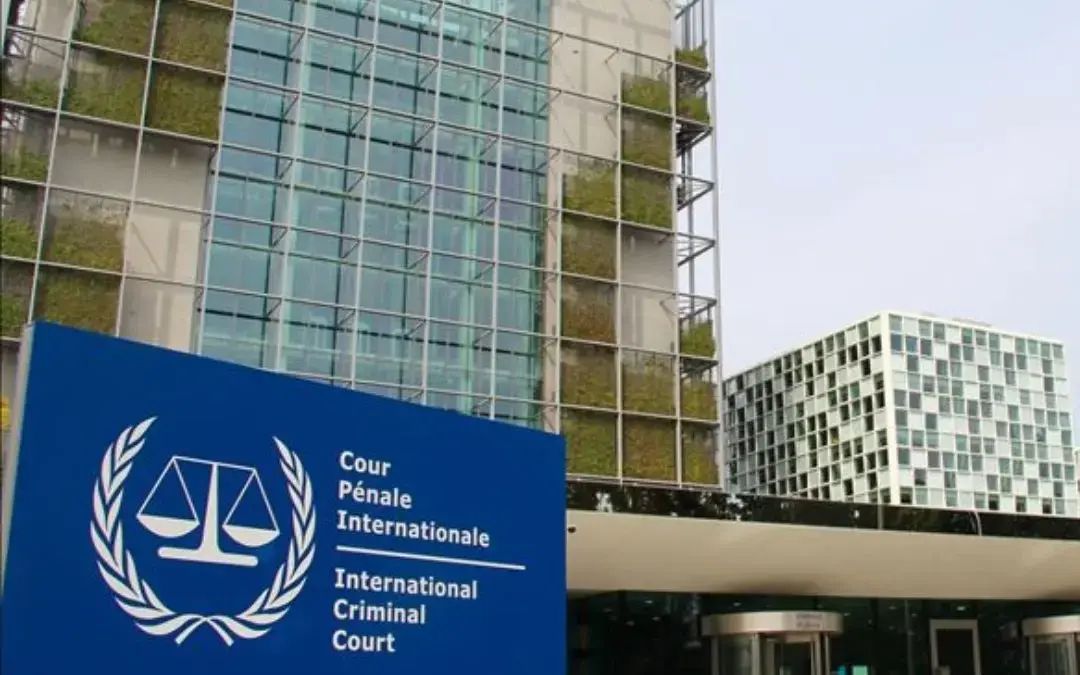
WASHINGTON / THE HAGUE — In a dramatic escalation of geopolitical hostility, the administration of U.S. President Donald Trump has officially imposed sweeping and unprecedented sanctions directly against the International Criminal Court (ICC). The announcement, delivered on a Friday that also saw a former ICC jurist awarded the Nobel Peace Prize, marks a profound rupture in transatlantic relations, pitting Washington against its closest European allies and threatening the operational viability of the world’s foremost permanent war crimes tribunal.
The move goes far beyond previous diplomatic rebukes or targeted punitive measures against individual court personnel. By aiming at the institutional architecture of the tribunal itself, the White House has set the stage for a bitter legal, financial, and diplomatic showdown.
Main Facts
The sanctions announced by the U.S. government on Friday are designed to systematically dismantle the operational capacity of the ICC. According to statements obtained by international news agencies prior to the official White House rollout, the measures will strictly prohibit financial and business transactions with the tribunal, effectively freezing its assets within the U.S. financial system, cutting off vital technological lifelines, and penalizing any third-party corporate entities—including banks, software providers, and insurance companies—that continue to render services to the court.
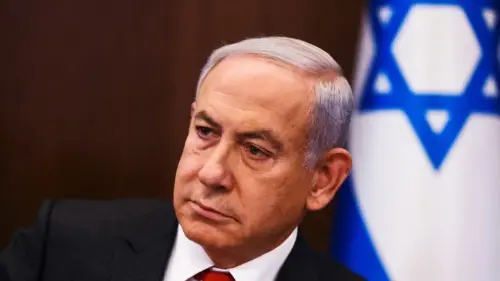
The core rationale driving Washington’s unprecedented aggression stems from long-standing friction over the ICC’s jurisdiction. Successive U.S. administrations have refused to ratify the Rome Statute, but the Trump administration has taken hostility to an operational level. Washington is deeply incensed by the tribunal’s ongoing issuance of arrest warrants for high-ranking Israeli officials, including Prime Minister Benjamin Netanyahu, as well as prior, albeit now-dormant, investigations into the conduct of American military personnel in Afghanistan.
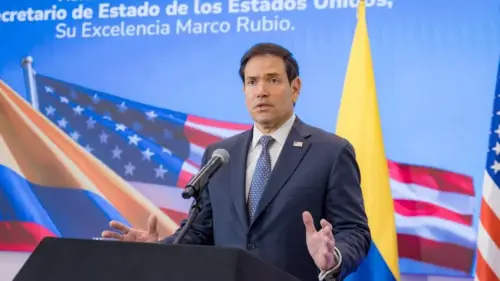
"The President, Donald Trump, will never allow the International Criminal Court to sit in judgment of American citizens," stated Secretary of State Marco Rubio in a comprehensive memorandum detailing the policy shift. "Therefore, today, the United States is imposing severe sanctions on the International Criminal Court. We are prohibiting all transactions with this rogue tribunal, cutting off its resources, and paralyzing its capacity to function."
The timing of the decree was particularly jarring. It came mere hours after the Norwegian Nobel Committee announced that the prestigious 2025 Nobel Peace Prize had been awarded to Navi Pillay, a distinguished South African jurist and former ICC Appeals Chamber judge, in direct recognition of her lifelong crusade for international criminal justice. The juxtaposition of the Nobel accolade and Washington’s punitive fiat has created an acute diplomatic dilemma for the 125 member states of the ICC, which include every member of the European Union and all NATO allies except the United States and Turkey.
Chronology of a Collision Course
The collision between Washington and The Hague did not materialize overnight; it is the culmination of years of escalating judicial inquiries, legislative threats, and retaliatory measures.
- July 2002: The Rome Statute officially enters into force, establishing the International Criminal Court to prosecute genocide, crimes against humanity, and war crimes. The United States, under President George W. Bush, actively opposes the treaty and subsequently "unsigns" it in 2002, enacting the American Service-Members’ Protection Act (popularly dubbed the "Hague Invasion Act").
- 2003–2008: South African jurist Navi Pillay serves with distinction as a judge on the Appeals Chamber of the ICC, helping to lay the foundational jurisprudence of the court before later serving as the United Nations High Commissioner for Human Rights.
- November 2017 – March 2020: The ICC pre-trial chamber authorizes an investigation into alleged war crimes and crimes against humanity committed in Afghanistan, which potentially implicates U.S. military and intelligence personnel.
- June 2020: The first Trump administration issues Executive Order 13928, authorizing economic sanctions and visa restrictions against ICC officials involved in investigating U.S. or allied personnel. Fiscal and travel restrictions are subsequently placed on specific prosecutors and judges, including then-Prosecutor Fatou Bensouda.
- April 2021: Following international outcry and changes in the U.S. executive branch under the Biden administration, the sanctions against ICC personnel are lifted, though Washington maintains its fundamental opposition to the court’s jurisdiction over non-party nationals.
- 2023–2024: The ICC intensifies its scrutiny of Middle Eastern conflicts, leading to applications for arrest warrants against top Israeli leadership, including Prime Minister Benjamin Netanyahu and former Defense Minister Yoav Gallant, alongside Hamas leaders. This triggers fierce condemnation from Washington, which views the warrants as an illegitimate encroachment on the sovereignty of a non-member state that possesses an independent judicial system.
- Early October 2025: Facing imminent threats of renewed U.S. economic warfare, ICC Registrar Osvaldo Zavala Giler urges European Union member states to activate defensive legal instruments, such as the EU’s "blocking statute."
- Friday, October [Current Year]: Within hours of Navi Pillay being named the recipient of the Nobel Peace Prize, Secretary of State Marco Rubio officially unveils the sweeping institutional sanctions against the ICC, marking the formal return to an aggressive, punitive U.S. posture.
Supporting Data and Structural Impact
The mechanics of U.S. secondary and primary sanctions are formidable. When the Department of the Treasury designates an international entity, the legal and operational fallout is swift and deeply disruptive. U.S. jurisdictions prohibit any domestic company—spanning financial institutions, technological conglomerates, legal advisory firms, and medical insurers—from engaging in commercial relations with the target.
Institutional Adaptation and Anticipatory Measures
Recognizing the high probability of a severe U.S. financial blockade, administrative officials at the ICC have spent the better part of the past year stress-testing their infrastructure and implementing contingency plans.
- Technological Sovereignty: Anticipating that software giants like Microsoft could be forced to sever license agreements overnight, the court’s IT department systematically migrated sensitive internal infrastructure away from proprietary ecosystems toward secure, open-source software alternatives.
- Financial Diversification: The tribunal has restructured its banking relationships, shifting operational accounts away from institutions with deep exposure to the U.S. financial clearinghouse system to European banks less susceptible to extraterritorial enforcement.
- Healthcare and Risk Management: Court officials have modified medical insurance portfolios to ensure that judges, prosecutors, and administrative staff retain coverage despite sweeping global compliance mandates.
Membership Demographics
The structural divide between Washington and the international legal community is underscored by the court’s vast demographic footprint:
- Total State Parties: 125 nations.
- Geographic Representation: Includes all 27 member states of the European Union, key Latin American democracies, major African economies, and the vast majority of Asia-Pacific democracies.
- NATO Dynamic: Of the 32 member states comprising the North Atlantic Treaty Organization, 30 are fully signed parties to the Rome Statute. Only the United States and Turkey stand outside the treaty framework, creating an untenable alliance dynamic where Washington’s defense partners are legally bound to cooperate with an institution that Washington is actively trying to bankrupt and paralyze.
Official Responses and Diplomatic Fallout
The U.S. announcement has generated immediate, polarized reactions across global capitals, amplifying friction between Washington and its traditional democratic allies in Europe.
The White House and State Department Perspective
Defending the administration’s hardline stance, Secretary of State Marco Rubio framed the sanctions as a necessary defense of American sovereignty and the security of allied nations that are unjustly targeted by what Washington characterizes as an unaccountable judicial body.
"A court that claims jurisdiction over citizens of countries that have never signed its founding treaty is a rogue institution acting outside the bounds of international law," Rubio asserted. "The United States will use every economic and diplomatic tool at our disposal to shield our personnel, and the personnel of our democratic allies, from politically motivated judicial overreach."
While the primary announcement was uncompromising, a senior State Department official—speaking on condition of anonymity to discuss internal regulatory mechanics—indicated that the Treasury Department would issue specific, narrow general licenses "to protect vital U.S. interests." This language implies that certain humanitarian, administrative, or winding-down operations might receive temporary waivers, though legal analysts warn these exemptions are unlikely to satisfy the court’s operational requirements.
The Nobel Committee’s Rebuke
The award of the Nobel Peace Prize to Navi Pillay served as an extraordinary counter-narrative to the American sanctions. In its official citation, the Norwegian Nobel Committee made little effort to mask its concerns regarding the political pressures facing international tribunals.
"At a time when judges and institutions of international law are being subjected to intense political attacks, the Committee wishes to issue a clear reminder of their indispensable value," the citation read. "An international legal system in which war criminals are held accountable and victims of atrocities witness the realization of justice is an absolute precondition for a sustainable, peaceful world."
Pillay herself released a statement expressing profound gratitude for the honor while issuing a sober warning about the health of the global rules-based order. "Justice is not a political commodity to be bartered, nor is it a privilege subject to the veto of powerful states," Pillay noted. "To attack the instruments of international justice is to attack the very victims of war crimes, genocide, and crimes against humanity who look to the global community as their final beacon of hope."
European Allies and the Dilemma of The Hague
European capitals, which have long served as the diplomatic and financial backbone of the ICC, find themselves in an extraordinarily delicate diplomatic bind. The Netherlands, which hosts the tribunal in The Hague, reiterated its unwavering commitment to the court’s mandate and independence. Dutch foreign ministry officials emphasized that the host country agreement obligates them to ensure the safe and unhindered operation of the tribunal on Dutch soil.
Earlier in the week, ICC Registrar Osvaldo Zavala Giler made an urgent public appeal to Brussels, calling on the European Union to activate its historic "Blocking Statute." Originally designed to neutralize the extraterritorial effects of U.S. sanctions against Cuba and Iran, the statute prohibits EU-based companies from complying with designated foreign sanctions, shielding them through legal counter-measures.
However, invoking the blocking statute against a superpower like the United States carries immense economic risks for European banks and multinational corporations, setting the stage for a protracted transatlantic trade and legal dispute.
Implications for the Future of Global Justice
The imposition of U.S. sanctions on the International Criminal Court represents a watershed moment for the post-World War II international legal order. Several critical implications emerge from this crisis:
- The Crisis of Multilateralism: The open warfare between Washington and the ICC highlights the deepening fractures within the multilateral governance framework. When the world’s preeminent economic and military power seeks to dismantle a global judicial body, the efficacy of international treaties is severely undermined.
- The Strains of Transatlantic Unity: European governments are now forced to choose between appeasing an aggressive U.S. administration or upholding the foundational principles of international humanitarian law. This tension threatens to spill over into broader defense, trade, and intelligence-sharing partnerships.
- Chilling Effect on Accountability: Even if the ICC successfully utilizes open-source technology and diversified banking networks to circumvent immediate financial asphyxiation, the psychological and professional toll on jurists, investigators, and witnesses is immense. Potential witnesses may hesitate to cooperate, and independent legal experts may think twice before accepting appointments to the bench.
- A Defining Legacy for International Law: As Navi Pillay accepts the Nobel Peace Prize amidst the backdrop of Washington’s financial siege, the international community faces an existential reckoning. The coming months will determine whether the architecture of global accountability can withstand the unyielding pressure of nationalist realpolitik, or whether the pursuit of universal justice will retreat in the face of raw geopolitical power.


Leave a Reply