

JERUSALEM / OSLO — The announcement of the 2026 Nobel Peace Prize has ignited a fierce international controversy, pitting the Norwegian Nobel Committee against the government of Israel. Navi Pillay, a prominent South African jurist and former United Nations High Commissioner for Human Rights, was awarded the prestigious distinction for her decades-long defense of international human rights and accountability.
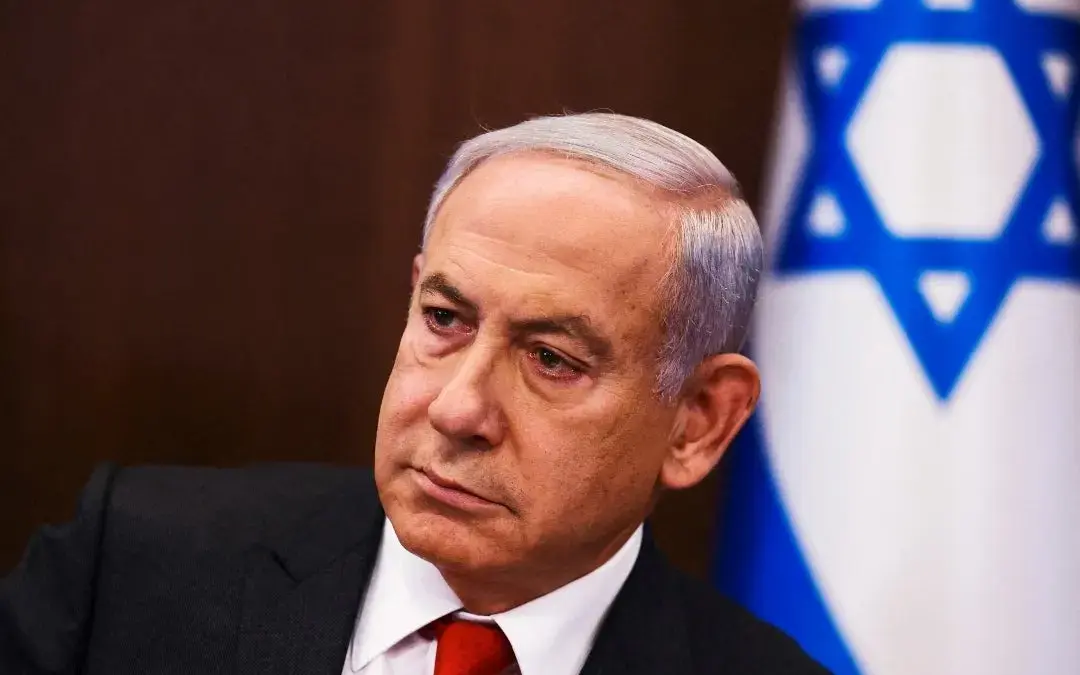
However, the decision has been met with immediate and blistering condemnation from the highest levels of the Israeli government. Prime Minister Benjamin Netanyahu’s office released a searing statement accusing the Nobel Committee of having "lost its moral compass," specifically pointing to Pillay’s leadership of a UN Commission of Inquiry that previously concluded Israel’s military campaign in Gaza amounted to genocide.
The clash underscores deep global fractures regarding international law, the mandate of human rights institutions, and the ongoing fallout from the Middle East conflict. As global leaders, human rights organizations, and legal experts weigh in, the 2026 Nobel Peace Prize has transformed from an annual celebration of peacemaking into a high-stakes geopolitical flashpoint.
1. Main Facts
The 2026 Nobel Peace Prize was awarded to Navi Pillay in recognition of her tireless efforts to uphold international criminal law, protect marginalized populations, and hold state and non-state actors accountable for war crimes, crimes against humanity, and genocide.
The core elements driving the current controversy include:
- The Laureate: Navi Pillay, 84, is a veteran jurist of Tamil descent born in apartheid-era South Africa. She has served as a judge on the International Criminal Tribunal for Rwanda (ICTR), the International Criminal Court (ICC), and as the UN High Commissioner for Human Rights from 2008 to 2014. Most recently, she headed the UN Independent International Commission of Inquiry on the Occupied Palestinian Territory, including East Jerusalem, and Israel.
- The Accusation from Israel: The Israeli government vehemently rejected the award. In a formal statement disseminated via the social media platform X (formerly Twitter), Prime Minister Benjamin Netanyahu’s office denounced the decision, labeling Pillay a "fanatic" who has dedicated her career to delegitimizing the Jewish state.
- The Contested Inquiry: The friction stems largely from Pillay’s role at the helm of the UN commission, which issued reports accusing Israel of systematic violations of international humanitarian law and concluding that actions in Gaza constituted acts of genocide—allegations that Israel rejects as fabricated, biased, and antisemitic.
- The Nobel Committee’s Rationale: In its official citation, the Norwegian Nobel Committee praised Pillay for "her unwavering courage in confronting impunity and standing as a bulwark for universal human rights in times of global democratic recession and violent conflict."
2. Chronology of Events
To understand the volatile context surrounding the 2026 Nobel Peace Prize, it is necessary to examine the trajectory of Navi Pillay’s career and the escalating legal and diplomatic battles between Israel and international bodies.
Pre-2024: A Lifetime on the Global Legal Stage
- 1967: Navi Pillay becomes the first non-white woman to open a law practice in South Africa’s Natal province, frequently defending anti-apartheid activists, exposing police brutality, and challenging discriminatory legislation under the apartheid regime.
- 1995–2003: Appointed by the UN Security Council as a judge to the International Criminal Tribunal for Rwanda (ICTR). She plays a pivotal role in the landmark Jean-Paul Akayesu case, which legally established that rape and sexual violence constitute acts of genocide.
- 2003–2008: Serves as a judge on the Appeals Chamber of the International Criminal Court (ICC).
- 2008–2014: Serves as the United Nations High Commissioner for Human Rights, where she frequently clashed with various global superpowers over human rights abuses in Sri Lanka, Sudan, Syria, and the Middle East.
2021–2024: The UN Commission of Inquiry
- May 2021: Following the escalation of violence in Gaza, the UN Human Rights Council establishes an ongoing, independent Commission of Inquiry (CoI) to investigate "all alleged violations of international humanitarian law and abuses of international human rights law" in the Occupied Palestinian Territory and Israel. Navi Pillay is appointed to chair the three-person commission.
- 2022–2024: The Commission releases multiple reports. In its 2024 publications, the CoI asserts that both Israeli authorities and Palestinian armed groups have committed war crimes and crimes against humanity, with the commission’s reports focusing heavily on the scale of destruction, starvation, and civilian casualties in Gaza, leading to findings that align with criteria for genocidal acts. Israel continuously denounces the commission as structurally biased and antisemitic.
October 2026: The Nobel Announcement and Backlash
- Early October 2026: The Norwegian Nobel Committee deliberates and selects Navi Pillay as the recipient of the 2026 Nobel Peace Prize.
- Friday, October [Day], 2026: The Norwegian Nobel Committee formally announces the award in Oslo. Within hours, the Prime Minister’s Office in Jerusalem issues its scathing response on X, accusing the committee of moral failure and launching a diplomatic offensive against the decision.
3. Supporting Data and Background
The controversy over Pillay’s Nobel Prize cannot be divorced from the broader statistical and legal realities of the Israeli-Palestinian conflict and the institutional architecture of international justice.
- The Scale of the Gaza Conflict: Since the escalation of hostilities following the October 7, 2023 attacks led by Hamas, the death toll in Gaza has surpassed tens of thousands, predominantly civilians, according to local health authorities and UN estimates. The systematic destruction of infrastructure, hospitals, and housing has prompted international judicial interventions, including proceedings at the International Court of Justice (ICJ) regarding alleged violations of the Genocide Convention.
- International Justice Metrics: Pillay’s career spans the transition of international law from state-centric diplomacy to individual criminal accountability. Her work on the ICTR set global precedents for prosecuting sexual violence as a weapon of war. Her supporters argue that her investigative mandates represent the gold standard of fact-finding under extreme duress.
- The Composition of the Nobel Committee: Comprising five members appointed by the Norwegian Parliament, the Norwegian Nobel Committee operates independently of the Norwegian government. Historically, the committee has occasionally awarded the prize to figures associated with controversial political or legal battles—such as Yasser Arafat, Yitzhak Rabin, and Shimon Peres in 1994, or Liu Xiaobo in 2010—frequently drawing sharp protests from governments targeted by the honorees’ work.
4. Official Responses
The announcement has triggered sharply polarized reactions from international leaders, legal scholars, and diplomatic corps.
The Israeli Government
The response from Jerusalem was swift, unified, and uncompromising. Prime Minister Benjamin Netanyahu’s office did not mince words in its statement on X:
"The Nobel Committee has entirely lost its moral compass. By awarding its highest accolade to a fanatic who built her career inventing and propagating blood libels against the only Jewish State, the committee has transformed a prize dedicated to peace into a political weapon rewarding extremism and bias."
Israeli officials elaborated that Pillay’s leadership of the UN Commission of Inquiry was fundamentally compromised from its inception, arguing that the body was established with a permanent mandate uniquely targeting Israel while ignoring the actions of terrorist organizations like Hamas and Hezbollah. Foreign Ministry representatives asserted that honoring Pillay sends a dangerous signal that international institutions reward political warfare disguised as legal investigations.
The Norwegian Nobel Committee
Defending its choice, the Norwegian Nobel Committee emphasized that Pillay’s life’s work embodies the spirit of Alfred Nobel’s will, which sought to reward those who have done the most "for fraternity between nations, for the abolition or reduction of standing armies and for the holding and promotion of peace congresses."
"Navi Pillay has spent over half a century fighting for the rule of law," said the Chair of the Nobel Committee during the announcement in Oslo. "Peace is not merely the absence of war; it is the presence of justice. By honoring Judge Pillay, the committee affirms that there can be no durable peace without accountability, and no reconciliation without the protection of universal human rights."
Human Rights Organizations and Global Reactions
International human rights organizations, including Amnesty International and Human Rights Watch, hailed the decision, describing it as a courageous and timely acknowledgment of the defenders of international justice at a time when the rules-based international order faces unprecedented strain.
Conversely, various pro-Israel advocacy groups in the United States and Europe echoed Jerusalem’s concerns, arguing that the award politicizes the Nobel brand and validates biased UN mechanisms. Diplomatic analysts note that the award risks chilling relations between Norway and Israel, while further straining relations between Western capitals and international judicial institutions like the ICC and ICJ.
5. Implications
The awarding of the 2026 Nobel Peace Prize to Navi Pillay carries profound, long-term implications for international diplomacy, global human rights institutions, and the ongoing conflict in the Middle East.
1. Erosion of Trust in Multilateral Institutions
The fierce rebuke from Israel highlights a deepening crisis of legitimacy facing international organizations. For years, Jerusalem and its allies—particularly the United States—have accused bodies like the UN Human Rights Council of institutional bias against Israel. By honoring the chair of a body that investigated Israel for genocide, the Nobel Committee has effectively anchored itself in the center of this legitimacy battle, hardening Israel’s resolve to reject UN-backed legal oversight and potentially leading to further diplomatic disengagement.
2. The Future of International Criminal Justice
Pillay’s recognition serves as a powerful morale boost for jurists, investigators, and prosecutors working within the international criminal justice system. At a time when institutions like the International Criminal Court face intense political pressure, sanctions threats, and non-cooperation from powerful nation-states, the Nobel Prize signals robust civil society and academic backing for the enforcement of international humanitarian law. However, critics argue that such polarizing choices risk weaponizing human rights law, rendering it less effective as a tool for mediation and more akin to an instrument of partisan political warfare.
3. Diplomatic Fallout Between Oslo and Jerusalem
Diplomatic channels between Norway and Israel—already strained over Norway’s recognition of a Palestinian state and its stance on the Gaza conflict—face renewed turbulence. Israeli diplomatic officials have signaled that official interactions with Norwegian representatives may be downgraded or subjected to intense scrutiny in the wake of the announcement.
4. Symbolic Impact on the Israeli-Palestinian Conflict
On the ground in the Middle East, the prize is unlikely to alter the immediate military or political dynamics of the conflict. However, symbolically, it elevates the legal framing of the war—specifically the allegations of genocide and war crimes—to the highest global platform. For Palestinians and their supporters, the award is viewed as validation of their suffering and the pursuit of legal accountability. For Israelis, it is perceived as an existential affront, reinforcing a siege mentality that the international community is fundamentally hostile to the nation’s right to self-defense.
Conclusion
The 2026 Nobel Peace Prize awarded to Navi Pillay will be remembered as one of the most contentious decisions in the history of the institution. By celebrating a legal luminary whose recent work directly intersected with the most polarizing geopolitical conflict of the decade, the Norwegian Nobel Committee has forced a global reckoning on the relationship between peace, justice, and politics. As Navi Pillay prepares to accept the award in Oslo, the fierce debate over her legacy serves as a stark reminder of how deeply divided the world remains over accountability, sovereignty, and the universal application of human rights.



Leave a Reply