

By Investigative Desk
Published in Global Insights & Investigations
Main Facts: The Nexus of Power, Contracts, and Intelligence
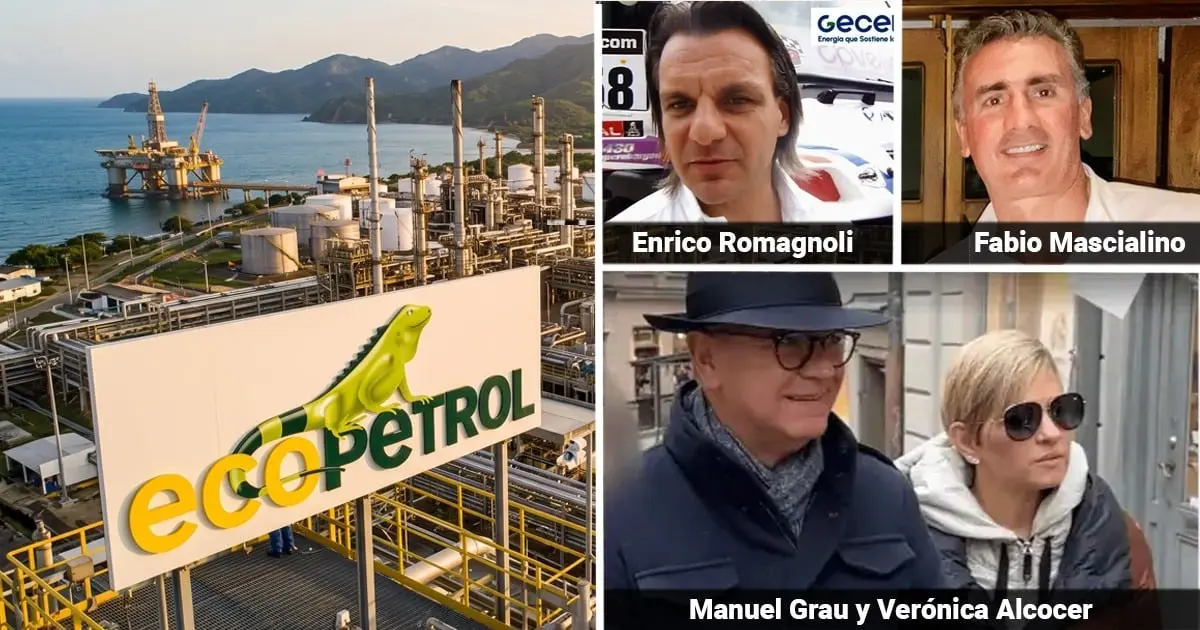
A sprawling multinational network of foreign fixers, controversial state-level contracts, and high-level political patronage has drawn the attention of corporate auditors, US financial regulators, and international intelligence archives. At the heart of this web are Italian nationals Fabio Mascialino and Enrico Romagnoli, alongside Catalan businessman Manel Grau.
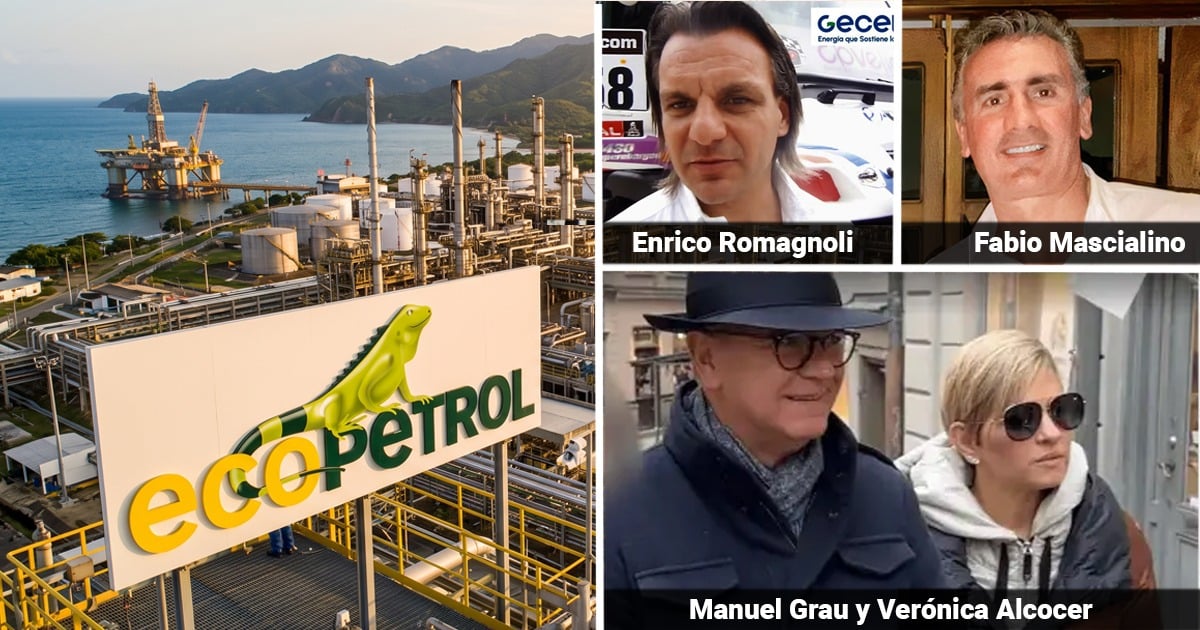
According to internal corporate audits, leaked intelligence files, and municipal records, these figures have systematically leveraged political connections in Colombia to secure multi-billion-peso public and state-corporate contracts. Their footprint spans from municipal waste management in Medellín under former Mayor Daniel Quintero—where a colossal $200 billion COP (approximately $50 million USD) contract was awarded—to backdoor maneuvering within Colombia’s state-run oil giant, Ecopetrol, and renewable energy ventures tied to the Ministry of Mines and Energy.
While neither Mascialino nor Romagnoli currently face formal criminal indictments from the Colombian Prosecutor General’s Office (Fiscalía General de la Nación), their business operations are under rigorous review by Ecopetrol’s compliance offices, the US Securities and Exchange Commission (SEC), and international law enforcement due to their striking parallels with past international scandals.

Chronology: A Timeline of Influence and Expansion
1. The Intelligence Horizon (Early 2010s – 2020)
- 2010: Fabio Mascialino establishes corporate roots in Chile through the founding of Themac, a firm specializing in urban sanitation services that would later expand its footprint into Uruguay and Colombia.
- Circa 2020: Years prior to his deep entrenchment in Colombian infrastructure, US Central Intelligence Agency (CIA) operatives closely track Mascialino. Intelligence agencies investigate his suspected involvement in a clandestine network attempting to route Argentine uranium to Iran via a free-port framework in Venezuela. Although the investigation failed to yield hard evidentiary thresholds leading to prosecution and was ultimately shelved, the intelligence community mapped out his Latin American associates—including Uruguayan sanitation officials.
2. The Medellín Waste Management Coup (2021–2023)
- January 2022: Carlos Fernando Borja Jiménez is appointed as the manager of Empresas Varias de Medellín (Emvarias), a subsidiary of the multi-utility conglomerate Grupo EPM, coinciding with the municipal administration of Medellín Mayor Daniel Quintero.
- September 2023: Emvarias awards a controversial waste management and sanitation contract valued at over $200 billion COP to Themac Colombia—a firm in which Mascialino reportedly held a 45% stake, alongside Catalan partners Xavier Vendrell and Manel Grau.
- November 2023: Following intense public outcry and political pressure, the Emvarias board of directors declares Carlos Fernando Borja Jiménez insubsistente (dismissed), forcing him out of his managerial post just two months after the contract’s contentious award.
- 2024: Newly elected Medellín Mayor Federico Gutiérrez publicly denounces the mechanics of the Emvarias contract, submitting a comprehensive dossier detailing foreign-backed administrative capture to the Federal Bureau of Investigation (FBI) during an official visit to Washington, D.C.
3. Infiltrating Ecopetrol and the Energy Sector (2024–2026)
- Late 2024: Leveraging internal maneuvering during the twilight phase of President Gustavo Petro’s administration, the Italian network facilitates a strategic administrative pivot inside Ecopetrol. Julio César Herrera is transferred from Houston to occupy the vital role of Commercial Vice President, replacing Felipe Trujillo.
- Early 2026: Erick Wehdeking Arcieri assumes the presidency of Gecelca (Generadora y Comercializadora de Energíadel Caribe S.A. E.S.P.), replacing engineer Andrés Yabrudy Lozano after a 17-year tenure.
- May 2026: An interadministrative agreement between the Ministry of Mines and Energy and Gecelca—aimed at executing the massive $4.2 trillion COP "Colombia Solar" program across 13 departments—becomes the focal point for the network. Uruguayan front company Vutmyl Advisors S.A. submits a technical package matching Gecelca’s exact specifications for solar panel kits on the exact day public procurement notices hit the SECOP platform. Internal Ecopetrol whistleblowers and audit leaks reveal that Enrico Romagnoli acted as a primary operative coordinating business proposals through newly opened channels with firms like Bimesur, Cathay Petroleum International, and TAC SAS.
- September 2026: Ecopetrol’s Board of Directors, chaired by former Minister Luis Felipe Henao, demands the resignation of acting executive Juan Carlos Hurtado. Leaked audio recordings catch Grau and Hurtado discussing strategic job placements within the state-run petroleum company to "throw a lifeline" to private commercial interests.
Supporting Data: Contracts, Entities, and Financial Magnitude
The sheer scale of capital moving through the networks tied to Mascialino, Romagnoli, and Grau highlights the systemic vulnerability of public procurement frameworks in Colombia.
| Entity / Project | Value (COP / USD Equivalent) | Key Stakeholders / Associated Figures | Operational Status / Findings |
|---|---|---|---|
| Emvarias Medellín Contract | ~$200 Billion – $251 Billion COP (~$50M – $60M USD) | Fabio Mascialino, Xavier Vendrell, Manel Grau, Carlos Fernando Borja Jiménez, Daniel Quintero | Adjudicated in late 2023; heavily investigated by municipal authorities and flagged in dossiers delivered to the FBI. |
| "Colombia Solar" Program | $4.2 Trillion COP (~$1.05 Billion USD) | Gecelca, Ministry of Mines and Energy, Vutmyl Advisors S.A., Enrico Romagnoli | Interadministrative agreement targeting vulnerable homes across 13 departments; technical offers aligned suspiciously with foreign suppliers. |
| Ecopetrol Commercial Operations | Variable corporate procurement | Julio César Herrera, Enrico Romagnoli, Juan Carlos Hurtado, Bimesur, Cathay Petroleum | Internal Ecopetrol audits exposed a coordinated enroque (reshuffling) designed to funnel state contracts to connected external intermediaries. |
Mascialino’s corporate vehicles—historically anchored by entities like Omb Latam (part of the bankrupt Busi Group facing international fraud litigation) and Themac—demonstrate a consistent pattern: entering municipal and national utility markets via sanitation and public works, utilizing front companies in intermediate jurisdictions like Uruguay, and shifting operational management to local fixers such as Romagnoli.

Official Responses and Institutional Standpoints
As investigative reports by outlets like Las2orillas, Semana, and El Colombiano continue to unearth internal corporate communications, the institutional response has been divided between defensive postures from political allies and aggressive audits from corporate governance bodies.
- The Ecopetrol Board and Internal Compliance: Ecopetrol’s internal audit teams have flagged multiple irregularities regarding the handling of commercial vice presidencies and external supplier alignment. The ousting of temporary executives like Juan Carlos Hurtado underscores an effort by the Board of Directors—led by figures independent of executive overreach—to quarantine the company from external political brokerage. Documents from these internal reviews have reportedly reached the US Securities and Exchange Commission (SEC), given Ecopetrol’s status as a publicly traded issuer on the New York Stock Exchange.
- Medellín Local Administration: Mayor Federico Gutiérrez has maintained an aggressive posture against the legacy of his predecessor, Daniel Quintero. Gutiérrez has characterized the Emvarias sanitation awards as clear instances of municipal asset capture, utilizing international diplomatic and law enforcement channels—including the FBI—to track how local public funds allegedly bled into offshore networks managed by foreign nationals.
- The National Government: Representatives close to the administration of President Gustavo Petro have dismissed the allegations as politically motivated attacks designed to destabilize state-owned enterprises. Defenders emphasize that neither Mascialino nor Romagnoli hold formal advisory roles within government ministries, framing their business activities as standard private-sector participation.
Implications: Systemic Vulnerabilities in Energy and Municipal Infrastructure
The convergence of international fixers with deep intelligence pasts into Colombia’s core economic engines—specifically Ecopetrol and state-backed renewable energy rollouts—reveals profound vulnerabilities in the nation’s institutional architecture.
- Erosion of Corporate Governance in State Enterprises: The ability of external actors like Manel Grau and Enrico Romagnoli to allegedly orchestrate executive reshufflings (such as placing friendly vice presidents in commercial divisions) indicates that state-owned giants remain perilously susceptible to clientelism. When procurement decisions in oil and gas are influenced by private brokers, the national interest is subordinated to transnational profit extraction.
- The Weaponization of the Green Transition: The multi-trillion-peso "Colombia Solar" initiative was designed to bring clean energy to the most vulnerable populations across 13 departments. However, the shadow cast by opaque intermediaries like Vutmyl Advisors and their structural alignment with foreign suppliers threatens to taint a vital social and environmental policy with corruption scandals.
- Cross-Border Accountability: Because these networks operate fluidly across Italy, Spain, Chile, Uruguay, and Colombia, traditional domestic investigative bodies often struggle to map the entire financial ecosystem. The intervention of international regulators like the SEC and foreign law enforcement signals that Colombian state contracts are increasingly viewed through a global compliance lens.
As corporate audits proceed and judicial authorities sift through the digital metadata of 2026’s public procurement cycles, the case of Mascialino, Romagnoli, and Grau stands as a sobering case study in how globalized capital, political patronage, and lax regulatory enforcement intersect to exploit Latin America’s most critical public assets.




Leave a Reply