

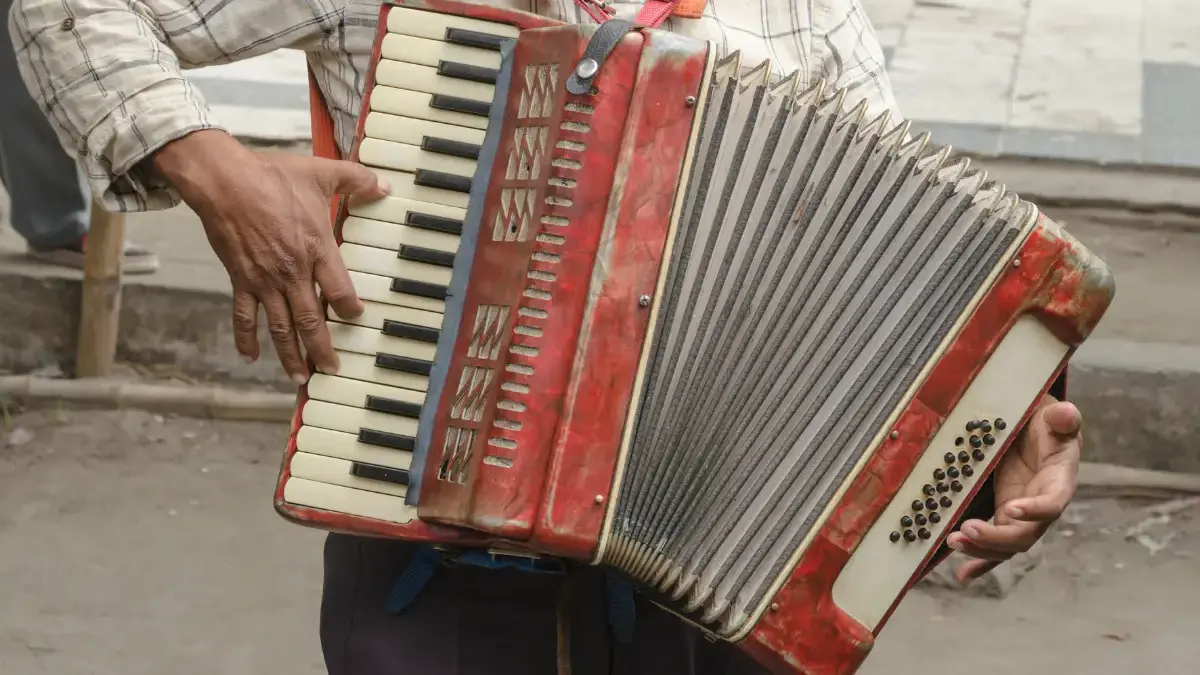
Today, when the vibrant notes of an accordion echo through the air, it is almost impossible for listeners not to instantly connect the sound with the Colombian Caribbean. The accordion serves as the emotional engine of the region, accompanying tales of joy, heartbreak, farewells, nostalgia, and grand celebrations. To millions, its voice possesses an unmistakable magic—a unique ability to awaken deep memories and evoke profound collective emotion the moment its bellows expand.
Yet behind this iconic symbol of Latin American identity lies a fascinating narrative of transatlantic migration, cultural hybridization, and artistic reinventiveness. The instrument that today defines the soul of Colombia’s northern coast was not forged in the tropics, but in the sophisticated artisan workshops of 19th-century Central Europe.
Main Facts: The Synthesis of Two Worlds
The journey of the accordion represents one of the most remarkable musical migrations in modern history. Designed as a modest European parlor instrument, it transformed over the course of a century into the primary narrative tool for Colombia’s rural storytellers, eventually gaining recognition from UNESCO as an intangible cultural monument.
Key highlights of this cultural evolution include:
- European Origins: Invented in Vienna in 1829 by Armenian-Austrian craftsman Cyrill Demian as a compact, portable reed instrument.
- Transatlantic Arrival: Imported into northern Colombia during the mid-to-late 19th century via Caribbean commercial ports, particularly in La Guajira.
- Cultural Fusion: Integrated seamlessly with Indigenous (guacharaca) and Afro-Colombian (caja vallenata) percussion, forming the tri-ethnic foundation of vallenato music.
- Literary Connection: Celebrated by Nobel Laureate Gabriel García Márquez, who famously described his masterpiece One Hundred Years of Solitude as a "400-page vallenato."
- Global Safeguarding: Recognized in 2015 by UNESCO as Intangible Cultural Heritage in Need of Urgent Safeguarding.
+-----------------------------------------------------------------------------------+
|                        THE TRI-ETHNIC HYBRIDIZATION OF VALLENATO                   |
+-----------------------------------------------------------------------------------+
|  EUROPEAN ELEMENT         |  AFRO-COLOMBIAN ELEMENT     |  INDIGENOUS ELEMENT         |
|  The Diatonic Accordion   |  The Caja Vallenata         |  The Guacharaca             |
|  (Melodic / Narrative)    |  (Rhythmic Percussion)      |  (Frictional Scraper)       |
+-----------------------------------------------------------------------------------+
Chronology: The Evolution of a Transatlantic Instrument
1829 (Vienna)        Late 1800s (La Guajira)    1940s-1950s (Colombia)     1968 (Valledupar)       2015 (Paris/UNESCO)
Demian patents       Accordion arrives via      First commercial           First Festival de la     Designated Intangible
the "Accordion"      German trade vessels       vallenato recordings       Leyenda Vallenata        Cultural Heritage
  |--------------------|--------------------------|--------------------------|------------------------|
The Austrian Genesis (1829)
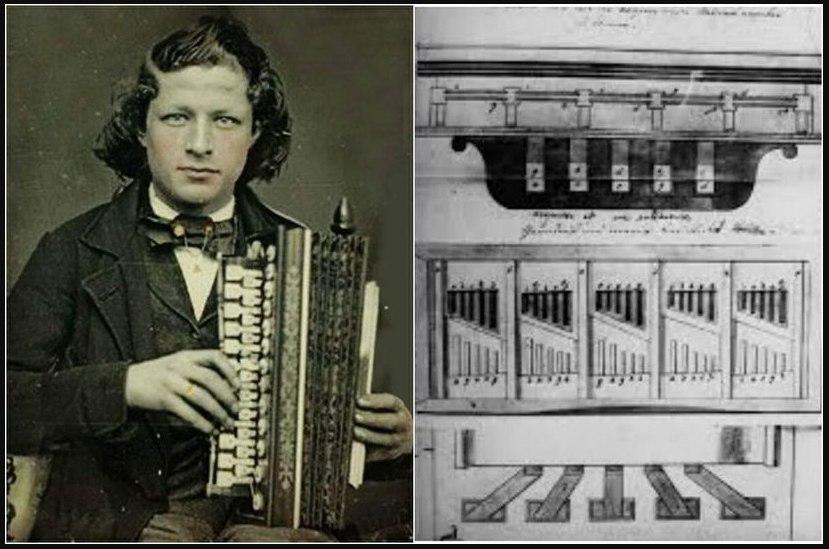
Long before it became the voice of coastal Colombia’s juglares (wandering minstrels), the accordion was born in Vienna, Austria. Cyrill Demian, an organ and piano maker of Armenian descent, worked alongside his sons, Karl and Guido, to craft a novel instrument capable of producing full musical chords with minimal effort.
On May 6, 1829, the Demian family presented their creation—which they named the Accordion—to the Austrian imperial authorities. The official patent was granted on May 23, 1829.
In its earliest iteration, Demian’s accordion was modest:
- A small wooden body featuring a hand-operated bellows.
- A primitive keyboard containing just five buttons on the melody side.
- Internal metal free reeds that vibrated as air passed through, producing distinct chords depending on whether the bellows were opened or closed.
Though simple, its portability and self-contained harmony allowed it to spread rapidly across European salon culture and urban streets.
The Maritime Crossing to Colombia (Late 19th Century)
During the second half of the 19th century, European merchant ships—primarily from Germany and Great Britain—traversed the Atlantic to trade along the Caribbean coast of South America. Ships loaded with goods arrived at ports along La Guajira, Riohacha, and Santa Marta, trading hardware, textiles, and household items for local agricultural commodities like coffee, dividivi, and dyewoods.
Among the cargo brought by German traders were diatonic button accordions, manufactured by brands such as Hohner. Initially sold to wealthy local families or bartered along river routes, the instrument quickly found its way into the hands of peasant laborers, cattle herders, and rural musicians across the Cesar River valley and the Magdalena Delta.
Early Recording Era and Popularization (1940s–1950s)
By the mid-20th century, rural accordion players had moved from local village squares (parrandas) to national radio broadcasting stations. Abel Antonio Villa became a central figure during this era, becoming recognized as the first accordionist to record commercial vallenato music on shellac discs, earning him the enduring title of "El Padre del Acordeón" (The Father of the Accordion).
Supporting Data and Context: Anatomy, Rhythms, and Literary Impact
Technical Mechanics and Adaptation
The instrument that took root in Colombia was primarily the diatonic button accordion. Unlike the piano accordion used in European classical or American polka traditions, the diatonic accordion operates on a push-pull mechanism: pushing air through the bellows produces one note, while pulling air produces another from the same button.
Local musicians in Colombia adjusted the internal reeds—a process known as afinación (tuning)—to produce a sharper, brighter, and louder tone capable of carrying across outdoor gatherings without amplification.
+-----------------------------------------------------------------------------------+
|                        THE FOUR STRUCTURAL AIRS (RHYTHMS) OF VALLENATO            |
+-----------------------------------------------------------------------------------+
| AIR / RHYTHM | TEMPO        | CHARACTERISTICS & NARRATIVE FUNCTION                |
+--------------+--------------+-----------------------------------------------------+
| Paseo        | Moderate     | Storytelling, romance, daily chronicles, philosophy |
| Merengue     | Fast / Lively| Syncopated, festive, complex rhythmic accordion work|
| Puya         | Very Fast    | Showcases technical accordion speed and virtuosic rivalry |
| Son          | Slow / Sad   | Melancholic, introspective, emphasizes bass notes  |
+-----------------------------------------------------------------------------------+
The Tri-Ethnic Musical Fusion
The integration of the accordion into Caribbean Colombia was not a simple adoption of European culture; it was a profound synthesis of three distinct heritages:
- European (The Accordion): Provided melodic structure, chordal harmony, and narrative flexibility.
- Afro-Colombian (The Caja Vallenata): A small, single-headed drum played with open hands, derived from African rhythm traditions, providing the syncopated heartbeat.
- Indigenous (The Guacharaca): A friction scraper fashioned from wild cane (lata de corozo), created by the native Chimila and Tairona peoples, providing a continuous rhythmic texture.
The Legendary Juglares
The accordion achieved legendary status through the juglares—itinerant musicians who traveled from village to village on foot or mule-back, delivering news, gossip, and personal stories set to music before the era of modern mass media.
Notable figures who shaped this era include:
- Emiliano Zuleta Baquero: Composer of the iconic song "La Gota Fría", which immortalized musical rivalries.
- Francisco "Pacho" Rada: A foundational composer credited with structuring the son rhythm.
- Gilberto Alejandro "Alejo" Durán: The legendary performer whose emotive voice and signature phrase ("Apa!") made him the undisputed winner of the first Vallenato Legend Festival in 1968.
- Luis Enrique Martínez: Known as "El Pollo Vallenato", whose technical innovations on the accordion keyboard set the standard for modern vallenato phrasing.
                                  VALLENATO MASTERY
                                         │
        ┌────────────────────────────────┼────────────────────────────────┐
        │                                │                                │
  PIONEERING JUGLARES            LITERARY POETS                   MODERN INNOVATORS
  • Abel Antonio Villa           • Rafael Escalona                • Juancho Rois
  • Alejo Durán                  • Leandro Díaz                   • Iván Zuleta
  • Luis Enrique Martínez        • Diomedes Díaz                  • Gonzalo "Cocha" Molina
  • Emiliano Zuleta              • Gabriel García Márquez         • Rolando Ochoa
The Literary Connection: García Márquez and Vallenato
The narrative quality of vallenato accordion music profoundly influenced Colombian literature. Nobel Prize-winning author Gabriel García Márquez repeatedly acknowledged that his literary style was directly inspired by the oral storytelling traditions of vallenato juglares.
In a famous declaration, García Márquez remarked that his masterpiece, Cien Años de Soledad (One Hundred Years of Solitude), was nothing more than a "400-page vallenato," structured with the same magical realism, humor, and tragic romanticism found in the songs of Rafael Escalona and Leandro Díaz.
Official Responses and Institutional Recognition
The institutionalization of vallenato music transformed the accordion from a regional folk instrument into an official symbol of Colombian national culture.
+-----------------------------------------------------------------------------------+
|                        INSTITUTIONAL MILESTONES IN VALLENATO PRESERVATION          |
+-----------------------------------------------------------------------------------+
| YEAR | INSTITUTION               | ACTION / DESIGNATION                           |
+------+---------------------------+------------------------------------------------+
| 1968 | Festival Leyenda Vallenata| Establishment of the official national crown   |
| 2013 | Ministry of Culture       | Declared Vallenato National Cultural Heritage   |
| 2015 | UNESCO                    | Inscribed on Intangible Cultural Heritage List |
+-----------------------------------------------------------------------------------+
The Festival de la Leyenda Vallenata (1968)
In 1968, former Minister of Culture Consuelo Araújo Noguera, politician (and later President) Alfonso López Michelsen, and legendary composer Rafael Escalona founded the Festival de la Leyenda Vallenata in Valledupar, the capital of the Cesar Department.
The festival was created to safeguard traditional performance styles from commercial erosion. Every year, accordionists from across the country compete for the prestigious title of Rey Vallenato (Vallenato King), evaluated on their mastery of the four traditional airs (Paseo, Merengue, Puya, and Son).
UNESCO Designation (2015)
On December 1, 2015, during its meeting in Windhoek, Namibia, UNESCO officially inscribed traditional vallenato music on the List of Intangible Cultural Heritage in Need of Urgent Safeguarding.
In its formal declaration, UNESCO noted:
"Traditional vallenato music is a musical genre resulting from the synthesis of expression derived from cowherds… It plays a crucial role in building regional identity and social cohesion. However, its survival is threatened by the rise of commercialization, stylistic variations, and a decline in spaces for traditional performance."
In response to this declaration, the Colombian Ministry of Culture, alongside local educational academies, established formal preservation programs, including specialized accordion schools for underprivileged children throughout the Caribbean region.
Breaking Barriers: The Female Accordionists
While vallenato history was long dominated by male juglares, women played a vital role in keeping the tradition alive, eventually breaking through deep-seated cultural barriers to achieve national and international recognition.
Key Female Trailblazers
- Rita Fernández Padilla: A pioneering accordionist, singer, and composer who formed Las Universitarias in the late 1960s—the first all-female vallenato group. She broke early stereotypes and composed classic vallenato works recorded by major artists.
- Chela Ceballos: Co-founder of Las Musas del Vallenato in the 1980s, an accordionist who proved that female-led ensembles could achieve immense commercial success throughout Latin America.
- Fabri Meriño: An early female accordion virtuoso who gained respect for her technical precision and deep understanding of traditional phrasing.
- Diana Burco: A modern singer-songwriter and accordionist whose work earned a Latin Grammy nomination, representing a new generation of women taking traditional vallenato to global stages.
+-----------------------------------------------------------------------------------+
|                        PIONEERING WOMEN IN VALLENATO ACCORDION HISTORY            |
+-----------------------------------------------------------------------------------+
| ARTIST                   | ERA / CONTRIBUTION                                     |
+--------------------------+--------------------------------------------------------+
| Rita Fernández Padilla   | Founded "Las Universitarias" (1960s); pioneering composer|
| Chela Ceballos           | Founded "Las Musas del Vallenato"; commercial breakthrough|
| Fabri Meriño             | Early master of traditional technical accordion play   |
| Diana Burco              | First female accordionist nominated for a Latin Grammy |
+-----------------------------------------------------------------------------------+
Modern Evolution and Implications for the Future
As vallenato entered the late 20th and early 21st centuries, the accordion adapted once more to shifting musical landscapes. Innovators brought new harmonic approaches and lightning-fast technique to the instrument, integrating modern sound arrangements while respecting traditional roots.
Key figures in this modern transformation include:
- Juancho Rois: Redefined accordion accompaniment through melodic counterpoint and creative intros during his legendary partnership with Diomedes Díaz.
- Gonzalo "Cocha" Molina & Iván Zuleta: Virtuosos who bridged the gap between classic juglar traditions and modern pop-vallenato.
- Rolando Ochoa: Son of legend Calixto Ochoa, who introduced contemporary electronic textures and avant-garde arrangements to accordion compositions.
- Carlos Vives & Egidio Cuadrado: Popularized vallenato globally by blending traditional accordion execution with modern rock and pop instrumentation on their landmark 1993 album Clásicos de la Provincia.
                            THE TRANSATLANTIC BRIDGE

      1829: Vienna, Austria                       Present Day: Colombia
   ┌─────────────────────────┐               ┌─────────────────────────┐
   │ Designed by C. Demian   │               │ UNESCO Cultural Heritage│
   │ Wooden Bellows, Reeds   │ ────────────> │ Soul of Vallenato Music │
   │ European Parlor Music   │ Transatlantic │ Narrative of a Nation   │
   └─────────────────────────┘     Trade     └─────────────────────────┘
Implications for National Identity and Global Heritage
The journey of the accordion—from an Austrian workshop to the tropical valleys of northern Colombia—offers a powerful testament to the creative resilience of folk traditions.
- Cultural Integration: It demonstrates how imported cultural items can be completely transformed by local communities, becoming quintessential markers of national identity.
- Intergenerational Continuity: Through youth competitions at the Festival de la Leyenda Vallenata and community academies across Colombia, thousands of young children continue to learn the push-and-pull mechanics of the diatonic accordion every year.
- Global Relevance: The accordion is no longer viewed as a relic of European history or a localized regional curiosity. It stands as a dynamic, evolving instrument that articulates the human experience—telling stories of love, grief, justice, and joy across generations and geographical borders.
More than a century after crossing the Atlantic, the accordion no longer sounds foreign to the ears of the world. It has been fully adopted by the country that welcomed it, serving as the musical voice of Colombia’s living memory.

Leave a Reply