

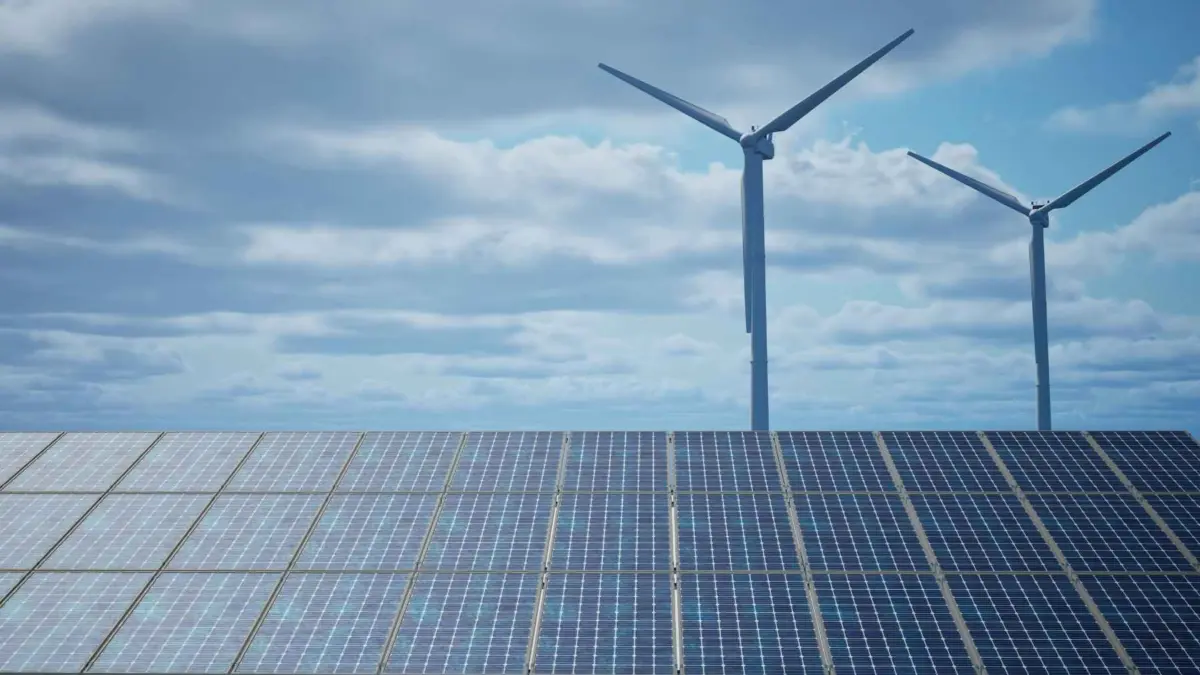
GENEVA — Global trade demonstrated remarkable resilience and unprecedented adaptation throughout 2025, shattering previous financial benchmarks despite the compounding pressures of enduring geopolitical conflicts and fractured economic landscapes worldwide. According to comprehensive new reports released by the United Nations, international agreements reached a staggering $35 billion in net gains, propelled largely by aggressive, forward-thinking capital injections into strategic sectors such as clean energy infrastructure, artificial intelligence (AI), and advanced semiconductor manufacturing.
While international markets successfully recalibrated to navigate a volatile global terrain, the UN’s economic assessments emphasize both the historic triumphs of this trade boom and the deep structural disparities threatening to leave developing nations behind in the modern industrial revolution.
Main Facts
The 2025 global trade landscape was defined by several transformative macroeconomic developments:
- Record Financial Returns: International cross-border agreements and investments yielded a historic $35 billion in net gains, driven by a profound paradigm shift in corporate investment priorities.
- The Asian Economic Engine: Asia cemented its role as the undisputed anchor of the global economy, generating an impressive 60% of total worldwide economic growth.
- The New Investment Trinity: Traditional metrics for corporate expansion—such as chasing low labor costs—took a back seat. Instead, capital overwhelmingly flowed into high-value, future-proofing sectors: renewable energy infrastructure, artificial intelligence, and semiconductor production.
- Geopolitical Tailwinds for Green Energy: Disruptions in traditional energy corridors, compounded by escalating tensions in the Middle East and the strategic vulnerabilities exposed by the closure of the Strait of Ormuz, accelerated the global transition toward reliable, domestic clean energy alternatives.
- The Developing Nation Divide: Despite record-breaking global numbers, international bodies warn of a widening "trade chasm." Outside of a select group of high-performing Asian economies, the majority of the Global South experienced notable contractions in trade activity.
Chronology of a Resilient Market: How 2025 Rewrote the Trade Playbook
Q1 2025: Navigating Persistent Geopolitical Headwinds
As the year commenced, the global economy labored under the heavy shadows of protracted conflicts. The ongoing war in Ukraine continued to strain European supply chains and agricultural exports, while the devastating humanitarian crisis and regional instability stemming from the conflict in the Gaza Strip injected acute volatility into international markets. Major financial institutions initially predicted a sluggish year, projecting that these localized flashpoints would choke the arteries of international shipping and manufacturing.
Q2–Q3 2025: The Strategic Pivot and the Rise of High-Tech Corridors
Rather than succumbing to stagnation, multinational corporations and sovereign states engaged in a massive market reconfiguration. Recognizing that traditional manufacturing hubs reliant on low-cost labor were increasingly vulnerable to supply chain bottlenecks and geopolitical shocks, investors redirected hundreds of billions of dollars.
During the middle quarters of 2025, capital expenditure pivoted decisively toward technological sovereignty and environmental security. Semiconductor fabrication plants (fabs) broke ground in non-traditional corridors, while massive investments in generative AI infrastructure laid the groundwork for a productivity boom. Simultaneously, acute energy anxieties in Europe and Asia catalyzed a rush of private and public capital into wind, solar, and next-generation battery storage grids.
Q4 2025 and Beyond: Consolidating the $35 Billion Milestone
By the close of the fourth quarter, United Nations economic analysts tallied the full-year data, confirming that global trade arrangements had generated $35 billion in gains. However, the closing months of 2025 also highlighted a growing bifurcation in the global economy. While powerhouse economies in East and South Asia surged ahead, early indicators warned that developing nations lacking the capital infrastructure for AI and green tech were sliding backward, setting the stage for urgent policy debates moving into subsequent years.
Supporting Data and Regional Disparities
The UN reports underscore that global growth in 2025 was far from uniform. The engine of the modern global economy is unmistakably concentrated in Asia, which now accounts for a commanding 60% of worldwide economic expansion.
The Asian Outperformers
A core group of nations led the charge in trade volume and industrial output throughout 2025. These stellar economic performers include:
- China: Continuing to dominate high-tech manufacturing, electric vehicle (EV) supply chains, and green energy technology exports.
- India: Experiencing a massive domestic consumption boom alongside accelerated integration into global technology and semiconductor supply chains.
- Vietnam and Indonesia: Solidifying their positions as primary manufacturing alternatives, capturing significant market share in electronics and assembled goods.
- Central Asian Nations: Kirgizstan, Mongolia, Uzbekistan, and Tajikistan all recorded notable economic dynamism, benefiting from shifting overland trade routes and regional integration initiatives.
The Plight of the Global South
Despite the celebratory tone surrounding Asia’s economic might, international authorities issued a stark warning: outside of this select cluster of high-growth Asian economies, the broader developing world—frequently referred to as the Global South—registered alarming contractions in trade activity.
These regions continue to grapple with severe structural hurdles, including mounting sovereign debt burdens, a lack of domestic capital for advanced industrialization, and tightening export controls imposed by advanced economies. Without systemic intervention, this divergence threatens to crystallize a permanent technological and economic apartheid on a global scale.
Official Responses and Institutional Analysis
Leadership within the United Nations and associated international trade forums have offered measured appraisals of the 2025 economic data, balancing optimism over market innovation with grave concern over global inequality.
The UN Assessment on Geopolitical Resilience
UN economists pointed out that while traditional globalization has taken a beating from protectionist policies and hot wars, global capitalism has proven hyper-adaptable. Rather than retreating into total isolationism, nations have engaged in "friend-shoring" and targeted regional integration.
However, senior UN officials cautioned that systemic conflicts—particularly those involving major industrial stakeholders like Russia, Ukraine, and key Middle Eastern actors—impose an invisible tax on global GDP. These conflicts disrupt commodity prices, inflate shipping insurance rates, and force central banks to maintain cautious monetary postures.
The Shift from Labor Arbitrage to Strategic Tech
Reflecting on the milestone $35 billion in trade gains, trade analysts noted that corporate boardrooms have fundamentally altered their risk-reward calculations. For decades, global trade was governed by the pursuit of the cheapest labor pool. In 2025, that philosophy was decisively eclipsed by the pursuit of strategic security.
Owning the intellectual property, raw materials, and manufacturing capabilities for semiconductors, artificial intelligence systems, and zero-emission energy grids became the ultimate currency of corporate and national power.
Implications for the Future of Global Trade
The remarkable trends of 2025 carry profound implications for the trajectory of international development, climate action, and geopolitical stability in the decades to come.
The Clean Energy Imperative and Energy Independence
The push toward renewable energy transitioned from an environmental talking point to an absolute economic necessity in 2025. The crisis surrounding the closure of the Strait of Ormuz and ongoing hostilities in the Middle East demonstrated the lethal fragility of fossil fuel dependency. Renewable energy sources—solar, wind, and green hydrogen—increasingly proved to be the most stable, affordable, and reliable shields against external geopolitical blackmail.
As infrastructural investments mature, renewable energy is rapidly displacing fossil fuels as the backbone of industrial power. Yet, this transition carries its own exclusionary risks.
Overcoming Barriers to Entry for Developing Nations
The heavy reliance on artificial intelligence, advanced semiconductors, and green technology creates steep barriers to entry for low-income countries. Modern export controls, stringent supply chain compliance mandates, and the immense capital requirements of high-tech industries mean that developing nations risk being locked out of the next phase of human economic evolution.
To counteract this existential threat, the United Nations has issued strong policy recommendations. International financial institutions, wealthy industrialized nations, and multilateral trade organizations must forge robust global alliances. These partnerships must be explicitly designed to facilitate technology transfer, provide concessional financing, and lower trade barriers for the Global South.
Unless the international community takes deliberate, cooperative steps to democratize access to the strategic sectors driving the modern economy, the record-breaking trade prosperity of 2025 may ultimately be remembered not as the dawn of a new era of shared global abundance, but as the moment the world split permanently into two distinct economic realities.


Leave a Reply