

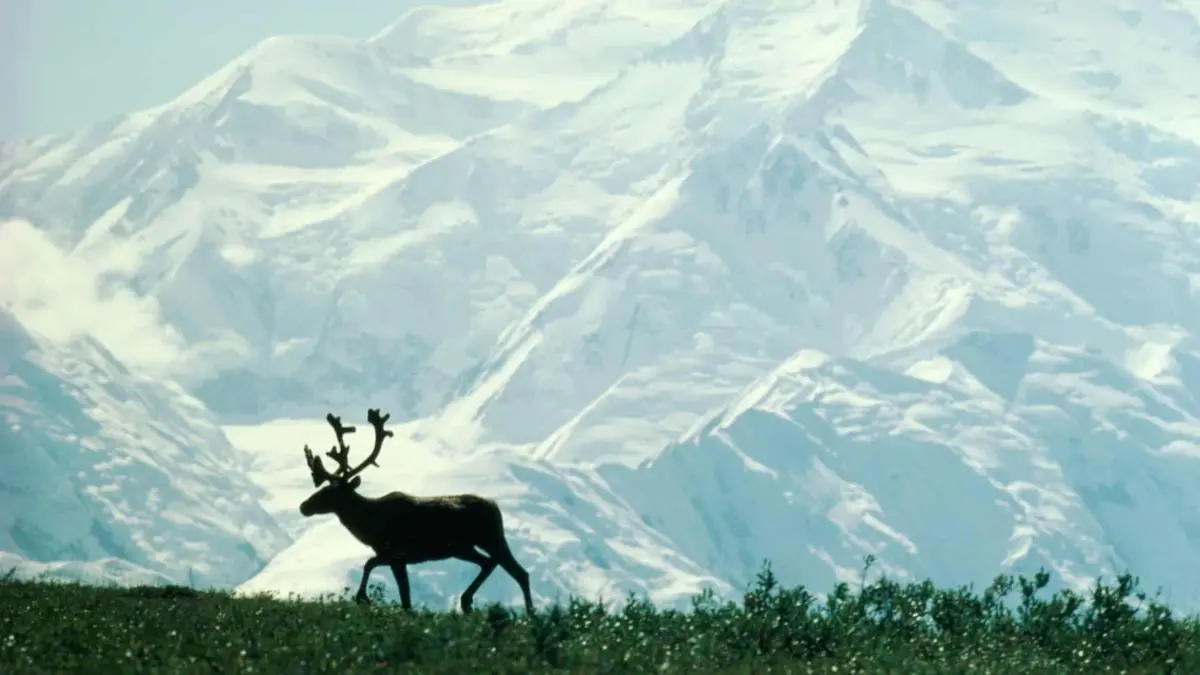
ANCHORAGE, ALASKA — The vast, pristine wilderness of America’s last frontier is facing an unprecedented regulatory pivot. A fierce political, legal, and cultural battle has erupted over the future of Alaska’s public lands following sweeping federal policy shifts. At the heart of the controversy is the systematic dismantling of long-standing environmental protections, most notably the targeted removal of conservation designations across millions of acres of federally managed territory.
Environmental advocacy groups, led by the Center for American Progress (CAP), have sounded the alarm, warning that policies spearheaded by the Donald Trump administration actively prioritize heavy industrial extraction—such as mining, logging, and fossil fuel development—over ecological preservation, climate stability, and the fundamental survival rights of Alaska Native communities.
As the debate intensifies, conservationists, tribal leaders, and policymakers are clashing over the long-term cost of unlocking these ecologically sensitive regions. With millions of acres of D-1 lands stripped of their protective status and foundational conservation rules under review, the legacy of America’s public lands system hangs in the balance.
Main Facts: Unlocking the Last Frontier
The core of the current crisis revolves around the rapid reversal of environmental and land-use regulations established or reinforced during previous administrations. The transition of federal power significantly altered the trajectory of natural resource management in Alaska, transforming a framework centered on climate mitigation and biodiversity into one optimized for resource extraction and industrial expansion.
On October 9, 2025, the U.S. Congress achieved a major legislative milestone by passing a resolution through both chambers to formally revoke the Yukon Center Resource Management Plan (RMP). Originally implemented in 2024 by the Bureau of Land Management (BLM), the RMP was designed to carefully govern and protect the use of more than 13 million acres of public lands located in the rugged interior of Alaska.
That 2024 framework was born out of profound concerns raised by indigenous tribal groups regarding the unchecked creep of industrial projects into their traditional territories. Recognizing both inherent tribal sovereignty and critical environmental imperatives, the federal government had previously insulated these vulnerable ecosystems. The framework effectively prohibited high-impact extractive projects, prioritizing the safeguarding of native fauna, fragile flora, and vital hydrological networks.
However, the recent legislative and executive actions have reversed course entirely. By invalidating the RMP, lawmakers cleared the path for expanded mining operations. Simultaneously, these actions dismantled protections covering more than 27 million acres of so-called "D-1" lands across the region. This sweeping de-reservation exposes critical habitats—most notably spawning grounds for wild salmon populations and migration corridors for caribou herds—to industrial degradation, directly threatening the food security and subsistence lifestyle of local populations.
Adding to the conservation community’s anxiety, the federal government—operating through the U.S. Department of Agriculture (USDA)—has moved to repeal or severely weaken the historic Roadless Rule. This initiative aims to clear the way for road construction and commercial exploitation in pristine national forest areas, raising serious concerns regarding soil erosion, watershed contamination, and exacerbated wildfire risks.
Chronology of Regulatory Shifts and Legislative Actions
To fully understand the current friction in Alaska, it is vital to trace the timeline of policy changes that brought these landscapes to the brink of industrial development:
- The Conservation Baseline (2024): The Bureau of Land Management establishes the Yukon Center Resource Management Plan, placing strict environmental safeguards over 13 million acres of interior Alaska. This decision is widely praised by tribal coalitions seeking to shield their ancestral heritage from speculative mining and industrial intrusion.
- The Executive Transition: Following changes in the federal administration, a concerted push begins to review, restructure, or completely rescind environmentally sensitive regulations enacted by the Biden administration, targeting greenhouse gas standards and public land designations.
- July 2025: The Center for American Progress publishes a comprehensive analysis detailing the systemic dismantling of public land protections. The report highlights that the federal administration has systematically ignored formal petitions and opposition from the vast majority of Alaska Native tribes.
- October 9, 2025: Both chambers of Congress pass a resolution revoking the Yukon Center Resource Management Plan, legally opening millions of acres to commercial exploitation.
- D-1 Land Rollbacks: Protections are systematically stripped from over 27 million acres of D-1 public lands, ending decades-old administrative barriers against large-scale staking, mining claims, and unchecked industrial access.
- August 2026: The USDA takes formal administrative steps to eliminate Roadless Rule restrictions, setting the stage for increased infrastructure development, logging, and road-building projects within ecologically sensitive forest zones.
Supporting Data: The Scale of Disruption
The debate over Alaska’s public lands is ultimately a debate over scale, legacy, and permanent ecological transformation. Environmental watchdogs and economic analysts have attempted to quantify the sweeping nature of the current administration’s public lands agenda.
According to data compiled by the Center for American Progress, the divergence in conservation philosophies between historical land stewardship and modern deregulation is staggering:
- 100 Million Acres: The estimated cumulative acreage from which federal protections have been stripped, modified, or bypassed during the Trump administration’s tenure to facilitate fossil fuel extraction, mining, and industrial infrastructure.
- 230 Million Acres: The historical benchmark set by conservationist President Theodore Roosevelt, who famously preserved vast swathes of American wilderness for public enjoyment and ecological integrity. The juxtaposition highlights how contemporary policy is systematically undoing a century of conservation gains.
- 70%: The estimated proportion of Alaska Native tribes whose traditional territories, subsistence hunting grounds, or ancestral waters will be directly impacted by the removal of D-1 land classifications.
- 13 Million vs. 27 Million: The immense scope of land affected by recent reversals—comprising the 13 million acres of the revoked Yukon Center RMP and the broader 27 million acres of D-1 lands suddenly exposed to mining claims.
This massive rollback of protected areas represents one of the most aggressive shifts in U.S. public lands policy in modern history, fundamentally altering the relationship between the federal government, indigenous stewards, and the natural environment.
Official Responses and Indigenous Resistance
While federal agencies and industry trade groups defend the deregulation push as a vital measure for achieving American energy independence, economic growth, and job creation, the backlash from local communities and conservation organizations has been fierce.
The Center for American Progress has served as a primary megaphone for local resistance, amplifying the voices of those whose lives are directly tied to the land. Among them is Tess Hostetter, a resident and community representative from Igiugig, a remote Alaska Native village whose cultural identity and physical survival depend almost entirely on wild salmon fishing. Hostetter has warned that industrial expansion and the subsequent contamination of local river systems will spell disaster for her people.
"Around 70% of the tribes in Alaska will be affected by being removed from the D-1 category," Hostetter explained in interviews facilitated by CAP. Emphasizing that these spaces are far more than economic assets, she noted that they represent sacred ancestral domains and the primary sustenance source for tribal communities. "In them truly resides the history and heritage of these peoples."
Critics point out that federal decision-makers have largely turned a deaf ear to these warnings. CAP’s July policy analysis explicitly accused the administration of "ignoring important environmental consequences and also the formal requests of the majority of Alaska Native tribes" who unified in opposition to the D-1 rollbacks and the repeal of the Yukon RMP.
On the federal side, proponents of the measures argue that decades of restrictive land-use classifications have locked away billions of dollars in critical minerals—such as rare earths, copper, and gold—essential for modern technology and national security. By removing administrative bottlenecks, the government aims to revitalize rural economies and reduce foreign resource dependency.
Broader Implications: Ecology, Climate, and Future Generations
The dismantling of protections across Alaska’s D-1 lands and the potential erosion of the Roadless Rule carry profound implications that extend far beyond the state’s borders.
Ecological and Wildlife Impacts
Ecologists warn that fragmenting continuous wilderness areas with roads, drilling rigs, and open-pit mines will irrevocably disrupt wildlife migration routes. Caribou herds, already stressed by a rapidly warming Arctic climate, face additional barriers to their seasonal movements. Similarly, industrial runoff and heavy metals from loosened mining restrictions threaten pristine watersheds, risking catastrophic downstream impacts on the world’s most robust wild salmon runs.
Food Security and Cultural Erasure
For Alaska Native communities, the stakes are existential. Subsistence harvesting is not merely a lifestyle choice; it is a cultural anchor and a nutritional necessity in areas where imported goods are exorbitantly expensive. The degradation of land and water strips these communities of their food security, accelerating cultural erosion and forcing demographic shifts away from ancestral homelands.
Climate Change Feedback Loops
From a macroeconomic and global climate perspective, opening millions of acres of carbon-rich northern soils and forested lands to industrial development undercuts national emissions targets. Undermining the integrity of natural carbon sinks in an era of accelerating climate disruption directly contradicts international environmental goals.
A Permanent Legacy
As CAP researchers concluded in their sobering assessment, the long-term cost of these policies is permanence: "The actions of the government will permanently alter entire landscapes and prevent future generations from enjoying public lands and waters."
As legal challenges mount and indigenous groups continue their tireless resistance in the courts and public squares, Alaska remains the ultimate battleground for the soul of American conservation. The decisions made today will determine whether the wild heart of the North remains a protected sanctuary for posterity or is systematically unraveled in the name of industrial progress.


Leave a Reply