

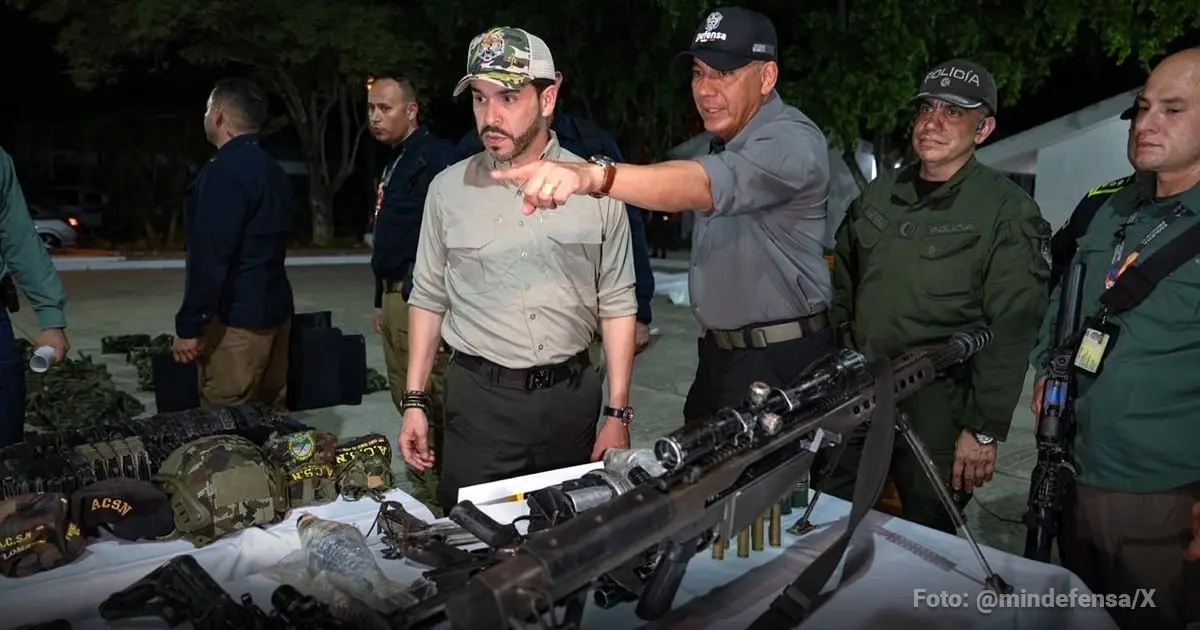
SANTA MARTA, COLOMBIA — In a coordinated and devastating blow against illegal armed groups operating in the Caribbean region of Colombia, security forces neutralized a high-level summit of the Autodefensas Conquistadoras de la Sierra Nevada (ACSN). The intense multi-agency operation, which combined months of meticulous intelligence gathering with overwhelming aerial and ground firepower, resulted in the death of seven paramilitary operatives and the capture of three others.
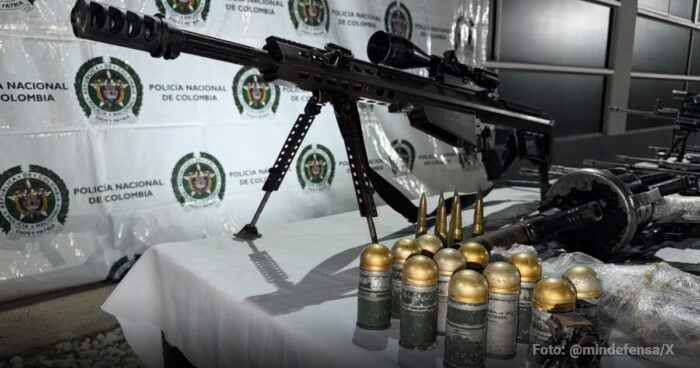
Among the neutralized targets were key financial and operational figures of the criminal structure, including Orlando Pérez Ortega, alias "Patiliso," and José Luis Pérez Villanueva, alias "El Cholo." However, beyond the high-profile casualties, the raid yielded a discovery that stunned military analysts: an American-made Barrett M82 .50 caliber anti-materiel rifle—a weapon with the devastating capability to pierce light armor, destroy radar installations, and neutralize aircraft from over a mile away.
This comprehensive report breaks down the operation, the chronology of the strike, the technical prowess of the seized weaponry, the official response from authorities, and the broader security implications for the region.
1. Main Facts
The military and police offensive unfolded in the rugged, densely forested terrain of Quebrada de Sol, a rural district within the corregimiento of Guachaca, nestled in the foothills of the Sierra Nevada de Santa Marta.
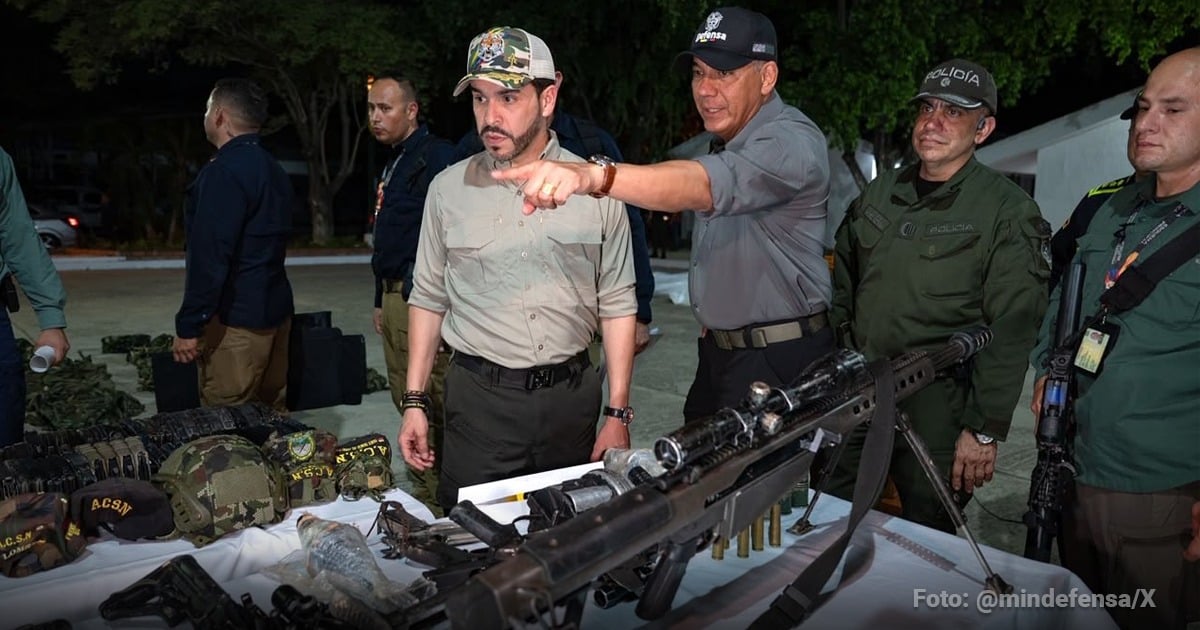
For three months, elite intelligence units of the Colombian National Police and military forces tracked the digital footprints and informant leads that pointed to Guachaca as the clandestine hub where the ACSN leadership gathered to coordinate drug trafficking routes, extortions, and illicit financial portfolios.
When the strike was finally greenlit, the operational parameters required an overwhelming display of force to prevent the targets from escaping into the impenetrable mountain labyrinth. The engagement left seven members of the paramilitary organization dead, including top-tier commanders "Patiliso" and "El Cholo." Three additional operatives were captured alive and handed over to judicial authorities.
Beyond the human toll, the tactical sweep recovered an arsenal designed for asymmetrical warfare. Alongside the iconic Barrett M82 sniper rifle equipped with a high-powered telescopic sight, security forces confiscated:
- 10 standard-issue assault rifles
- 3 grenade launchers
- Multiple hand grenades
- Pistols and extensive ammunition reserves
- Tactical gear, including ballistic vests, harnesses, and military-grade rucksacks
The presence of heavy weaponry and specialized tactical supplies underscores the high level of funding, logistical organization, and militarization achieved by the Autodefensas Conquistadoras de la Sierra Nevada in their bid to control the lucrative smuggling corridors of northern Colombia.

2. Chronology of the Operation
The dismantling of the ACSN cell was not a stroke of luck, but the culmination of a meticulously planned timeline that moved from passive intelligence to aggressive kinetic execution.
Phase 1: The Three-Month Hunt (Pre-Operation)
Intelligence operations began roughly ninety days prior to the raid. Analysts meticulously mapped the movements of José Luis Pérez Villanueva (alias "El Cholo"). Through human intelligence (HUMINT) and signal intercepts, investigators determined that the remote, mist-shrouded mountain trails of Guachaca were being used as a sanctuary where high-ranking commanders met to audit their criminal revenues and plan territorial expansions.
Phase 2: The Mega-Assault (The Strike)
The execution phase was launched in the mid-afternoon, minimizing the element of nighttime evasion while capitalizing on element-of-surprise aerial insertions.
- 3:00 PM: The operation commenced with the deployment of air assets. Three heavily armed Black Hawk helicopters from the National Police, operating in tandem with two Super Tucano attack aircraft from the Colombian Air Force, secured the airspace over the target zone in the Sierra Nevada foothills.
- 3:15 PM – 5:00 PM: Special forces units fast-roped from the hovering Black Hawks into the rugged terrain surrounding the paramilitary encampment, establishing a tight perimeter to cut off escape routes while ground-support units closed in on the meeting site.
- 5:30 PM: Following an intense firefight in the dense vegetation, the operation concluded. Seven combatants, including high-value targets "Patiliso" and "El Cholo," were confirmed dead at the scene. Three other suspects surrendered and were taken into custody.
3. Supporting Data: The Anatomy of the Barrett M82 Rifle
The most alarming artifact recovered from the paramilitary camp was the Barrett M82 .50 caliber rifle—often sensationalized in popular culture, yet undeniably lethal in real-world combat scenarios.
Engineering and Origins
Designed and engineered by Ronnie Barrett and manufactured by the American firm Barrett Firearms, the M82 saw its first commercial models hit the market in 1982. It is a recoil-operated, semi-automatic anti-materiel rifle engineered for long-range, high-impact engagements.
Technical Specifications
- Weight: Approximately 33 pounds (15 kg) unloaded.
- Length: Roughly 1.45 meters (nearly 4.8 feet) from the muzzle brake to the buttstock.
- Effective Range: Capable of striking targets accurately up to 1,800 meters (nearly 1.1 miles).
- Ammunition Feed: Detachable box magazine with a 10-round capacity.
- Munitions Versatility: The weapon’s chamber can fire a variety of .50 BMG (Browning Machine Gun) rounds, including armor-piercing, incendiary, and multi-purpose ammunition.
Capabilities and Market Dynamics
Because of its extreme kinetic energy transfer upon impact, the Barrett M82 is colloquially referred to as an "anti-materiel" weapon rather than a standard anti-personnel rifle. It is capable of disabling lightly armored vehicles, destroying radar equipment, punching through concrete defensive walls, and severely damaging stationary aircraft.
Legally manufactured and sold to military buyers, a new legal Barrett M82 typically commands a market price between $13,000 and $14,000 USD (surpassing 42 million Colombian pesos). However, investigators noted a chilling economic reality in the illicit underworld: on the black market, these weapons can frequently be procured by criminal organizations for prices ranging between $7,000 and $14,000 USD, often sourced via international arms-trafficking networks that siphon weapons away from conflict zones or corrupt state inventories.
Globally, the Barrett M82 is trusted by the military and special operations forces of over 30 nations. In Europe alone, it remains a standard asset for the armed forces of Spain, France, Italy, Germany, Greece, Denmark, Finland, and the Netherlands. Its presence in the hands of a Colombian paramilitary structure highlights the alarming globalization of heavy criminal armaments.
4. Official Responses
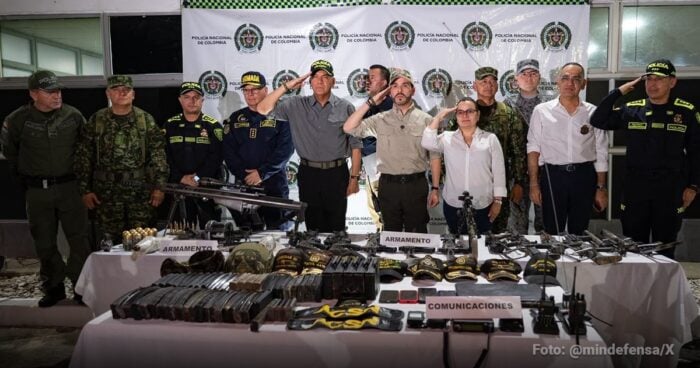
Following the conclusion of the raid, high-ranking spokespersons from the Colombian National Police and the Ministry of National Defense released statements emphasizing the strategic importance of the strike.
Security commanders noted that the neutralization of Orlando Pérez Ortega ("Patiliso") and José Luis Pérez Villanueva ("El Cholo") effectively decapitates a critical regional leadership tier of the Autodefensas Conquistadoras de la Sierra Nevada. Authorities reiterated that the organization has long relied on the geographical isolation of the Sierra Nevada to shield its leadership from law enforcement.
"This operation proves that no matter how remote, rugged, or inaccessible criminal sanctuaries may seem, the combined capabilities of our intelligence apparatus, our Air Force, and our National Police special forces will reach them," a senior police commander stated during a press briefing.
Furthermore, military officials announced that forensic ballistics teams have launched an immediate investigation into the serial numbers of the seized Barrett M82 rifle and the ten assault rifles recovered at the site. The goal is to trace the supply chain of the weapons, determining how an American-manufactured anti-materiel rifle found its way into the jungles of northern South America.

5. Strategic Implications
The seizure of a Barrett M82 rifle during a raid on a paramilitary camp carries profound implications for the security landscape of Colombia and the broader Andean region.
- Escalation of Asymmetric Firepower: Historically, criminal syndicates and neo-paramilitary groups relied primarily on standard assault rifles (such as AK-47s and Galils) and improvised explosive devices. The acquisition of .50 caliber anti-materiel platforms signals a dangerous escalation in the technological sophistication and destructive capacity of these groups, posing a direct, lethal threat to police helicopters and armored transport vehicles.
- Vulnerability of Critical Infrastructure: With an effective range approaching two kilometers, a weapon like the Barrett M82 allows criminal elements to project force against regional infrastructure, energy installations, and aviation corridors with impunity if left unchecked.
- Erosion of Paramilitary Sanctuaries: The success of a joint heliborne and air-support operation in the treacherous terrain of the Sierra Nevada demonstrates that the Colombian state maintains the projection capabilities necessary to dismantle high-value targets in historically neglected rural zones.
- The Transnational Arms Pipeline: The presence of high-end Western military hardware in a localized Colombian criminal network points to porous borders and sophisticated international trafficking rings that continuously feed Latin America’s internal conflicts with surplus or illicitly diverted weaponry.
As judicial proceedings advance for the three captured operatives, the wider security apparatus remains on high alert, tasked with intercepting the secondary leadership tiers attempting to fill the vacuum left by the downfall of "Patiliso" and "El Cholo." Meanwhile, the captured Barrett rifle stands as a sobering reminder of the lethal hardware fueling regional conflicts across the globe.




Leave a Reply