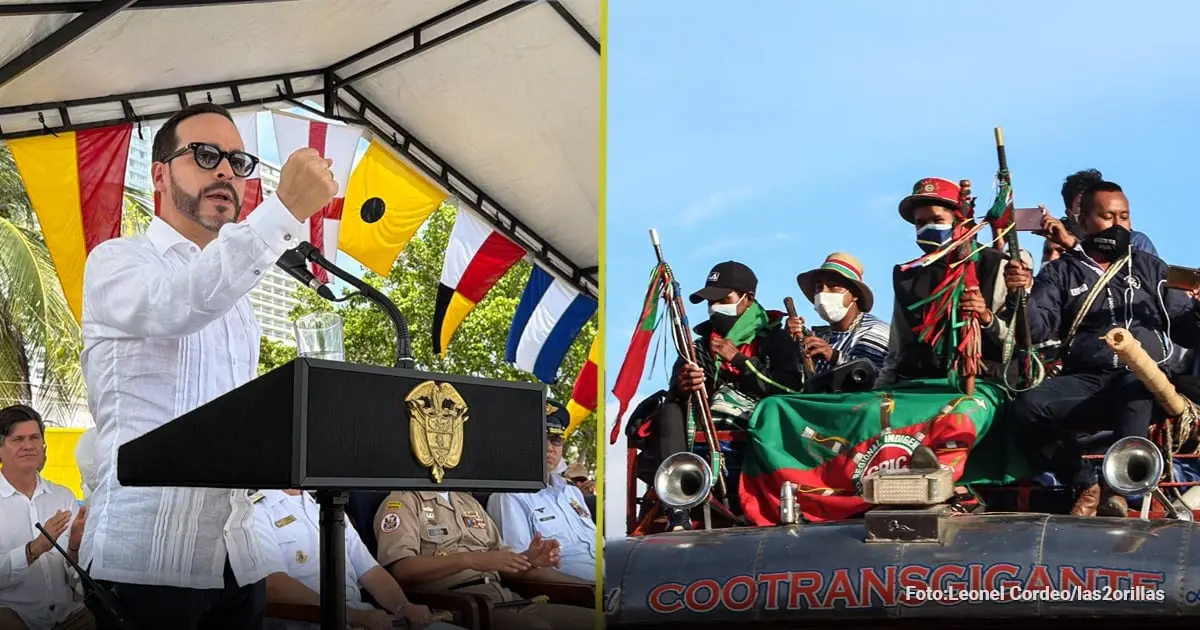
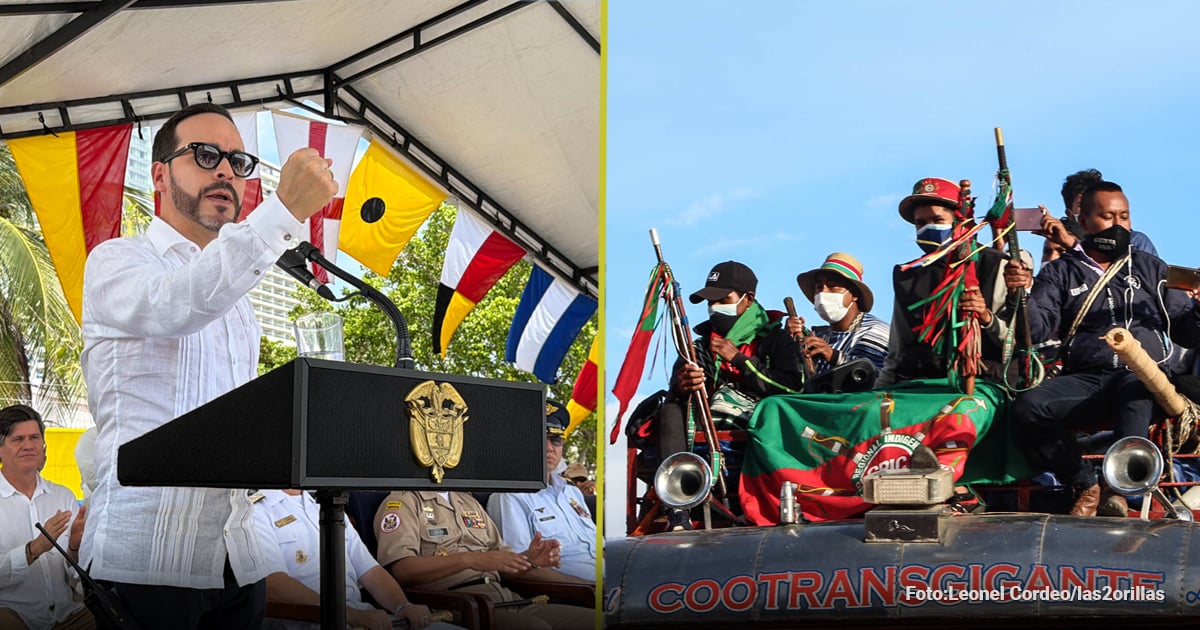
BOGOTÁ, Colombia — A decisive political and social showdown is unfolding in the department of Cauca as the government of President Abelardo de la Espriella and the Regional Indigenous Council of Cauca (CRIC) brace for a high-tension weekend.
Scheduled from October 11 to 14, an upcoming indigenous mobilization and social summit in the municipality of Caldono has triggered an immediate and firm response from the executive branch. While indigenous leadership insists the gathering is a peaceful space for dialogue regarding autonomy, territorial rights, and social policy, the national government has drawn a hard red line against highway blockades and announced a sweeping, contract-by-contract financial audit of more than 1.13 trillion pesos previously allocated to the organization.
The confrontation has rapidly escalated beyond a localized disagreement, opening a significant front of political friction for the administration and putting the fragile security dynamics of southwestern Colombia under intense national scrutiny.
Main Facts
The brewing conflict centers on a combination of scheduled mass mobilizations, strict governmental warnings against public disruptions, and a financial review of historic state-indigenous agreements.
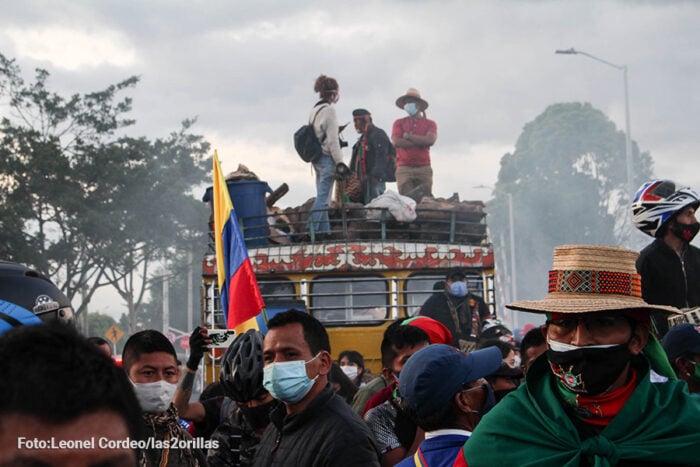
The Mobilization: The CRIC has convened a regional summit of indigenous peoples and social organizations in Caldono, Cauca, running from October 11 through October 14.
The Government’s Stance: President Abelardo de la Espriella’s administration has affirmed its constitutional commitment to protecting peaceful protest, but explicitly declared that it will not tolerate highway blockades, acts of violence, or negotiations conducted under duress.
The Financial Audit: Following a ministerial council meeting, the executive branch ordered a thorough, contract-by-contract review of approximately 1.13 trillion pesos distributed to the CRIC under previous multi-year cooperation agreements.
The Precedent: The disputed funds trace back to November 2022, when the administration of former President Gustavo Petro sealed a pact with the CRIC to finance the organization’s second four-year strategic plan spanning from 2023 to 2026.
Chronology of Events
The friction between the current administration and the powerful indigenous organization has accumulated steadily over recent months, marked by administrative decisions, public declarations, and escalating rhetoric.
August 2025: The Radio and Information Dispute
Tensions first surfaced in late August when the CRIC publicly rejected a decision by the Ministry of Information Technologies and Communications (MinTIC) to suspend regional programming across 20 peace-building radio stations and 74 frequencies on Radio Nacional. The indigenous organization argued that silencing these localized broadcasts heavily compromised community communication networks in territories heavily impacted by the armed conflict, setting an adversarial tone between indigenous authorities and the new government.
October 6, 2025: The Executive Warning and Audit Order
Following a high-level ministerial council, President Abelardo de la Espriella addressed the nation regarding the CRIC’s impending mobilization in Cauca. The president established the government’s position: while peaceful assembly is protected, public infrastructure blockades will be met with state resistance, and no negotiations will take place under pressure. Simultaneously, the president announced the comprehensive audit of 1.13 trillion pesos in state funding previously routed to the organization.
October 11–14, 2025: The Caldono Summit and Current Showdown
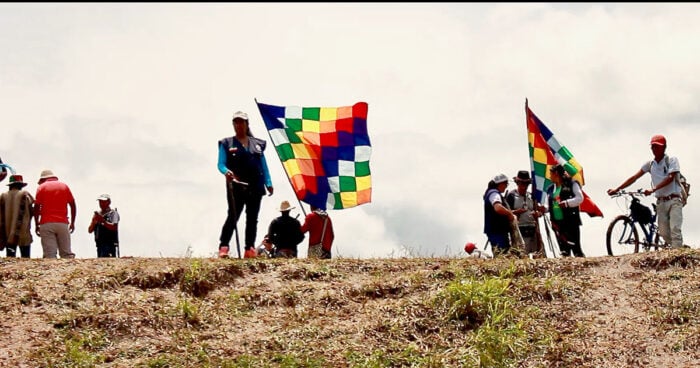
The core of the current crisis culminates this weekend in Caldono. Thousands of indigenous community members and social representatives are gathering to discuss territorial defense and collective rights, while security forces maintain a high-alert posture across Cauca’s primary corridors to prevent interruptions to public transit and commerce.
Supporting Data and Financial Background
The financial dimension of the standoff involves substantial public investments aimed at redressing historical inequalities and promoting indigenous autonomy in one of Colombia’s most volatile regions.
The 1.13 Trillion Peso Figure: The funds under review originate from commitments made during the previous national administration. In November 2022, the government of Gustavo Petro entered into formal agreements with the CRIC to enact a four-year development plan (2023–2026).
Scope of the Pact: The multi-trillion-peso framework was designed to finance indigenous-run administrative systems, educational frameworks, health initiatives, and critical land-access programs.
Audit Nature: Government officials have emphasized that the newly ordered audit—examining agreements contract by contract—is a standard oversight measure designed to track the precise execution of public funds. Executive spokespersons have clarified that the announcement does not inherently imply criminal wrongdoing or embezzlement by the organization, but rather a transparent accounting of state expenditures.
Official Responses and Institutional Positions
The two sides of the conflict present sharply contrasting interpretations of the October mobilizations and the fundamental nature of state-indigenous relations.
The National Government
President De la Espriella’s administration has framed its approach around the principle of law and order, coupled with fiscal responsibility. During his October 6 address, the president reiterated:
"This government fully guarantees the right to peaceful protest, but we will not allow our roads to be blocked, nor will we permit the state to be cornered by threats or ultimatums. Every peso of public money delivered to regional organizations must be rigorously accounted for to ensure it truly benefits the communities."
The executive branch maintains that utilizing mass road closures as a standard mechanism for political leverage undermines the rule of law and damages the national economy, particularly in a strategic agricultural and transit corridor like Cauca.
The CRIC Leadership
Representing the indigenous communities, CRIC councilor Édgar Fernández strongly rejected the government’s characterization of their peaceful summit. Fernández condemned the executive’s warnings as an "intimidatory" tactic designed to criminalize legitimate social protest and delegitimize historical rights.
"We are not heading to Caldono to block roads or execute acts of violence," Fernández stated. "This is a sovereign summit of indigenous peoples and grassroots social organizations to discuss our survival, our autonomy, our territories, and the historic agreements that the state has repeatedly promised to honor. Treating our social agenda as a public security threat is a profound mistake."
The organization maintains that the state’s sudden focus on auditing past funding agreements is a politically motivated strategy aimed at weakening indigenous autonomy and undermining their capacity for collective bargaining.
Historical Context: A Territory Forged in Conflict
To fully understand the gravity of the standoff in Caldono, one must examine the complex geopolitical and social realities of the Cauca department.
Cauca has historically served as a crucible for agrarian disputes, deep-seated social inequality, and violent territorial control by various illegal armed factions. Founded in 1971, the Regional Indigenous Council of Cauca (CRIC) emerged as one of Latin America’s most resilient and influential indigenous movements. Over more than five decades, the organization has spearheaded major milestones in territorial restitution, the strengthening of indigenous councils (cabildos), and the defense of cultural autonomy.
Because of its formidable mobilization capacity, the CRIC has consistently functioned as a central political actor, forcing successive national governments to negotiate directly regarding regional development and rights implementation.
However, the region remains heavily scarred by ongoing violence. In comprehensive human rights reports compiled by the CRIC, the organization has documented the devastating toll of the internal armed conflict on indigenous youth. Most notably, the CRIC reported that at least 606 children and adolescents were torn from their communities through forced recruitment by illegal armed groups over a recent three-year period.
These persistent security vacuums and the aggressive presence of drug-trafficking syndicates and dissident armed groups make regional stability a matter of constant peril. While previous administrations, particularly under Gustavo Petro, focused heavily on institutional concertation, land reform, and dialogue to address these structural crises, the arrival of the De la Espriella administration has signaled a definitive shift toward tighter fiscal oversight and zero tolerance for civil disruptions.
Implications for the Future
The outcome of the mobilization in Caldono carries profound implications for national governance, social stability, and civil-indigenous relations in Colombia:
The Future of Social Protest: How the security forces handle the October 11–14 mobilizations will establish a crucial precedent for how the current administration manages mass social unrest and regional discontent moving forward.
Precedent for State-Indigenous Pacts: The execution and findings of the 1.13 trillion peso audit will likely redefine how future budgetary allocations and multi-year development plans are monitored, potentially introducing significantly heavier bureaucratic controls over autonomous regional funds.
Political Stability in the Southwest: Maintaining an open channel for peaceful dialogue while enforcing strict anti-blockade laws will test the administration’s diplomatic capabilities in a region where local grievances run deep and historical distrust of the central government remains widespread.
As the weekend approaches, all eyes remain fixed on Caldono. Whether the mobilization proceeds peacefully without crippling regional infrastructure—and whether both parties can transition from adversarial rhetoric to constructive institutional dialogue—will dictate the political temperature of Colombia for the months to come.







Leave a Reply