

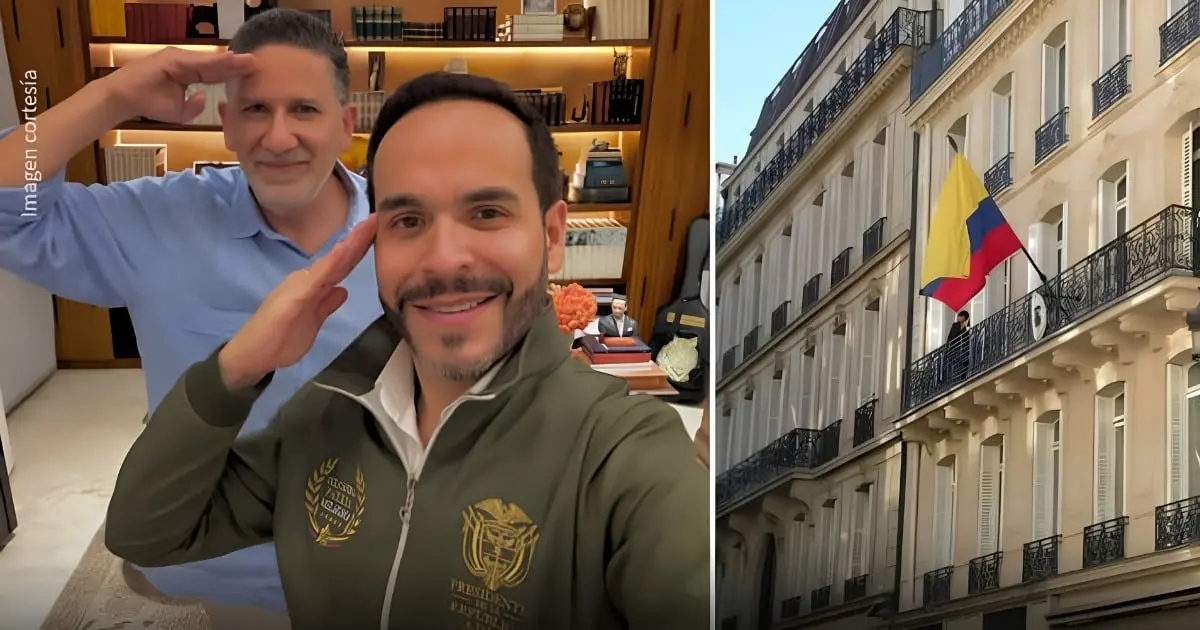
BOGOTÁ — In one of the most significant diplomatic realignments of the current administration, former Governor of Bolívar Juan Carlos Gossaín is slated to assume leadership at one of Colombia’s most prestigious and coveted international missions: the Embassy in Paris. Gossaín, who governed the Caribbean department between 2012 and 2015, will step into the French capital to replace Alfonso Prada, the former director of the National Learning Service (SENA) who had held the post since April 2023.
The appointment underscores a deliberate consolidation of political alliances by the administration of President Abelardo de la Espriella. Gossaín arrives in Paris not merely as a regional technocrat, but as a vocal and visible ally of the current president, having vigorously defended the administration’s policy platform across public forums and digital media channels over recent years. As Colombia looks to reinforce its cultural, economic, and political footprint in Western Europe, the transition at the Paris embassy marks a critical pivot in the nation’s foreign service strategy.
1. Main Facts and Political Context
The selection of Juan Carlos Gossaín for the Paris diplomatic post highlights the intersection of regional political pedigree and national executive patronage. The Embassy of Colombia in France traditionally serves as a premier posting, requiring a delicate balance of cultural diplomacy, multilateral engagement, and high-level political representation.
Gossaín’s ascent to this post is underpinned by several core developments:
- The Succession: He replaces Alfonso Prada, a stalwart of preceding political configurations who had managed the Paris mission since the spring of 2023.
- The Presidential Alignment: Gossaín enters the diplomatic corps as a trusted surrogate of President Abelardo de la Espriella. His public alignment with the administration’s core mandates has made him a reliable voice for executive objectives abroad.
- The Institutional Weight: Paris remains a linchpin for Colombian foreign policy in Europe—a continent where Colombia maintains roughly 26 diplomatic missions, with Madrid and Paris acting as the primary anchors of bilateral relations.
For Gossaín, this appointment represents a return to the forefront of public life, pivoting from regional administration on the Caribbean coast to high-stakes European diplomacy.
2. Chronology of a Political Career
To understand Gossaín’s trajectory to the Parisian diplomatic stage, one must examine a decades-long career rooted in the administrative and electoral machinery of Colombia’s Caribbean coast.
Early Foundations and the Curi Era
A native of the region, Gossaín earned his law degree from the Faculty of Law and Political Sciences at the University of Cartagena. His foundational steps in public service were forged alongside the late, legendary three-time Mayor of Cartagena, Nicolás Curi. Working closely with Curi, Gossaín absorbed the intricacies of municipal governance, serving in critical capacities as a legal advisor, private secretary, and secretary of finance. These formative years established his reputation as a capable administrator with a deep understanding of coastal politics.
Expanding Horizons: The Secretariat of Planning
Following his tenure in municipal administration, Gossaín expanded his portfolio to the departmental level, serving as the Secretary of Planning for the Department of Bolívar. This role allowed him to cultivate broader administrative competencies, overseeing regional development frameworks and laying the groundwork for his eventual run for the governorship.
The "Bolívar Ganador" Governorship (2012–2015)
Maintaining deep-rooted ideological and political affinities with the traditional Liberal Party—led nationally by former President César Gaviria—Gossaín launched his gubernatorial campaign under the banner “Bolívar Ganador” (Winning Bolívar). Backed by a broad coalition of liberal forces and regional stakeholders, he secured a decisive electoral victory and governed the department from 2012 through 2015.
3. Supporting Data and Administrative Legacy
Gossaín’s legacy as Governor of Bolívar is frequently cited by his supporters as evidence of his executive capabilities, particularly in infrastructure development and fiscal restructuring. During his four-year term, his administration spearheaded several high-impact regional projects:

- The Transversal de los Montes de María: A vital infrastructure initiative designed to improve connectivity, security, and commercial transit through a historically conflict-affected and economically isolated subregion of Bolívar.
- The Reconstruction of the Gambote Bridge: A critical engineering project that restored essential connectivity across the Dique Canal, revitalizing regional commerce and transportation networks.
- The Administrative Modernization: The creation of the Departmental Administrative Center (CAD) in the municipality of Turbaco, aimed at centralizing public services and streamlining bureaucratic efficiency for citizens.
- Fiscal and Institutional Rationalization: Among his more difficult administrative choices was the promotion and execution of the liquidation of the historic, yet financially unviable, Lotería de Bolívar, a move designed to protect public resources.
These milestones formed the administrative bedrock of his career, providing him with the credentials to transition from subnational governance to the nuances of international statecraft.
4. Official Responses and Diplomatic Receptions
The announcement of Gossaín’s appointment has elicited a range of responses across the Colombian political spectrum, reflecting the high-profile nature of the Paris posting.
Within government circles, defenders of the administration have lauded the choice as a masterstroke of pragmatic diplomacy. Proponents argue that seasoned administrators with executive experience—such as former governors—are uniquely qualified to manage complex diplomatic missions that require both political acumen and managerial rigor. They emphasize that Gossaín’s legal background and deep familiarity with state administration will serve him well in navigating the labyrinth of French institutional politics and multilateral bodies headquartered in Paris, such as the OECD and UNESCO.
Conversely, critics and opposition figures have scrutinized the appointment through the lens of political patronage. Observers note that the Paris embassy, alongside other key European posts, has frequently been utilized to reward close political allies of the sitting executive. Questions have been raised regarding Gossaín’s lack of traditional, career-diplomatic experience, though supporters quickly counter that political appointees have long been a fixture of Colombia’s highest-tier embassies.
5. Implications for Bilateral Relations and Future Outlook
As Juan Carlos Gossaín prepares to pack his bags for the French capital, the geopolitical and bilateral implications of his posting are substantial.
Strengthening the Transatlantic Dialogue
France remains one of Colombia’s most steadfast European partners, cooperating extensively on issues ranging from environmental protection and the implementation of the peace accords to trade and cultural exchange. Gossaín will be tasked with maintaining this robust dialogue, ensuring that Paris remains a receptive audience for the current administration’s domestic and international priorities.
The Broader Diplomatic Board
Gossaín’s assignment is part of a broader wave of diplomatic realignments engineered by President Abelardo de la Espriella. By placing trusted, ideologically aligned figures in key global capitals, the executive branch seeks to project a cohesive foreign policy message. Analysts will be watching closely to see how Gossaín adapts to the refined, protocol-heavy environment of French diplomacy, a stark departure from the rough-and-tumble realities of Caribbean regional politics.
Final Steps Toward Confirmation
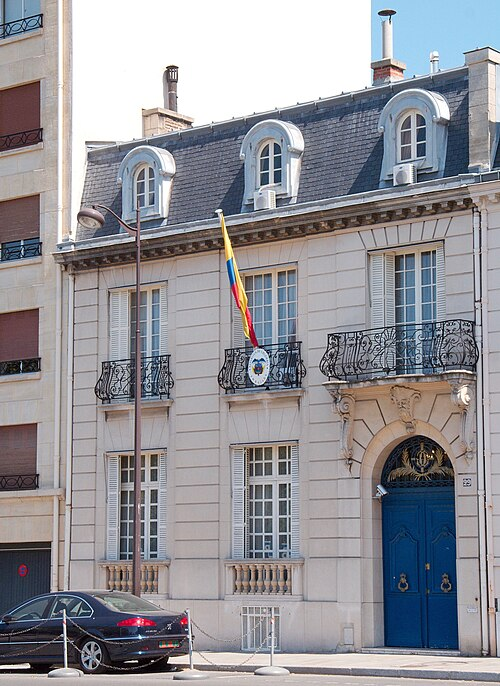
Pending the final completion of standard diplomatic protocols and official credentialing, Gossaín’s transition to the Avenue de New York in Paris will soon be formalized. For a man who began his career in the municipal offices of Cartagena alongside Nicolás Curi, taking the helm of Colombia’s mission in France marks the pinnacle of a long, adaptive, and politically resilient public life. Whether his administrative past in Bolívar will successfully translate into diplomatic triumphs in Paris remains one of the most compelling narratives in contemporary Colombian foreign affairs.


Leave a Reply