

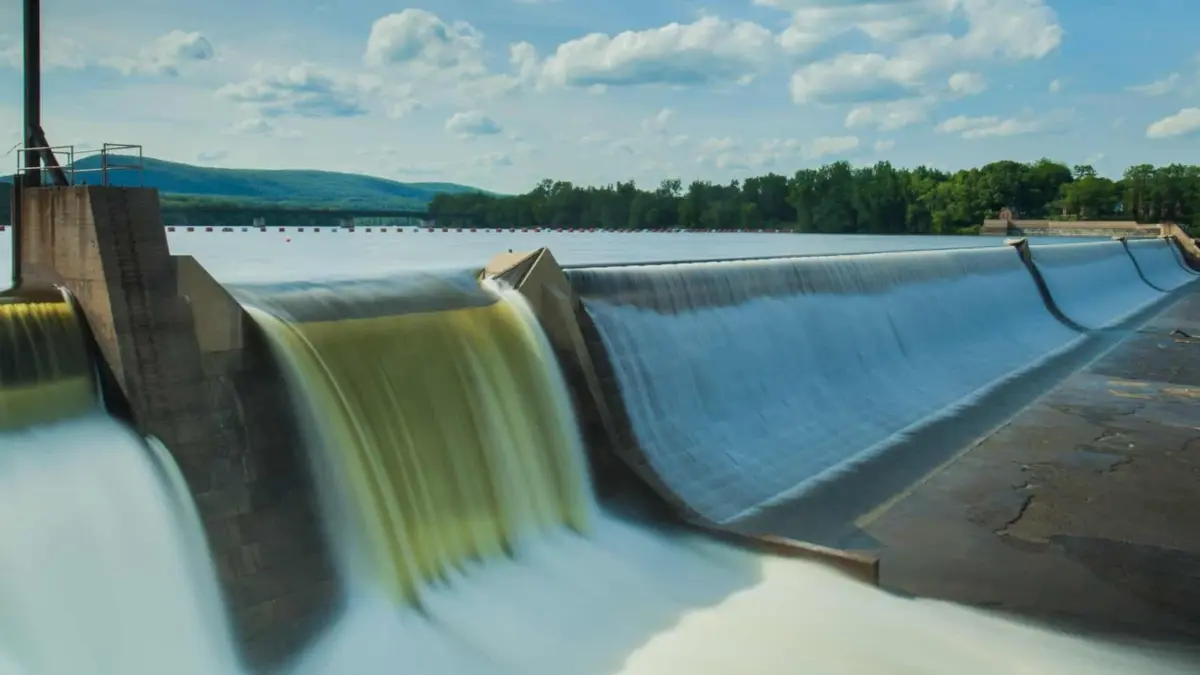
WASHINGTON — In an era defined by an unprecedented surge in electricity demand—driven by the rapid expansion of data centers, artificial intelligence, and the widespread electrification of transport—the United States is looking backward into its energy history to secure its technological future. The Department of Energy (DOE), acting through the Water Power Technologies Office (WPTO), has launched a sweeping modernization initiative aimed at breathing new life into one of the nation’s oldest, most reliable renewable energy sources: hydroelectric power.
Long viewed as a cornerstone of America’s baseload electricity generation, hydropower currently accounts for approximately 6% of the national energy mix. However, decades of operational wear, shifting environmental standards, and the imperative to integrate with modern, high-tech grids have created an urgent need for an overhaul. To tackle these challenges, the DOE has selected 14 pioneering projects. These initiatives are designed to inject cutting-edge technology, materials science, and digital management tools into the American hydropower fleet, ensuring it remains competitive, cost-effective, and environmentally sustainable for decades to come.
Main Facts: The 14 Projects Transforming American Hydropower
At the heart of the DOE’s latest modernization campaign is the Hydropower Testing Network (HyTN). This framework serves as a bridge between laboratory innovation and commercial deployment, allowing developers to test, validate, and scale technologies that address systemic vulnerabilities in hydroelectric facilities.
The 14 selected projects span a vast spectrum of engineering disciplines, ranging from advanced materials and biological sensors to marine storage and low-pressure turbine prototypes:
- Dry Surface Technologies: Focused on manufacturing scale-up, this project introduces a non-toxic, anti-fouling surface coating designed to prevent component clogging and biofouling in water-handling machinery.
- Emrgy: Developing a prototype for a modular, low-pressure turbine technology platform optimized for distributed energy generation in rivers and canals.
- GenH: Testing a rapid-deployment, low-impact technology designed to harness electricity from existing non-powered dams (NPDs) without requiring major structural overhauls.
- Hydro Green Energy: Conducting a comprehensive grid-focused economic analysis for a pumped storage hydropower (PSH) project utilizing an existing dam and reservoir system.
- Kingsbury: Evaluating advanced thermoplastic polymers as high-performance, durable bearing materials for hydroelectric generators to reduce maintenance downtime.
- Nucleic Sensing Systems: Validating a real-time environmental DNA (eDNA) sensor that continuously monitors water bodies to detect fresh aquatic species presence while filtering out degraded or transported eDNA.
- Prometheus Innovations: Assessing specialized coatings formulated to prevent the colonization of harmful aquatic organisms, such as invasive zebra/quagga mussels and brown algae, on critical infrastructure.
- Chelan County Public Utility District No. 1: Evaluating grease-free, self-lubricating gate bushings alongside low-temperature cold-spray technologies to repair turbine components in situ, minimizing costly equipment removal.
- Radmantis: Utilizing Verdantas facilities to test fish survival rates and behavioral responses within steel-channeled water systems, improving ecological safety protocols.
- RCAM Technologies: Advancing 3D-printed, underwater pumped storage hydropower systems that store electricity within hollow concrete spheres positioned on the ocean floor or deep lakebeds.
- University of Washington Applied Physics Laboratory: Assessing advanced water quality monitoring sensors designed for high-resolution environmental compliance tracking.
- VBASE Oil Company: Testing specialized, environmentally biodegradable lubricants engineered specifically for heavy-duty hydroelectric generating stations.
Chronology: Tracing the Path to Hydropower’s Modern Renaissance
To understand the significance of the DOE’s current initiative, it is necessary to examine the historical trajectory of water power in the United States, the policy shifts that prioritized grid reliability, and the operational milestones leading up to the creation of the HyTN.
The Foundation Era (Early to Mid-20th Century)
The expansion of American hydropower began in earnest during the New Deal era of the 1930s. Massive federal undertakings—such as the construction of the Hoover Dam, the establishment of the Tennessee Valley Authority (TVA), and the development of the Columbia River basin projects—transformed the American landscape. For decades, these colossal concrete structures provided cheap, reliable electricity that powered the industrialization of the American West and South. By the late 20th century, however, the era of mega-dam construction drew to a close, constrained by limited remaining geographic sites and growing awareness of ecological consequences.
The Shift Toward Environmental Mitigation (1990s–2010s)
As environmental legislation—such as the Clean Water Act and the Endangered Species Act—matured, hydroelectric operators faced stringent new compliance requirements. Mitigating the impact of dams on migratory fish populations, water temperatures, and river sediment flows became a paramount operational concern. Capital expenditures shifted away from capacity expansion toward environmental retrofits, fish ladders, and flow-management systems. Consequently, the average age of American hydroelectric infrastructure began to climb, with many facilities operating well past their original design lifespans.
The Decarbonization Imperative and Grid Modernization (2020–Present)
Entering the 2020s, federal energy policy pivoted sharply toward aggressive decarbonization targets and grid resilience. As intermittent renewables like wind and solar experienced exponential growth, system operators realized that the grid required robust, dispatchable storage and baseload power to prevent instability. Hydropower emerged not as a legacy technology to be phased out, but as the premier green battery and grid stabilizer.
In response, the DOE established frameworks like the Hydropower Testing Network (HyTN) to fast-track private sector innovations. The selection of the 14 modernization projects represents the culmination of years of targeted federal R&D, shifting the focus from mere maintenance to high-tech optimization.
Supporting Data: The Vital Metrics of U.S. Hydropower
Evaluating the necessity of these federal investments requires a close look at the numbers defining the current energy landscape.
- 6%: The share of total U.S. utility-scale electricity generation currently provided by conventional hydroelectric facilities. Despite the rapid growth of photovoltaic solar and wind, hydropower remains the single largest source of renewable electricity generation in several regions, particularly the Pacific Northwest.
- 90%+: The percentage of U.S. energy storage capacity provided by Pumped Storage Hydropower (PSH). As the grid absorbs higher shares of intermittent weather-dependent generation, PSH acts as the ultimate grid shock absorber, moving water between upper and lower reservoirs to store and release energy on demand.
- 80+ Years: The average age of many major components within the U.S. hydroelectric fleet. Without advanced materials—such as the thermoplastic polymers tested by Kingsbury or the cold-spray repair methods evaluated by Chelan County PUD—aging infrastructure faces rising failure rates and prohibitive replacement costs.
- 14: The number of targeted modernization projects funded through the WPTO-DOE partnership, strategically chosen to address distinct bottlenecks ranging from biological monitoring to structural manufacturing.
Official Responses and Stakeholder Perspectives
The strategic pivot toward advanced hydropower has drawn broad praise from industry associations, environmental engineers, and federal energy officials, who emphasize that modernizing existing assets is far more efficient than building new ones.
"We are facing an energy demand curve unlike anything seen in generations," noted a senior official within the U.S. Department of Energy’s Water Power Technologies Office. "Building entirely new mega-dams is neither practical nor ecologically desirable. Instead, the smartest, most cost-effective path forward is to optimize what we already have. By injecting advanced sensors, automated maintenance tools, and modern materials into our current fleet, we unlock hidden capacity without breaking new ground."
Industry stakeholders have similarly highlighted the dual benefits of economic competitiveness and environmental protection. Private developers participating in the HyTN initiative point out that technologies like Emrgy’s low-pressure turbines and GenH’s non-powered dam solutions open up entirely new market segments.
"For too long, small-scale or non-powered water assets were left out of the clean energy transition because the capital expenditure and regulatory hurdles were simply too high," said a representative from a participating technology partner. "Initiatives like this lower the barrier to entry, allowing us to generate clean electricity from moving water in places where it was previously economically unfeasible."
Environmental watchdogs have also expressed cautious optimism regarding projects focused on ecological metrics, such as Nucleic Sensing Systems’ real-time eDNA monitoring and Radmantis’s fish-survival testing facilities. Ensuring that technological upgrades go hand-in-hand with ecosystem protection is viewed as essential for securing long-term social license for hydroelectric operations.
Implications: Economic Growth, Environmental Stewardship, and Grid Security
The modernization of America’s hydroelectric infrastructure carries profound implications for the nation’s economic vitality, environmental health, and national security.
1. Strengthening Grid Reliability Amid Surging Demand
As data centers supporting artificial intelligence and cloud computing multiply across the American landscape, grid operators warn of looming capacity shortfalls. Wind and solar power are indispensable for decarbonization, but their output fluctuates with weather conditions. Hydroelectric power—particularly when enhanced by pumped storage and fast-responding turbine technology—provides the instant ramp-up capability and frequency regulation required to keep the grid balanced. Modernizing these assets ensures that the energy transition does not compromise system reliability.
2. Economic Expansion and Specialized Job Creation
Revitalizing the hydropower sector is not merely an engineering exercise; it is an economic catalyst. The deployment of advanced manufacturing processes, digital sensor networks, and robotic repair techniques creates a demand for specialized high-tech labor. From materials scientists designing anti-fouling coatings to software engineers programming automated gate systems, the modernization wave generates high-paying, future-proof jobs across manufacturing, engineering, and environmental science sectors.
3. Minimizing Ecological Footprints
Historically, hydropower development has faced fierce opposition due to its impact on aquatic ecosystems, sediment transport, and fish migrations. By prioritizing low-impact technologies—such as modular, run-of-river turbines that do not require massive wall construction, and precise eDNA sensors that track aquatic health in real time—the DOE’s initiative signals a new paradigm. It proves that energy extraction and environmental preservation can coexist through the application of smart engineering.
4. A Template for Global Clean Energy Infrastructure
As other nations grapple with the dual challenges of rising electricity demand and climate change, the United States’ strategy of upgrading legacy renewable assets offers a compelling global blueprint. Rather than abandoning older infrastructure, leveraging targeted R&D to transform mid-century assets into high-tech, digital nodes represents a sustainable, cost-effective model for the global energy transition.
Through these 14 strategic partnerships, the Department of Energy is ensuring that the rushing waters that helped build modern America will continue to power its digital future, securely, cleanly, and efficiently for generations to come.


Leave a Reply