

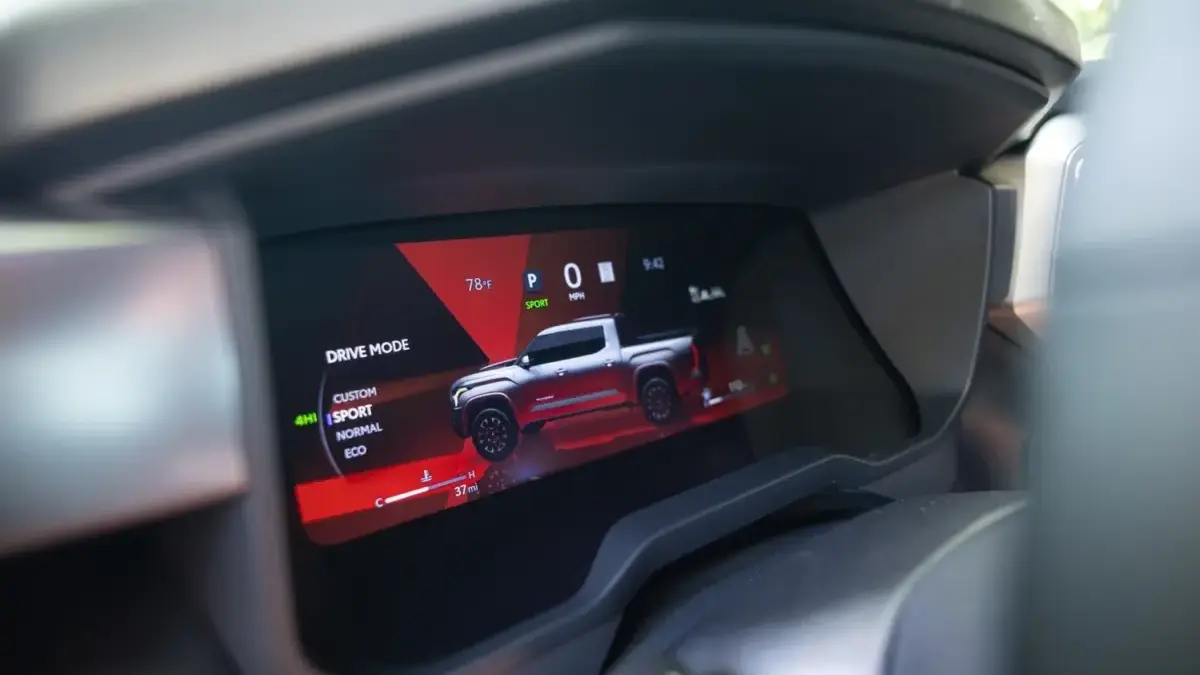
Introduction: The Paradigm Shift of the Modern Automobile
For decades, buying a car meant purchasing a finished product—a static mechanical machine that began its inevitable, linear descent into obsolescence the moment its tires rolled off the dealership floor. Traditional maintenance involved oil changes, fluid checks, and mechanical part replacements. However, the contemporary automotive landscape has undergone a radical transformation. Today’s modern vehicles are no longer merely mechanical marvels; they are sophisticated, mobile data centers powered by millions of lines of code.
At the center of this digital evolution are Over-the-Air (OTA) software updates. Much like a smartphone that refreshes itself overnight to patch security vulnerabilities or introduce user-interface enhancements, modern cars can now upgrade their systems while parked safely in a garage. This capability has fundamentally redefined the relationship between drivers and their vehicles, turning cars into dynamic assets that can theoretically improve in performance, efficiency, and safety long after purchase.
Main Facts: The Anatomy and Impact of OTA Technology
What Are OTA Updates?
OTA updates refer to the wireless delivery of new software, firmware, or system configurations via cellular networks (such as 4G and 5G) or local Wi-Fi connections. Instead of requiring a physical visit to a service center for a diagnostic computer flash, manufacturers can push updates directly to the vehicle’s electronic control units (ECUs).
Direct Impact on Performance and Capabilities
The implications of remote software deployments extend far beyond minor infotainment tweaks. By altering how code interacts with physical hardware, software can actively reshape the driving experience:
- Powertrain and Battery Management: In electric vehicles (EVs), OTA updates can optimize thermal management systems and battery chemistry algorithms, directly yielding extended driving ranges and faster, safer charging speeds.
- Dynamic Performance: Pioneered heavily by brands like Tesla and subsequently adopted by legacy manufacturers, performance-focused updates have successfully reduced 0–60 mph (0–100 km/h) acceleration times and fine-tuned torque vectoring entirely through code adjustments.
- Safety and Driver Assistance Systems (ADAS): Calibration tweaks to cameras, radar, and LiDAR sensors can drastically improve the responsiveness and accuracy of automated emergency braking, lane-keep assist, and adaptive cruise control.
Chronology: The Evolution of Automotive Software Deployment
To understand how the industry arrived at ubiquitous wireless updates, it is essential to trace the integration of software into automotive engineering:
- Early 2000s — The Rise of the Electronic Control Unit (ECU): Vehicles began incorporating dozens of discrete microprocessors to manage everything from fuel injection to anti-lock braking systems (ABS). However, any software corrections required physical plugin tools at specialized dealer workshops.
- Late 2000s to Early 2010s — Infotainment Connectivity: With the advent of Bluetooth, integrated cellular modems, and touchscreen interfaces, automakers began allowing basic tethered updates for navigation maps and media systems, though core vehicle dynamics remained strictly offline.
- Mid-2010s — The Tesla Disruption: Tesla popularized true full-vehicle OTA updates, proving that core driving dynamics, autopilot functions, and safety features could be remotely overhauled without owner intervention.
- Late 2010s to 2020s — Industry-Wide Adoption: Facing competitive pressure, legacy automotive giants (including Volkswagen, Ford, BMW, and General Motors) began restructuring their electrical architectures from scattered, vendor-specific ECUs to centralized domain controllers capable of supporting widespread OTA integration.
- Current Era — Regulatory Standardization: Modern regulatory frameworks, such as the United Nations Economic Commission for Europe (UNECE) Regulations R155 and R156, have formally established cybersecurity and software update management system (SUMS) protocols as mandatory compliance standards for new vehicle types.
Supporting Data: Efficiency, Cost, and Consumer Benefits
The shift toward wireless maintenance offers staggering logistical and financial advantages for both manufacturers and consumers:
- Drastic Reduction in Recall Costs: According to automotive industry estimates, traditional physical recalls cost billions of dollars globally each year in labor, notification mailings, and lost productivity. Resolving software-related glitches via OTA costs a fraction of a cent per vehicle in data transmission fees, bypassing the dealership network entirely.
- Time Savings for Consumers: The average physical recall or software update at a dealership requires anywhere from two hours to an entire day of a customer’s time. OTA updates shift this burden to off-peak hours, usually executing overnight while the vehicle is parked.
- Escalating Software Complexity: A modern premium vehicle currently runs on upwards of 100 million lines of code—outpacing modern commercial passenger aircraft. Without automated, remote delivery systems, managing bugs and patches across millions of active vehicles would be an insurmountable logistical impossibility.
Official Responses: Industry Perspectives and Regulatory Bodies
Automotive executives and international regulators view the proliferation of OTAs with a mix of high optimism and cautious vigilance.
Manufacturer Perspective
Industry leaders champion OTAs as the cornerstone of customer-centric mobility and long-term vehicle value. Executives frequently highlight that remote updates allow brands to foster ongoing relationships with vehicle owners, offering subscription-based feature unlocks or continuous quality-of-life improvements. Furthermore, brands view OTAs as a crucial shield against catastrophic brand damage; quickly patching a software bug over-the-air prevents the negative public relations cascade associated with massive, highly publicized physical recall campaigns.
Regulatory and Safety Perspective
Governments and safety organizations, however, emphasize the critical need for guardrails. The implementation of UNECE R155 (Cybersecurity Management) and R156 (Software Update Management System) represents an official response to the inherent risks of connected cars. Regulators mandate that manufacturers prove their networks are impenetrable to malicious actors before vehicles are certified for public roads. Officials stress that convenience must never supersede fundamental functional safety.
Implications: Risks, Privacy Concerns, and the Future of Mobility
Despite the undeniable benefits, the widespread adoption of OTA updates introduces complex challenges that the automotive sector must actively navigate.
1. Cybersecurity Vulnerabilities
Opening a permanent digital gateway to a vehicle inherently creates a potential vector for malicious exploitation. If an automaker fails to implement rigorous encryption, digital signatures, and multi-layered authentication, hackers could theoretically intercept update packages, deploy malicious malware, or remotely command vehicle functions. Cybersecurity is no longer an IT concern—it is a matter of physical life and death on the highway.
2. System Stability and "Bricking"
An interrupted data transmission, a sudden drop in cellular connectivity, or a power failure during a critical firmware flash can leave a vehicle completely inoperable—a phenomenon colloquially known as "bricking." High-profile incidents involving major manufacturers, where software bugs locked out electrical management or dashboard displays, underscore the necessity for failsafes, such as redundant backup memories and robust 12V battery monitoring during the update cycle.
3. Data Privacy and Surveillance
To diagnose performance issues and tailor future software iterations, connected cars continuously harvest massive streams of telemetry data—ranging from driving habits and precise GPS locations to cabin interaction metrics. While automakers argue this data is anonymized and used exclusively for research and development, consumer advocacy groups raise persistent concerns regarding corporate surveillance, data ownership, and potential monetization of driving habits without explicit, transparent user consent.
4. Technological Obsolescence and the Digital Divide
As vehicles evolve into computers, they become subject to the same lifecycle limitations as smartphones and laptops. Older hardware architectures may lack the processing power required to run next-generation software packages or advanced driver-assistance features. This creates a distinct technological divide, where older models risk being abandoned by manufacturers who eventually cease pushing software support, effectively accelerating artificial obsolescence.
Best Practices for Safe Vehicle Updates
To maximize the advantages of OTA technology while mitigating inherent risks, automotive experts recommend the following guidelines for vehicle owners:
- Stable Environments: Always perform major system updates while parked in a secure area with a stable Wi-Fi connection, minimizing the risk of data packet loss during transmission.
- Power Integrity: Ensure the vehicle’s 12-volt auxiliary battery is fully charged and healthy. Because the main high-voltage battery or internal systems rely heavily on the 12V system to sustain operations during a flash, low voltage can cause catastrophic update failures.
- Do Not Interrupt: Never attempt to start the ignition, disengage parking brakes, or manipulate electronic controls while an update installation is actively underway.
- Prioritize Safety Patches: While optional aesthetic or entertainment updates can be delayed, never ignore critical safety or cybersecurity patches issued by the manufacturer.
Conclusion: The New Normal of Automotive Ownership
Over-the-air updates have irrevocably altered the DNA of the modern automobile. What began as a convenient method for refreshing navigation maps has matured into a foundational pillar of vehicle performance, safety, and longevity. As regulatory frameworks tighten and automotive software grows ever more intricate, keeping a car’s code updated will sit alongside checking tire pressures and changing engine oil as an essential routine of responsible vehicle ownership. Ultimately, the modern car is living proof that a vehicle’s journey does not end at the factory line—it continues to evolve every single day.

Leave a Reply