

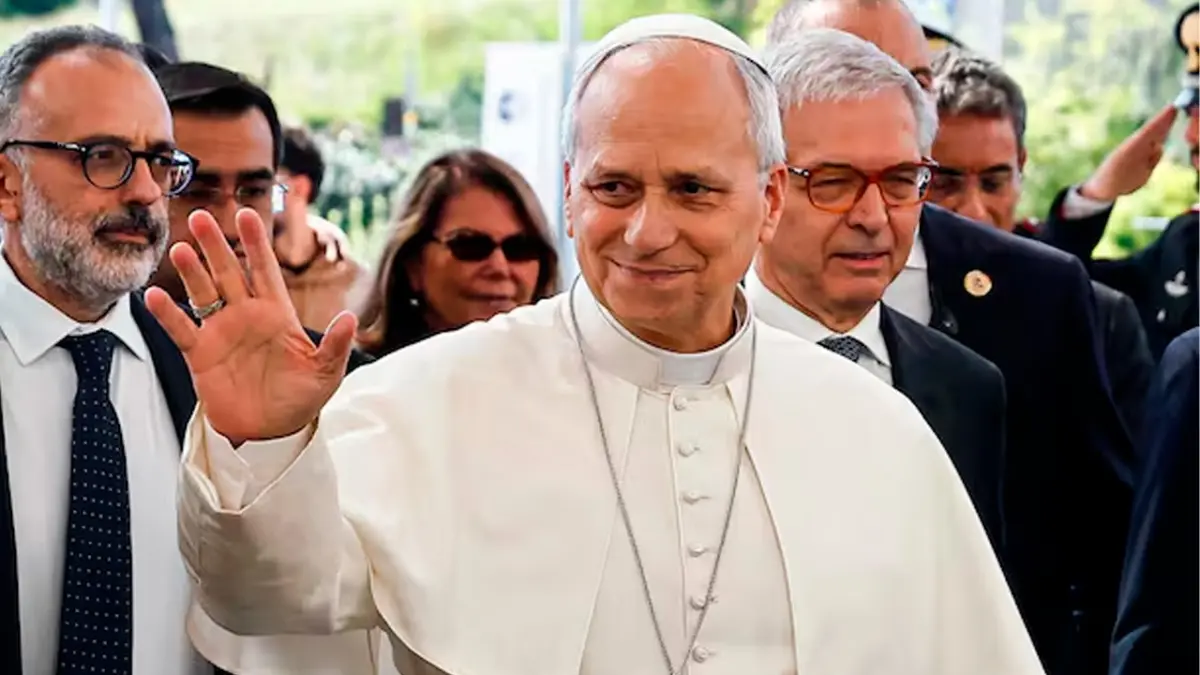
ROMA — In a momentous and deeply concerning development for the Roman Catholic Church, the Vatican officially confirmed on Tuesday, October 13, that Pope Leo XIV has been diagnosed with lung cancer. The announcement came directly from the Holy See’s press office shortly after the 71-year-old pontiff underwent a major thoracic surgical procedure at the prestigious Agostino Gemelli University Polyclinic in Rome.
Pathological analysis conducted during the operation confirmed the presence of an adenocarcinoma pulmonar—a common form of non-small cell lung cancer—in the lower lobe of the Pope’s right lung. While pre-operative medical examinations had strongly suggested the presence of a localized malignant lesion, the surgical biopsy definitively sealed the diagnosis, marking the most significant health crisis of his 17-month pontificate.
Despite the gravity of the diagnosis, initial medical reports offer a cautiously optimistic outlook. The complex surgery was completed successfully without immediate complications, and the Pope is currently resting comfortably as he begins a mandatory period of convalescence in the hospital’s specialized medical suite. However, the diagnosis casts an immediate shadow over the pontiff’s near-term schedule, raising urgent questions regarding the trajectory of his leadership and an upcoming international apostolic journey.
1. Main Facts: The Procedure, the Diagnosis, and the Immediate Aftermath
The medical intervention took place at Rome’s Gemelli Hospital, an institution historically trusted by the papacy for complex medical care. According to official bulletins released by the Holy See, Pope Leo XIV—born Robert Francis Prevost—underwent a specialized video-assisted thoracoscopic surgery (VATS), a minimally invasive technique designed to reduce recovery time and post-operative discomfort compared to traditional open-chest procedures.
The Surgical Details
- Procedure: Extirpation (resection) of the lower lobe of the right lung (lobectomy) via video-assisted thoracic surgery.
- Duration: The surgical team spent approximately 90 minutes actively operating, while the entire duration within the surgical suite lasted roughly three hours, accounting for anesthesia administration and preparatory measures.
- Medical Team: Led by top-tier thoracic surgeons and oncologists at the Policlínico Universitario Agostino Gemelli.
- Current Status: The Pope successfully regained consciousness, emerged from anesthesia without incident, and was subsequently transferred to his private recovery room located on the hospital’s tenth floor.
The Oncological Findings
The core of the medical discovery centers on an adenocarcinoma, a malignant epithelial tumor originating in the glands of the lungs. The nodule had been initially flagged during routine medical examinations overseen by the Vatican’s health service. Prior to entering the operating room, Pope Leo XIV had candidly acknowledged to his inner circle and medical advisors that a localized lesion had been detected, necessitating surgical removal to prevent further health deterioration.
Crucially, the Holy See has not yet announced whether the pontiff will require adjuvant therapies, such as chemotherapy or radiation therapy. Oncologists and attending physicians are awaiting comprehensive post-operative pathology reports, which will evaluate the exact staging of the tumor, its margins, and whether there are any microscopic signs of lymphatic or systemic spread. These critical determinations will dictate the definitive long-term treatment plan.
2. Chronology of Events: From Routine Check-up to Surgical Suite
To fully understand how this medical crisis unfolded, it is essential to trace the timeline of events leading up to the historic announcement on October 13.
- Late Summer / Early Autumn: Routine medical screening protocols implemented by the Vatican health services detect a solitary pulmonary nodule in the right lung of Pope Leo XIV. Subsequent diagnostic imaging, including high-resolution CT scans and biopsies, raise strong suspicions of a primary malignancy, prompting a recommendation for surgical intervention.
- Days Prior to Surgery: The pontiff addresses the impending procedure with characteristic calm, briefing close aides and confirming that a localized lesion must be surgically excised. Despite the private burden of a cancer diagnosis, he maintains his demanding pastoral schedule up until the eve of his hospitalization.
- Tuesday, October 13 (Morning): Pope Leo XIV checks into the Agostino Gemelli University Polyclinic in Rome. Preparations are finalized for the scheduled video-assisted thoracic surgery.
- Tuesday, October 13 (Midday): The pontiff is wheeled into the operating theater. The procedure begins smoothly, lasting approximately three hours in total, with 90 minutes dedicated to the video-assisted lobectomy of the right lower lung lobe.
- Tuesday, October 13 (Afternoon): The Vatican officially releases a statement confirming the success of the surgery and revealing the definitive histopathological diagnosis of pulmonary adenocarcinoma.
- Tuesday, October 13 (Evening): Pope Leo XIV successfully wakes from anesthesia, demonstrates stable vital signs, and is transferred to the tenth-floor papal suite at Gemelli Hospital, where he begins his post-operative recovery under round-the-clock medical supervision.
3. Supporting Data and Medical Context: Understanding Pulmonary Adenocarcinoma
Lung cancer remains one of the most thoroughly studied malignancies in modern oncology, yet its diagnosis in a reigning Supreme Pontiff is a rare and striking event in modern ecclesiastical history.
What is Pulmonary Adenocarcinoma?
Adenocarcinoma is the most common subtype of non-small cell lung cancer (NSCLC), accounting for roughly 40% of all lung cancer diagnoses. It typically originates in the peripheral lung tissues, arising from mucus-producing glandular cells. While frequently associated with a history of tobacco smoking, adenocarcinoma is also the most prevalent form of lung cancer diagnosed in non-smokers and individuals with specific genetic predispositions.
The Advantages of Video-Assisted Thoracoscopic Surgery (VATS)
The choice of VATS for a 71-year-old patient—even one occupying the highest spiritual office in the world—reflects contemporary surgical standards aimed at optimizing geriatric oncology outcomes:
- Reduced Trauma: By avoiding the spreading of ribs required in traditional thoracotomy, VATS significantly lowers post-operative pain.
- Shorter Hospitalization: Minimally invasive techniques drastically reduce the risk of pulmonary complications, such as pneumonia, which are particularly hazardous for elderly patients recovering from lung resections.
- Faster Rehabilitation: It enables patients to resume mobility much sooner, a vital factor in preventing deep vein thrombosis and restoring normal respiratory function.
Geriatric Oncology and Papal Health
At 71 years of age, Robert Francis Prevost finds himself in an age bracket where cancer risks naturally escalate. However, modern oncological interventions often achieve favorable outcomes for localized adenocarcinomas detected at an early stage. The primary goal of a lobectomy in such cases is curative: removing the entire lobe containing the primary tumor along with adjacent lymph nodes for pathological staging.
4. Official Responses and Institutional Reactions
The revelation of Pope Leo XIV’s cancer diagnosis immediately reverberated across the global Catholic Church, prompting an outpouring of solidarity, prayers, and official statements from ecclesiastical leaders, political heads of state, and the faithful worldwide.
The Holy See Press Office
The Vatican has adopted a policy of complete transparency balanced with cautious restraint regarding the pontiff’s ongoing medical updates. Daily or bi-daily bulletins are expected from Matteo Bruni, Director of the Holy See Press Office, detailing the Pope’s respiratory metrics, pain management, and nutritional progress. The Vatican has emphasized that while the surgery was an undeniable success, the Holy Father requires total rest to recuperate from a major thoracic operation.
Global Ecclesiastical and Political Solidarity
Within hours of the announcement, cardinals, bishops, and conference presidents from every continent issued statements calling for global prayer vigils.
- The Italian Episcopal Conference (CEI) released a fervent appeal urging parishes across Italy to offer special intentions for the Pope’s complete recovery during daily Masses.
- Interfaith Leaders from various global religious traditions have also sent messages of goodwill, underscoring Pope Leo XIV’s role as a universal voice for peace and human dignity.
- International Heads of State, including leaders from across Europe, the Americas, and Asia, transmitted official diplomatic cables expressing profound concern and wishing the pontiff a swift return to full health.
5. Implications for the Papacy: Governance, Scheduling, and Future Itineraries
The sudden onset of a major health crisis just 17 months into the pontificate of Leo XIV inevitably forces the Vatican administration to recalibrate its short- and medium-term operational roadmap. The physical demands of the papacy are notoriously grueling, and a major pulmonary resection requires a strict, unyielding period of physical rehabilitation.
Immediate Disruptions to the Papal Calendar
- Cancellation of Public Audiences: The Holy See has officially suspended all of Pope Leo XIV’s public audiences and private meetings through October 20. This initial one-week blackout is non-negotiable, serving as the absolute baseline for his acute hospital recovery.
- Resumption of Duties: Whether the pontiff can resume light administrative duties from his hospital suite or his residence at the Domus Sanctae Marthae following his discharge remains entirely dependent on his postoperative stamina and pulmonary capacity.
The Fate of the Upcoming Apostolic Journey
Perhaps the most pressing logistical question centers on the planned apostolic journey to South America, specifically scheduled for November, which includes anticipated stops in Uruguay, Argentina, and Peru.
International papal travel demands immense physical stamina, involving grueling time-zone shifts, relentless public appearances, open-air masses, and high-security motorcades. Medical experts note that recovering from the removal of a lung lobe generally requires weeks, if not months, of gradual rehabilitation, breathing exercises, and endurance building.
- The Medical Verdict: Attending physicians will make the final determination regarding the South American tour based on serial follow-up scans, respiratory function tests, and the Pope’s overall vitality in the coming weeks.
- Contingency Planning: Vatican Secretariat of State officials are quietly reviewing potential contingencies, which could range from scaling down the itinerary, postponing specific legs of the journey, or canceling the international trip altogether to prioritize the pontiff’s complete recovery.
Conclusion: A Test of Resilience for a New Pontificate
The diagnosis of pulmonary adenocarcinoma and the subsequent successful lung resection mark a watershed moment for the pontificate of Pope Leo XIV. Having assumed the Chair of Saint Peter just 17 months ago, the 71-year-old American-born pontiff now faces a deeply personal crucible that mirrors the universal human vulnerability to illness.
As Pope Leo XIV recuperates in his tenth-floor suite at the Gemelli Polyclinic, the eyes of over 1.3 billion Catholics worldwide remain fixed on Rome. While the medical prognosis for localized adenocarcinoma treated via successful lobectomy offers genuine grounds for hope, the coming days and weeks will test both the physical resilience of the pontiff and the administrative agility of the Roman Curia. For now, the global church unites in a singular focus: prayerful solidarity for the swift and complete restoration of the health of Pope Leo XIV.




Leave a Reply