

Bogotá, Colombia — In an era where commercial algorithms increasingly homogenize global listening habits, public service broadcasting continues to serve as a vital sanctuary for regional expression, cultural preservation, and sonic experimentation. On Wednesday, July 15, 2026, Radio Nacional de Colombia rolled out its highly anticipated weekly musical premieres, offering listeners an expansive journey across the richly textured topography of the country.
This week’s curation transcends mere entertainment, acting instead as an anthropological and artistic map of Colombia’s diverse cultural intersections. From the high-altitude Andean peaks of Bogotá and Pasto to the crystalline Caribbean waters of San Andrés, the selected releases showcase how contemporary Colombian artists are simultaneously honoring their ancestral roots and pushing the boundaries of modern production. Featuring collaborations and solo projects from Gregorio Uribe, Lucio Feuillet, Obie P, and Los Cotopla Boyz, this week’s showcase highlights the ongoing renaissance of Colombian music on domestic and international stages.
Main Facts
The latest slate of premieres introduced by Radio Nacional de Colombia bridges disparate musical genres, generations, and geographic coordinates into a singular, cohesive broadcast identity. At the heart of this week’s rotation are three distinct releases that capture the current zeitgeist of Colombian independent and commercial music scenes:
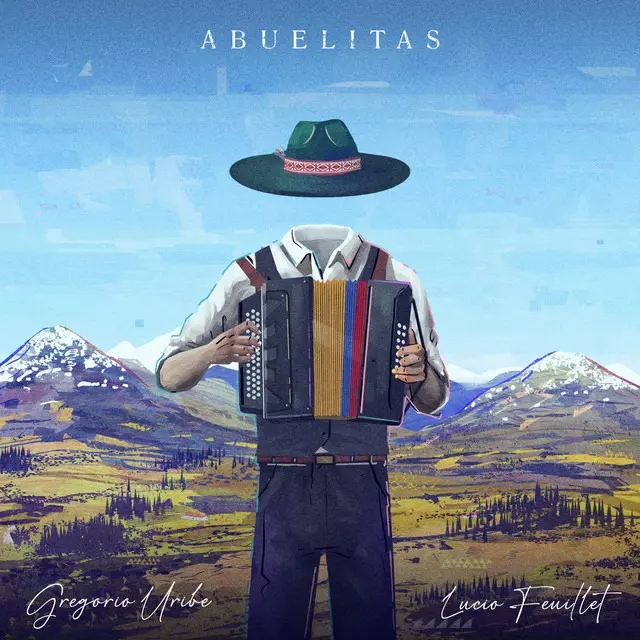
- “Abuelitas” by Gregorio Uribe featuring Lucio Feuillet: A cross-regional collaboration uniting the virtuosic accordion stylings of Bogotá-born Gregorio Uribe with the emotive vocal delivery of Nariño-born singer-songwriter Lucio Feuillet. The track serves as the powerful lead single for Uribe’s upcoming studio album, which pairs his solo accordion with regional guest artists from across the nation. Inspired by the traditional huayno rhythms of the southern Andes, the song pays homage to biological grandmothers and female ancestral knowledge keepers.
- “Him When Dee Dee” by Obie P: A deeply personal and emotionally resonant offering from San Andrés-born urban artist Obie P. A veteran standard-bearer of Caribbean dancehall and contemporary afrobeats in Colombia, Obie P channels a harrowing personal crisis—his young son’s near-fatal health scare—into an uplifting anthem designed to inspire faith, perseverance, and prayer.
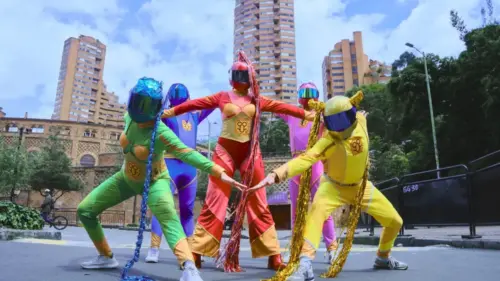
- “Bolegancho” by Los Cotopla Boyz: Representing the vanguard of Bogotá’s "nueva tropicanibalía" (new tropical cannibalism) and psychedelic cumbia, Los Cotopla Boyz bring high-octane theatricality and academic precision to the airwaves. Culled from their sophomore full-length album, Guau, no joda, “Bolegancho” is an ode to a traditional artisanal liquor from Norte de Santander. The track’s inclusion marks a major milestone, graduating to the station’s official rotation after earning its initial breakthrough on Demo Estéreo, Radio Nacional’s dedicated digital platform for emerging talent.
Chronology: The Evolution of Colombia’s Sonic Mosaic
To fully understand the weight of these new releases, it is essential to trace the historical and contemporary development of the cultural movements that informed them. The roadmap of Colombian music has long been defined by geographic isolation—partitioned by three towering Andean cordilleras and vast river basins—which historically fostered distinct regional identities.
Pre-2018: The Roots of Modern Regional Fusion
For decades, traditional rhythms such as cumbia, vallenato, currulao, and bambuco evolved largely within their native territories—the Caribbean coast, the Magdalena River valley, the Pacific littoral, and the Andean highlands. While national icons like Carlos Vives in the 1990s famously bridged the gap between traditional vallenato and pop-rock, the turn of the 21st century saw a growing divide between commercial urban genres (reggaeton and dancehall) and institutional folk music.
2018–2022: The Rise of Alternative Tropicalia and Academic Folk
Around 2018, a new wave of conservatory-trained musicians in urban centers like Bogotá began reinterpreting tropical music through a lens of academic rigor and psychedelic experimentation. Groups like Los Cotopla Boyz emerged during this window, treating tropical music not as a museum piece, but as a living, malleable canvas. Simultaneously, artists like Gregorio Uribe—who spent years building a bi-national career between New York and Bogotá orchestrating big bands and accordion explorations—began conceptualizing integrative nationwide projects.
2022–2026: The Institutional Amplification of Independent Spaces
In recent years, platforms like Radio Nacional de Colombia have systematically closed the gap between underground creation and mainstream audiences. Through initiatives like Demo Estéreo, digital scouting has transformed into a reliable pipeline for grassroots talent. The maturation of regional artists—such as Lucio Feuillet in Pasto and Obie P in San Andrés—has been heavily supported by decentralized digital distribution, allowing artists from island and peripheral territories to command national attention without relocating to central production hubs like Bogotá or Medellín.
Supporting Data and Cultural Context
The current landscape of Colombian music broadcasting relies heavily on systemic state support and public media infrastructure to counteract the homogenization of commercial streaming algorithms.
Regional Representation in Public Broadcasting
Radio Nacional de Colombia maintains a strict mandate to reflect the cultural plurality of the nation’s 32 departments. Data from cultural ministry metrics indicate that independent regional music releases have seen a 35% increase in national airplay rotation over the past four years, largely driven by public radio initiatives.
Genre Breakdown of the July 2026 Premieres
- Andean-Southern Fusion: Represented by the huayno inflections of Uribe and Feuillet, blending 6/8 and 2/4 time signatures typical of Andean folk with contemporary accordion counterpoint.
- Caribbean Afrobeats & Dancehall: Championed by Obie P, reflecting the distinct Afro-Caribbean Creole (Raizal) culture of San Andrés y Providencia, where Caribbean migration and British Antillean heritage create a unique sonic dialect distinct from mainland Colombia.
- Psychedelic Tropicalia: Pioneered by Los Cotopla Boyz, utilizing vintage analog synthesizer tones, distorted electric guitars, and classic Latin percussion sections (congas, güira, timbales) to recreate the festive atmosphere of 1970s chicha and cumbia psicodélica.
Official Responses and Artist Perspectives
The creators behind this week’s featured tracks have shared deep insights into the creative processes, personal motivations, and sociopolitical implications driving their respective works.
Gregorio Uribe on Unifying the Country’s Geographies
Speaking on the conceptual framework behind his upcoming album and the lead single “Abuelitas,” Gregorio Uribe emphasized the unifying power of the accordion beyond its traditional vallenato stronghold:
"This project is an intentional journey that stitches together the Andes, the Caribbean, the Llanos, and the Pacific from a contemporary perspective. With ‘Abuelitas,’ we wanted to look south, honoring the huayno rhythm that connects so many nations in our hemisphere, while dedicating a song to the true pillars of our society: our biological grandmothers and the female knowledge-keepers who sustain our communal memories."
Lucio Feuillet on Nariñense Identity in National Discourse
Collaborating vocalist Lucio Feuillet highlighted the significance of bridging the cultural gap between southern Nariño and the capital city:
"Being invited into Gregorio’s accordion universe is a testament to how art can dissolve borders within our own country. Often, the south of Colombia is overlooked in central media narratives. Through ‘Abuelitas,’ we are asserting that the musical memory of Nariño is an active, vital thread in the broader tapestry of Colombian identity."
Obie P on Vulnerability and the Healing Power of Music
Addressing the deeply personal roots of his afrobeats single “Him When Dee Dee,” Obie P reflected on how a near-tragedy reshaped his artistic output:
"As artists, we spend so much time crafting music for the clubs, for the dancehall, for energy and movement. But life humbles you. When my son almost lost his life recently, I experienced a spiritual reckoning. This song isn’t just a track; it’s a testimony. It’s an invitation for anyone going through the darkest moments of life to believe, to pray, and to hold onto hope when all logic tells you to surrender."
Los Cotopla Boyz on Academic Playfulness and Folklore
Representing the irreverent spirit of Bogotá’s alternative scene, members of Los Cotopla Boyz discussed the transition from underground web platforms to official station rotation:
"We approach tropical music with the discipline of classical musicians and the chaotic energy of Saturday morning cartoons. ‘Bolegancho’ is a tribute to the folklore of everyday life, celebrating a traditional drink from Norte de Santander with the same reverence usually reserved for classical masterworks. Breaking out through Demo Estéreo and landing on Radio Nacional proves that public radio still believes in music that doesn’t fit neatly into a corporate box."
Implications for the Future of Colombian Music
The selection of these specific tracks by Radio Nacional de Colombia carries profound implications for the domestic music industry and the broader cultural economy of the region.
Decentralization of Cultural Capital
For decades, artistic validation in Colombia was hyper-concentrated in the "golden triangle" of Bogotá, Medellín, and Cali. By elevating artists originating from Pasto (Lucio Feuillet) and San Andrés (Obie P), alongside regional explorations from the capital and Norte de Santander, public media actively decentralizes cultural authority. This validates regional scenes, encouraging local youth to pursue artistic careers without feeling compelled to erase their native accents, idioms, or sonic traditions.
The Survival of Public Service Broadcasting in the Streaming Era
As streaming platforms increasingly rely on data-driven predictability—recommending music based on hyper-specific listening history—they frequently trap listeners in cultural echo chambers. Curated public broadcasting acts as an essential antidote to this isolation. By introducing a listener accustomed to urban afrobeats (Obie P) to psychedelic cumbia (Los Cotopla Boyz) and Andean folk-fusion (Uribe and Feuillet) within the same broadcast hour, Radio Nacional fosters a more culturally literate, curious, and empathetic citizenry.
Economic Viability for Niche and Independent Creators
Independent musicians in Colombia face steep structural barriers, from high costs of physical production (such as vinyl manufacturing, as undertaken by Los Cotopla Boyz) to the logistical nightmares of national touring. Airplay on institutional networks like Radio Nacional does more than build prestige; it grants vital royalty distributions through collective management societies (such as SAYCO and Acinpro), providing essential financial sustenance to artists who operate outside major multinational record labels.
Conclusion
The musical premieres unveiled by Radio Nacional de Colombia on July 15, 2026, stand as a testament to the enduring vitality, complexity, and resilience of Colombian culture. Through the cross-regional accordion dialogues of Gregorio Uribe and Lucio Feuillet, the deeply personal spiritual afrobeats of Obie P, and the psychedelic, high-spirited tropicalia of Los Cotopla Boyz, listeners are reminded that music in Colombia is not a static artifact, but a living, breathing conversation between past and future generations.
As these tracks ripple across the airwaves and digital platforms, they reinforce the indispensable role of public service media in mapping the nation’s soul—proving that when given space to resonate, the diverse voices of Colombia can harmonize into a powerful, unified national symphony.


Leave a Reply