

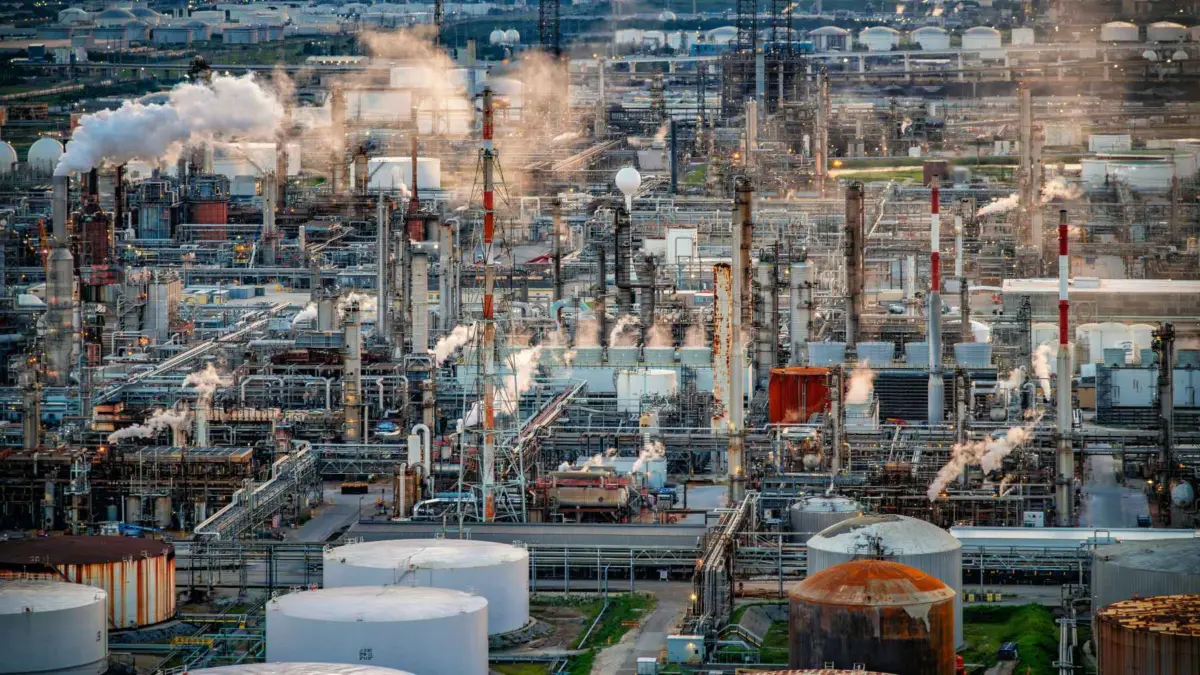
WASHINGTON & CARACAS — In a geopolitical development that has immediately reshaped the contours of hemispheric relations and global energy markets, the United States and Venezuela have officially inked a sweeping 25-year oil agreement. Finalized following crucial diplomatic groundwork led by U.S. Secretary of State Marco Rubio, the pact grants Washington significant operational influence over vast Venezuelan reserves, while providing Caracas with a much-needed economic lifeline.
The deal forms a cornerstone of the Donald Trump administration’s broader push for energy dominance, economic revitalization, and national security fortification. By securing access to tens of billions of barrels of proven reserves without direct financial outlay, the White House aims to stabilize domestic fuel prices, expand global energy supplies, and neutralize lingering foreign policy dependencies in an increasingly volatile world.
Main Facts: Core Pillars of the U.S.-Venezuela Energy Pact
The newly minted bilateral agreement represents one of the most significant transnational resource-sharing arrangements in modern history, balancing Washington’s strategic ambitions with Caracas’s pressing economic realities.
- Duration and Scope: The formal agreement spans a substantial 25-year period, establishing a long-term framework for bilateral energy cooperation, technical assistance, and commercial trade.
- Production Targets: The primary objective of the partnership is to ramp up crude oil extraction to 1.5 million barrels per day (bpd), a figure that would significantly alter regional output capacities.
- Financial Projections: The agreement anticipates attracting approximately $100 million in direct investments, generating an estimated $209 million in gross projected revenues for the Venezuelan state.
- The Revenue Model: According to statements from Venezuelan leadership, the net income for the South American nation is projected at $19 per barrel, calculated under the baseline assumption that the global average price of crude remains stable at $65 per barrel.
- Control and Sovereignty: A point of immediate public divergence involves operational oversight. President Donald Trump asserted that Washington has secured indirect operational control over more than 65,000 billion [sic: billion/thousand million] barrels of proven Venezuelan reserves at zero cost to American taxpayers. Conversely, Venezuelan leader Delcy Rodríguez was quick to qualify these remarks, emphasizing that the absolute sovereignty and legal title of the oil deposits remain firmly in Venezuelan hands and were explicitly excluded from privatization negotiations.
Chronology of Events: From Back-Channel Talks to Public Declarations
The pathway to this landmark agreement unfolded rapidly through a series of high-level diplomatic maneuvers, culminating in a weekend flurry of public statements across television networks and digital platforms.
1. The Diplomatic Legwork
In the weeks preceding the announcement, back-channel negotiations—heavily steered by Secretary of State Marco Rubio—accelerated between Washington and the government of Delcy Rodríguez in Caracas. Recognizing the mutual benefits of reviving Venezuela’s crippled petroleum sector and satisfying America’s strategic appetite for reliable energy inputs, negotiators drafted the framework for a technical and operational partnership.
2. The Formal Announcement and Truth Social Celebration
As soon as the ink dried on the preliminary framework, President Trump took to his official Truth Social account to trumpet the agreement as a monumental victory for American consumers and the nation’s strategic reserves. Trump framed the deal not merely as a commercial transaction, but as a strategic windfall, explicitly noting that the influx of Venezuelan crude would rapidly accelerate the replenishment of the U.S. Strategic Petroleum Reserve (SPR) and drive down gasoline prices at the pump nationwide.
3. Secretary Chris Wright’s Fox News Address
On the Saturday following the announcement, newly minted U.S. Energy Secretary Chris Wright appeared on Fox News to validate the administration’s stance. Wright contextualized the deal within a global framework, arguing that the world is experiencing a desperate shortage of reliable fossil fuels. He underscored that the partnership would not only inject fresh oil into global markets but also grant the United States vital access to expanded refining capacity.
4. Sunday Confirmations and Domestic Energy Policy Clarifications
By Sunday, Secretary Wright expanded upon the administration’s broader energy philosophy. In subsequent interviews, he contrasted the Trump administration’s expansionist agenda with the energy policies of the previous administration and state-level actors in California, officially cementing the ideological divide defining U.S. energy policy moving forward.
Supporting Data and Economic Mechanics
To fully comprehend the gravity of the U.S.-Venezuela agreement, analysts must examine the underlying metrics governing production, pricing, and geopolitical supply chains.
| Metric / Indicator | Projected Target / Baseline |
|---|---|
| Agreement Duration | 25 Years |
| Target Daily Production | 1.5 million barrels per day (bpd) |
| Estimated New Investment | ~$100 million |
| Projected State Revenue (Venezuela) | ~$209 million |
| Net Income per Barrel for Venezuela | $19.00 (based on a $65/bbl average market price) |
| Reserves Under Operational Influence | >65,000 million barrels of proven reserves |
The economic mechanics of the deal are designed to ensure that Venezuela receives a predictable revenue stream to service its domestic economic crises, while American entities—leveraging advanced extraction and refining technologies—optimize the output efficiency of fields that have suffered years of underinvestment, infrastructure decay, and international sanctions.
Furthermore, the integration of Venezuelan heavy crude into U.S. Gulf Coast refineries addresses a structural mismatch in America’s refining sector, which was specifically engineered to process heavy, sour crude grades historically imported from Latin America and the Middle East.
Official Responses and Perspectives
Reactions to the agreement have reverberated across international capitals, reflecting a mixture of triumphalism in Washington, pragmatic defense of sovereignty in Caracas, and watchful scrutiny from global competitors.
The White House Perspective: "A Gift of Energy"
President Trump did not mince words when describing the strategic utility of the accord. "This is a gift of Venezuela to the United States," Trump declared, emphasizing that the arrangement costs American taxpayers nothing while yielding maximum geopolitical and economic dividends.
Secretary of State Marco Rubio, whose regional expertise played a decisive role in bridging the diplomatic divide, echoed these sentiments. Rubio categorized the pact as a "win-win scenario" capable of restoring economic stability to a beleaguered Venezuelan populace while simultaneously insulating the United States from foreign supply shocks.
The Department of Energy: Rebuilding Refining Capacity
Energy Secretary Chris Wright emphasized the technical nature of the partnership, framing it as a triumph of engineering and commerce over ideological stagnation.
"This is going to bring more oil to the world, which it desperately needs right now," Wright stated during his Fox News appearance. "The Trump Administration is all about adding energy and bringing more commerce. We are providing the technical muscle to unlock potential that has been squandered for years."
Caracas’s Balancing Act: Rebuilding the Economy While Guarding Sovereignty
For Delcy Rodríguez and the Venezuelan government, the agreement represents a pragmatic retreat from total economic isolation. Facing years of crushing hyperinflation, crumbling infrastructure, and crippled oil output, Caracas needed a deep-pocketed, technologically proficient partner to revive its primary economic engine.
However, mindful of domestic political optics and historical sensitivities surrounding national sovereignty, Rodríguez was careful to draw a firm red line. By publicly clarifying that the underlying ownership of Venezuela’s subsoil wealth remains exclusively in state hands—and is entirely separate from operational and technical negotiations—Rodríguez sought to reassure domestic constituents that the nation’s core patrimony has not been compromised.
Strategic Implications: Geopolitics, Domestic Policy, and the Global Energy Landscape
The 25-year U.S.-Venezuela oil agreement carries profound implications that stretch far beyond the immediate commercial interests of the signatories, touching upon global market stability, domestic U.S. politics, and the broader green transition debate.
1. Global Market Stabilization and Geopolitical Leverage
By unlocking 1.5 million barrels per day of incremental production, the agreement introduces significant supply elasticity into a global energy market historically vulnerable to disruptions in the Middle East and Eastern Europe. For Washington, anchoring a major Latin American producer into its commercial and security orbit diminishes the leverage historically held by hostile petro-states, reinforcing American hegemony in Western Hemisphere resource management.
2. Reinforcing Domestic Energy Independence and Lowering Consumer Costs
Domestically, the Trump administration views the inflow of affordable heavy crude as a vital deflationary tool. By filling the Strategic Petroleum Reserve at an accelerated pace and feeding domestic refineries with low-cost feedstock, the White House aims to deliver tangible relief to American drivers at the gasoline pump, fulfilling a core economic promise of the administration.
3. A Direct Rebuke to Environmental and State-Level Climate Agendas
Secretary Chris Wright used the rollout of the agreement to draw a sharp contrast with domestic climate policies. In his post-agreement remarks, Wright explicitly criticized the legacy of the Biden administration and the aggressive green-transition policies pursued by states like California under Governor Gavin Newsom.
Blaming past closures of domestic refineries and stringent regulatory burdens for self-inflicted energy scarcity, Wright positioned the Venezuela deal as part of a counter-offensive. "We, of course, are rowing in the opposite direction," Wright affirmed, signaling that the White House remains fully committed to expanding fossil fuel extraction, modernizing traditional refining infrastructure, and rolling back restrictive environmental mandates to achieve total "energy dominance."
Conclusion
As the ink dries on this 25-year pact, the U.S.-Venezuela energy agreement stands as a watershed moment. Whether it achieves its ambitious production targets of 1.5 million barrels per day while successfully navigating the complex domestic political landscapes of both nations remains to be seen. Nevertheless, Washington and Caracas have irrevocably altered the geopolitical map, prioritizing pragmatic resource commerce over decades of ideological hostility.


Leave a Reply