

Global Energy Desk
Published: May 2026
Main Facts
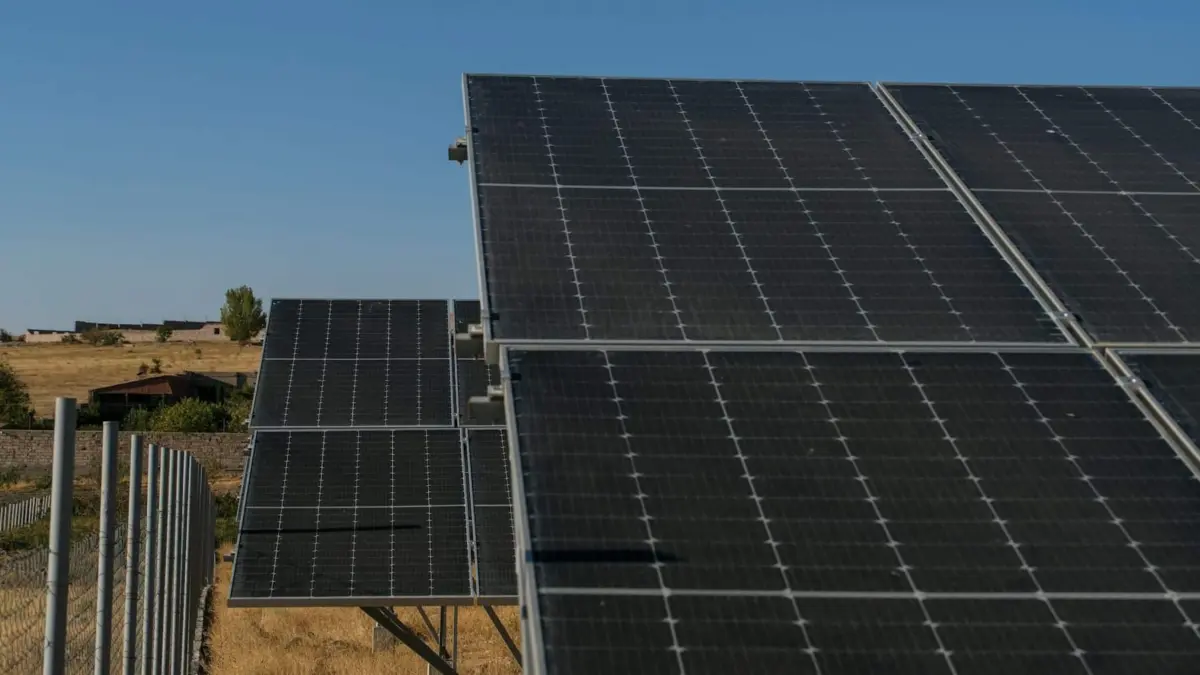
The global energy landscape is undergoing a silent yet profound structural transformation. At the heart of this shift is the explosive growth of hybrid energy projects—specifically, the physical and operational integration of utility-scale photovoltaic (PV) solar farms with advanced battery energy storage systems (BESS). Long considered a promising frontier in clean tech engineering, this model has transitioned from a niche alternative into a dominant force in modern power generation.
Recent market intelligence reveals that grid-connected solar-plus-storage installations attracted a record-shattering $25 billion in investments during the first half of 2026 alone. This capital influx signals a decisive turning point for institutional investors, who now view hybrid renewable infrastructure as a stable, highly profitable asset class capable of competing directly with conventional fossil-fuel power plants.
By pairing solar arrays with high-capacity lithium-ion and alternative-chemistry battery banks, developers have effectively dismantled the traditional Achilles’ heel of renewable energy: intermittency. No longer bound strictly by daylight hours or unpredictable weather patterns, modern solar facilities equipped with storage can dispatch power on demand, regulate grid frequency, and bypass the bottlenecks of legacy transmission systems. As a result, the global energy market is witnessing an unprecedented convergence of hardware manufacturing, software-driven grid management, and aggressive financial backing.
Chronology of a Paradigm Shift: The Evolution of Solar-Plus-Storage
To understand the current boom in hybrid energy systems, it is necessary to trace the technological and economic milestones that paved the way for the 2026 investment wave.
Phase 1: The Isolation Era (Pre-2018)
In the early days of utility-scale solar deployment, photovoltaic farms and battery storage were treated as entirely distinct entities. Solar plants were designed exclusively for generation, feeding raw electricity directly into the grid the moment photons hit the panels.
Storage, meanwhile, was largely confined to small-scale residential applications or experimental off-grid projects. During this era, grid operators viewed solar power with skepticism, categorizing it as "non-dispatchable" and unpredictable. When solar generation peaked in the mid-afternoon—often far outstripping local demand—operators frequently had to curtail (waste) clean energy to prevent grid overload.
Phase 2: The Regulatory Catalyst and Cost Reductions (2019–2023)
The turning point began as the manufacturing costs of lithium-ion battery cells plummeted by more than 80% over the decade, driven by surging electric vehicle (EV) production and economies of scale in Asia. Simultaneously, forward-thinking regulatory bodies—particularly in the United States, through mechanisms like the Federal Energy Regulatory Commission (FERC) Order 841—began removing market barriers for energy storage participation in wholesale electricity markets. Developers realized that co-locating batteries directly adjacent to solar panels dramatically reduced engineering, procurement, and construction (EPC) costs.
Phase 3: The Maturation of Grid-Scale Hybrids (2024–2025)
By the mid-2020s, standalone solar projects began facing severe saturation in high-penetration markets like California, Texas, and parts of Western Europe. Wholesale electricity prices during peak solar hours routinely dipped into negative territory, eroding profit margins for asset owners.
The industry responded by pivoting aggressively toward co-located designs. Batteries allowed developers to "time-shift" cheap midday solar energy, holding it in reserve and discharging it during the evening peak when electricity prices—and grid demand—were highest.
Phase 4: The 2026 Investment Explosion
Entering 2026, the hybrid model achieved critical mass. Surpassing previous historical records, the sector secured $25 billion in capital commitments in just the first six months of the year. Co-located facilities are no longer experimental; they represent the default standard for new utility-scale solar deployment in leading energy markets, fundamentally redefining how base-load power is conceptualized and delivered.
Supporting Data: Numbers Behind the Hybrid Boom
A closer examination of market data underscores the sheer scale of the solar-plus-storage expansion.
- $25 Billion in H1 2026: Global capital deployment into co-located solar and storage projects reached an all-time high in the first half of 2026, outperforming traditional standalone renewable asset classes in growth velocity.
- 50% Co-location Rate in the US: In the United States—the world’s most dynamic market for grid-scale storage—approximately half of all new energy storage capacity installed over the past quarter was built directly alongside photovoltaic farms.
- Substation and Land Optimization: Co-locating assets allows developers to share critical infrastructure, including high-voltage transformers, grid interconnection points, and land leases. Industry analyses suggest this shared footprint cuts capital expenditure (CapEx) by 10% to 15% compared to developing separate standalone sites.
- Curtailment Mitigation: In regions with high solar penetration, hybrid systems have successfully reduced energy waste by capturing up to 95% of generation that would have otherwise been curtailed during periods of low grid demand.
Despite these impressive metrics, the broader clean energy financing ecosystem remains nuanced. While solar-plus-storage is experiencing exponential growth, overall global clean energy investment figures between late 2025 and mid-2026 remained relatively flat. This plateau was largely driven by a sharp contraction in the offshore wind sector, following disappointing public auctions in key European markets such as Denmark and Germany. Consequently, the stellar performance of solar-plus-storage has served as a vital stabilizing engine for the broader renewable energy financing landscape.
Official Responses and Industry Perspectives
Energy ministers, financial analysts, and utility executives have weighed heavily on the rapid ascent of hybrid solar and storage systems, highlighting both the opportunities and the systemic vulnerabilities of the current transition.
The Regulatory and Market View
"The synergy between solar generation and battery storage is no longer just an innovative design choice; it is an absolute operational necessity for a modern, decarbonized grid," notes a senior energy policy advisor based in Washington, D.C. "What we are witnessing is the evolution of renewable energy from an intermittent supplementary resource into a fully dispatchable anchor of our energy infrastructure."
Market analysts emphasize that the ability of hybrid plants to interact with real-time wholesale electricity markets transforms them into commercial powerhouses. By bidding dynamically into ancillary services markets—such as frequency regulation and spinning reserves—asset owners can diversify revenue streams far beyond simple kilowatt-hour sales.
Caution from the Financial Sector
Despite the enthusiasm surrounding battery integration, financial institutions have issued notes of caution regarding the broader clean energy transition. Industry economists point out that the massive capital inflows into solar-plus-storage cannot single-handedly shoulder the weight of global decarbonization.
"While the growth curve of hybrid solar assets is breathtaking, it represents only a fraction of total transition finance," states a leading infrastructure fund manager in London. "The struggles seen in European offshore wind auctions demonstrate that we cannot rely on a single technology or regional market to drive decarbonization. We need a massive, diversified deployment of capital across wind, geothermal, green hydrogen, and long-duration storage if we are to meet global climate targets while satisfying soaring electricity demand driven by data centers and electrification."
Implications for the Future of Global Energy
The consolidation of solar-plus-storage projects carries profound implications for geopolitics, grid security, and the future of industrial energy consumption.
1. The Death of the "Baseload" Myth
For decades, traditional utilities argued that intermittent renewables could never replace fossil-fuel or nuclear baseload power plants because the sun does not always shine and the wind does not always blow. Hybrid projects equipped with multi-hour battery storage fundamentally dismantle this argument. By smoothing out generation profiles and offering dispatch flexibility on demand, solar-plus-storage facilities can mimic—and in some cases outperform—peaker gas plants, providing rapid-response capacity without burning hydrocarbons.
2. Supply Chain Dynamics and Raw Material Pressures
The explosive demand for utility-scale battery systems places immense pressure on the global supply chains for critical minerals, including lithium, cobalt, nickel, and graphite. As the United States and European nations race to scale up their domestic installation bases, policymakers are increasingly prioritizing localized supply chains and alternative battery chemistries (such as sodium-ion and iron-flow systems) to insulate the energy transition from geopolitical friction and trade volatility.
3. Transformation of the Wholesale Electricity Market
As co-located assets continue to saturate regional transmission organizations (RTOs), the traditional economic dynamics of wholesale power markets are shifting. Price volatility during peak hours is beginning to smooth out, as batteries absorb excess generation and release it systematically. This protects consumers from extreme price spikes during heatwaves or cold snaps, while simultaneously providing asset owners with predictable, recurring revenue streams.
4. A Blueprint for Total Decarbonization
Ultimately, the success of the $25 billion hybrid surge in early 2026 serves as a proof-of-concept for the rest of the energy sector. It demonstrates that green technologies can achieve true market maturity—competing on cost, reliability, and scale without relying indefinitely on government subsidies.
As the world navigates an era of escalating energy demand driven by artificial intelligence, electric mobility, and industrial electrification, the marriage of solar power and advanced battery storage stands out as one of humanity’s most powerful tools in building a resilient, fully decarbonized power grid for the future.




Leave a Reply