

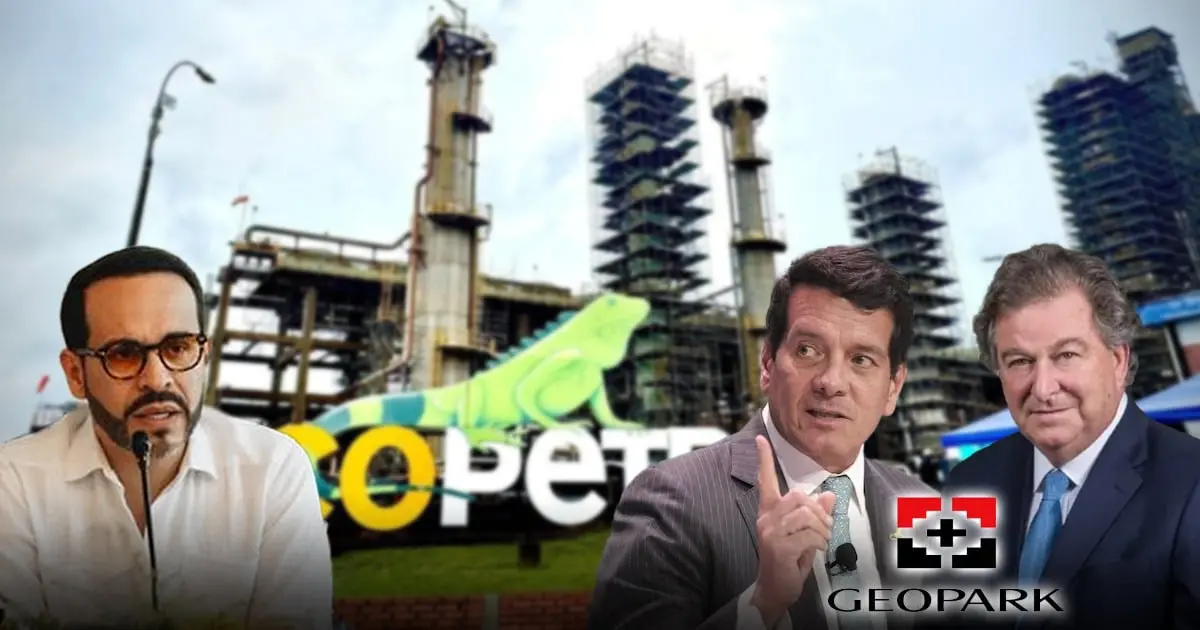
BOGOTÁ — With the political landscape shifting under the incoming administration of President Abelardo de la Espriella, Colombia’s energy sector stands on the brink of a historic paradigm shift. The government’s explicit campaign commitment to green-light hydraulic fracturing (“fracking”) under stringent environmental controls has immediately resurrected an intense debate that once paralyzed the country’s economic and legislative arenas.
Major domestic and international energy players—some licking their wounds from prior regulatory and political defeats, others emboldened by fresh capital injections—are aggressively repositioning themselves. Leading the charge are state-run giant Ecopetrol, regional powerhouse GeoPark (backed by the influential Gilinski family), Drummond Energy, and Parex Resources. These companies are preparing to dust off shelved unconventional projects, signaling a potential new gold rush in Colombia’s hydrocarbon basins.
Main Facts: The New Landscape for Unconventional Hydrocarbons
The prospective return of fracking to Colombia marks a dramatic pendulum swing from the policies of the preceding Gustavo Petro administration, which had made the energy transition and the complete abandonment of fossil fuel expansion the ideological cornerstones of its governance.
- The Policy Shift: President-elect Abelardo de la Espriella’s administration has pledged to dismantle the de facto bans and legal roadblocks that stifled unconventional exploration, arguing that Colombia needs to secure its energy self-sufficiency amidst declining traditional gas and oil reserves.
- The Key Players: Ecopetrol, GeoPark, Drummond, and Parex Resources are at the vanguard of the anticipated operational rollout. Meanwhile, international heavyweights like ConocoPhillips previously pulled out, and ExxonMobil surrendered its pilot contracts in 2023, though experts suggest they could reevaluate their stances given the new market conditions.
- The Geographic Focus: Operations and prospective drilling are primarily concentrated in the Middle Magdalena Valley (Valle del Magdalena Medio) and the Cesar-Ranchería basin, areas historically recognized for their rich hydrocarbon potential.
- Technological Evolution: Industry consensus among energy executives indicates that initial, highly restrictive "pilot projects" are no longer necessary. Decades of global technological advancements—particularly in the Permian Basin in Texas and Vaca Muerta in Argentina—mean companies can deploy mature, environmentally monitored methodologies from day one.
A Decade of Turbulence: Chronology of Fracking in Colombia
The journey of hydraulic fracturing in Colombia has been a tortuous legal, political, and social saga spanning over a decade.
1. The Genesis and Legal Battles (2014–2022)
- 2014: Under the administration of President Juan Manuel Santos, the Colombian government first laid the groundwork for commercial exploration of unconventional reservoirs, viewing it as the logical next step to sustain national oil and gas production.
- 2016: The National Hydrocarbons Agency (Agencia Nacional de Hidrocarburos – ANH) formally signed seven exploratory contracts aimed at unconventional deposits. However, fierce resistance from environmental organizations, local communities, and civil society triggered a protracted series of judicial battles.
- 2022: After years of injunctions and counter-suits, the Council of State (Consejo de Estado) delivered a landmark ruling declaring the regulatory framework for fracking lawful, provided strict environmental safeguards were maintained. Yet, by the time the judicial green light was flashed, the political reality of the country had completely transformed.
3. The Petro Freeze (2022–2026)
- August 2022: Gustavo Petro assumed the presidency on a platform centered on ecological transition. Under the leadership of successive Ministers of Mines and Energy Irene Vélez and Susana Muhamad, the administration systematically dismantled the legal and administrative pathways for unconventional extraction.
- 2023: The controversial Comprehensive Research Pilot Projects (Proyectos Piloto de Investigación Integral—specifically the Kalé and Platero projects in Puerto Wilches, Santander, led by Ecopetrol and ExxonMobil) were officially suspended and ultimately canceled. Consequently, ExxonMobil threw in the towel, returning its contracts to the ANH and withdrawing its local operating arm, XTO Energy.
4. The De La Espriella Era and Re-emergence (2026–Present)
- 2026: The electoral victory of Abelardo de la Espriella inverted the national energy strategy overnight. With the executive branch actively supporting unconventional development, pioneers and fresh capital investors alike began mobilizing assets to reclaim lost ground.
Supporting Data: Institutional Players and Regional Footprints
To understand how rapidly the sector can mobilize, one must examine the specific trajectories and asset bases of the companies leading the charge.
Ecopetrol and the Permian Legacy
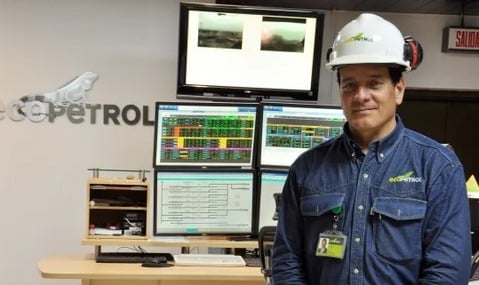
Ecopetrol, under the visionary leadership of its former president Felipe Bayón, spent years cultivating institutional expertise in hydraulic fracturing abroad. Bayón spearheaded Ecopetrol’s aggressive push into the Permian Basin in Texas through a high-profile joint venture with Occidental Petroleum (Oxy) initiated in late 2019.

The venture produced staggering output and revenue figures that consistently acted as a buffer against President Petro’s attempts to dismantle state-backed foreign energy ventures. Crucially, Ecopetrol deployed dozens of Colombian technical personnel to Texas, cultivating a cadre of engineers deeply versed in modern fracking operations. This technical muscle remains embedded within the company’s corporate memory, ready to be redeployed domestically.
GeoPark and the Gilinski Factor
Felipe Bayón now helms GeoPark, where he enjoys wide latitude to implement advanced extraction technologies. GeoPark has already established a formidable operational footprint in Argentina’s premier shale play, Vaca Muerta, successfully bringing online multiple wells utilizing advanced hydraulic fracturing in blocks such as Loma Jarillosa Este and Puesto Silva Oeste.
Adding considerable financial muscle to GeoPark is the recent, high-profile investment by billionaire businessman Jaime Gilinski, whose heirs have secured seats on GeoPark’s board of directors. With seasoned leadership under Bayón and fresh capital from the Gilinski syndicate, GeoPark is uniquely positioned to spearhead private-sector fracking in Colombia.

Drummond Energy’s Strategic Pivot
Drummond Energy, historically known for its massive coal-mining footprint in northern Colombia, has steadily diversified its portfolio. While Drummond did not participate in the frozen pilot projects of the Duque administration, it quietly secured four contracts for unconventional deposits.
Country Manager Alberto García has announced that Drummond intends to commence exploratory drilling by 2027 in the Cesar-Ranchería basin, spanning La Guajira and Cesar departments. Notably, the company has recalibrated its regional strategy, effectively sidelining plans to construct a liquefied natural gas (LNG) regasification terminal in Ciénaga, Magdalena, in favor of focusing capital expenditure directly on domestic fracking operations.
Parex Resources and the Magdalena Medio Consolidation
Parex Resources stands as the largest private oil producer in Colombia. The firm has steadfastly maintained its exposure to unconventional asset potential in the Middle Magdalena Valley. Following its acquisition of Frontera Energy’s assets, Parex executed a landmark $250 million strategic partnership with Ecopetrol to jointly develop conventional and unconventional assets across crucial fields such as Casabe and Llanito.
Official Responses and Industry Stakeholder Positions
The prospective reopening of the fracking debate has triggered sharp reactions across the political and labor spectrum.
- The Energy Industry: Private operators and trade associations, such as the Colombian Petroleum Association (ACP), have consistently argued that rigid bans on fracking robbed the country of vital exploration data while paradoxically forcing Colombia to import natural gas to cover domestic shortfalls—a dynamic critics label a profound economic paradox. Industry leaders maintain that modern, closed-loop water management systems and real-time seismic monitoring render historical environmental critiques obsolete.
- Labor Unions: Traditional labor organizations, most notably the Workers’ Trade Union (Unión Sindical Obrera – USO), have historically broken ranks with traditional left-wing political allies on this specific issue. The USO vigorously lobbied to protect Ecopetrol’s investments in US shale (such as the Permian operations), arguing that starving the state company of technological modernization threatens long-term employment, national fiscal stability, and energy sovereignty.
- Environmental and Civil Society Groups: Environmental collectives, local communities in Puerto Wilches, and academic defenders of the previous administration’s policies are preparing for renewed legal and social mobilization. They contend that regardless of political changes in Bogotá, the geological risks to subterranean aquifers, localized seismic stability, and greenhouse gas emission metrics remain unmitigated.
Implications for Colombia’s Energy Matrix and Economy
The pivot back toward unconventional extraction carries profound systemic implications for the Andean nation:
- Combating the Gas Deficit: Colombia faces an impending structural deficit in domestic natural gas reserves, forcing the country to rely increasingly on imported fuel. Implementing advanced extraction techniques in the Magdalena Medio and Cesar-Ranchería basins is viewed by proponents as the most viable short- to medium-term remedy to replenish reserves and stabilize industrial and residential energy tariffs.
- Fiscal Health and Royalty Revenues: Ecopetrol remains the crown jewel of Colombia’s public finances, providing substantial dividends directly to the national budget. Unlocking high-yield unconventional reservoirs could revitalize declining production curves from mature conventional fields, safeguarding national credit ratings and public spending capacity.
- Geopolitical and Capital Realignment: With international players like ExxonMobil monitoring regulatory developments and regional giants like Pluspetrol (owned by Edith Rodríguez) keeping a close eye on the market, Colombia could re-establish itself as a preferred destination for complex upstream capital deployment in Latin America.
As the De La Espriella administration transitions from campaign rhetoric to concrete regulatory decrees, the stage is set for a high-stakes showdown between energy security imperatives and environmental preservation movements—one that will define Colombia’s economic trajectory for decades to come.



Leave a Reply