

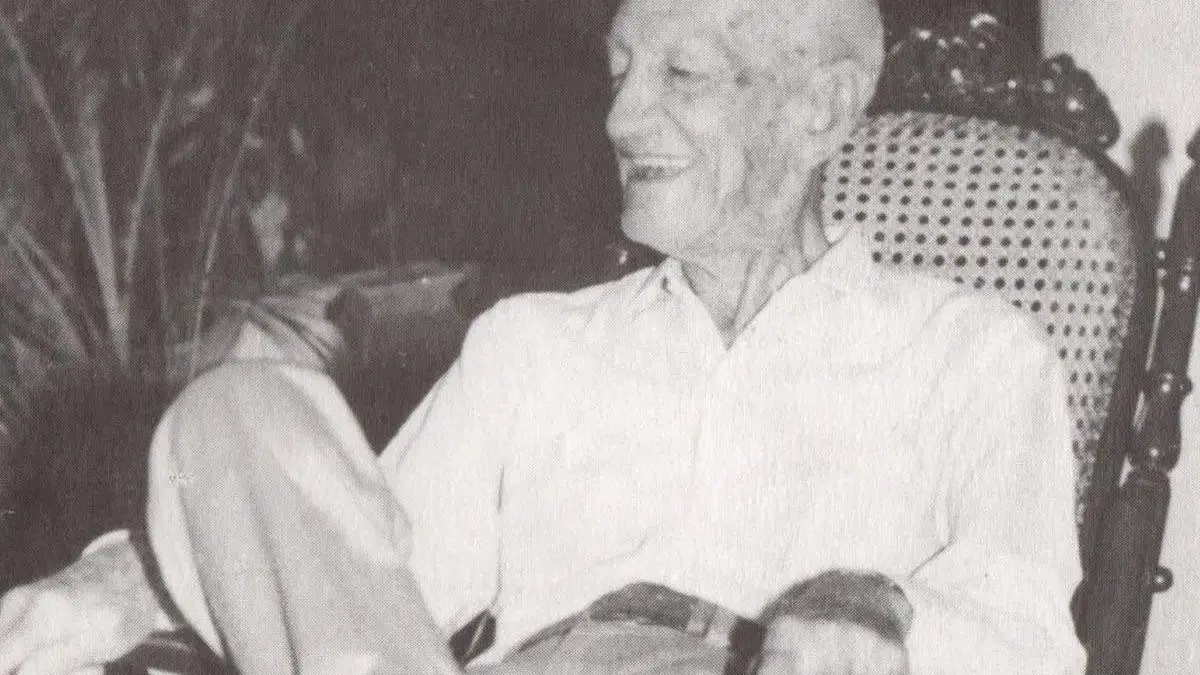
VALLEDUPAR, COLOMBIA — In the vast, sun-drenched expanse of Colombia’s northern department of Cesar, where the accordion breathes life into the folklore of the Magdalena River valley, the name Tobías Enrique Pumarejo Gutiérrez remains an ideological cornerstone. Better known to history and folklore as “Don Toba,” Pumarejo was far more than a wealthy landowner or a charismatic troubadour of the early 20th century. He was a visionary pioneer who helped forge the lyrical, romantic, and poetic identity of vallenato music long before it captured the global stage.
As cultural institutions and music historians mark the 120th anniversary of his birth, "Don Toba" stands out as a fascinating figure: a man who could not play a single musical instrument yet composed more than 150 timeless masterpieces. He bridged the gap between rustic folk traditions and refined lyricism, mentored legends like Rafael Escalona, and gifted Latin America the definitive soundtrack of the December holidays.
Main Facts: The Legend of "Don Toba"
Born in Valledupar on August 8, 1906, into a prosperous cattle-ranching family, Tobías Enrique Pumarejo Gutiérrez lived a life defined by contrasts and passions. In his seminal book on the history of vallenato songs, Cuando Matilde camina, researcher Julio Oñate Martínez paints a vivid portrait of Pumarejo as a "famous vallenato troubadour, romantic and party-loving, a descendant of landowners, who had a great fondness for sorrel horses, fine hats, and women with penetrating eyes."
Though born into an elite social class that traditionally looked down upon accordion music—then considered the domain of lower-class peasants and farmworkers—Pumarejo fiercely embraced the sound of the region. His life can be measured not merely by his wealth or his administrative duties at the family estate, El Otoño, but by his contributions to Colombian cultural heritage:
- The Reluctant Instrumentalists: Despite composing more than 150 songs spanning vallenatos, rancheras, waltzes, and pasillos, Pumarejo never learned to play an instrument. He hummed or sang his verses, relying on others to bring them to rhythmic life.
- The Pioneer of Romantic Vallenato: Long before the romantic vallenato boom of the 1980s and 1990s, Pumarejo infused his lyrics with emotional vulnerability, deep longing, and poetic sophistication, setting a precedent for disciples like Gustavo Gutiérrez.
- The Holiday Anthem: In 1948, he handed over his composition "La víspera de año nuevo" (New Year’s Eve) to legendary interpreter Guillermo Buitrago, creating an immutable cultural ritual that continues to define December celebrations across Colombia and the diaspora.
- A Cultural Gatekeeper: As a man of considerable social standing, Pumarejo used his influence to break down class barriers, famously opening the doors of the exclusive Club de Valledupar to accordion music and serving as a juror in the inaugural Festival de la Leyenda Vallenata in 1968.
Chronology: A Life Bound to Music, Land, and Horses
1906–1920s: Formative Years and the Orquesta Magdalenense
Tobías Enrique Pumarejo was born in Valledupar on August 8, 1906, back when the region was still part of the vast Magdalena Department. Following the customs of prosperous families of the era, he was sent away in his youth to complete his secondary education at the prestigious Liceo Antioqueño of the University of Antioquia in Medellín.
It was in the heart of Antioquia, far from the scorching heat of his native Caribbean plains, that Pumarejo first organized his cultural resistance. Alongside other illustrious young costeños—including future governor Pedro Castro Monsalvo—he formed the Orquesta Magdalenense. This amateur group sought to champion and diffuse the traditional music of Colombia’s Caribbean coast in the Andean interior. It was within this collegiate ensemble that Pumarejo truly began honing his skills as a composer.
The 1930s–1940s: El Otoño and the Legendary Parrandas
Upon returning to the Caribbean lowlands, Pumarejo took over the administration of El Otoño, the family’s sprawling estate near El Copey in the modern-day Cesar Department. El Otoño quickly became a mythical nexus for Colombian folklore.
Pumarejo’s passion for accordion music was rivaled only by his love for horses. He dedicated numerous compositions to his prized animals, including “Los tres caballos,” “Mi potrerito,” and “El alazanito” (the latter famously recorded by Alfredo Gutiérrez).
More importantly, El Otoño was legendary for its parrandas—marathon musical gatherings orchestrated by Don Toba that could last up to fifteen days straight. It was during these legendary sessions that Pumarejo mentored a new generation of songwriters. He often recounted giving the very first composition lessons to future masters like Rafael Escalona and Gustavo Gutiérrez.
1948: The Birth of a Holiday Immortal
The year 1948 marked a watershed moment in Colombian popular music. Pumarejo ceded his merengue vallenato “La víspera de año nuevo” to troubadour Guillermo Buitrago. The song captured the collective soul of the nation, transforming into an inescapable cultural artifact.
As writer José I. Pinilla Aguilar notes in Cultures of Colombian Music:
"Mixed feelings pour into every chest upon hearing the explosions of fireworks that, like giant fireflies, streak across the skies on those joyful nights when one year dies and another is born (…). Travel superstitions carrying a suitcase and walking around the house, grapes, glasses of wine, feasts, drinks, and a thousand other things intertwine across all social fabrics that populate the universe, with the singing of ‘La víspera de año nuevo’."
1968–1995: Elder Statesman of Vallenato
As vallenato grew from a regional folk expression into a recognized national genre, Pumarejo served as an elder statesman and moral authority. In 1968, he sat as a distinguished juror for the inaugural edition of the Festival de la Leyenda Vallenata, the genre’s premier competitive event.
Don Toba continued writing, living, and shaping the cultural landscape of the Caribbean until his passing. He died in Barranquilla on April 8, 1995, at the age of 88, leaving behind an indelible legacy.
Supporting Data: The Catalogue of Don Toba
While “La víspera de año nuevo” brought him universal acclaim, Pumarejo’s musical footprint is vast and multifaceted. Researchers catalog more than 150 distinct compositions. His work broke out of strict vallenato metrics to explore international rhythms, demonstrating a sophisticated musical ear despite his inability to play an instrument.
Selected Notable Works of Tobías Enrique Pumarejo:
- “La víspera de año nuevo” – The definitive Latin American New Year anthem.
- “Mírame Fijamente” – Featuring verses adapted from a copla heard in a film starring Spanish icon Sarita Montiel.
- “Muchacha patillalera” – A homage to the women of Patillal, a cradle of vallenato lore.
- “La cita” – A masterclass in romantic anticipation.
- “Nueve de mayo” – A lyrical snapshot of regional memory.
- “Alma de Valledupar” – A deeply personal love letter to his hometown.
- “Desolación” – Demonstrating his capacity for heartbreak and dramatic tension.
- “Sabana sanjuanera” – Capturing the topography and spirit of San Juan del Cesar.
- “Ojos penetrantes” – A direct nod to the muses that inspired his life.
- “La Muerte de Pedro Castro” (also known as “Tres de marzo”) – A poignant elegy for his lifelong friend and fellow cultural pioneer.
- “Mala suerte” – Blending fatalism with catchy Caribbean cadence.
Official Responses and Cultural Perspectives
The enduring reverence for Tobías Enrique Pumarejo is regularly highlighted by folklorists, historians, and institutional bodies dedicated to preserving Colombia’s intangible heritage.
Dr. Abelardo de Castro, a cultural historian specializing in Caribbean traditions, emphasizes the social engineering behind Pumarejo’s life:
"People remember Don Toba for his parties and his horses, but they often overlook the quiet revolution he led. In early 20th-century Colombia, high society viewed accordion music as vulgar. Because Don Toba was a wealthy landowner with elite lineage, his open embrace of the genre legitimized it. He dragged vallenato out of the dusty backroads of the farms and seated it proudly in elite parlors. Without his social capital, the institutionalization of vallenato would have taken decades longer."
Meanwhile, the Fundación Festival de la Leyenda Vallenata has frequently underscored Pumarejo’s role in the genre’s structural evolution. In commemorative statements released ahead of his 120th anniversary milestone, the foundation noted that Pumarejo’s transition from narrative storytelling to inward-looking emotional reflection laid the structural framework for the "new wave" of romantic vallenato that dominated later decades.
Implications: Securing a Legacy for Future Generations
One hundred and twenty years after his birth, the legacy of Tobías Enrique Pumarejo offers vital lessons for contemporary Latin American music. As commercial pressures increasingly push folk genres toward homogenized, fast-paced formulas, the artistry of Don Toba serves as a reminder of the power of lyrical depth and social integration.
- Bridging Class Divides: Pumarejo’s life demonstrates how cultural gatekeepers can use their privilege to elevate marginalized art forms. By bringing accordion music into elite spaces without diluting its authenticity, he created a unified cultural identity in a deeply stratified society.
- The Evolution of Songwriting: By pioneering romantic themes within a genre traditionally dominated by chronicle and news-reporting ballads (cantos de crónica), Pumarejo proved that folk music could scale universal emotional heights while retaining its local color.
- Institutional Memory: As contemporary vallenato faces rapid commercialization, cultural preservationists argue that the roots established by figures like Pumarejo must be actively taught to younger generations. His catalog remains a primary text for any serious student of Colombian musicology.
Ultimately, every December 31st, when families across the hemisphere embrace one another to the booming strains of “La víspera de año nuevo,” they are dancing to the heartbeat of Tobías Enrique “Don Toba” Pumarejo—a man who couldn’t touch an instrument, yet permanently tuned the strings of the Colombian soul.


Leave a Reply