

Main Facts: The Passing of a Vallenato Legend
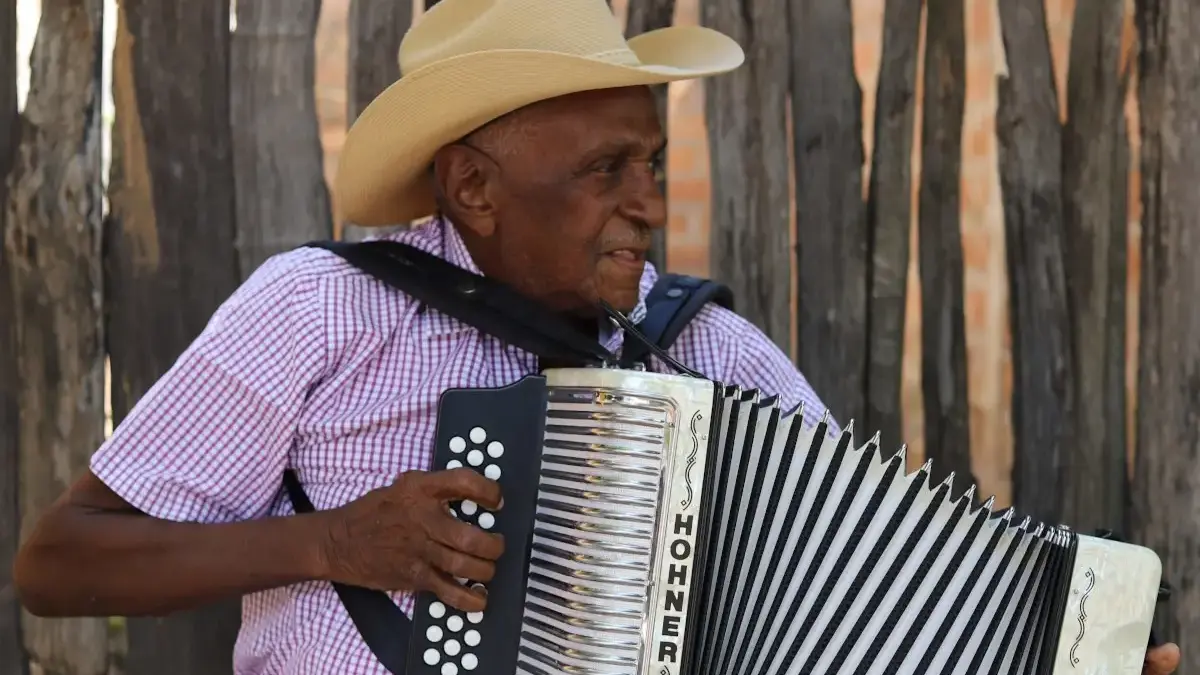
Náfer Durán Mojica, affectionately known throughout Colombia as "Naferito" and crowned the 1976 Vallenato King (Rey Vallenato), passed away early Tuesday morning in Valledupar, the capital of the Cesar department. He was 92 years old. The iconic accordionist, composer, and juglar had been admitted to a local healthcare clinic several days prior following severe health complications stemming from chronic cardiac ailments.
The news of his death was formally confirmed by his son, the acclaimed composer Luis Durán, who expressed the family’s profound grief and sense of pride in a moving public message:
"Exemplary father, today you leave us with a melancholic heart, but with the satisfaction of duty fulfilled… goodbye, father of my soul."
Durán’s passing marks the loss of one of the last remaining foundational figures of traditional vallenato music. A central pillar of one of the most celebrated musical dynasties in Colombian history, Durán was instrumental in defining the genre’s canon during the 20th century. Beyond his prowess as a virtuoso performer on the diatonic accordion, he played a pivotal role in discovering and launching the recording career of Diomedes Díaz, who would go on to become the most commercially successful vallenato artist in history.
Throughout his lifelong career, Náfer Durán remained a staunch defender of what he termed vallenato puro (pure vallenato)—the authentic, unadulterated roots music of the Caribbean plains, rooted in storytelling, regional identity, and traditional rhythms (paseo, merengue, puya, and son). Dressed in his signature elegant hat and sporting an infectious smile, Durán embodied the spirit of the rural juglar (minstrel), leaving behind a rich legacy of over 100 original compositions.
Chronology: From El Paso to the Pinnacle of Vallenato History
To understand the magnitude of Náfer Durán’s impact on Colombian culture, one must examine the pivotal milestones that defined his life and six-decade career:
[Early Years] --------> [1968] -------------> [1976] -----------------> [1983] -----------------> [2020s-2025] ----> [Present]
Musical upbringing     Brother Alejo         Crowned Rey Vallenato;     Declared "Fuera        Late-life tributes;      Passing in
in El Paso, Cesar      crowned 1st King      records *Herencia          de Concurso" by jury   composes spiritual       Valledupar at
                       of Vallenato          Vallenato* w/ Diomedes     including Márquez      compositions             age 92
Early Life and Musical Roots
Náfer Durán Mojica was born in El Paso, a municipality in the department of Cesar, Colombia. He was the son of Náfer Donato Durán Mojica and Juana Francisca Díaz Villarreal, a household where music was not merely a pastime, but an essential language. Raised in an environment steeped in traditional folklore, young Náfer and his siblings grew up surrounded by diatonic accordions. Durán frequently recounted that from his earliest memories, he knew how to do nothing else but play the accordion, explaining:
"It was our favorite toy. That was the primary instruction we received from the time we were very young children."
1968: The Rise of the Durán Dynasty
The Durán name became forever etched into the annals of Latin American music when Náfer’s elder brother, Gilberto Alejandro "Alejo" Durán (El Negro Grande), won the inaugural Rey Vallenato title at the first-ever Festival de la Leyenda Vallenata in 1968. This historic achievement established the Durán dynasty as foundational figures in the formal recognition of vallenato as a national treasure.
1976: Crowned King and Launching "El Cacique"
In 1976, Náfer Durán achieved the highest honor in traditional Colombian music by winning the professional accordion category at the 9th Festival de la Leyenda Vallenata in Valledupar.
That same year, Durán made an extraordinary contribution to Latin American music history. Recognizing the raw, untapped talent of a young, unknown singer-songwriter from La Junta named Diomedes Díaz, Durán invited him into the recording studio. Together, they produced Herencia Vallenata, the debut album that launched Díaz’s legendary career. Durán’s endorsement of the young artist—who would later be dubbed El Cacique de La Junta—helped alter the trajectory of tropical music in South America.
1983: The Historic "Fuera de Concurso" Declaration
During the 1983 edition of the Festival de la Leyenda Vallenata, Náfer Durán entered the accordion competition once again. The judging panel assembled that year was among the most distinguished in the festival’s history, featuring Nobel Prize-winning author Gabriel García Márquez, former Minister of Communications Rafael Rivas Posada, past Vallenato King Miguel López, and legendary blind composer Leandro Díaz.
Recognizing that Durán’s technique, feeling, and historical authority placed him far beyond the standard scoring parameters of a conventional contest, the jury made the unprecedented decision to declare him fuera de concurso ("out of competition" / beyond classification). Deeming his performance "fuera de serie" (extraordinary and incomparable), the jury preserved his elite status while crowning Julio Rojas Buendía as that year’s festival king.
Twilight Years and Final Works
In his later years, Durán stepped back from demanding concert tours but remained deeply committed to his craft. He turned his creative attention toward sacred themes, dedicating his final months to composing religious songs centered on his faith in God. He continued to appear at cultural honors across Northern Colombia, including a high-profile tribute at the Valledupar Chamber of Commerce.
Supporting Data: Musical Legacy, Compositions, and the Durán Dynasty
Catalogue and Significance of Work
Náfer Durán authored over 100 registered compositions spanning the four traditional vallenato rhythms. His catalogue is widely revered for its narrative purity, poetic simplicity, and emotional depth.
| Song Title | Rhythm / Key Feature | Cultural Impact & Notes |
|---|---|---|
| Déjala vení | Puya / Merengue | Highly complex cadence; remains a standard test piece for accordionists in national competitions. |
| Sin ti | Minor Key Paseo | One of Durán’s personal favorites; showcased his masterclass in emotional minor-tone phrasing. |
| Con sentimiento | Traditional Paseo | Celebrated for its intricate bass accompaniment and traditional lyricism. |
| La grabadora | Storytelling Paseo | Popularized across the Caribbean region; widely covered by subsequent generations. |
Among his works, Déjala vení holds a unique place in accordion pedagogy. Because of its demanding fingerwork, syncopated rhythms, and traditional phrasing, the composition is frequently selected by young musicians seeking to demonstrate technical mastery before the judges at the Festival de la Leyenda Vallenata.
The Durán Dynasty in Context
In Colombian folklore, few families command the respect accorded to the Durán dynasty of El Paso, Cesar. Alongside the Zuleta, López, and Granados families, the Duráns shaped the modern sound of the accordion on the Caribbean coast.
While Alejo Durán was celebrated for his rhythmic cadence and expressive vocal calls (¡Aepa!), Náfer was lauded for his precise harmonic arrangements, creative bassline runs, and versatility across both major and minor keys.
                  [Durán Dynasty Roots]
              Náfer Donato Durán Mojica
                        &
          Juana Francisca Díaz Villarreal
                        |
        +---------------+---------------+
        |                               |
 Alejandro "Alejo" Durán         Náfer Durán Mojica
 (1st Rey Vallenato, 1968)      (Rey Vallenato, 1976)
                                        |
                                   Luis Durán
                              (Composer & Musician)
Official Responses and Tributes
The death of Náfer Durán provoked a wave of tributes from civic leaders, cultural institutions, and prominent figures across the music industry.
Statements from Family
Luis Durán, speaking on behalf of the family, emphasized his father’s unwavering dedication to both his family and his artistic calling. He reflected on Náfer’s quiet discipline, recalling how the juglar practiced daily up until his hospitalization, treating the accordion with the same reverence in his nineties as he did in his youth.
Náfer Durán’s Final Public Words
During a public homage held in his honor at the Chamber of Commerce of Valledupar, Náfer Durán delivered an emotional address reflecting on his lifetime commitment to folklore:
"Receiving another tribute at my age fills me with profound satisfaction, because it highlights that I put my talent at the service of pure vallenato—the kind they want to destroy, but haven’t been able to. And mark my words, I remain firm with my accordion until God takes me to His holy kingdom. Every day I thank Him for life and for everything He has given me alongside my family."
Cultural Organizations and Government Bodies
- The Vallenato Legend Festival Foundation (Fundación Festival de la Leyenda Vallenata): Issued a statement mourning the loss of the 1976 King, describing him as "an indelible pillar of our musical identity whose notes gave life to the true essence of rural minstrelsy."
- Departmental Government of Cesar: Declared an official period of mourning, highlighting Durán’s lifelong efforts to preserve the intangible cultural heritage of the region. Local authorities confirmed that public memorial services would be held in Valledupar and El Paso to allow fans and fellow accordionists to pay their final respects.
Implications: The Defense of Traditional Vallenato and Enduring Legacy
The Transition of UNESCO-Recognized Heritage
In 2015, UNESCO added traditional vallenato music to its list of Intangible Cultural Heritage in Need of Urgent Safeguarding. The designation cited the threat posed by commercialization, the rise of modernized fusion pop, and the rapid disappearance of the classic juglares—the itinerant musicians who historically traveled from town to town spreading news through song.
The passing of Náfer Durán represents a critical turning point in this preservation effort. As one of the few surviving masters who bridged the gap between rural 20th-century folklore and the modern recording era, Durán’s death leaves a creative void that cultural guardians warn must be met with renewed educational initiatives.
[Traditional Juglares] --------> [Commercial Era] --------> [UNESCO Safeguarding]
- News delivered via song        - Mass production          - Preservation of 4 rhythms
- Rural narrative style          - Pop/Fusion elements      - Academy training
- Náfer & Alejo Durán            - Digital distribution     - Honoring original masters
Preserving "Vallenato Puro"
Durán’s lifelong crusade against the dilution of traditional vallenato resonated deeply with folk purists. Throughout his career, he voiced concern over modern trends that reduced the complex four-rhythmic framework (paseo, merengue, puya, son) to standard pop structures.
By leaving behind a documented catalogue of authentic playing techniques—characterized by independent left-hand bass execution and narrative lyricism—Durán’s work serves as a foundational text for music academies across South America. His legacy ensures that as vallenato continues to evolve globally, its foundational roots remain firmly anchored in the soul of the Caribbean plains.


Leave a Reply