

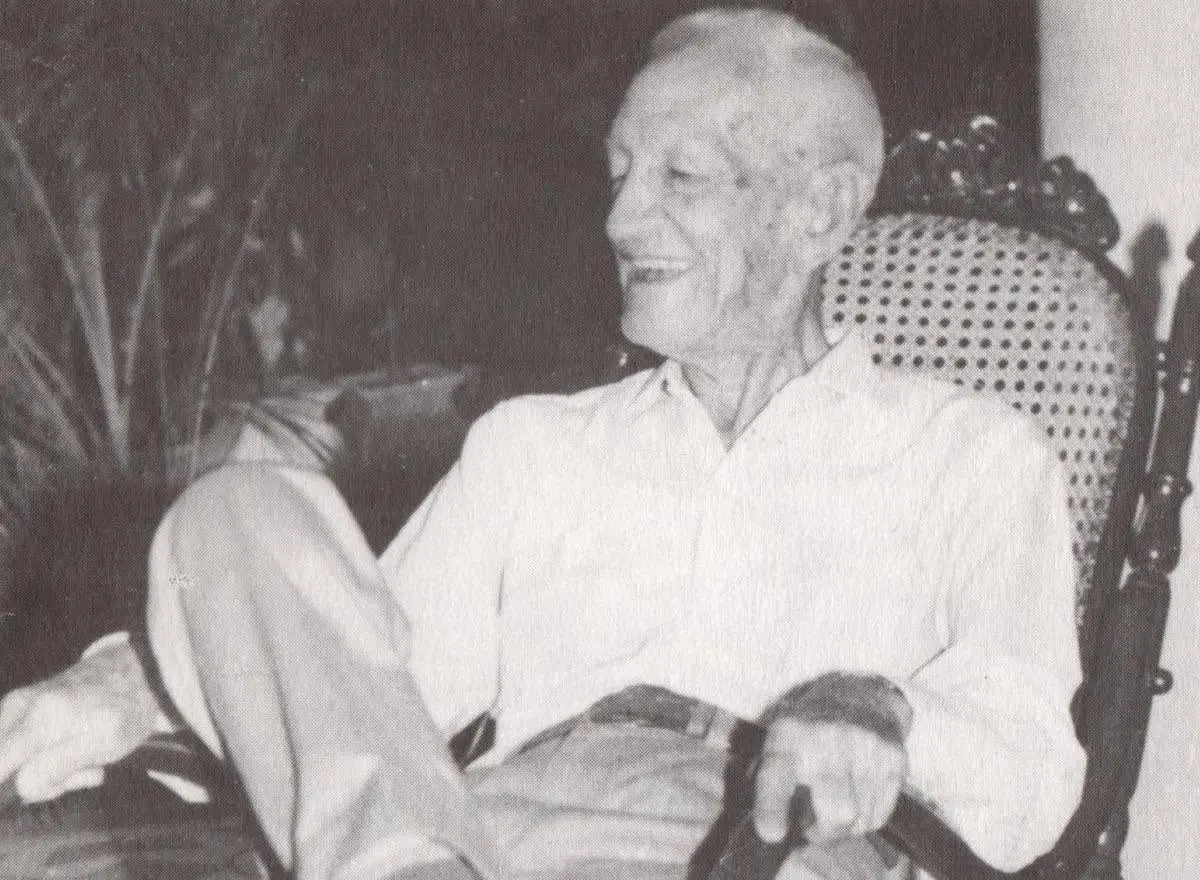
VALLEDUPAR, COLOMBIA — In the rich, sun-drenched tapestry of Colombian folklore, few figures loom as large or as colorfully as Tobías Enrique Pumarejo Gutiérrez. Better known by his eternal moniker, "Don Toba," Pumarejo was far more than a wealthy landowner and legendary troubadour; he was a foundational architect of vallenato music. Operating in an era before the genre filled stadiums or dominated international airwaves, Don Toba helped elevate accordion-driven folk tunes from the rural plains of the Caribbean coast into sophisticated lyrical poetry that would eventually conquer the world.
As cultural historians and traditionalists commemorate 120 years since his birth on August 8, 1906, Don Toba remains the quintessential embodiment of the romantic, bohemian spirit of nineteenth- and twentieth-century Caribbean Colombia. Though he never learned to play a single musical instrument, his innate ear for melody, combined with an aristocratic charm and an insatiable appetite for romantic pursuits and legendary celebrations, cemented his legacy as one of the most important precursors in the history of Colombian popular music.
Main Facts: The Legend and Legacy of Don Toba
To understand Tobías Enrique Pumarejo is to understand the aristocratic roots of early vallenato. In his acclaimed book Cuando Matilde camina, dedicated to the historical evolution of vallenato songs, researcher Julio Oñate Martínez paints a vivid portrait of Pumarejo: "A famous vallenato troubadour, romantic and party-loving, a descendant of landowners, who had a great fondness for bay horses, fine hats, and women with penetrating eyes."
Born into a prosperous cattle-ranching dynasty in Valledupar—which at the time belonged to the Department of Magdalena—Pumarejo’s life bridged the gap between elite agrarian society and the raw, unpolished folklore of the working-class Magdalena department.
Despite lacking any formal training in music theory or instrumental performance, Pumarejo composed more than 150 musical works. His catalog transcended the traditional boundaries of vallenato, branching successfully into rancheras, waltzes, and pasillos. Yet, it was his poetic intuition that truly set him apart. Long before the "vallenato romántico" movement took the genre by storm in the late 20th century, Don Toba was already infusing his verses with a tender, lyrical vulnerability that contrasted sharply with the purely narrative, chronicle-style songs of his contemporaries.
His crowning achievement as a composer came in 1948 when he handed a sweeping merengue vallenato titled "La víspera de año nuevo" (New Year’s Eve) to legendary singer Guillermo Buitrago. The song instantly transformed into an indelible cultural artifact, serving ever since as the compulsory soundtrack for the holidays in Colombia and across the Latin American diaspora.
Chronology: A Life Spent Between the Plains and the Parlor
Early Years and the Medellín Awakening (1906–1920s)
Born on August 8, 1906, young Tobías was sent away from the sweltering heat of Valledupar during his youth to complete his secondary education at the prestigious Liceo Antioqueño of the University of Antioquia in Medellín. Far from home, Pumarejo experienced a profound longing for his native Caribbean coast.
To bridge this geographical and emotional gap, he and a group of fellow costeño expatriates—among them future governor Pedro Castro Monsalvo—formed the Orquesta Magdalenense. Operating purely as amateurs, the group dedicated themselves to performing and disseminating coastal music in the Andean heartland. It was within this collegiate crucible that Pumarejo first began to hone his skills as a lyricist and cultural ambassador.
The Era of "El Otoño" and Legendary Parrandas (1930s–1940s)
Upon completing his studies, Pumarejo returned to his homeland and assumed the management of El Otoño, the sprawling family cattle estate near El Copey in the modern-day Department of Cesar.
If horses were his second-greatest passion, music and celebration were his first. El Otoño quickly became legendary throughout the region not just for its livestock, but for the legendary parrandas vallenatas hosted by Don Toba. These marathon celebrations frequently lasted up to fifteen days, drawing accordionists, singers, and poets from across the Caribbean lowlands.
It was during these legendary gatherings that Pumarejo served as an informal mentor to the next generation of giants. He frequently recounted giving foundational composition lessons to young protégés who would later canonize the genre, including Rafael Escalona and Gustavo Gutiérrez.
The Cultural Patriarch and Festival Juror (1950s–1980s)
As vallenato began to transition from localized folk tradition to a nationally recognized commercial genre, Don Toba remained a central, unifying figure. Backed by his family’s privileged economic standing, he famously used his social capital to break down regional and class barriers, opening the doors of the exclusive Club de Valledupar—historically closed to lower-class folk musicians—to accordionists and jugstrels.
In 1968, his authority within the cultural ecosystem was officially recognized when he was appointed as a member of the elite jury for the inaugural edition of the prestigious Festival de la Leyenda Vallenata (Festival of the Vallenato Legend).
Final Years and Passing (1995)
Tobías Enrique Pumarejo passed away in Barranquilla on April 8, 1995, at the age of 88. Even in his twilight years, he remained a sharp-witted raconteur, a living link to the golden age of Colombian troubadours.
Supporting Data: The Musical Catalog of a Master
Don Toba’s legacy is preserved in a vast catalog of over 150 compositions. While "La víspera de año nuevo" remains his most globally recognized contribution, his repertoire features numerous gems that defined the emotional landscape of mid-century Caribbean Colombia.
Notable Works by Tobías Enrique Pumarejo:
- "La víspera de año nuevo": Immortalized by Guillermo Buitrago, this timeless merengue continues to define the emotional atmosphere of December 31st across Latin America.
- "Mírame Fijamente": A brilliant composition featuring verses inspired by a cuplé heard in a film starring Spanish icon Sarita Montiel.
- Horse-Inspired Trilogía: Reflecting his lifelong equestrian passion, Pumarejo wrote "Los tres caballos," "Mi potrerito," and "El alazanito" (the latter famously recorded by accordion maestro Alfredo Gutiérrez).
- Lyrical Chronicles and Romances: "Muchacha patillalera," "La cita," "Nueve de mayo," "Alma de Valledupar," "Desolación," "Sabana sanjuanera," "Ojos penetrantes," "La Muerte de Pedro Castro" (also known as "Tres de marzo"), and "Mala suerte."
Cultural Impact as Described by Scholars
The profound sociological impact of his work was captured by writer José I. Pinilla Aguilar in Cultures of Colombian Music:
"Mixed feelings pour into every chest upon hearing the bursts of firecrackers that, like giant fireflies, streak across the skies on joyous nights when one year dies and another is born (…). Superstitions of traveling with a suitcase walking around the house, grapes, glasses of wine, feasts, drinks, and a thousand other things intertwine across all social fabrics that populate the universe, with the song of ‘La víspera de año nuevo’."
Official Responses and Cultural Commemorations
As the nation marks the 120th anniversary of his birth this August, cultural institutions, folklorists, and regional authorities have mobilized to ensure that Don Toba’s contributions are not lost to modern amnesia.
The Ministry of Culture, alongside the departmental government of Cesar and the Valledupar Municipality, has scheduled a series of commemorative virtual exhibitions, academic panels, and tribute concerts highlighting his bridge-building role between elite society and traditional folk artists.
"Tobías Enrique Pumarejo represents a rare synthesis in Colombian history," noted a joint statement released by the Valledupar Heritage Foundation. "He was a man of immense privilege who chose to dedicate his soul to the marginalized music of the accordion. Without his aristocratic patronage, his lyrical sensitivity, and his commitment to the parranda, vallenato would not possess the refined emotional depth that distinguishes it today."
Implications: The Genesis of Romantic Vallenato
Beyond his historical novelty as a non-instrumentalist composer who threw month-long parties, Don Toba’s true legacy lies in the structural evolution of vallenato music itself.
Before Pumarejo and his contemporaries entered the fray, vallenato was largely transactional and factual—songs were sung as newspaper items, reporting on local murders, political disputes, cattle thefts, or localized gossip. While these "sones" and "paseos" possessed immense anthropological value, they rarely delved deeply into the abstract realms of introspective heartbreak, philosophical longing, or delicate romantic idealization.
By introducing complex emotional nuances into his verses—drawing inspiration from Spanish cinematic cuplés, European waltzes, and his own intense romantic escapades—Pumarejo laid the foundational blueprint for vallenato romántico. This stylistic shift was later seized upon and perfected by his direct disciples, most notably Gustavo Gutiérrez, and subsequently carried forward by generations of modern singer-songwriters who turned vallenato into Colombia’s premier romantic export.
As the echoes of "La víspera de año nuevo" continue to ring out every December across the globe, the spirit of Don Toba—seated on a fine bay horse, wearing a spotless hat, gazing through the eyes of an unforgettable muse—lives on as the eternal heartbeat of vallenato lore.


Leave a Reply