

By Editorial Culture & Music Desk
Published: July 26
1. Main Facts: The Indelible Voice That Shaped a Nation
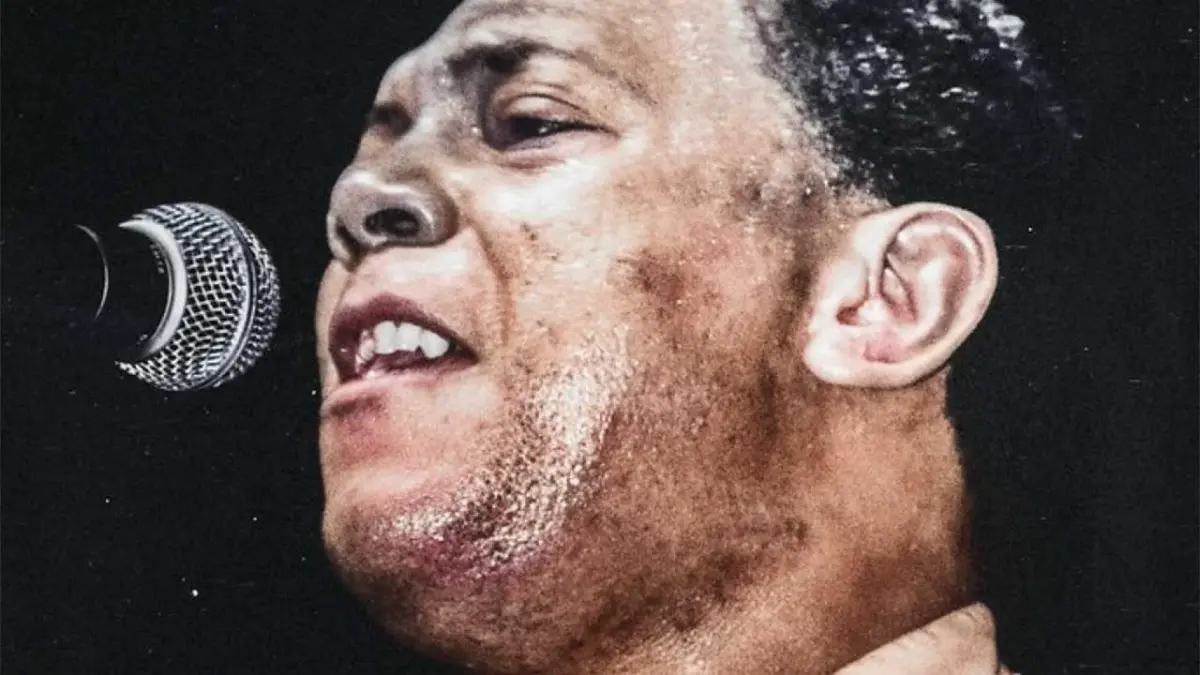
Fifteen years after his physical departure on July 26, 2011, Álvaro José Arroyo González—universally known simply as Joe Arroyo—remains the undisputed titan of Colombian tropical music and the paramount voice of the Caribbean. Despite the passing of decade milestones and shifting musical landscapes, the cultural weight of the Cartagena-born singer-songwriter only deepens with time.
Often hailed as the male equivalent of Celia Cruz, Arroyo was far more than a celebrated interpreter; he was a visionary architect of sound. He single-handedly forged a new sonic paradigm by synthesizing diverse rhythmic tributaries from Africa and the Spanish-speaking Caribbean into a singular, explosive genre known affectionately as "joesón".
As Colombia marks fifteen years since his death, cultural institutions, musicologists, and millions of fans are pausing to honor a creator whose trajectory was as volatile as it was brilliant. His legacy is etched not just in the millions of records sold, but in the collective heartbeat of a nation that still dances, weeps, and revolts to his timeless anthems.
2. Chronology: From the Streets of Cartagena to Global Immortality
The life of Joe Arroyo was a whirlwind of raw talent, relentless touring, meteoric rises, and harrowing near-death experiences. Tracing his path reveals a prodigy whose musical destiny was clear from his earliest years.
- Early Beginnings (1950s–1970s): Born in Cartagena de Indias, Arroyo’s musical gifts manifested early. By his early teens, he was already performing in local venues, absorbing the rich Afro-Caribbean currents swirling through Colombia’s coastal ports. Stints in formative ensembles such as Rubén Darío Salcedo’s orchestra and the group La Protesta sharpened his performance chops.
- The Fruko y sus Tesos Era (Mid-1970s): At just 16 years of age, Arroyo joined Fruko y sus Tesos, the premier salsa powerhouse of the decade. This collaboration proved transformative. His distinct vocal phrasing, raw power, and songwriting acumen propelled the orchestra to new heights and launched the young cartagenero into national prominence.
- The Golden Age of Collaborations (Late 1970s–Early 1980s): Refusing to be confined to a single project, Arroyo lent his irreplaceable voice to a stellar roster of groups, including The Latin Brothers, Los Líderes, Los Bestiales, La Integración, and Pacho Galán’s legendary orchestra. During this period, he mastered the nuances of salsa, tropical cumbia, and folkloric rhythms.
- Solo Stardom and Discos Fuentes / Sony Music Eras (1980s–2000s): Establishing himself as a solo artist, Arroyo spent over three decades spearheading the tropical music scene. Working with powerhouses like Discos Fuentes and Sony Music, he crafted an unbroken string of chart-topping hits that defined Colombian parties, carnivals, and emotional landscapes.
- The Final Curtain and Myth-Making (July 26, 2011): Following years of severe health battles, multiple hospitalizations, and dramatic brushes with mortality, Arroyo passed away in Barranquilla. His death sparked national mourning, sealing his transition from a living legend to an immortal cultural deity.
3. Supporting Data: The Numbers Behind a Musical Titan
To understand the magnitude of Joe Arroyo’s career, one need only look at the sheer volume and commercial footprint of his creative output. Few artists in Latin American history have achieved such a staggering balance of critical acclaim and popular saturation.
- Discographic Footprint: Over his lifetime, Arroyo recorded more than 300 songs distributed across roughly 40 distinct albums.
- Songwriting Prowess: He personally penned approximately 100 original compositions, many of which crossed the line from commercial hits to permanent cultural fixtures.
- Chart Dominance: More than 60 of his recorded tracks reached the absolute summit (#1) of national radio and record charts.
- The Supercongo de Oro: Such was his unmatched dominance during the world-famous Barranquilla Carnival that organizers were forced to invent an entirely new, higher category of award exclusively for him—the Supercongo de Oro.
An Unrivaled Catalog of Anthems
Arroyo’s discography reads like a masterclass in Caribbean anthropology. Among his self-penned masterpieces are cultural touchstones such as:
- "Rebeldía" (an enduring, profound hymn examining the socio-cultural realities of African heritage and resistance in the Colombian Caribbean).
- "La Noche" and "En Barranquilla me quedo" (essential hymns of coastal identity and urban devotion).
- Other staples including "Echao pa’lante", "Te quiero más", "Mary", "El trato", "Fuego en mi mente", "Musa original", "Tumbatecho", "A mi Dios todo le debo", and "La fundillo loco".
Furthermore, his signature voice elevated songs written by other esteemed composers into legendary status, such as "Pa’l bailador", "Yamulemau", "El ausente", "El caminante", "El son del caballo", and "Nadando".
4. Official Responses and Critical Perspectives: Genius Touched by Tragedy
Writers, biographers, and cultural historians have spent decades attempting to decode the enigma of a man who lived as intensely as he sang.
Mauricio Silva Guzmán, author of the definitive biography “Joe Arroyo, el Centurión de la Noche. Una vida cantada” (Joe Arroyo, the Centurion of the Night: A Sung Life), captured the duality of the artist’s existence with striking precision. In his biographical work, Silva notes that Arroyo was:
"Possibly the most talented of the popular creators and interpreters that Colombia has produced… a man marked at the very same time by success and by misfortune: consecrated by the musical genius he inherited from his African ancestors, which he knew how to conjugate with the rhythms of the tropics; applauded by that unmistakable voice… yet, at the same time, condemned by vice, struck down by family tragedies, and diminished by illnesses from which he more than once escaped by true miracle."
Cultural ministries, municipal governments along the Caribbean coast, and national media outlets routinely issue statements highlighting how Arroyo’s work dismantled racial and regional barriers in Colombia. By unapologetically centering Afro-Latino rhythms in the mainstream, he forced the interior of the country to look toward the coast not merely as a vacation destination, but as the rhythmic and spiritual engine of the nation.
5. Implications: The Living Legacy of the "Joesón"
Fifteen years after his passing, the implications of Joe Arroyo’s legacy resonate on multiple fronts: cultural, sociological, and artistic.
Bridging the Racial and Cultural Divide
Before Joe Arroyo, mainstream Colombian music was often rigidly stratified. Arroyo took the folkloric beats of palenque, salsa, porro, soca, and cumbia and melted them down in a crucible of pure urban energy. His music became the soundtrack of social integration. Songs like "Rebeldía" provided a vocabulary for discussing black identity, colonialism, and resistance in a nation historically reluctant to confront its racial complexities.
The Blueprint for Modern Tropical Fusion
The genre he pioneered—the joesón—laid the groundwork for contemporary Colombian global exports. Modern artists who mix traditional coastal sounds with urban beats, electronic music, and global pop implicitly walk the path that Arroyo blazed in the 1980s and 90s. He proved that local Caribbean roots, when executed with absolute technical brilliance and emotional honesty, possess universal appeal.
Eternal Guardian of the Caribbean Soul
As new generations discover his tracks through digital streaming platforms, vinyl revivals, and Carnival celebrations, Joe Arroyo ceases to be merely a historical figure and becomes an ongoing cultural dialogue. He remains the Centurión de la Noche, standing guard over the collective memory of a joyful, resilient, and fiercely proud Caribbean.
Fifteen years gone, the voice that shook Barranquilla, Bogotá, and the world refuses to fade. Joe Arroyo is, and forever will be, Colombia’s greatest musical son.


Leave a Reply