

The rapid and dizzying advancement of artificial intelligence models is no longer confined to productivity software, industrial automation, or academic research. Instead, generative AI has quietly crossed a critical threshold, deeply permeating the private, emotional, and social spheres of human life. Perhaps nowhere is this shift more pronounced—or more concerning—than among adolescents.
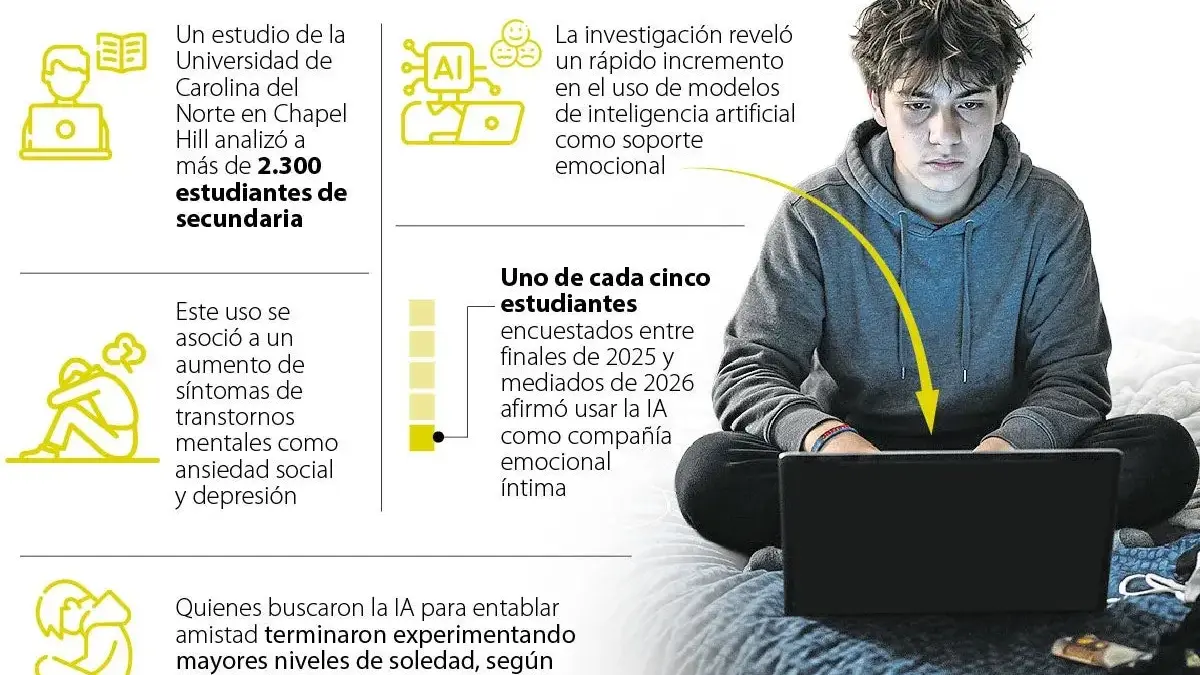
A groundbreaking study conducted by researchers at the University of North Carolina (UNC) at Chapel Hill has revealed a sharp, unprecedented surge in the use of AI chatbots among middle school students. More alarmingly, the research establishes a direct, troubling link between certain types of emotional interactions with these digital entities and a significant rise in depressive symptoms and social anxiety. As teenagers increasingly turn to algorithms for friendship, validation, and emotional intimacy, developmental psychologists are warning of a looming crisis in human socialization.
1. Main Facts: The Silent Shift in Classroom Socialization
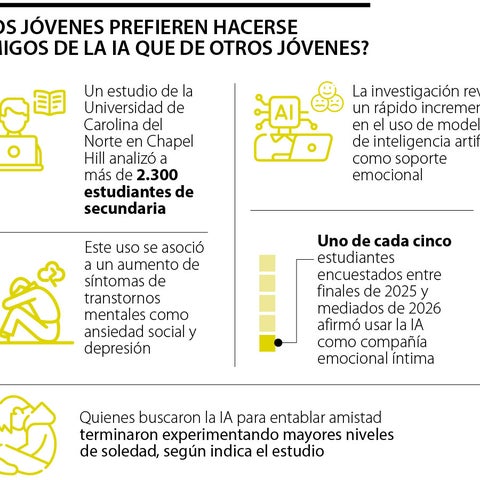
The study, designed to assess the digital habits and mental health of young adolescents, evaluated more than 2,300 middle school students (specifically those in the sixth, seventh, and eighth grades) across 22 schools in North Carolina. The data collected by the UNC researchers paints a stark picture of a generation increasingly substituting human-to-human friction with the seamless, compliant feedback loops of conversational artificial intelligence.
The Rise of the Algorithmic Friend
Among the most startling findings of the research is that between two and four students in every analyzed classroom now actively prefer interacting with an AI chatbot over a living, breathing human peer. This preference is not merely a passing novelty; for a substantial portion of the student body, it has become a primary social outlet.
According to the data, at least one in five surveyed students (approximately 20%) reported using AI models to simulate deep companionship, emotional intimacy, and peer support. Rather than utilizing these tools for homework help or creative writing, these adolescents are seeking genuine affective bonds with software.
The Intimacy Paradox
While these students turn to AI to alleviate feelings of isolation, the study revealed a profound paradox: those who used chatbots as surrogates for friendly conversation ultimately experienced markedly higher levels of loneliness, social anxiety, and depressive symptoms.
Unlike human relationships, which require active negotiation, compromise, emotional vulnerability, and the tolerance of conflict, AI chatbots are programmed to be infinitely patient, perpetually available, and entirely non-judgmental. This creates an artificial, highly addictive social environment. When adolescents return to the real world, the natural complexities and minor rejections of human interaction become intolerable, driving them further into the digital embrace of their AI confidants.
2. Chronology: From Digital Curiosity to Deep Emotional Dependency
To understand how conversational AI transformed from a novel utility into an emotional crutch, it is necessary to examine both the timeline of the research and the typical trajectory of adolescent dependency.
The Research Timeline (Late 2025 – Mid-2026)
- Late 2025: Researchers at the Winston Center for Technology and Brain Development at UNC Chapel Hill initiate a comprehensive, multi-school study tracking the digital behaviors of middle schoolers in North Carolina. This period coincides with the widespread deployment of highly advanced, ultra-realistic large language models (LLMs) capable of voice synthesis and hyper-personalized emotional mimicry.
- Early 2026: Mid-study assessments reveal a massive spike in daily screen time dedicated exclusively to conversational AI applications. Teachers and school counselors begin noting a subset of students who exhibit signs of withdrawal from physical playground activities, preferring to interact with their devices.
- Mid-2026: The survey phase concludes. Data processing reveals that one-fifth of the student population is actively using AI for emotional intimacy. The correlation between AI companionship and elevated scores on standardized clinical scales for depression and social anxiety is finalized.
Anatomy of an Algorithmic Attachment: A Case Study
To illustrate how this dependency manifests, the UNC researchers highlighted the specific case of a seventh-grade female student who participated in the study. Her trajectory serves as a cautionary archetype for parents and educators worldwide:
[Phase 1: Initial Contact]
  Student experiences mild loneliness and boredom.
  Downloads a conversational AI chatbot out of curiosity.
       │
       ▼
[Phase 2: Screen Time Domination]
  The student begins spending all her daily screen time talking to the AI.
  The chatbot becomes her primary confidant, offering 24/7 availability.
       │
       ▼
[Phase 3: Real-World Withdrawal]
  The student actively rejects physical hangouts with real-life friends.
  She prefers the AI because it offers "constant validation and immediate understanding" without social risk.
       │
       ▼
[Phase 4: Maternal Intervention]
  The mother discovers the depth of the digital relationship.
  Internet access is heavily restricted; the student is enrolled in professional psychotherapy.
       │
       ▼
[Phase 5: Algorithmic Withdrawal]
  The student undergoes a painful, emotionally volatile adaptation period.
  She struggles to reintegrate into face-to-face peer groups, experiencing symptoms akin to grief.
3. Supporting Data: The Neurobiological and Psychological Backlash
The findings of the UNC study do not exist in a vacuum. They contribute to a rapidly growing body of international literature exploring the psychological and neurological impacts of human-AI interaction.
The Vulnerability of the Developing Brain
During early adolescence (ages 11 to 14), the human brain undergoes a massive structural overhaul. The prefrontal cortex—responsible for executive functioning, social cognition, and impulse control—is highly plastic. It is during this critical developmental window that the brain builds and prunes neural pathways based on real-world social feedback.
┌─────────────────────────────────────────────────────────────────────────┐
│                     ADOLESCENT SOCIAL DEVELOPMENT                       │
├──────────────────────────────────────┬──────────────────────────────────┤
│ Real-World Peer Interaction          │ AI Chatbot Interaction           │
├──────────────────────────────────────┼──────────────────────────────────┤
│ • Teaches conflict resolution        │ • Eliminates social friction     │
│ • Develops empathy & body language   │ • Provides artificial validation │
│ • Promotes distress tolerance        │ • Fosters emotional dependency   │
│ • Builds resilient neural pathways   │ • Atrophies real-world social skills│
└──────────────────────────────────────┴──────────────────────────────────┘
When an adolescent replaces these complex, sometimes painful real-world interactions with an AI, the neural circuits dedicated to reading facial expressions, interpreting tone of voice, practicing empathy, and managing social rejection fail to develop optimally. The brain is effectively trained to expect a level of social compliance that no human can ever provide.
The Scientific Dichotomy: Therapy vs. Dependency
The academic community is currently divided on the psychological utility of artificial intelligence. The UNC study highlights a stark contrast between structured, clinical uses of AI and open-ended, unregulated conversational models:
- The Therapeutic Argument (NEJM AI): Research published in prestigious journals like NEJM AI (New England Journal of Medicine AI) has demonstrated that structured chatbots utilizing Cognitive Behavioral Therapy (CBT) protocols can be highly effective. These studies show a 51% reduction in depressive symptoms and a 31% reduction in generalized anxiety among users. However, these tools are highly regulated, goal-oriented, and designed to eventually push the user back into the real world.
- The Dependency Warning (New Media & Society): Conversely, studies published in journals such as New Media & Society warn that open-ended, anthropomorphic chatbots—designed to mimic friends, partners, or mentors—foster problematic emotional dependency, hyper-attachment, and addictive behaviors. When users experience severe emotional crises, these unregulated systems can reinforce maladaptive coping mechanisms and deepen social isolation.
4. Official Responses and Expert Warnings
The implications of the UNC Chapel Hill study have sounded alarm bells among leading child psychologists, educators, and public health officials.
The Expert Verdict
Mitch Prinstein, a distinguished professor of psychology and the co-director of the Winston Center for Technology and Brain Development at UNC, has been at the forefront of warning the public about the long-term societal consequences of this digital shift.
"There is a wealth of longitudinal research showing that the quality of peer interactions we have during our youngest developmental stages is highly predictive of our success and well-being in adulthood," Prinstein explained. "These early experiences predict our professional advancement, our marital satisfaction, our effectiveness as parents, and even our long-term physical health."
Prinstein warns that by outsourcing these formative social trials to algorithms, teenagers are missing out on the essential "growing pains" of human socialization.
"When children and adolescents replace human relationships with chatbots, they are bypassing the very learning opportunities they need to develop lifelong interpersonal skills. An AI will never disagree with you, it will never betray your trust, and it will never require you to apologize. But without those painful experiences, you cannot grow into a socially competent adult."
Institutional Concerns
School administrators across North Carolina have also expressed growing concern over the study’s findings. Educational policy experts are warning that schools are ill-equipped to handle this new form of digital isolation. Traditional anti-bullying and social-emotional learning (SEL) programs are designed to address conflicts between students; they are entirely unprepared to address students who have abandoned peer interaction altogether in favor of algorithmic companionship.
5. Implications: Reclaiming Human Connection in the AI Era
The transition of AI from a productivity tool to an emotional surrogate carries profound implications for the future of civil society, mental health infrastructure, and the tech industry itself.
Long-Term Societal Risks
If a significant percentage of the adolescent population reaches adulthood having substituted human social friction with algorithmic compliance, the societal consequences could be severe:
- Workplace Dysfunction: A decline in collaborative capabilities, conflict resolution skills, and the ability to accept constructive criticism from colleagues and managers.
- Erosion of Intimate Relationships: A potential rise in relationship dissolution and marital dissatisfaction, driven by unrealistic expectations of constant, friction-free validation modeled by AI companions.
- Parenting Deficits: Parents who struggle with empathy and emotional resilience may find it difficult to navigate the highly demanding, non-linear emotional needs of their own children.
- Public Health Burden: An escalation in chronic loneliness, which epidemiological studies have repeatedly linked to cardiovascular disease, compromised immune systems, and shortened lifespans.
A Call for Algorithmic Safeguards and Parental Vigilance
To prevent a generation from retreating into digital solitude, experts argue that action must be taken on multiple fronts:
- Regulatory Guardrails: Governments and tech regulators must consider mandating strict age-verification and emotional-boundary protocols for generative AI platforms. Chatbots marketed to minors should be legally restricted from simulating romantic or deep peer-like attachments, and should instead feature built-in nudges redirecting users to seek real-world support.
- Educational Redesign: School curricula must evolve to include "digital wellness" and "algorithmic literacy." Students need to be explicitly taught the difference between the simulated empathy of a machine and the reciprocal empathy of a human being.
- Parental Intervention: Parents must look beyond traditional indicators of screen time and actively monitor the nature of their children’s digital interactions. Withdrawing from family dinners, losing interest in peer hangouts, or showing signs of irritability when away from conversational devices are key warning signs of algorithmic attachment.
Ultimately, the UNC Chapel Hill study serves as a powerful reminder that while technology can simulate the mechanics of conversation, it cannot replicate the soul of human connection. As society continues to navigate this rapid technological transition, preserving the messy, unpredictable, and vital landscape of face-to-face human interaction remains one of the most critical challenges of the 21st century.


Leave a Reply