

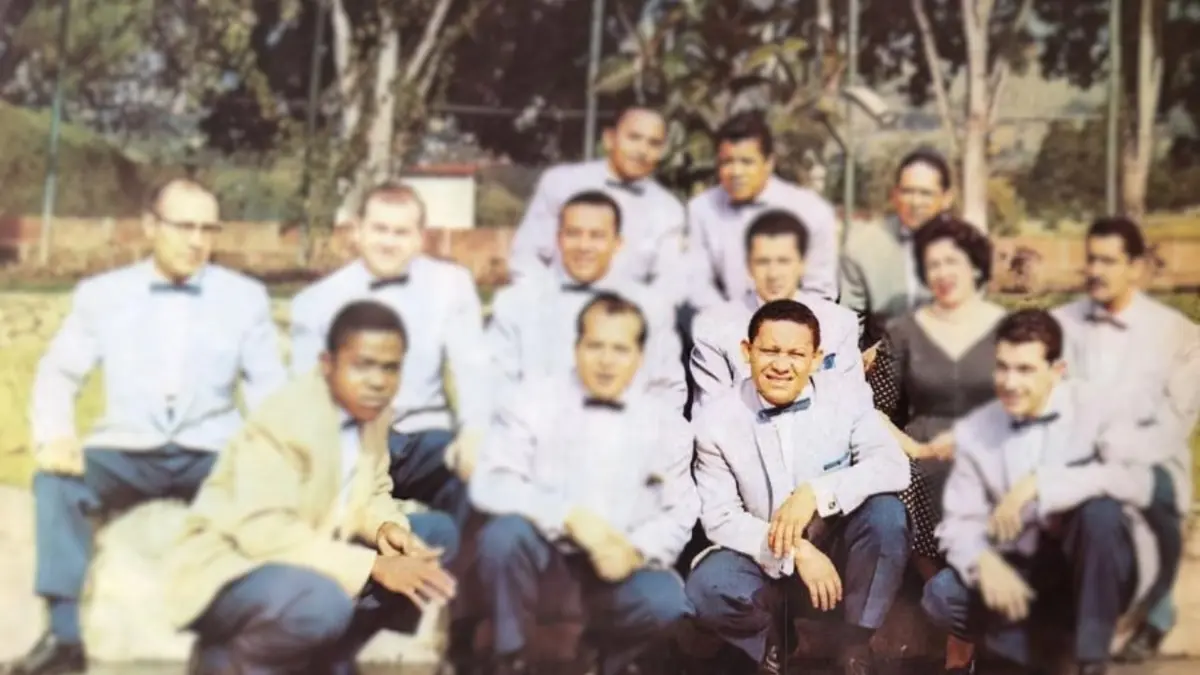
As music lovers across the globe look back at the golden age of Colombian tropical music, legendary names like Lucho Bermúdez and Matilde Díaz invariably dominate the conversation. Yet, etched deeply into the collective memory of Caribbean rhythm aficionados is another irreplaceable figure: the charismatic, dynamic vocalist Rafael Enrique Ruiz Romero, universally known as Bobby Ruiz.
As cultural historians and musicologists prepare to commemorate the centenary of his birth on July 6, Bobby Ruiz stands tall not merely as a footnote in the grand legacy of Bermúdez’s orchestra, but as a foundational pillar of Colombia’s mid-20th-century musical identity. His vocal agility, magnetic stage presence, and unmistakable chemistry with Matilde Díaz helped shape the golden era of cumbias, porros, and tropical jazz, cementing a legacy that transcends borders.
Main Facts: The Anatomy of a Musical Legend
Born in Cartagena on July 6, 1926, Bobby Ruiz carved out an extraordinary artistic trajectory that spanned over half a century. While Matilde Díaz is historically remembered as the undisputed queen of Lucho Bermúdez’s ensemble, the synergy between Díaz and Ruiz was the secret weapon that propelled the orchestra to international acclaim.
According to José Portaccio Fontalvo, biographer of the legendary maestro, the vocal interplay between Ruiz and Díaz was nothing short of symbiotic. In his definitive book, Lucho Bermúdez. Cumbias, porros y viajes, Portaccio Fontalvo notes:
"The duo of Bobby Ruiz and Matilde Díaz was fundamental to the success of the orchestra. Their voices intertwined and brought luster to the songs."
This vocal alchemy reached its absolute peak on the iconic long-play record Lucho en el Tequendama. Practically every track on the album—including beloved classics such as “Lina,” “Baila negra,” “Tumbasón en Bogotá,” and “Mono Fabio”—relied heavily on this powerhouse partnership.
Beyond his technical vocal prowess, Ruiz brought an unmatched theatricality to the stage. Matilde Díaz herself once fondly recalled his vivacious persona:
"He was the grace of the orchestra. He would move, he would invent words, he would sing in French, he would sing in Italian, even though he wasn’t saying anything at all. And everyone loved him for it."
Chronology: From Cartagena’s Underground Stages to International Stardom
The Early Days and Teenage Hustle (1944)
Ruiz’s passionate affair with music began in his early adolescence. Around 1944, driven by an insatiable desire to perform, the young Cartagena native began sneaking into local nocturnal establishments to sing. His undeniable talent was evident early on, though his age often cut his performances short—not by audience disapproval, but by local police raids escorting the underage singer off the premises.
The Barranquilla Debut and Early Recordings
After building a solid local reputation in Cartagena, Ruiz’s horizon expanded. He traveled to Barranquilla, marking his official debut as an orchestra singer alongside Rumbavana, a Cuban ensemble whose director, Armando Cartaya, eventually moved to Cartagena to direct the Orquesta Emisoras Fuentes. It was during this phase that Ruiz made his foundational studio recordings, laying down tracks such as “El clarinete de Simón,” “El currimbá,” and “La mano descompuesta.”
The Medellín Era and Collaborations
Seeking broader horizons, Ruiz migrated to Medellín, Colombia’s bustling industrial and musical hub. There, he integrated into several legendary outfits:
- Sonora Cabelcino (led by Edmundo Arias)
- Orquesta de Pacho Galán
- Finally, the pinnacle of his career: Lucho Bermúdez’s Orchestra, which he joined in the mid-1950s.
During his tenure with Bermúdez, Ruiz recorded an astonishing catalog of hits, including solo performances like “Los primos Sánchez,” “La buchaca,” “El marañón,” “La gaita de las flores,” “Carnaval,” “El gallito,” “Molongo,” “El pájaro macuá,” “El pitirre,” “María tumbasón,” and “La boquillera.”
Simultaneously, he continued his famed duets with Matilde Díaz on tracks such as “Diana María,” “Manizaleña,” “El helado de leche,” “Hasta luego Medellín,” “Arepa de pilón,” and “Julián el solterón.”
Diversifying the Sound: Other Collaborations
Ruiz’s incredible versatility allowed him to lend his voice to a wide array of alternative projects across Colombia:
- With Sonora Cabelcino: “Qué ladrón,” “La flaca,” “Que le den,” “Juan Torero,” and “Qué campanera.”
- With Italian Jazz: “Chachita bonita.”
- With Edmundo Arias: “Solo estoy,” “Qué dichoso es,” and “Cumbia candelosa.”
- With Sonora Dinamita: “Marañón” and “Pedazo de cariño.”
- With Pedro Laza y sus Pelayeros: The definitive coastal classic “El pescador.”
The American Chapter and Final Years
As the 1970s dawned, the musical landscape began to shift. Ruiz made the monumental decision to leave Bermúdez’s orchestra and relocate to the United States alongside his wife, Dioselina. Settling in Los Angeles, he founded Los Internacionales, an orchestra dedicated to promoting salsa and traditional Colombian tropical music to the North American diaspora.
Even while abroad, Ruiz maintained a deep umbilical connection to his homeland, frequently returning to Cartagena to reconnect with old friends, enjoy the coastal breeze, and attend to his health. In his later years, he resided in Atlanta, Georgia, where he passed away at the remarkable age of 91, leaving behind a legacy as vast as the Caribbean Sea.
Supporting Data: The Discographic Footprint
To fully appreciate Bobby Ruiz’s contribution to Latin American music, one must examine the sheer volume and diversity of his recorded output. Spanning major historic labels such as Tropical, Philips, and Sonolux, his voice helped anchor the commercial and artistic expansion of Colombian phonographic culture.
| Category | Track Title | Associated Ensemble / Co-artist | Record Label Context |
|---|---|---|---|
| Definitive Duets | “Lina”, “Baila negra”, “Mono Fabio” | Matilde Díaz / Lucho Bermúdez | Lucho en el Tequendama (Various) |
| Orchestral Solo Hits | “La boquillera”, “El gallito”, “Carnaval” | Lucho Bermúdez | Tropical / Sonolux |
| External Collaborations | “El pescador” | Pedro Laza y sus Pelayeros | Regional Coastal Catalog |
| Tropical Expansion | “Marañón”, “Pedazo de cariño” | Sonora Dinamita | Philips / Tropical |
His ability to seamlessly transition from the sophisticated, jazz-infused arrangements of Bermúdez to the raw, folkloric cadence of Pedro Laza demonstrates a rare vocal adaptability. While many singers of his era were rigidly typed into specific genres, Ruiz approached cumbias, porros, porros-cantados, and even international imports with the same effortless flair.
Official Responses and Critical Evaluation
Music critics and cultural institutions have long evaluated Ruiz’s impact as essential to understanding the evolution of the Colombian big band.
Renowned cultural analysts note that while arrangers like Lucho Bermúdez provided the structural skeleton of the music, vocalists like Bobby Ruiz gave it flesh, blood, and personality. In an official retrospective published by cultural preservationists in Cartagena, musicologist Dr. Ernesto McCausland observed:
"Bobby Ruiz possessed what very few frontmen manage to achieve: total identification with the common people while maintaining the technical standards required by elite ballroom orchestras. He bridged the gap between the rural sounds of the Colombian coast and the sophisticated urban dance halls of Bogotá, Medellín, and beyond."
Furthermore, biographers emphasize that Ruiz’s departure for the United States in the 1970s did not mark an end to his artistry, but rather a global expansion. By establishing Los Internacionales in Los Angeles, he became an early ambassador of Colombian tropical music on the West Coast of the United States, sowing the seeds for future generations of salsa and cumbia musicians operating in the diaspora.
Implications: Preserving the Legacy for Future Generations
As we approach the centenary of Bobby Ruiz’s birth on July 6, the implications of celebrating figures of his stature extend far beyond mere nostalgia. In an era where contemporary Latin music is dominated by hyper-digitalized production and fast consumption cycles, revisiting the legacy of artists like Ruiz serves several critical functions:
- Reclaiming Musical Heritage: By studying Ruiz’s career, contemporary artists gain a masterclass in phrasing, stage presence, and genre-blending. His work proves that commercial appeal does not require sacrificing artistic integrity.
- Highlighting the Golden Age of Colombian Big Bands: Too often, tropical music history focuses solely on the bandleaders. Acknowledging stellar sidemen and vocalists like Ruiz democratizes our understanding of musical history, recognizing that a masterpiece like Lucho en el Tequendama was a collaborative triumph.
- Strengthening Cultural Identity: For the Caribbean coast of Colombia, and Cartagena in particular, honoring Ruiz reinforces a sense of historical continuity. It reminds new generations that their ancestors built an artistic tradition that resonated from the barrios of Barranquilla to the stages of North America.
As our Artist of the Week, Bobby Ruiz receives the homage he so richly deserves. When the clock strikes July 6, let gramophones spin, let trumpets blare, and let us remember the boy from Cartagena who sang his way into police blotters as a teenager, danced his way into the hearts of millions, and ultimately secured an immortal space in the pantheon of Latin American music.



Leave a Reply