

Main Facts
Jorge Velosa, born in the high-altitude Andean municipality of Ráquira, Boyacá, on October 6, 1949, stands as an irreplaceable pillar of Colombian culture. As a singer, songwriter, veterinarian, actor, radio broadcaster, and author, Velosa is universally recognized as the founding father and primary architect of carranga—a lively, narrative-driven peasant music genre that captures the heartbeat, humor, and daily realities of rural life in the Colombian Andes.
From humble beginnings constructing crude instruments out of everyday objects as a young boy, Velosa evolved into a national icon. He bridged the cultural gap between isolated agrarian communities and bustling urban centers. His career, spanning over five decades, defies categorization. He moved fluidly from the lecture halls of the National University of Colombia, where he earned a degree in veterinary medicine, to the national television screen in beloved sitcoms like Don Chinche, and finally to international stages as a musical ambassador.
At the core of Velosa’s legacy is his ability to elevate música campesina (peasant music) from regional obscurity to a defining genre of Colombian identity. Alongside legendary anthems like "La Cucharita," "Julia, Julia, Julia," and "La China que yo tenía," Velosa’s body of work includes symphonic experiments, children’s literature, radio scripts, and continued musical collaborations well into the 2020s. Today, at 77 years old, he remains an active creator, cultural historian, and the undisputed voice of the Colombian countryside.
Chronology of a Cultural Revolution
1949–1970s: Roots, Rhythms, and Rural Imagination
Jorge Velosa Ruiz was born into a traditional family deeply rooted in the customs, folklore, and agricultural rhythms of Boyacá. According to family recollections shared by his mother in a 1996 interview with journalist Consuelo Cepeda, Velosa’s musical inclinations manifested before he could even read. By the age of five, he was conjuring makeshift instruments out of whatever he could find—crafting capadores (pan flutes), maracas, and flutes out of discarded items. With characteristic charm, he turned play into art, organizing his childhood peers into impromptu neighborhood bands.
Despite his early artistic impulses, Velosa pursued formal higher education in Bogotá. He enrolled at the National University of Colombia, successfully graduating as a doctor in veterinary medicine. Yet, destiny pulled him back to his cultural roots. While practicing veterinary medicine in rural Boyacá, Velosa found himself immersed once more in the cadence of peasant life. He began listening intently to traditional coplas, rumbas, and torbellinos, recognizing in them a rich, untapped vehicle for storytelling, social commentary, and humor.
The Late 1970s–1980s: The Birth of Carranga and National Stardom
During the 1970s, Velosa synthesized his academic background with his deep appreciation for Andean folklore, experimenting with novel compositional forms that blended traditional rural rhythms with sharp, witty lyricism. The watershed moment arrived in 1977 when Velosa, alongside José Luis "El Chato" Lagos, Jorge González, and Ramiro Zambrano, founded Los Carrangueros de Ráquira.
This foundational ensemble did not merely play traditional music; they birthed a brand-new genre: carranga. Characterized by the bouncing rhythm of the requinto (a small Colombian guitar), acoustic guitars, guacharaca, and double bass (or tiple), carranga injected rural optimism, satire, and melancholy into the Colombian national consciousness.
In 1984, the release of the landmark album Pa’ los pies y el corazón cemented their status as national treasures. Songs like "La Cucharita"—a humorous yet poignant tale of a lost wooden spoon—swept across the nation, becoming an instant classic taught in schools and sung at festivals. This era also produced enduring hits such as "La gallina mellicera," "Las diabluras," and "El rey pobre," expanding the group’s repertoire and broadening their appeal to diverse demographics.
1980s–2000s: Multimedia Expansion and Literary Pursuits
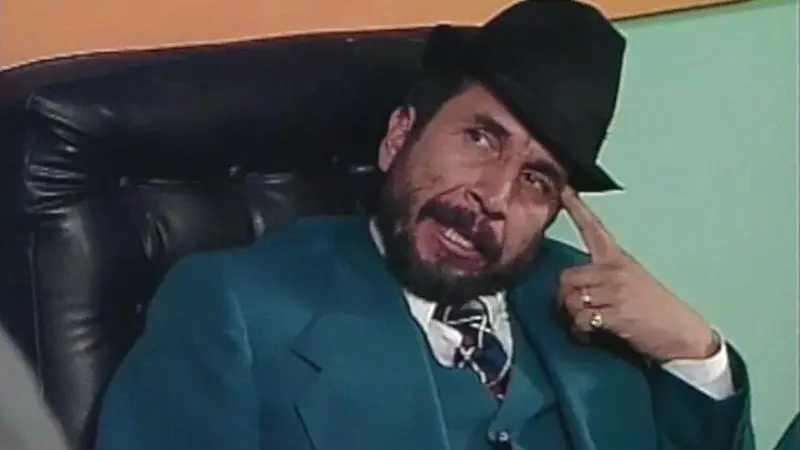
Velosa’s creative output quickly outgrew the boundaries of the recording studio. In the 1980s and 1990s, he transitioned into Colombian television, endearing himself to millions through memorable acting roles in iconic national sitcoms such as Don Chinche and Romeo y Buseta. Simultaneously, he worked in radio as a broadcaster and scriptwriter, utilizing the medium to champion rural education, environmental preservation, and oral traditions.
As a writer, Velosa published several beloved books rooted in rural folklore and the history of his musical movement. Works such as La cucharita y no sé qué más, El convite de los animales, and Historiando mi cantar solidified his status as a custodian of Colombia’s intangible cultural heritage.
2010s–Present: Symphonic Evolution and Timeless Relevance
Never one to rest on his laurels, Velosa continued to innovate late into his career. In 2011, he undertook the ambitious Carranga Sinfónica project, brilliantly fusing traditional peasant melodies with rich orchestral arrangements.
Demonstrating that his creative fire remains unquenched, Velosa teamed up with Los Carrangueros del 25 in recent years, releasing new material such as the 2024 production El carrango y la carranga and the single El velorio del compadre. Today, Jorge Velosa stands as a living legend, continuously bridging generational divides and proving that the stories of the Andes are timeless.
Supporting Data and Repertoire
To understand the magnitude of Jorge Velosa’s impact, one must examine the quantitative and qualitative dimensions of his artistic legacy. His catalog spans dozens of albums, hundreds of recorded tracks, and numerous collaborative projects that have redefined Colombian folklore.
Key Discography and Musical Milestones
- Los Carrangueros de Ráquira (1977): The pioneering ensemble that brought the carranga genre into the mainstream.
- Pa’ los pies y el corazón (1984): A seminal record that institutionalized carranga in urban radio and national consciousness.
- Carranga Sinfónica (2011): A monumental crossover project adapting rural folk motifs for symphonic orchestras.
- El carrango y la carranga (2024): A contemporary collaboration with Los Carrangueros del 25, proving the genre’s continued vitality.
Essential Tracklist of the Maestro
- "La Cucharita": The undisputed anthem of the carranga movement, beloved for its narrative charm and tragicomic storyline involving a lost wooden spoon.
- "Julia, Julia, Julia": A lively, romantic-satirical tune characterized by rapid-fire requinto picking and infectious vocal harmonies.
- "La china que yo tenía": A staple of Andean folk dance, celebrating rural courtship and regional idioms.
- "Las diabluras": A playful exploration of mischief, human nature, and countryside folklore.
- "El rey pobre": A philosophical reflection on wealth, happiness, and agrarian dignity.
Literary Contributions
- La cucharita y no sé qué más
- El convite de los animales
- Historiando mi cantar
Official and Cultural Responses
Throughout his illustrious career, Jorge Velosa has received widespread acclaim from cultural ministries, academic institutions, and fellow artists across Latin America.
Cultural historians frequently cite Velosa as a pioneer who saved a vanishing culture from extinction. During a tribute organized by the National University of Colombia, academic panels highlighted how Velosa’s veterinary background directly informed his artistic philosophy: just as a veterinarian heals physical ailments, Velosa’s music heals the cultural disconnect between modern urban society and its agrarian roots.
Fellow musicians have consistently praised his humility, poetic craftsmanship, and unwavering authenticity. Prominent figures in Colombian folk and tropical music have frequently noted that before Velosa, peasant music was often dismissed by metropolitan elites as unsophisticated or provincial. By infusing the genre with sharp wit, poetic metaphors, and pristine musicianship, Velosa forced the nation to listen to the countryside with pride and respect.
Institutional bodies, including Colombia’s Ministry of Culture, have repeatedly honored him for his lifetime contributions to the arts, recognizing him not merely as an entertainer, but as an essential guardian of national memory. Radio networks and public television archives treat his interviews—such as his historic 1996 conversation with Consuelo Cepeda—as priceless educational artifacts.
Implications for Colombian Culture and Future Generations
The legacy of Jorge Velosa extends far beyond his personal discography; it carries profound implications for the preservation and evolution of Latin American folk traditions in the 21st century.
1. Democratization of Folklore
Before Velosa popularized carranga, traditional Andean music was largely confined to localized festivals, family gatherings, and rural markets. By packaging these rhythms into catchy, accessible, and humorous songs, Velosa democratized Colombian folklore. He proved that rural narratives—dealing with overworked mules, lost spoons, agrarian love affairs, and village gossip—possess universal emotional resonance.
2. Safeguarding Oral Tradition in a Digital Age
In an era dominated by globalized pop music and digital streaming algorithms, Velosa’s extensive literary and musical output serves as a bulwark against cultural homogenization. His children’s books, radio scripts, and lyrical chronicles ensure that regional idioms (boyacensismos), traditional instruments (like the requinto and guacharaca), and rural wisdom are successfully transmitted to younger generations.
3. A Blueprint for Cultural Fusion
Velosa’s Carranga Sinfónica and his ongoing collaborations with contemporary artists demonstrate that traditional genres do not need to remain static to stay authentic. By merging peasant instruments with symphonic arrangements, Velosa established a blueprint for how indigenous and rural sounds can adapt to modern artistic platforms without losing their soul.
As Jorge Velosa continues to write, sing, and inspire, his lifetime of work stands as a testament to the power of culture from below. He has ensured that the voice of the Colombian peasant will echo not only across the misty peaks of the Andes, but throughout the global cultural landscape for generations to come.

Leave a Reply