

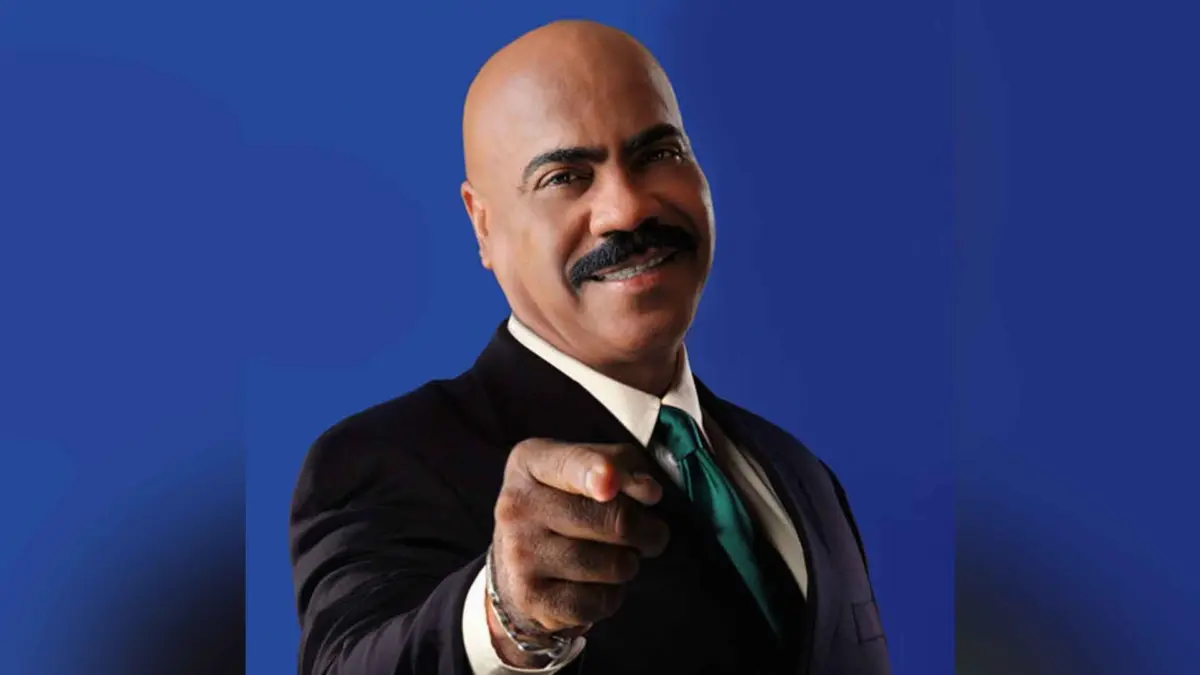
Main Facts: The Legacy of a Multifaceted Maestro
There are endings that function as a mirror to a lifetime. For Lenín Alfonso Bueno Suárez, the final scene of his existence was an authentic reflection of his fiery, passionate spirit. In November 2019, inside his home in Barranquilla, the veteran broadcaster, sociologist, and vallenato composer suffered a fatal heart attack directly in front of his television set. He was not merely watching a broadcast; he was caught in the ecstasy of celebration, cheering wildly as his beloved football team, Junior de Barranquilla, secured a dramatic classification to the finals of the Torneo Finalización against Deportes Tolima.
That overflowing enthusiasm—a relentless, infectious passion that he channeled into every single one of his professional and artistic endeavors—remains the defining memory held by those who knew him best. Bueno Suárez was a cultural architect of the Colombian Caribbean, bridging the worlds of academic sociology, mass media, and folkloric composition. Operating frequently under the pseudonym "Leabus," he left an indelible footprint on the golden age of vallenato music, serving not just as a chronicler of the genre, but as a critical catalyst for its evolution, commercial explosion, and internationalization.
His sudden death while celebrating a sports triumph encapsulated his essence: he lived loudly, loved deeply, and remained utterly devoted to the cultural and social passions of Caribbean Colombia until his final heartbeat.
Chronology: From the Shores of Riohacha to the Heart of Barranquilla
Early Roots and Military Service
Lenín Alfonso Bueno Suárez was born on June 16, 1946, in Riohacha, the sun-baked capital of Colombia’s northern Guajira department. Growing up immersed in the rich oral traditions and nascent musical expressions of the Guajira peninsula, Bueno developed a deep appreciation for the accordion-driven melodies of the countryside.
Before establishing himself as a fixture in Caribbean urban culture, young Lenín spent a formative period residing in neighboring Venezuela. However, the pull of his homeland and civic duty prompted a return to Colombia. Upon crossing back across the border, he completed his mandatory military service, a grounding experience that sharpened his discipline before he plunged headfirst into the vibrant intellectual and artistic currents of the Colombian coast.
Moving to "La Arenosa" (1968)
In 1968, Bueno made a permanent move to Barranquilla—affectionately known as La Arenosa (The Sandy City)—a bustling port metropolis that served as the cultural and economic gateway of northern Colombia. Armed with a sharp sociological mind and a golden voice, he quickly integrated himself into the city’s burgeoning radio landscape.
During the early 1970s, Bueno stepped behind the microphone to launch a specialized cultural program titled Festival Vallenato. Beginning on Emisora Atlántico and later migrating to the prestigious La Voz de Barranquilla, the broadcast became a vital platform for the dissemination and legitimation of vallenato music at a time when the genre was fighting for space against tropical orchestras and imported pop.
Simultaneously, he pursued formal academic training, earning a degree in sociology. This dual identity—the academic analyst of social structures and the passionate troubadour of the Caribbean cantinas—gave his musical compositions a unique narrative depth, capturing the sociology of everyday provincial life in his lyrics.
Supporting Data: The Birth of a Legend and the Creation of "Leabus"
The Fateful Night in June 1976: The Genesis of the Binomio de Oro
Perhaps one of the most significant contributions Lenín Bueno Suárez made to Colombian musical history occurred off the airwaves, deep in the intimate, unscripted atmosphere of a traditional Caribbean parranda (party).
As Bueno himself frequently recounted, a fateful night in June 1976 at his Barranquilla home served as the crucible for one of the most successful partnerships in Latin American music history. Gathered around drinks and casual conversation were two rising stars: vocalist Rafael Orozco and accordionist Israel Romero ("El Pollo Irra").
Orozco had already recorded a couple of productions alongside accordionist Emilio Oviedo, while Romero had proven his mettle accompanying Daniel Celedón. Yet, fate dictated that the supreme elegance and stylistic refinement of the "nueva ola" (new wave) of vallenato needed their union. Bueno, leveraging his growing influence in the regional entertainment circuit, managed to negotiate a high-profile concert booking for Orozco in the municipality of Sabanalarga. However, he attached a non-negotiable condition: Orozco could only perform if Israel Romero accompanied him on the accordion.
The chemistry was instantaneous, the performance triumphed, and the legendary Binomio de Oro was born.
The Catalogue of "Leabus"
Recognizing the power of his own pen, Bueno adopted the moniker Leabus and began supplying top-tier vallenato acts with masterclass compositions. His songs were characterized by vivid storytelling, emotional resonance, and a witty, street-smart philosophy that resonated deeply with the working class.
- For the Binomio de Oro: Leabus penned enduring tracks such as "El que espabila pierde"—which later transcended local borders to receive a sophisticated, orchestrated rendition by French maestro Raymond Lefevre—and "La parranda es pa’ amanecé," a massive hit that was famously covered by the Venezuelan tropical powerhouse Los Melódicos.
- For Los Hermanos Zuleta: He contributed quintessential anthems like "Soy parrandero y qué" and "Nostalgia estudiantil."
- For Other Icons: His songwriting prowess enriched the repertoires of numerous legends. Julio Rojas and Ricardo Maestre recorded his poignant "Pena y dolor"; Los Betos immortalized "El loco de mamá"; Romualdo Brito triumphed with "El diario de mi vida"; and the legendary Jorge Oñate, backed by Raúl "Chiche" Martínez, recorded "Siempre unidos."
- Diverse Collaborations: His works were also interpreted by Jairo Serrano ("Más que amigos"), Adanís Díaz ("Estrella fugaz"), and notably, El Doble Poder in 1981, who released the epic coral soap-opera vallenato "Drama provinciano" featuring Daniel Celedón, Mélida Yara, and a ten-year-old prodigy named Jorge Celedón.
Performing Career: From Sello Fuentes to Los Sabaneros
Leabus was not merely a writer for others; he possessed a commanding stage presence. At the dawn of the 1970s, he fronted his own vallenato ensemble, releasing several 45 RPM singles under prestigious regional labels such as Discos Fuentes and Tropical. Tracks like "La huelga," "Qué vaina," and "Parece mentira" showcased his sharp social commentary and lighthearted wit.
Later in his career, he lent his talents as both a singer and author to Los Sabaneros, a legendary super-group formed alongside former members of the iconic Corraleros de Majagual, including Nacho Paredes, Luis Pérez Cedrón, and César Castro. This collaboration cemented his status as a pillar of tropical and folkloric performance.
Official Responses and Testimonials
The profound impact of Lenín Bueno Suárez on the cultural ecosystem of Colombia’s Caribbean coast is best understood through the words of his peers, who remember him not just as a professional colleague, but as the beating heart of their social circles.
Fernando Meneses, a legendary composer whose classics were immortalized by the Binomio de Oro, offered a warm and vivid portrait of his lifelong friend:
"Lenín Bueno was a supremely amiable man, highly sensitive, joyful, talkative, an exceptional parranda companion, and above all, an extraordinary friend whom I met in 1976 when I arrived to work in Barranquilla."
Meneses recalled how their bond was forged almost instantly due to geographic proximity. Upon arriving in Barranquilla, Meneses moved into the exact same apartment building where Bueno resided—a building that also housed another titan of the accordion, Israel Romero. This residential hub became a creative incubator where radio broadcasters, sociologists, accordionists, and poets collided, exchanging ideas that would permanently shape the trajectory of Colombian folklore.
Cultural institutions, regional radio networks, and fellow artists have consistently underscored that Bueno’s background in sociology deeply informed his artistic output. Unlike artists who wrote strictly for commercial appeal, Leabus viewed vallenato as a sociological document—a living, breathing chronicle of peasant migration, urban adaptation, heartbreak, and festive resilience.
Implications: Preserving the Roots of Caribbean Identity
The life and career of Lenín Alfonso Bueno Suárez ("Leabus") carry profound implications for how Colombia understands, preserves, and honors its intangible cultural heritage. As the country marks the milestone commemoration of his birth, several key lessons emerge regarding the preservation of the vallenato tradition.
1. The Interdisciplinary Nature of Folklore
Bueno’s trajectory demonstrates that traditional music does not exist in a vacuum. His training as a sociologist allowed him to decode the underlying social structures of the Caribbean coast and translate them into universally relatable lyrics. In an era where modern commercial pressures often strip musical genres of their narrative depth, the legacy of Leabus serves as a reminder that enduring art requires intellectual grounding, cultural context, and authentic lived experience.
2. The Unsung Heroes of the Industry
While vocalists and accordionists frequently capture the lion’s share of public adoration, the ecosystem of vallenato relies heavily on the architects behind the scenes—the radio programmers, lyricists, and cultural brokers like Bueno who engineered partnerships, nurtured talent, and fought for broadcast spaces during the genre’s formative decades. Recognizing Leabus as an essential cultural figure expands the historical narrative beyond the stage stars to include the intellectual catalysts of the movement.
3. A Blueprint for Cultural Memory
As traditional Caribbean rhythms continue to evolve and fuse with global urban sounds, preserving the memory of figures like Lenín Bueno Suárez becomes paramount. His dual life as an academic researcher and a joyful parrandero encapsulates the duality of the Caribbean soul: rigorous intellect paired with an unquenchable thirst for celebration.
By remembering Leabus—whether through the haunting verses of "Drama provinciano" or the historical recounting of that magical June night in 1976 when Rafael Orozco and Israel Romero first shook hands—contemporary generations are handed a vital anchor to their cultural identity. Lenín Bueno Suárez lived on his own terms: deeply connected to his people, passionately devoted to his art, and cheering for his team until the very end. His legacy remains etched not just in the archives of Colombian radio, but in the permanent soundtrack of the Caribbean soul.


Leave a Reply