

Executive Summary and Main Facts
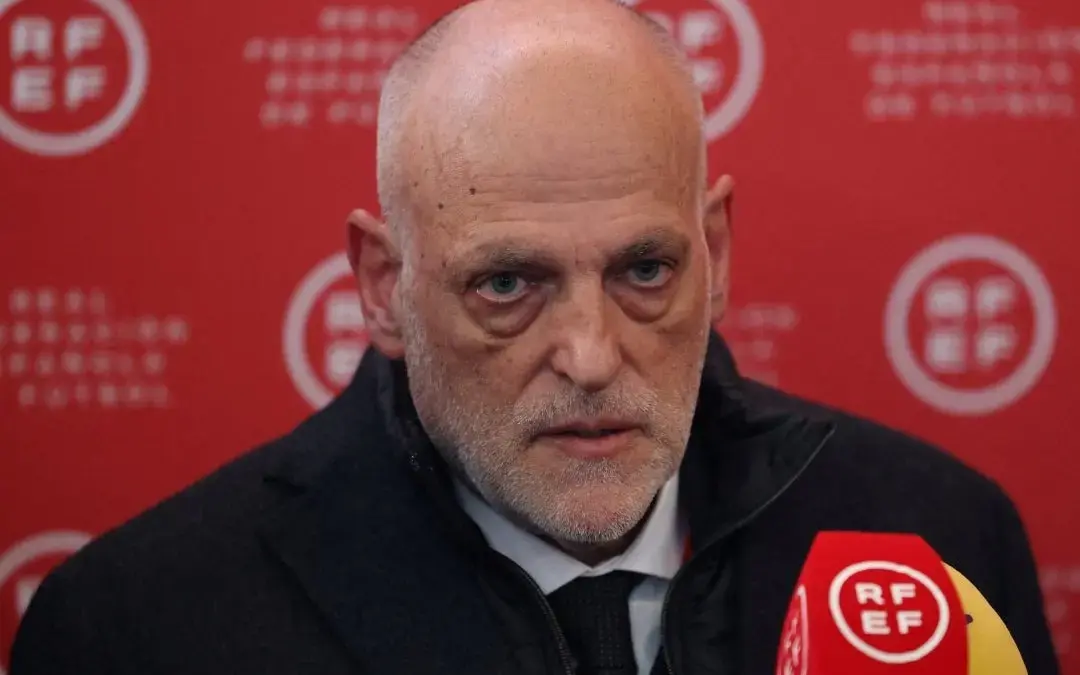
The landscape of European professional football stands at a historic crossroads. Javier Tebas, the outspoken president of Spain’s LaLiga, has added his formidable voice to the escalating chorus demanding severe regulatory enforcement against Manchester City. Tebas has publicly asserted that the reigning English Premier League champions should face the harshest possible sanctions following a landmark finding by an independent commission.
This independent body reportedly determined that Manchester City is culpable in 114 out of 115 alleged breaches of the Premier League’s stringent financial rules—a staggering catalog of infractions stretching across more than a decade. Throughout these investigations, the club has consistently and vehemently denied any wrongdoing, maintaining that its financial operations are entirely legitimate.
However, the weight of the commission’s findings has triggered seismic shockwaves across the footballing ecosystem. The potential spectrum of sanctions facing the Etihad Stadium outfit is unprecedented in modern sports history, ranging from massive financial penalties and severe sporting point deductions to the ultimate disciplinary action: compulsory relegation from the top flight of English football.
According to Tebas, this moment transcends the borders of the United Kingdom. Speaking at the prestigious Peak Performance & Health Summit in London—an event jointly organized by FIFPRO (the global players’ union) and the Cleveland Clinic—the LaLiga chief emphasized that the implications of this case threaten the very integrity of continental club competitions, reviving deep-seated debates surrounding financial doping, systemic rule manipulation, and sporting equity.
A Decade of Defiance: The Chronology of the Case
To understand the gravity of the current situation, one must retrace a complex, multi-year paper trail of regulatory scrutiny, corporate restructuring, and high-stakes legal battles.
2009–2018: The Genesis of the Allegations
The roots of the Premier League’s unprecedented investigation stretch back to 2009, coinciding with the transformative period immediately following the club’s acquisition by the Abu Dhabi United Group, spearheaded by Sheikh Mansour bin Zayed Al Nahyan. According to regulatory findings, this era marked the beginning of what investigators describe as a sustained, systematic pattern of financial non-compliance. Over the subsequent nine years, Manchester City ascended to domestic dominance, securing multiple Premier League titles while aggressively expanding its commercial portfolio.
November 2018: The Der Spiegel Leaks
The modern phase of scrutiny erupted late in 2018, when German publication Der Spiegel published a series of explosive investigative reports based on documents leaked by the whistleblower platform Football Leaks. These documents suggested that Manchester City had systematically circumvented UEFA’s Financial Fair Play (FFP) regulations by artificially inflating sponsorship values through state-linked entities in Abu Dhabi, thereby masking owner-infusions as legitimate commercial revenue.
February 2020: UEFA’s Hammer Blow
Prompted by the media revelations, European football’s governing body, UEFA, launched a formal investigation. In February 2020, UEFA’s Club Financial Control Body (CFCB) ruled that Manchester City had committed "serious breaches" of FFP regulations between 2012 and 2016. The club was slapped with a two-year ban from all UEFA club competitions, including the lucrative UEFA Champions League, alongside a €30 million fine.
July 2020: The Court of Arbitration for Sport (CAS) Overturn
Manchester City immediately launched a vigorous defense, appealing the UEFA ruling to the Court of Arbitration for Sport (CAS) in Lausanne, Switzerland. In a stunning verdict delivered in July 2020, CAS overturned the two-year European ban and reduced the financial penalty to €10 million. The tribunal concluded that many of the alleged breaches presented by UEFA were either time-barred (exceeding the five-year statute of limitations) or insufficiently substantiated by concrete evidence.
February 2023: The Premier League Charges
Undeterred by the CAS ruling—and operating under a distinct regulatory framework unconstrained by similar statutes of limitations—the English Premier League dropped a historic bombshell in February 2023. Following a secretive four-year investigation prompted by the initial leaks, the Premier League formally charged Manchester City with over 100 breaches of financial rules spanning the period from the 2009–10 season to the 2017–18 season. The charges detailed failures to provide accurate financial information, failures to disclose full manager and player remuneration details, failures to comply with UEFA’s licensing and FFP regulations, and a failure to cooperate with Premier League investigations.
Late 2024 / Early 2025: The Independent Commission Verdict
After months of private legal sparring, closed-door hearings before an independent judicial panel, and mounting speculation, football industry sources confirmed that the independent commission had delivered its verdict. The panel reportedly found Manchester City guilty on all but one of the 115 charges, setting the stage for a penalty phase that could fundamentally reshape the power dynamics of English and European football.
Supporting Data and Regulatory Framework
The unprecedented nature of the charges against Manchester City requires an examination of the structural frameworks governing contemporary football finance.
The 115 Charges Breakdown
The Premier League’s charges against Manchester City are broadly categorized into several distinct areas of regulatory failure:
- Accurate Financial Reporting (approx. 54 charges): Covering the period from 2009–10 to 2018–19, requiring member clubs to provide utmost good faith and accurate depictions of financial health, particularly concerning revenue streams.
- Cooperation with Investigations (approx. 35 charges): Spanning December 2018 to the present day, accusing the club of failing to assist the Premier League in its ongoing inquiries by withholding documents and requested data.
- Manager and Player Remuneration Details (approx. 14 charges): Spanning the 2009–10 to 2015–16 seasons, relating to undisclosed or improperly accounted payments made to managers and high-profile players outside standard contracts.
- UEFA Financial Fair Play Compliance (approx. 7 charges): Covering seasons 2013–14 to 2017–18, where the club allegedly failed to abide by European licensing guidelines.
- Premier League Profitability and Sustainability Rules (PSR) (approx. 5 charges): Covering the 2015–16 to 2017–18 seasons, detailing breaches of domestic spending limits.
Financial Imbalance and "Financial Doping"
At the heart of the regulatory case is the concept of "financial doping"—a term popularized during the dawn of state-backed football club ownership. The core allegation is that Manchester City utilized related-party transactions (RPTs), where corporate sponsors linked directly to the club’s ownership group injected capital into the club at vastly inflated market rates.
According to financial analysts, this practice allowed the club to bypass spending restrictions, build world-class squads, secure elite coaching talent, and dominate domestic competitions while ostensibly appearing compliant with revenue generation metrics.
Official Responses and Stakeholder Perspectives
The fallout from the commission’s findings has polarized the football world, drawing sharp contrasts between aggrieved competitors, regional league administrators, and the accused club itself.
Javier Tebas and LaLiga: A Call for Exemplary Punishment
Javier Tebas has emerged as one of the most vocal critics of Manchester City’s financial model. Speaking in London, Tebas recalled his initial warnings at the 2017 Soccerex convention, noting that neither the club nor the Premier League leadership of that era welcomed his scrutiny.
"Llevo muchos años expresando mi preocupación por el Manchester City. Lo hice en 2017 en Soccerex. Lo dije entonces; ni al City ni a la Premier League de aquella época les gustó," Tebas stated.
He emphasized that the duration and scope of the infractions demand a severe, uncompromising institutional response.
"Incumplirlas durante más de 10 años (…) es muy grave. Por tanto, el castigo debería ser severo, no solo para dar ejemplo, sino porque se incumplieron las normas," he added.
Tebas also took direct aim at the 2020 CAS ruling that had previously rescued Manchester City from European exclusion, arguing that those judicial precedents demand urgent reassessment in light of the new discoveries.
"En mi opinión, deberían revisarse las decisiones del Tribunal de Arbitraje Deportivo. Anuló la sanción que había impuesto la Uefa y esa decisión fue muy cuestionable. Ahora se ha demostrado que la Uefa tenía razón con las sanciones contra el Manchester City."
Manchester City’s Defense
Throughout the years of investigation, Manchester City has maintained an unyielding stance of innocence. In official statements issued in response to both the initial Premier League charges and subsequent developments, the club has expressed surprise at the formalization of the allegations, pointing out that it possesses "a comprehensive body of irrefutable evidence" that supports its position.
The club’s legal strategy has consistently focused on challenging the jurisdiction of sporting panels, questioning the interpretation of commercial contracts, and highlighting the lawful nature of its commercial partnerships under English corporate law.
Wider Premier League Clubs and Civil Litigation
Behind closed doors, the ripple effects of the commission’s findings are creating unprecedented legal friction among Premier League rivals. According to British media reports, multiple member clubs are actively seeking high-level legal counsel to explore potential civil indemnification claims.
These clubs argue that the sustained financial manipulation directly deprived them of domestic titles, European qualification spots, television revenue, and commercial value over a decade of competition.
Implications for the Future of Football
The unfolding Manchester City case carries profound structural implications that extend far beyond the offices of the Premier League or the boardrooms of LaLiga.
A Turning Point for Financial Regulation
For decades, critics of modern football economy have argued that elite clubs backed by sovereign wealth funds operate under an entirely different set of rules than traditional community-rooted institutions. If the Premier League successfully enforces severe sporting sanctions—such as significant points deductions or administrative relegation—it will signal a definitive shift in the balance of power. Regulators will have proven that institutional enforcement mechanisms possess the teeth to penalize even the most commercially powerful entities in world sport.
The Erosion of CAS Authority
Javier Tebas’s pointed critique of the Court of Arbitration for Sport highlights a growing institutional friction between statutory sports tribunals and national/continental governing bodies. If domestic commissions and international federations increasingly challenge or bypass traditional arbitration outcomes, the architecture of global sports jurisprudence could undergo a radical restructuring.
Precedent for European Leagues
When asked whether clubs in other European leagues could face similar reckonings, Tebas offered a measured assessment. While he noted that other leagues could theoretically uncover parallel financial infractions, he emphasized that the sheer duration, scale, and nature of Manchester City’s alleged actions represent a uniquely systemic challenge.
Nevertheless, the verdict serves as a stark warning shot across the bow of every major club in Europe: the era of unchecked financial maneuvering, opaque sponsorship structures, and regulatory impunity is drawing to a close. As football moves toward an increasingly scrutinized and legally complex future, the final chapter of the Manchester City case will undeniably serve as the ultimate benchmark for sporting governance, accountability, and the preservation of competitive integrity for generations to come.



Leave a Reply