

By Global Defense and Security Desk
Published: May 2026
Main Facts
The security architecture of Colombia is undergoing a profound and contentious realignment. Following years of ideological experimentation under former President Gustavo Petro—whose signature "Paz Total" (Total Peace) policy sought to negotiate simultaneously with multiple armed groups—the nation has pivoted decisively back toward a hardline stance on national security.
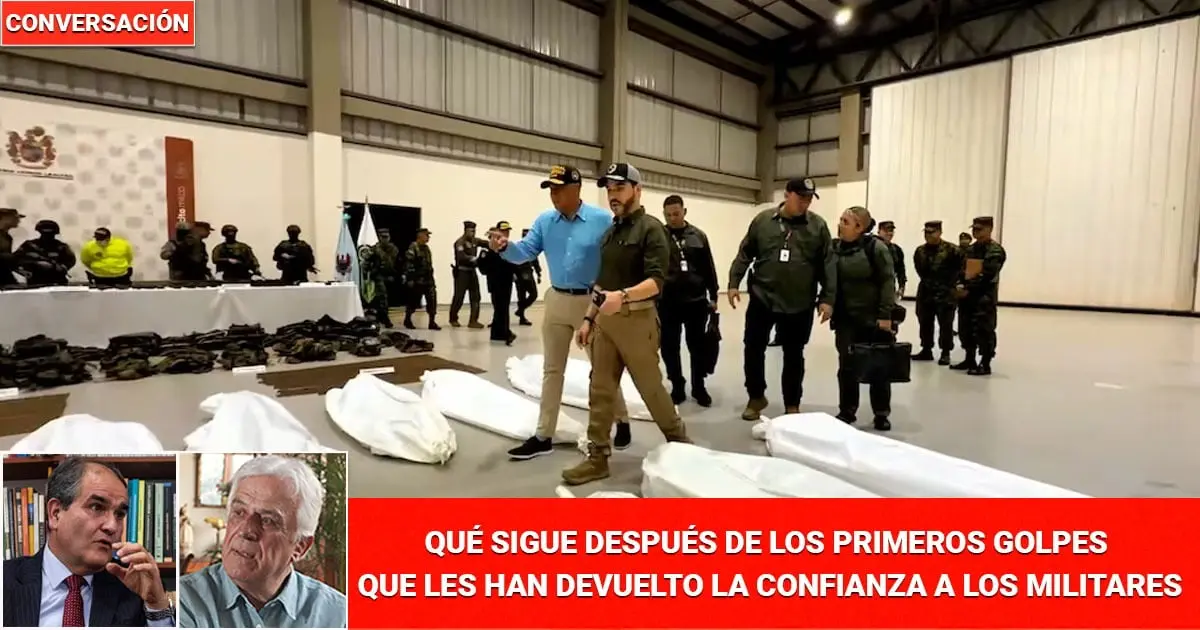
At the center of this debate is a damning assessment delivered by retired Marine Corps General Rafael Colón. In a sweeping analysis of the country’s security trajectory, Colón characterized the previous administration’s peace policy as "a tall tale," arguing that its foundational flaw lay in a fatal contradiction: attempting to build lasting peace without first securing the monopoly of state force across the national territory.
This critique assumes heightened urgency following the inauguration of Abelardo de la Espriella, whose administration has signaled an immediate return to offensive military and police action against criminal syndicates, guerrillas, and drug-trafficking cartels. De la Espriella’s rise to power marks a stark departure from the era of protracted ceasefires, suspended military operations, and nine simultaneous negotiation tables that defined the latter half of the 2020s.
According to military analysts, the core consequence of the "Total Peace" initiative was the operational paralysis of the Armed Forces. Critics argue that restrictions on offensive operations, combined with a degraded intelligence apparatus, created vacuums rapidly filled by expanding insurgent groups and transnational cartels. As Colombia enters a new political chapter, the debate over how to balance state authority, human rights safeguards, and territorial control has reignited at the highest levels of government and civil society.
Chronology: The Arc of Colombia’s Security Crisis
To understand the current pivot in Colombian defense policy, it is necessary to examine the chronological progression of the security landscape over the past decade, culminating in the sweeping changes of 2026.
2016–2022: Post-Accord Realities and Emerging Threats
Following the historic 2016 peace agreement between the Colombian government and the Revolutionary Armed Forces of Colombia (FARC), security forces faced a transformed conflict landscape. While the FARC’s hierarchical structure demobilized, dissident factions ("disidencias") quickly formed, driven by the lucrative narcotics trade and illegal mining. During this period, security strategy largely prioritized territorial consolidation, leveraging advanced intelligence capabilities—often developed in close coordination with international partners such as the CIA and DEA—to target high-value targets within groups like the ELN and the Gulf Clan (Clan del Golfo).
August 2022: The Advent of "Total Peace"
With the inauguration of President Gustavo Petro in August 2022, Colombia’s defense paradigm shifted dramatically. The administration introduced the "Paz Total" legislation, expanding the legal framework to negotiate not only with political insurgencies like the ELN but also with criminal cartels and gang syndicates.
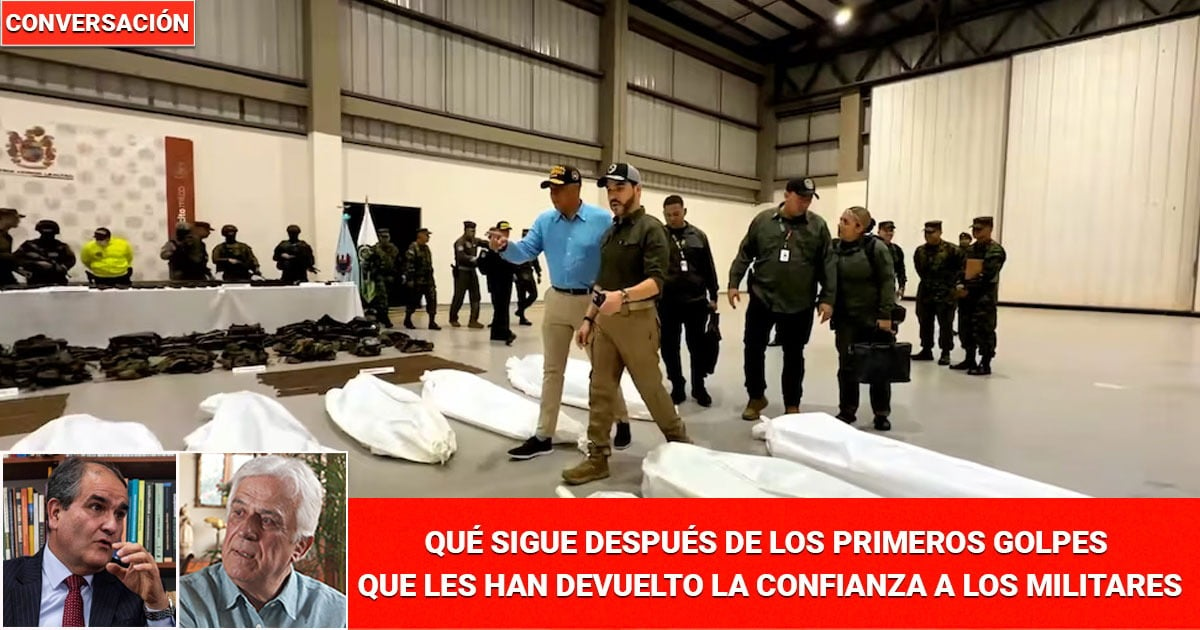
To foster an environment conducive to dialogue, the government ordered sweeping bilateral ceasefires. For the military and National Police, this meant a suspension of large-scale offensive operations. Troops were increasingly constrained to defensive postures, mandated to avoid engagements unless directly attacked, effectively freezing the initiative of the security forces.
2023–2025: The Deepening Vacuum
As the years progressed, independent think tanks and security monitors began recording alarming trends. The simultaneous pursuit of nine negotiation tables strained state resources and diplomatic bandwidth. More critically, armed groups utilized the ceasefire windows not to demobilize, but to rearm, recruit, and expand their territorial footprints.
Intelligence sharing and technical capabilities, once the crown jewel of the Colombian military, reportedly deteriorated due to shifting political priorities and strained international cooperation. By late 2025, data compiled by organizations like the Fundación Ideas para la Paz (FIP) and corroborated by defense ministry metrics indicated exponential growth among dissident structures, particularly in strategic corridors near the Pacific coast, the Bajo Cauca, and the Venezuelan border.
Early 2026: The Political Watershed and Operational Reset
The mounting security crisis catalyzed a major political shift. Disillusionment with the security vacuum culminated in the election and subsequent inauguration of Abelardo de la Espriella. Moving swiftly upon taking office, the new administration rescinded the open-ended ceasefire directives, authorized the resumption of full-scale military and police offensives, and initiated a comprehensive overhaul of national intelligence frameworks to re-establish state authority.
Supporting Data and Strategic Analysis
The debate over the efficacy of "Total Peace" is underpinned by hard data regarding force readiness, criminal expansion, and territorial control. Retired General Rafael Colón’s critique—drawn from decades of operational experience, notably commanding troops in the volatile Montes de María region—highlights the intricate relationship between military action and institutional development.
The Montes de María Doctrine: Authority, Control, and Development
Colón’s operational philosophy was forged in the Montes de María, a strategic sub-region in northern Colombia where Caribbean conflict dynamics intersect with vital drug-trafficking arteries leading toward Antioquia and the Caribbean Sea. In these rugged terrains, Colón pioneered a triad strategy that combined aggressive combat operations with direct civil-military engagement and infrastructure delivery.
In his analysis, security cannot exist in a vacuum. His core thesis rests on three simultaneous pillars:
- Authority: The unmistakable projection of state power to deter and neutralize illegal armed actors.
- Territorial Control: The continuous presence of police and military units to prevent armed groups from filling institutional voids.
- Development: The immediate follow-through of social investment, justice systems, and infrastructure to integrate marginalized regions into the formal economy.
According to Colón, the Petro administration’s fatal error was decoupling these pillars. By attempting to negotiate peace without maintaining state authority and territorial control, the government inadvertently handed the strategic initiative back to criminal organizations.

Statistical Indicators of Expansion
The human and territorial cost of the frozen military doctrine is reflected in empirical studies:
- Surge in Dissidencies: Data cited from the Fundación Ideas para la Paz and internal defense assessments indicate that dissident FARC factions and criminal networks expanded their numerical strength and territorial footprint by more than 90% during the peak years of the "Total Peace" policy.
- Degradation of Intelligence Networks: Technical intelligence operations, which historically relied on seamless multi-agency coordination and foreign intelligence-sharing partnerships (specifically with US agencies like the CIA and DEA), experienced severe friction and capacity loss due to political directives restricting electronic surveillance and cross-border cooperation against specific targets.
- Extortion and Narcotrafficking Volumes: Despite nominal peace talks, global cocaine production metrics remained at historic highs, as armed groups utilized ceasefire protections to secure processing labs, protect smuggling corridors, and impose extortion taxes on local populations without fear of aerial interdiction or ground raids.
Official Responses and Institutional Perspectives
The pivot in national security has generated vigorous debate across government institutions, the judiciary, and military leadership.
The Executive and the Ministry of Defense
The current administration under President Abelardo de la Espriella has taken a zero-tolerance approach to armed groups that refuse immediate, unconditional surrender. Speaking through the Ministry of Defense, the government has emphasized that dialogue cannot be a substitute for the constitutional duty of the state to protect its citizens.
The defense portfolio has been directed to rebuild tactical intelligence units, modernize the infantry and naval capabilities, and re-engage international security partners. Officials argue that while the door to localized reconciliation remains open for actors who demonstrate genuine legal compliance, the primary instrument for dealing with transnational cartels and recalcitrant guerrillas must be the full, unhindered application of military and police power.
Military Command and the Legacy of Human Rights
Addressing concerns from civil society, military leadership has been careful to distance the return to offensive operations from the abuses of the past. Retired General Colón and active-duty commanders have repeatedly stressed that the tragic legacy of the "falsos positivos" (extrajudicial killings scandal) remains a permanent, cautionary lesson for the ranks.
Modern military doctrine in Colombia, officials maintain, is bound by rigorous internal oversight, strict adherence to International Humanitarian Law (IHL), and oversight from both domestic and international human rights monitors. Authority, Colón insists, must never degenerate into authoritarianism; military efficacy must be matched by absolute transparency and respect for constitutional boundaries.
The Judicial Front: JEP and Ordinary Courts
A critical friction point in the nation’s security architecture involves the interplay between the Special Jurisdiction for Peace (JEP)—established under the 2016 accords—and the ordinary justice system. Legal scholars and military representatives continue to debate how the JEP handles cases involving military personnel versus combatants from illegal groups. Critics of the previous administration argue that legal ambiguity and perceived leniency toward unrepentant criminals undermined troop morale, as soldiers who risked their lives in combat frequently found themselves subjected to protracted legal scrutiny while armed actors enjoyed broad immunities under ceasefire provisions.
Furthermore, local governance structures—municipalities and departmental governorates—are facing mounting pressure to step up. Security analysts point out that military victories are ephemeral if local mayors and governors fail to establish effective public policy, combat corruption, and deliver basic public goods in areas where illegal armed groups have historically exerted social control.

Implications for the Future of Colombia
The transition away from the "Total Peace" framework carries profound implications for Colombia’s domestic stability, regional geopolitics, and democratic institutions.
1. Re-establishing Deterrence
The immediate implication of the new security posture is a return to deterrence. By signaling that military force is once again a viable and active instrument of state policy, the government aims to force armed groups to recalculate the costs of defiance. For local populations in conflict-affected departments—such as Cauca, Nariño, Arauca, and Catatumbo—the hope is that renewed military presence will curtail the abuses, extortion, and forced displacement perpetrated by warring factions.
2. Regional and International Cooperation
Colombia’s security has always been deeply intertwined with regional stability and bilateral partnerships. The freezing of military operations under the previous administration strained relationships with traditional allies. The current shift toward aggressive counter-narcotics and counter-terrorism operations is expected to restore full intelligence-sharing agreements with the United States and bolster regional coordination with neighboring states facing cross-border incursions by Colombian-origin syndicates.
3. The Long-Term Challenge of Institutional State-Building
Ultimately, military analysts and civilian experts agree that kinetic operations alone cannot solve Colombia’s structural violence. While the current hardline policy is viewed as a necessary corrective to restore order and freeze the expansion of criminal syndicates, its long-term success will depend entirely on whether the state can transition from military containment to permanent civil governance.
As General Colón’s analysis underscores, the ultimate test of the new administration will not merely be its capacity to dismantle armed groups through force of arms, but its ability to ensure that state authority is permanently anchored by territorial control, economic development, and the rule of law. Only by bridging the gap between security and social integration can Colombia hope to break the recurring cycles of violence that have defined its modern history.




Leave a Reply