

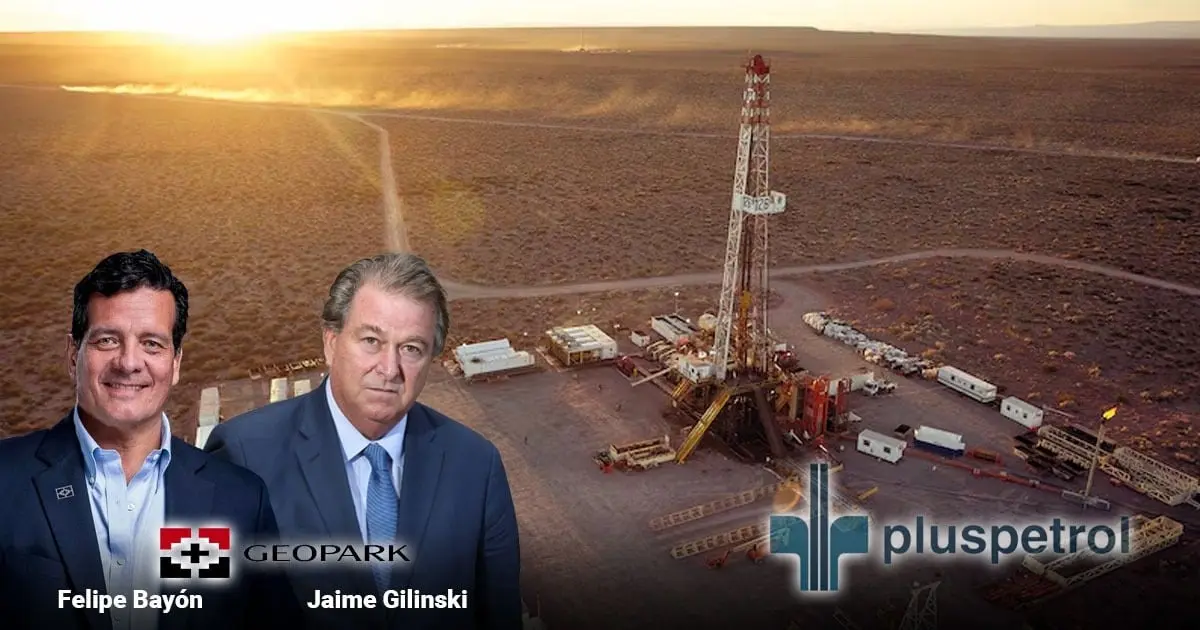
For decades, Edith Rodríguez remained an enigma to the general public, deliberately avoiding the flashbulbs of society magazines and elite business chronicles. Yet, behind the scenes, she commanded an industrial empire that made her, according to Forbes estimates as early as 2020, the wealthiest woman in Argentina.
Her quiet dominance of the South American energy sector made global waves when she orchestrated a multi-billion-dollar power play, acquiring ExxonMobil’s Argentine assets and outmaneuvering heavyweight tycoons like Bulgheroni of Pan American Energy (PAE) and Paolo Rocca of Techint. But long before she commanded headlines for sweeping multi-billion-dollar deals, Rodríguez and her family laid the groundwork for a strategic divestment in Argentina’s crown jewel—the Vaca Muerta shale formation.
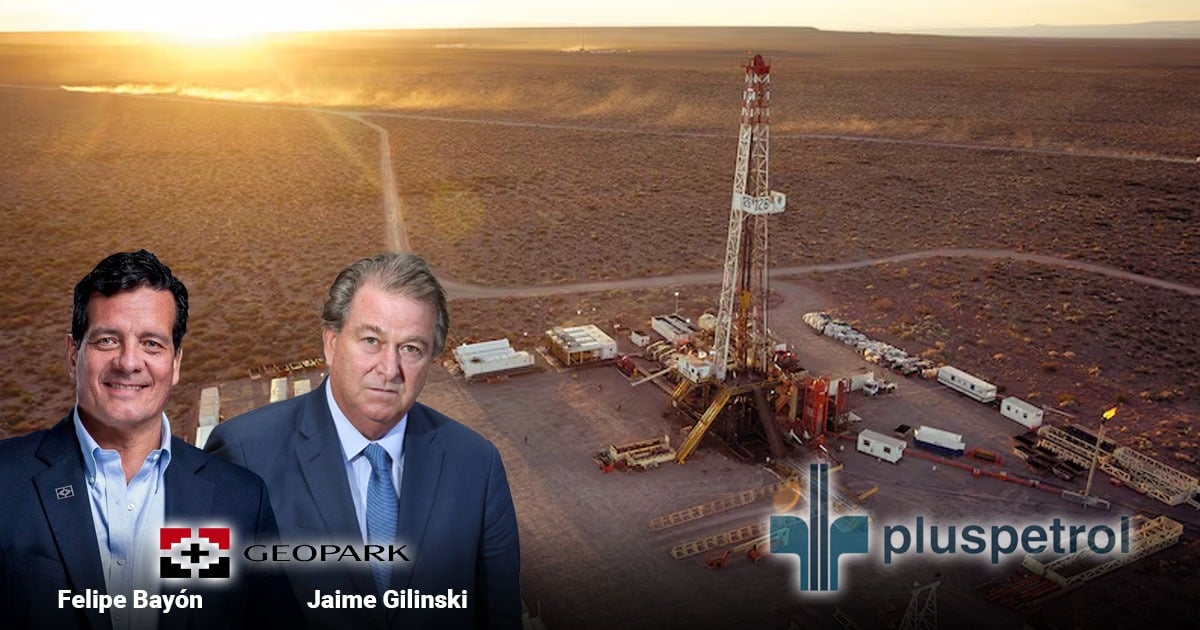
By selling two lucrative blocks (Loma Jarillosa Este and Puesto Silva Oeste) to GeoPark—shortly before Colombian billionaire Jaime Gilinski took a controlling stake in the firm—Rodríguez inadvertently opened the door for Gilinski and veteran oil executive Felipe Bayón to enter the major leagues of unconventional hydrocarbons.
Main Facts
The narrative of this high-stakes corporate transition centers on several pivotal transactions and market shifts:
- The Pluspetrol Dynasty: Founded 45 years ago by the late Luis Alberto Rey alongside Héctor Poli, Pluspetrol evolved from humble beginnings into Argentina’s fourth-largest oil producer (trailing only YPF, PAE, and Vista) and a top-tier gas operator in the Vaca Muerta basin.
- The Strategic Sale to GeoPark: On September 25, under the leadership of newly appointed CEO Felipe Bayón, GeoPark acquired two high-potential Vaca Muerta fracking blocks from Pluspetrol—controlled by Edith Rodríguez—for USD 115 million.
- The Gilinski Takeover: Just months later, in March 2026, Colombian billionaire Jaime Gilinski launched a successful acquisition of the majority shareholding in GeoPark. Inheriting the Argentine assets, Gilinski and Bayón immediately stepped on the accelerator, pushing to scale production from an initial 1,700–2,000 barrels per day to an ambitious 20,000 barrels per day by 2028.
- Unprecedented Scale: Backed by a projected USD 1 billion investment plan running through 2031, the Gilinski-Bayón partnership has positioned GeoPark to aggressively expand its footprint in the Patagonian shale fields, even competing against U.S. fracking pioneer Harold Hamm for additional blocks.
Chronology: From Paper Mills to Patagonian Oil Giants
The legacy of Pluspetrol is inextricably linked to the relentless ambition of its founder, Luis Alberto Rey. A man of sharp intellect and formidable work ethic, Rey’s trajectory through Argentine industry reads like a masterclass in diversification.
1. The Industrial Foundations (1960s–1970s)
Long before drilling for crude, Rey made his mark in the paper and manufacturing sectors. He served as a partner in Editorial Abril—the publishing house behind iconic Argentine magazines such as Claudia, Siete Días, and Panorama. In 1972, he became one of the founding architects of Papel Prensa. His business empire also spanned construction via Ingeniería Tauro and mechanical engineering through the Turri lathe factory.

2. Entering the Hydrocarbon Sector (1976–1980s)
Rey’s construction ventures naturally bridged the gap into the energy sector. In 1976, alongside the Poli family, he established Pluspetrol. The fledgling company secured secondary recovery contracts with the state-owned YPF, taking over the Centenario field in Neuquén. Shortly after, Pluspetrol won the concession for the Ramos area in Salta and built a power generation plant in Tucumán.
By 1979, the company began its international expansion, planting flags in Colombia and Côte d’Ivoire. The turning point came in 1985 with the Alfonsín administration’s "Plan Houston," where Pluspetrol captured a massive share of exploration blocks, followed by the reactivation of marginal areas under Carlos Menem in the 1990s.
3. Regional Expansion and the Peruvian Crown Jewel
Pluspetrol’s crowning international achievement came in Peru under the government of Alberto Fujimori. In 1998, in a strategic partnership with Hunt Oil, the company secured the concession for Camisea—the largest natural gas field in the region. By 2004, production deep within the Amazonian jungle was fully operational, cementing Pluspetrol’s status as a regional heavyweight.
4. Leadership Transition and the Rey Family Consolidation
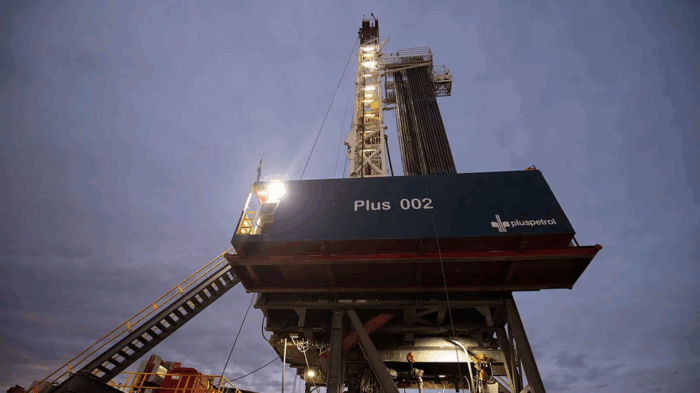
Luis Alberto Rey passed away in February 2005 at the age of 75. Management of the enterprise fell to his wife, Edith Rodríguez—whom he married in 1960—and their three children. Their eldest son, Ricardo Luis Rey, assumed the presidency of the company, presiding over a family fortune estimated by Forbes at USD 3.1 billion.
For decades, the Rey family maintained a 70% stake in Pluspetrol, with the Polis holding the remaining 30%. That corporate structure shifted permanently in 2023 when the Rey family bought out their long-time partners, taking 100% control of the company just as Argentina’s unconventional oil boom began to peak.
Supporting Data: Production and Portfolio Metrics
Pluspetrol’s current operating profile highlights its immense industrial capacity:

- Production Volumes: By mid-2024, Pluspetrol reported an annualized production of 82,846 barrels of oil equivalent per day (boe/d), driven by hyper-growth in Vaca Muerta. In natural gas, it ranks as the fifth-largest operator in the basin, pumping 9.3 million cubic meters per day ($m^3/d$).
- Asset Portfolio: Headquartered legally in the Netherlands, Pluspetrol boasts five major non-conventional fields—with La Calera serving as its crown jewel—alongside conventional assets like El Corcobo (straddling La Pampa and Mendoza), offshore concessions in the Malvinas Basin, and lithium exploration initiatives via its subsidiary, Lítica Resources. Historically, the company has operated in Venezuela, Bolivia, Colombia, Algeria, Angola, and Tunisia.
- The GeoPark Transaction: The two Vaca Muerta blocks sold to GeoPark (Loma Jarillosa Este and Puesto Silva Oeste) traded hands for USD 115 million. Current development plans target a massive ramp-up to 20,000 barrels per day by 2028, backed by a USD 1 billion capital expenditure commitment spanning 2025 through 2031.
Official Responses and Corporate Strategy
The transition of assets in Vaca Muerta has triggered dynamic corporate realignments across South America:
- GeoPark’s Aggressive Pivot: Under Felipe Bayón—who took the helm as CEO in June 2025 after a distinguished career at Ecopetrol—GeoPark has doubled down on Argentina. Partnering with Jaime Gilinski following his acquisition of the firm in early 2026, the executive duo has moved swiftly to integrate and expand their Patagonian footprint.
- Pluspetrol’s International Realignment: While Pluspetrol maintains a historical footprint in Colombia—dating back to its heavy-crude ventures in the Llanos Orientales during the late 2000s alongside partners like KNOC and CNPC—the company has systematically scaled back direct operational exposure in certain regions. Having divested or evaluated blocks in the Middle Magdalena Valley and Putumayo, Pluspetrol’s regional strategy has shifted toward high-impact evaluations and strategic partnerships.
Implications: A New Era for Latin American Energy
The ripple effects of Edith Rodríguez’s strategic divestment extend far beyond a simple asset swap. By offloading the Vaca Muerta blocks to GeoPark, Rodríguez not only streamlined Pluspetrol’s portfolio but also engineered the exact vehicle that allowed Jaime Gilinski to breach the elite echelons of Latin American oil exploration.
As Argentina positions itself as a global energy powerhouse under President Javier Milei—eclipsing traditional regional producers—the convergence of seasoned players like Pluspetrol, aggressive capital allocators like Gilinski, and veteran engineering leadership under Felipe Bayón signals a transformative chapter for Vaca Muerta. With billions of dollars in fresh capital flowing into Patagonian shale and potential cross-border fracking initiatives gaining momentum, the quiet foundations laid by Edith Rodríguez and Luis Alberto Rey continue to reverberate across the continent’s economic landscape.

Leave a Reply