

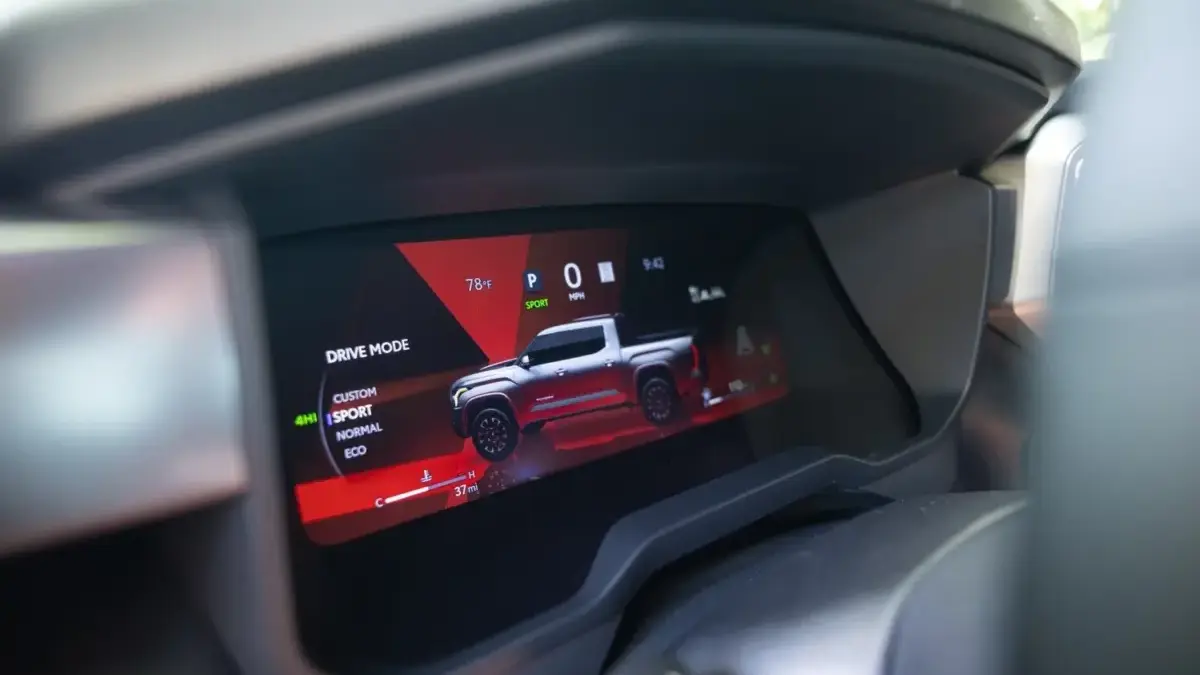
For decades, buying a car meant purchasing a product with a fixed expiration date. The moment a vehicle rolled off the dealership lot and onto the public road, its technological and mechanical trajectory pointed in only one direction: obsolescence. Hardware aged, software bugs remained unaddressed until the next routine garage visit, and optional features were locked into the physical configuration chosen at the time of purchase.
Today, that paradigm has fundamentally shattered. Modern automobiles are no longer just mechanical marvels powered by internal combustion engines or battery packs; they are sophisticated, mobile data centers. At the heart of this transformation lies the Over-the-Air (OTA) update—a wireless technology that allows vehicles to download and install software upgrades remotely, much like a smartphone updating overnight.
As automotive manufacturers race to pivot toward software-defined vehicles (SDVs), OTAs have evolved from a novelty used to tweak infotainment screens into critical mechanisms that alter vehicle dynamics, optimize battery chemistry, and patch vital cybersecurity vulnerabilities. However, this digital revolution brings a complex matrix of benefits, technical risks, regulatory hurdles, and privacy concerns that are reshaping the relationship between driver, machine, and manufacturer.
Main Facts: The Anatomy of Modern Automotive OTAs
To understand the profound impact of OTA updates, one must first examine how they function and what they are capable of achieving.
Unlike traditional vehicle servicing—which requires physical intervention by a technician with a diagnostic tool plugged into the OBD-II port—OTA updates leverage cellular networks (4G/5G) or home Wi-Fi connections to transmit code directly to a vehicle’s electronic control units (ECUs).
Types of Updates
- SOTA (Software-Over-The-Air): These updates target high-level systems, including the infotainment interface, navigation databases, Bluetooth connectivity, and user-interface themes. They are typically fast, run in the background, and rarely disrupt vehicle operation.
- FOTA (Firmware-Over-The-Air): These are deeper, more complex installations that modify the firmware of foundational vehicle systems. FOTA updates can alter powertrain behavior, braking calibration, advanced driver-assistance systems (ADAS), and battery management systems (BMS).
Direct Impact on Physical Performance
Perhaps the most startling revelation of the SDV era is that software can rewrite physics. In electric vehicles (EVs), sophisticated battery management algorithms delivered via OTA can optimize thermal regulation, yielding tangible increases in overall driving range or charging speeds.
High-profile manufacturers, most notably Tesla, have famously pushed updates that recalibrate inverter limits to reduce 0-to-100 km/h acceleration times. Conversely, traditional automakers are increasingly using FOTA to introduce subscription-based performance boosts or dynamic handling adjustments, turning static hardware into a flexible, upgradable canvas.
Chronology: From Diagnostic Ports to Cloud-Connected Mobility
The integration of software into automobiles did not happen overnight. It is the result of a decades-long transition from purely mechanical systems to centralized computing architectures.
- The 1970s–1990s (The Mechanical-Digital Split): Early electronic fuel injection and engine control units (ECUs) required specialized hardware and physical connections for diagnostics. Software was strictly a factory-set variable.
- The Early 2000s (The OBD-II Era): The universal adoption of On-Board Diagnostics (OBD-II) standardized error reporting. While mechanics could update software modules, it still required a physical visit to a service center.
- 2012 (The Tesla Disruption): Tesla popularized widespread FOTA updates, proving that an entire vehicle fleet could receive sweeping operational enhancements, user interface overhauls, and safety patches overnight without visiting a service bay.
- The Mid-to-Late 2010s (Mainstream Adoption): Premium legacy brands—including BMW, Mercedes-Benz, Audi, and Ford—began restructuring their vehicle architectures away from dozens of fragmented microcontrollers toward domain-controller layouts capable of supporting wireless updates.
- The 2020s (Regulatory Standardization): Recognizing the immense power and risk of remote modifications, international regulatory bodies began introducing strict legal frameworks to govern cyber security and software updates, setting the stage for the modern era of compliance.
Supporting Data: Efficiency, Cost Savings, and the Recall Crisis
The economic and logistical implications of OTA updates are staggering for both consumers and manufacturers.
The Death of the Physical Recall
Historically, discovering a software glitch or a minor logic error in a vehicle component meant issuing a massive, expensive physical recall. Manufacturers had to mail notices to millions of owners, coordinate dealership appointments, and pay technicians for labor hours.
According to industry data, the cost of a single physical recall campaign can easily scale into the tens or hundreds of millions of dollars in logistics, lost customer time, and warranty claims. OTAs allow manufacturers to resolve non-mechanical software bugs instantly and globally at a fraction of the cost. A flaw that once required a three-week national service campaign can now be neutralized in a 20-minute download window while the car sits quietly in an owner’s driveway.
Consumer Adoption and Expectations
Market surveys indicate that modern car buyers increasingly view OTA capability as a core purchasing criterion. Consumers accustomed to seamless smartphone updates expect their vehicles to similarly appreciate in value and capability over time. However, data also highlights growing consumer anxiety regarding "feature creep"—where manufacturers lock pre-installed hardware behind software paywalls, requiring monthly subscriptions for heated seats, enhanced performance, or advanced driver assists.
Official Responses and Regulatory Frameworks
Because wireless updates have the power to alter vehicle safety systems, powertrain output, and braking characteristics, governments and international regulators have stepped in to establish rigorous guardrails.
UNECE Regulations R155 and R156
The United Nations Economic Commission for Europe (UNECE) introduced landmark regulations—UNECE R155 (Cybersecurity Management System) and UNECE R156 (Software Update Management System)—to govern how automotive manufacturers develop, test, and deploy software updates.
- R155 mandates that manufacturers implement robust cybersecurity frameworks to protect vehicles from external hacking, data breaches, and malicious code injection.
- R156 requires automakers to maintain strict traceability of all software versions installed in every vehicle, ensuring that updates are thoroughly validated before deployment and that drivers are accurately informed of modifications affecting vehicle type-approval.
Industry Compliance
Major global automotive alliances have responded by overhauling their software engineering pipelines. Companies now employ dedicated "Product Security Incident Response Teams" (PSIRT) to monitor vulnerabilities continuously, deploying cryptographic signing and secure boot processes to guarantee that malicious actors cannot intercept or spoof OTA update packages.
Implications: Risks, Cybersecurity, and the Future of Ownership
While the advantages of a constantly evolving vehicle are undeniable, the transition to software-defined mobility opens Pandora’s box regarding security, privacy, and long-term vehicle ownership.
1. Cybersecurity Vulnerabilities and the Threat of Malware
Any device connected to the internet is a potential target for malicious actors. If a manufacturer’s cloud infrastructure lacks robust encryption, or if a vehicle’s update pipeline suffers from authentication flaws, hackers could theoretically intercept update packages.
The nightmare scenario involves deploying malicious firmware—often referred to as malware—capable of disabling safety-critical systems, locking steering controls, or holding vehicle fleets for ransom. Consequently, the industry’s defense relies heavily on multi-layered security protocols, including hardware-backed security modules (HSMs) and rigorous digital signing.
2. System Stability and the "Bricked" Car Phenomenon
Software updates are notoriously prone to edge-case bugs. If an installation process is interrupted—due to a sudden loss of cellular connectivity, a software glitch, or, most critically, a drop in voltage from the vehicle’s 12V auxiliary battery—the system can fail mid-write.
This phenomenon, known as "bricking," leaves the vehicle’s electronic architecture corrupted and the car completely inoperable. Past incidents involving major manufacturers like Ford and Volkswagen have demonstrated that even minor coding errors can lock down electrical management systems, forcing emergency tows to authorized service centers despite the promise of remote convenience.
3. Data Privacy and Telemetric Surveillance
To optimize software, predict maintenance needs, and refine autonomous driving algorithms, connected cars must constantly collect vast quantities of data. Everything from driving habits, GPS coordinates, and cabin audio to component wear-and-tear is beamed back to manufacturer servers.
While automakers argue this telemetry is essential for product improvement, it raises profound questions regarding user privacy. Who owns this data? How long is it stored, and can it be subpoenaed or sold to third-party data brokers? Navigating the dense fine print of connected-services privacy policies has become an unavoidable chore for modern drivers.
4. Technological Obsolescence and Manufacturer Dependence
The shift to OTA updates creates a new form of planned obsolescence. Vehicles are increasingly dependent on centralized cloud infrastructure maintained exclusively by the manufacturer.
If a legacy automaker decides to sunset support for an older model generation, or if the physical processor embedded in the dashboard lacks the computing power required to run newer, heavier software packages, the vehicle’s evolution halts abruptly. This creates a stark technological chasm between vehicles manufactured just a few years apart, potentially depressing resale values for older connected cars.
Conclusion: The New Maintenance Checklist
The evolution toward software-defined vehicles represents an irreversible shift in automotive engineering. Just as checking the oil, inspecting tire tread, and monitoring brake fluid levels became standard habits of twentieth-century motoring, managing digital health has become essential for twenty-first-century drivers.
For the update process to remain smooth and stress-free, industry experts recommend adhering to a few fundamental best practices:
- Perform major updates while parked at home with a stable internet connection.
- Ensure the vehicle’s 12V battery is fully charged or that the car is plugged into a dedicated charger to prevent power drops during installation.
- Never ignore critical safety patches, as delaying updates can expose the vehicle to known vulnerabilities or result in the deprecation of vital automated systems.
Ultimately, when properly regulated, secured, and managed, OTA updates ensure that our vehicles are safer, more efficient, and more capable tomorrow than they were the day we drove them off the lot.

Leave a Reply