

Gastronomy has once again been transformed by the power of social media. In an era where culinary trends emerge daily and disappear just as quickly, a refreshing, brilliantly simple technique has captured the global imagination—and it requires neither an expensive ice cream maker nor advanced culinary training. The "viral watermelon ice cream" hack has taken digital platforms by storm, turning basic frozen fruit into a creamy, luxurious, and budget-friendly dessert in a matter of minutes.
What started as a clever experiment by a digital content creator has now crossed international borders, inspiring professional chefs and home cooks alike—including prominent figures in the Peruvian culinary scene—to rethink how we consume summer treats.
Main Facts: The Anatomy of a Viral Sensation
At its core, the viral ice cream trend is a triumph of kitchen ingenuity. It strips away the complex machinery, stabilizers, and emulsifiers typically associated with commercial ice cream production, relying instead on a brilliant physical reaction between frozen fruit and high-fat dairy.
The Original Recipe
The phenomenon was originally popularized by culinary content creator Alexa Santos through The Feedfeed, a prominent digital cooking community. To replicate her exact method, home cooks need only three basic ingredients:
- A fresh watermelon
- One cup of heavy cream (crema de leche)
- A drizzle of honey
The Technique
The preparation method is as visually satisfying as it is effective:
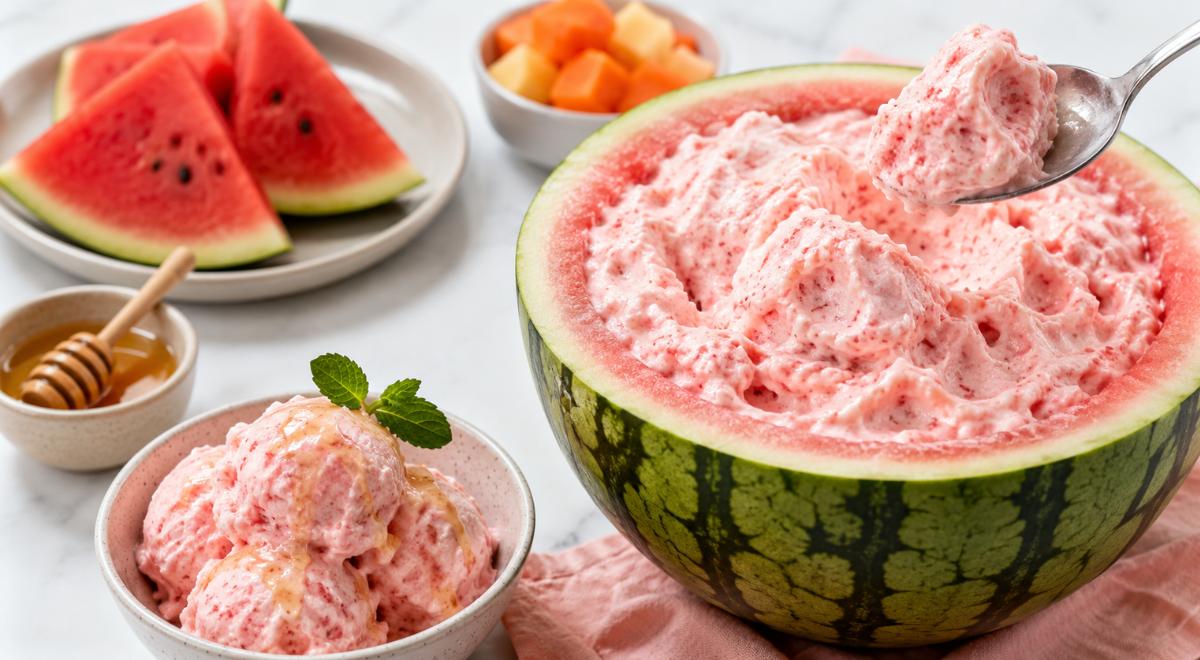
- The Vessel: A watermelon is sliced in half, and the core is partially hollowed out to form a natural, edible bowl.
- The Freeze: The hollowed fruit is wrapped securely in plastic film and placed in the freezer overnight.
- The Transformation: The following day, heavy cream is poured directly into the frozen cavity. Using a spoon or fork, the maker scrapes the frozen pulp while simultaneously mixing it with the cream.
- The Result: The friction and scraping action break down the ice crystals of the fruit, emulsifying them with the fats in the heavy cream. This instantly yields a smooth, pastel-pink dessert with a velvety texture, ready to be enhanced with a drizzle of honey.
Chronology: From Digital Experiment to Global Culinary Movement
The evolution of this trend highlights the lightning-fast speed at which modern food culture travels from individual kitchens to international acclaim.
Phase 1: Inception on Social Media
Long before going mainstream, food creators sought ways to bypass the traditional ice cream-making process, which often involves chilling bowls, churning bases, and waiting hours for proper freezing. The breakthrough came when creators realized that freezing a fruit whole and directly scraping it with a dairy fat created an instant gelato-like consistency. Alexa Santos refined this into the now-iconic watermelon bowl method, which immediately went viral due to its aesthetic appeal and minimal cleanup.
Phase 2: Crossing into South American Gastronomy
It did not take long for the trend to migrate southward, capturing the imagination of Latin American chefs who are well-known for celebrating fresh, local produce. In Peru—a country globally celebrated for its rich culinary diversity—chefs quickly adapted the technique to local palates and ingredients.
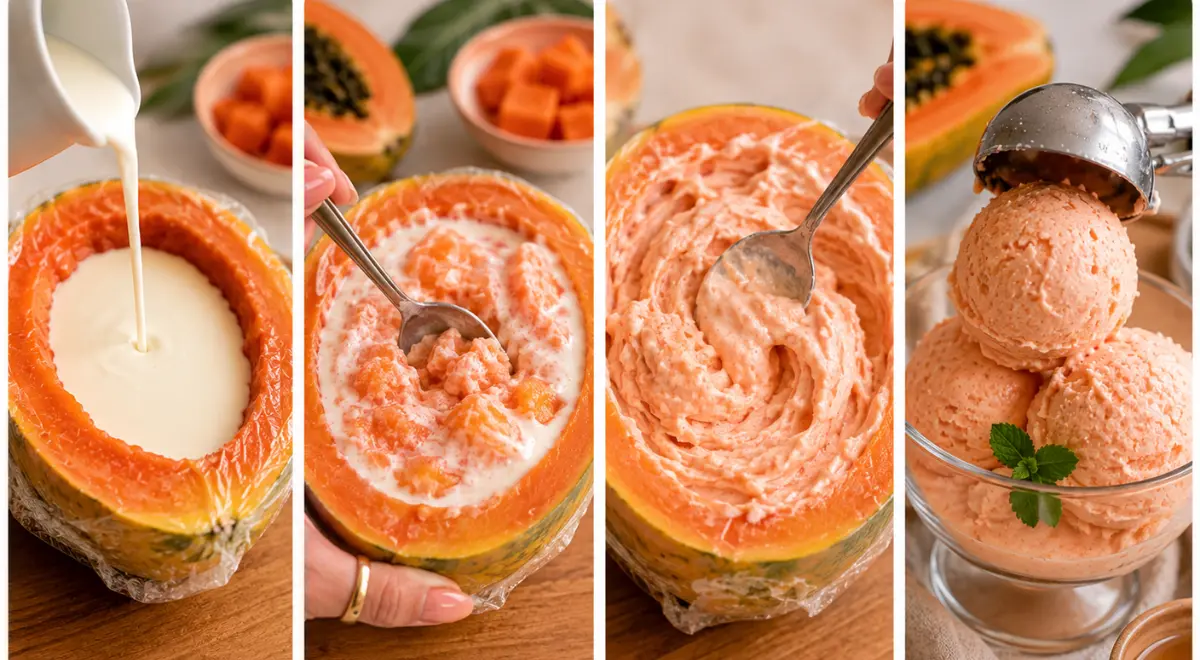
Renowned Peruvian chef Rodrigo Fernandini embraced the viral method, expanding the scope beyond watermelon to include other tropical and native staples like melons and papayas. By pouring heavy cream directly over the frozen surfaces of these fruits and scraping them into a creamy consistency, Fernandini demonstrated how versatile the technique truly is.
Simultaneously, content creators like @pisucocina introduced alternative variations, substituting heavy cream for Greek yogurt and pairing it with fresh strawberries to create a lighter, protein-rich profile without sacrificing creaminess.
Supporting Data and Adaptability: The Science of Scraping
The success of this viral hack is rooted in food science. Traditional ice cream relies on tiny air cells and fat droplets surrounding ice crystals to create a smooth mouthfeel. By using flash-frozen fruit (which naturally contains water locked in microscopic crystals) and introducing a rich dairy fat like heavy cream or Greek yogurt, the manual scraping action mimics the mechanical churning of an ice cream machine.
Expanding the Menu: A Step-by-Step Guide for Other Fruits
The beauty of this trend is its infinite adaptability. Home cooks are no longer limited to watermelon; the technique works brilliantly with almost any fruit boasting high water or flesh content.
Here is how culinary enthusiasts are adapting the method for a wide array of fruits:
- Selection and Prep: Wash and slice your fruit of choice—whether it is melon, papaya, mango, strawberries, or bananas. Ensure the pieces are appropriately sized and place them in the freezer overnight until they are completely solid.
- The Container: Transfer the frozen fruit to a bowl, or utilize the fruit’s natural rind (such as half a melon or papaya) to serve as an eco-friendly, zero-waste serving dish.
- The Dairy Integration: Pour heavy cream over the fruit. For smaller or tarter fruits like strawberries or raspberries, blending the fruit beforehand with a dense base like Greek yogurt yields superior results.
- The Scrape: Using a sturdy spoon or fork, firmly scrape the surface of the frozen fruit, folding it continuously into the dairy fat. Continue this process until the mixture transforms from icy flakes into a homogeneous, creamy, soft-serve texture.
- Toppings and Presentation: Serve immediately. Enhance the flavor profile by adding regional or personalized toppings such as raw honey, algarrobina (a traditional Peruvian syrup derived from the carob tree), or a medley of toasted nuts and dried fruits.
Official Responses and Culinary Expert Perspectives
While food industry traditionalists often scoff at internet food trends, professional chefs have largely praised the viral ice cream hack for its accessibility and encouragement of home cooking.
Culinary educators point out that trends like this break down psychological barriers in the kitchen. Many consumers are intimidated by pastry arts, believing that desserts require precise chemical measurements and specialized appliances. By proving that a delicious, high-end-looking dessert can be made using nothing more than a piece of fruit, heavy cream, and a spoon, the trend democratizes dessert-making.
Furthermore, nutritionists have highlighted the functional benefits of the hack. Unlike commercial ice creams loaded with artificial preservatives, high-fructose corn syrup, and hydrogenated oils, the viral fruit ice cream offers a clean ingredient label. Parents, in particular, have embraced the method as a clever way to increase fruit consumption among children who might otherwise reject plain produce.
Implications: Sustainability, Economy, and the Future of Home Cooking
The widespread adoption of the frozen fruit scraping technique carries significant implications for modern households, particularly regarding economy and sustainability.
Economic Relief in the Kitchen
As global inflation impacts the cost of groceries, specialty items like commercial artisanal ice creams have become luxury purchases. The viral fruit hack utilizes whole produce—often making use of fruits that are approaching over-ripeness and would otherwise be discarded. By freezing them just in time, households reduce food waste while creating an inexpensive dessert option.
The Rise of Zero-Waste Dessert Culture
Using hollowed-out fruit rinds as serving bowls aligns perfectly with the growing zero-waste movement in contemporary gastronomy. It eliminates the need for single-use plastic bowls or the washing of extra dishware, merging convenience with environmental consciousness.
What’s Next for Viral Food Culture?
As chefs and home cooks continue to experiment with the technique, we are likely to see savory adaptations, dairy-free alternatives using coconut cream or plant-based yogurts, and regional flavor fusions incorporating local spices and superfoods.
Ultimately, the viral frozen fruit ice cream is more than just a passing social media fad. It is a reminder that the best culinary innovations often stem from simplicity, creativity, and a willingness to play with our food. Whether you are battling a summer heatwave or simply craving a sweet, guilt-free treat after dinner, a trip to the freezer and a sturdy spoon are all you need to join the global culinary revolution.

Leave a Reply