


Main Facts
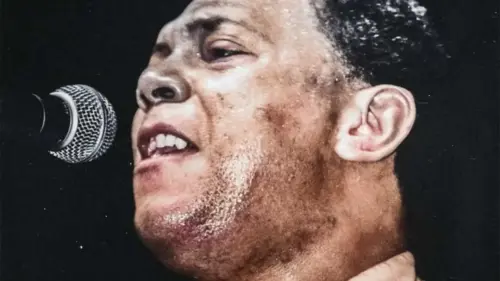
For over four decades, Son Palenque has stood as an indomitable pillar of Afro-Colombian music, operating as a vital bridge connecting deep-rooted ancestral traditions with modern sonic landscapes. At the helm of this groundbreaking musical collective is Justo Valdez—affectionately known as “El jelejele,” “The King of Creole Therapy,” and “The Legend.” Under his direction, the band has consistently delivered an explosive fusion of flavor, serving as a literal and figurative corner of Africa planted firmly in Colombian soil.
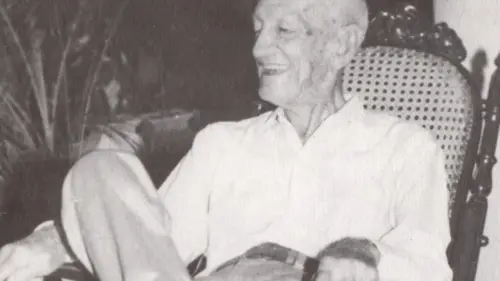
Born in San Basilio de Palenque in 1951—the first free town established by enslaved Africans in the Americas—Valdez is more than just a vocalist. He is an agile percussionist, prolific composer, and a foundational architect of champeta criolla. His lineage is steeped in musical royalty: he is the son of Cecilio Valdez Simanca, known as “Ataole,” a legendary percussionist and sonic hero of Palenque traditions; the nephew of José Valdez Simanca (“Simancongo”), a master marímbula player and founding member of the historic Sexteto Tabalá; and the cousin of the legendary percussionist Paulino Salgado (“Batata”).
Today, Son Palenque’s legacy extends far beyond their extensive discography. They are widely recognized as a foundational "university" for Afro-Colombian music, having helped shape the early careers of iconic champeta artists such as Charles King, Melchor Pérez, and Viviano Torres. Their latest release, Rincón de África (Corner of Africa)—produced by Javier Mutis with support from Bogotá’s Secretariat of Culture and Idartes—proves that even after forty years, Valdez and his collective still know how to make the needle hit the red.
Chronology: From the Fields of Palenque to the Global Stage
Roots and Early Struggles (1951–1979)
Justo Valdez spent his early years dividing his time between agricultural labor in San Basilio de Palenque and absorbing the rhythmic vernacular of his community, anchored by the heavy, resonant drumbeats of his father.
“My father, who passed away in 1980, was my teacher. I mention him in several of my songs, for example in ‘Unye Unye,’ which I recorded in the ’80s for the Victoria label, where I said: ‘The drums that I have are the inheritance of my father, with them I sustain myself, I don’t want them to end,’” Valdez recalls.
In his youth, Valdez migrated to Cartagena, finding work as a bricklayer and a street vendor selling sunglasses. The transition was arduous, mirroring the experiences of many fellow Palenqueros who left their hometown in search of economic survival. Yet, music remained their North Star. One fateful night in 1979, on the beaches of Marbella, Son Palenque was officially born. The name was a double entendre: inspired by the traditional son rhythm, it also translates colloquially to "they are from Palenque."
The Breakthrough and the Birth of Champeta (1980s)
The band’s early lineup featured Valdez on lead vocals, “Ataole,” Enrique Tejedor, and Luciano Torres on backing vocals, Tomás Valdez on the tambor alegre, and Pánfilo Valdez as second lead voice. Rehearsals initially took place in a local school where “Ataole” worked as a watchman.
Their big break came unexpectedly during the November independence festivities in Cartagena. Denied an initial slot by an event promoter, the band caught their opening when vallenato star Silvio Brito experienced extensive delays setting up his equipment. Fearing the crowd would disperse, the master of ceremonies announced, "Bring up Son Palenque." They performed “Dame un trago,” which instantly became a crowd favorite.
Encouraged by Argelio Pérez, a promoter for CBS, the band entered the studio, recording two foundational tracks: “El Palo de Mamón”—the only recorded track featuring “Ataole”—and “Aloito Pio,” a track composed and sung by Justo Valdez in the native Palenque language. This made them true pioneers in recording music in a tongue that local society had long marginalized.
“When we just arrived in Cartagena, people made fun of our accent, saying that the Palenque language was ugly, that using it was a symbol of ignorance because we didn’t know how to speak properly,” Valdez reflects. “But when we were on stage, we had a lot of success. The public thought we were an African, Haitian, or Jamaican group.”
By their third album, they released “Itan pa loyo,” widely recognized as the very first criollo therapy song—a style that would eventually evolve into the genre known globally as champeta. The track became the official theme song for the third edition of the Caribbean Music Festival.
Throughout the 1980s, Son Palenque released a string of critically acclaimed, dancefloor-igniting vinyl records, including Son Palenque (1981), Los Trotamundos del Sabor (1983), Larepa’sa (1984), Ane Jue (1985), and Afric Erotic (1986). Hits like “El Sapo” and “Palenque Palenque” became anthems that shook the Barranquilla Carnival and circulated widely in international world-music compilations.

Industry Shifts, Solos, and Revival (1990s–Present)
As the vinyl industry collapsed in the mid-1990s and recording contracts dried up, Valdez briefly pursued a solo career within the emerging champeta criolla market. To survive economic hardships, Valdez and his bandmates returned to the beaches of Cartagena, selling sunglasses to tourists between musical engagements.
Despite these hardships, the resilient spirit of the group could not be extinguished. In 2012, Son Palenque roared back with Kamajanes de la Música Palenquera, followed by Afro-colombian Sound Modernizers (2014) and Kutu Prieta Pa Saranguia (2017)—meaning "Black strength to enjoy."
Valdez has consistently embraced fresh musical blood to keep the band evolving. “I like to work with musicians like them, because we who form Son Palenque are empirical, we don’t know about sheet music, and they contribute to putting a little more movement into the music, to enriching the melodic part,” he notes regarding his newer collaborators.
Their modern era has continued unabated with Itan pa Loyo (2022) and their most recent, highly praised project, Rincón de África (2023).
Supporting Data: Discographical Milestones
To understand the immense scope of Son Palenque’s contribution to Latin American and Caribbean music, one must look at their recorded output, which charts the evolution of Afro-Colombian coastal sounds:
- 1981: Son Palenque (Debut studio album establishing their modern-folkloric fusion)
- 1983: Los Trotamundos del Sabor
- 1984: Larepa’sa
- 1985: Ane Jue
- 1986: Afric Erotic (Showcasing experimental African-rooted arrangements)
- 1994: Thin Records Presenta Son Palenque
- 1995: Dame un Trago
- 1999: Kumina
- 2012: Kamajanes de la Música Palenquera (Marking their major contemporary revival)
- 2014: Son Palenque, Afro-colombian Sound Modernizers
- 2017: Kutu Prieta Pa Saranguia
- 2022: Itan pa Loyo
- 2023: Rincón de África
Official Responses and Institutional Recognition
The cultural significance of Son Palenque has long transcended the informal dancefloors and sound systems (picós) of the Caribbean coast, drawing formal backing from cultural ministries and municipal arts institutions.
Their latest album, Rincón de África, received vital institutional backing, released with the explicit auspice of the Distrital Program of Concerted Supports from the Secretariat of Culture, Recreation, and Sport of Bogotá, alongside the District Institute of Arts (Idartes). This institutional endorsement reflects a broader paradigm shift in Colombia, wherein genres born from the margins—specifically the Palenque vernacular and early champeta—are finally being recognized as foundational elements of the nation’s intangible cultural heritage.
Furthermore, cultural programs, public television networks like Radio Nacional de Colombia, and documentary projects such as Deysa Rayo’s interview series “En Clave” have dedicated significant broadcast hours to preserving and documenting Valdez’s oral history, ensuring that the hardships and triumphs of the band’s foundational members are archived for future generations of musicologists.
Implications: Cultural Preservation and the Future of Afro-Colombian Sound
The narrative of Son Palenque is ultimately a study in cultural survival and artistic autonomy. When Justo Valdez and his bandmates began integrating the Palenque language—a Spanish-based Creole (lengua palenquera) containing Kikongo roots from Central Africa—into commercial recordings, they faced systemic linguistic discrimination. Mainstream Colombian society often dismissed the language as uneducated or unsophisticated.
By persisting, Son Palenque did not merely carve out a commercial niche; they actively decolonized the Colombian musical imagination. They proved that folkloric traditions originating from resistance communities could successfully interface with modern recording studio techniques, drum machines, and electric basslines without losing their spiritual core.
Moreover, by functioning informally as a "musical university" that trained future champeta pioneers, Son Palenque ensured that the stylistic DNA of terapia criolla would permeate successive generations of Caribbean artists. As global interest in vintage Afro-Latin sounds, tropical vinyl culture, and world music continues to expand, Son Palenque stands as a living monument—a bridge where the ancestral rhythms of the Congo basin meet the vibrant, resilient street culture of modern Colombia.


Leave a Reply