

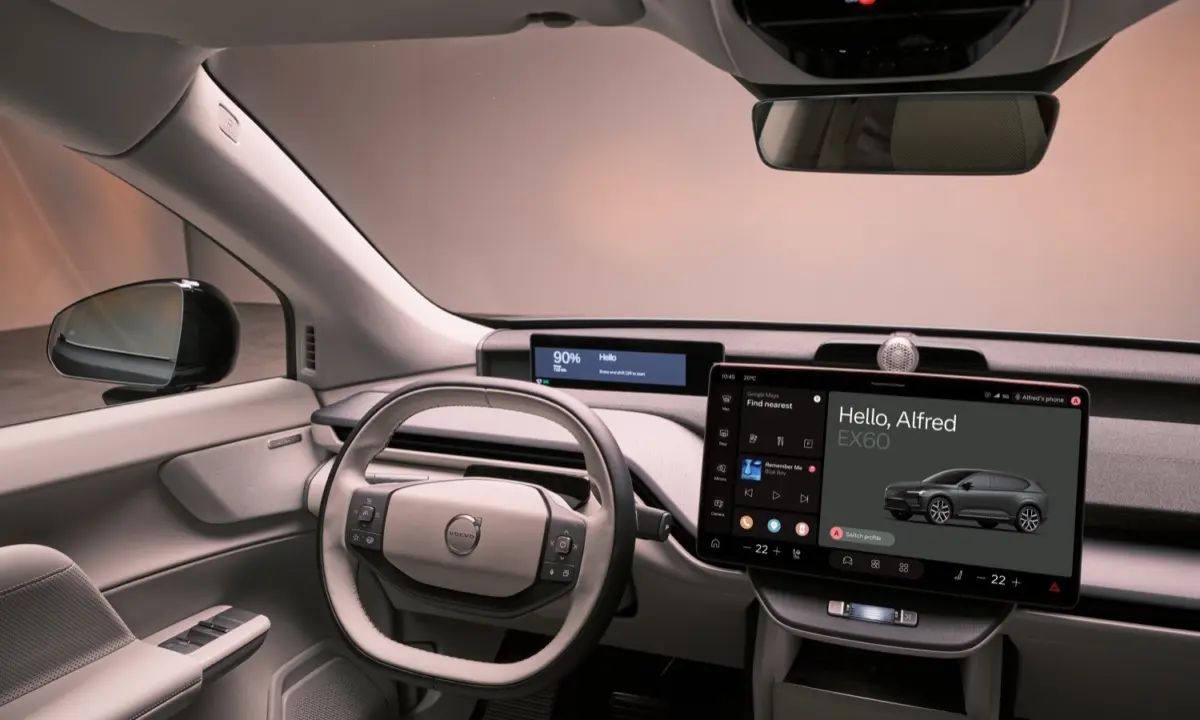
Volvo is continuing to accelerate its aggressive transition toward becoming a fully electric vehicle manufacturer. As part of this comprehensive product rollout, the Swedish automaker has officially registered the EX50 moniker with the European Union Intellectual Property Office (EUIPO), confirming industry suspicions that a brand-new, purpose-built, all-electric compact SUV is well under development.
Slated to arrive on the market between 2027 and 2028, the forthcoming EX50 will slot strategically between the smaller EX30 and the larger EX60. Industry analysts and insiders note that this vehicle is engineered from the ground up to offer a more accessible pricing structure than the current EX40 (formerly known as the XC40 Recharge), without compromising the hallmark safety standards, meticulous craftsmanship, and Scandinavian luxury that define the brand.
Main Facts
The Volvo EX50 represents a pivotal turning point in the manufacturer’s long-term product roadmap. Rather than functioning as a direct facelift or a simple evolution of the current EX40, the EX50 is an entirely fresh vehicle architecture conceived to tackle the fiercely competitive European premium compact SUV market.
- Market Positioning: The EX50 will bridge the physical and financial gap between the entry-level EX30 and the mid-size EX60. It will serve as a more modern, efficient, and cost-effective successor to the legacy electric platforms within Volvo’s lineup.
- Platform Architecture: The SUV will utilize Geely’s advanced SPA3 platform, the same foundational architecture making its debut under the EX60. This platform enables high component-sharing across group brands and supports an advanced 800-volt electrical architecture, unlocking ultra-fast charging capabilities.
- Manufacturing Hub: Production will take place at Volvo’s state-of-the-art facility in Slovakia. This strategic geographic choice helps optimize labor costs while sidestepping potential international tariffs—particularly for key export markets like the United States.
- Core Competitors: Upon its commercial launch, the EX50 will go head-to-head against established segment heavyweights, including the BMW iX1, the Audi Q4 e-tron, and other premium European compact battery-electric vehicles (BEVs).
Chronology: The Road to the EX50
The genesis of the EX50 cannot be viewed in isolation; it is part of a multi-year electrification roadmap designed to overhaul Volvo’s entire portfolio.
- Early Phase (2021–2023): Volvo introduces its initial wave of dedicated EVs, anchored by the XC40 Recharge and C40 Recharge (later renamed EX40 and EC40). Concurrently, engineering teams begin conceptualizing next-generation scalable platforms to reduce reliance on legacy internal combustion engine (ICE) architectures.
- Late 2023 – 2024: The company launches the sub-compact EX30 to critical acclaim, proving that Volvo can produce high-demand, high-margin, smaller electric vehicles. Discussions regarding the next tiers of the lineup—including the EX60 and a bridge between compact segments—intensify internally.
- 2025–2026 (Current Window): Volvo formally registers the "EX50" trademark with the European Union Intellectual Property Office. Reports from automotive industry intelligence networks like Automotive News reveal details regarding the adoption of the SPA3 platform and manufacturing plans in Slovakia.
- 2027–2028 (Anticipated): The official global unveiling, followed closely by commercial production and the market rollout of the EX50. This period is expected to mark the gradual phasing out of older EV transitions in favor of dedicated SPA3-based vehicles.
Supporting Data and Technical Architecture
To understand why the EX50 is such a critical vehicle for Volvo, one must examine the underlying engineering and manufacturing economics.
The Economics of the SPA3 Platform
Volvo’s shift to the SPA3 platform is designed to drastically lower manufacturing overhead. By leveraging shared modular components across the broader Geely holding group—which includes brands like Polestar, Zeekr, and Lotus—Volvo can optimize supply chains and streamline factory tooling. Lower production costs are vital for maintaining healthy profit margins in the fiercely contested compact luxury segment, where price sensitivity remains a primary barrier to mainstream EV adoption.
Charging Speeds and Performance Metrics
While Volvo has yet to publish official figures regarding horsepower, battery capacities, or exact WLTP driving ranges, the integration of an 800-volt electrical system via the SPA3 platform points toward significant technological leaps:
- Ultra-Fast Charging: An 800V architecture drastically cuts down replenishment times, allowing drivers to charge from 10% to 80% significantly faster than current 400V-based architectures.
- Weight and Efficiency Optimization: Advanced thermal management systems and dense battery pack packaging will maximize interior space while preserving aerodynamic efficiency, a critical factor for highway cruising range.
Cutting-Edge Safety and Infotainment
Volvo remains synonymous with automotive safety, and the EX50 will be no exception.
- Advanced Sensor Suite: The vehicle will feature a roof-mounted LiDAR sensor, working in tandem with an array of cameras and radar units to power next-generation advanced driver-assistance systems (ADAS).
- Interior Safety Innovations: Technologies such as multi-adaptive seatbelts, pioneered in higher-tier models like the EX60, are expected to trickle down to the EX50.
- Digital Ecosystem: Inside the cabin, the vehicle will utilize an advanced infotainment system powered by Android Automotive OS, natively integrating Google Maps, Google Assistant, and the Google Play Store for seamless connectivity.
Official Responses and Industry Outlook
Volvo executives have consistently emphasized that profitability and sustainability must go hand in hand as the brand navigates the evolving global EV landscape. While initial corporate strategies aimed for a completely all-electric lineup by the end of the decade, shifting market realities, varying infrastructure rollouts across global territories, and fluctuating consumer demand have prompted a pragmatic recalibration.
Despite these macro-environmental shifts, brand representatives maintain that dedicated EV platforms like the one underpinning the EX50 are non-negotiable for long-term survival. Industry commentators note that filling the gap between the EX30 and EX60 is essential. While the EX30 caters to younger urban buyers looking for an entry-level footprint, and the EX60 targets families needing mid-size space and long-distance touring capabilities, the EX50 targets the sweet spot of the European market—the traditional heartland of compact crossovers previously occupied by cars like the XC40.
Implications for the Market and Consumers
The introduction of the Volvo EX50 carries profound implications for both the brand and prospective luxury EV buyers.
1. A Natural Successor to the EX40
For years, Volvo’s electric crossover presence relied heavily on vehicles built atop modified multi-energy platforms (such as the CMA architecture used for the XC40/EX40). The EX50 represents a clean break from the past—a vehicle built from scratch solely as an electric car. This purpose-built design yields superior interior packaging, better weight distribution, and optimized aerodynamics. Consequently, the EX50 is poised to effectively supplant the EX40 in spirit and function, offering a vastly superior digital and mechanical package.
2. Democratizing Premium Electric Mobility
By leveraging the cost-saving benefits of the SPA3 platform and manufacturing the vehicle within the European Union (Slovakia), Volvo can better insulate itself against shifting geopolitical landscapes and exorbitant import duties. For consumers, this translates to more competitive pricing in the showroom, putting pressure on German rivals like BMW, Audi, and Mercedes-Benz to rethink their own compact electric pricing strategies.
3. Strengthening European Manufacturing Footprint
Volvo’s heavy investment in its Slovakian production plant underscores a regionalized manufacturing strategy. By producing vehicles closer to key European consumer markets, the company reduces logistics-related carbon emissions, shortens supply chain vulnerabilities, and reinforces its commitment to European economic infrastructure.
Summary
As the automotive industry marches steadily toward the latter half of the decade, the Volvo EX50 stands out as one of the most anticipated product launches on the horizon. By combining competitive pricing, advanced 800V charging technology, cutting-edge safety features, and a dedicated platform, Volvo is ensuring that its next-generation compact SUV will be well-equipped to capture the hearts and wallets of European drivers when it hits showroom floors between 2027 and 2028.

Leave a Reply