

Main Facts
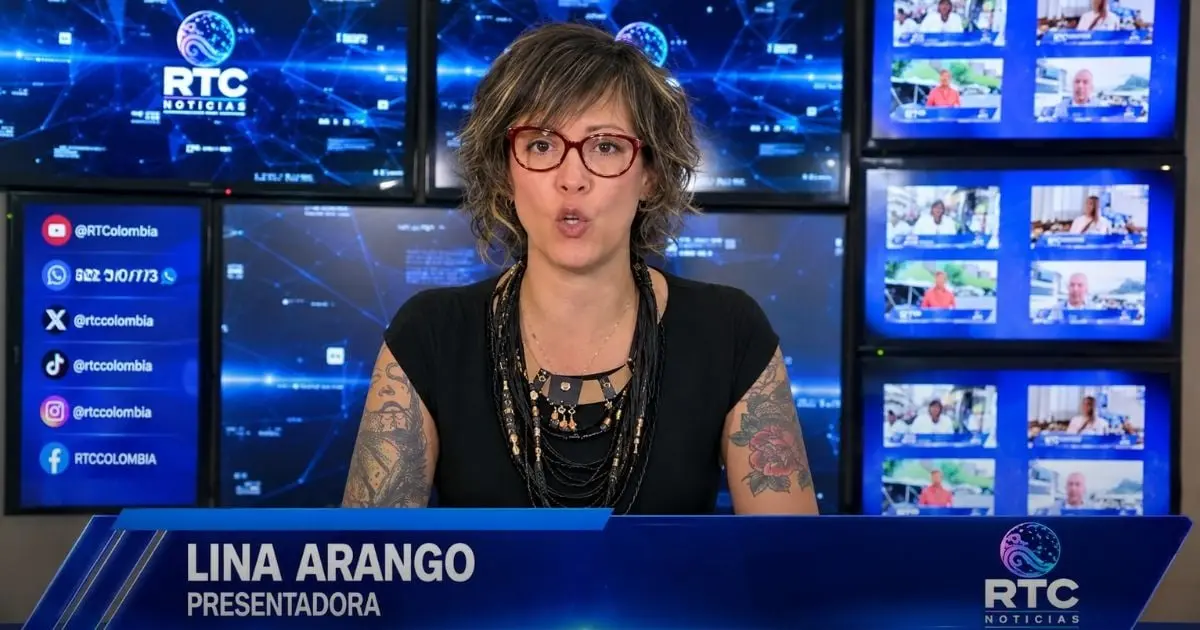
The landscape of Colombian public media and independent digital journalism has been thrust into a high-stakes legal and political confrontation. On September 14, 2026, a new independent digital news outlet named RTC Noticias (which modified its name to RTCC—Radio y Televisión Comunitaria de Colombia—after its first week on air) made its official debut. Operating primarily out of a studio in Medellín, the alternative broadcast was spearheaded by prominent former journalists from the public broadcasting system RTVC, most notably Lina Arango, formerly a presenter for the RTVC morning program “El Calentao”, and Larry Hoyos, a former RTVC correspondent in Medellín and contributor to Tercer Canal.
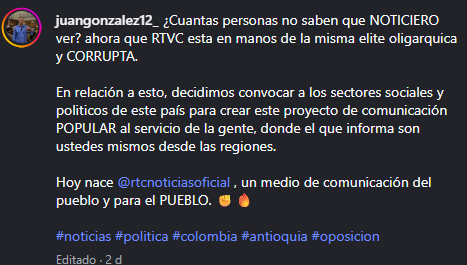
The outlet’s inaugural broadcast drew approximately 900 concurrent viewers on YouTube, signaling a modest yet engaged initial audience for a grassroots digital media project. However, the launch quickly transcended digital media metrics. RTC/RTCC positions itself as an explicitly anti-establishment platform, featuring editorial stances sharply critical of the government of Abelardo de la Espriella. Prominent staff members, such as journalist Juan Pablo González, have openly displayed affinities for leftist political movements like the Pacto Histórico, framing the new medium as a grassroots continuity of public-interest reporting directly from the Colombian territories.
The response from the establishment was swift. Just one day after the launch, RTVC Noticias—under the direction of Ángela María Mora Soto—retaliated aggressively. The public media system filed a formal trademark infringement lawsuit before the Superintendencia de Industria y Comercio (SIC), alongside criminal complaints filed with the Prosecutor’s Office (Fiscalía General de la Nación) against the unnamed former RTVC journalists leading the project.
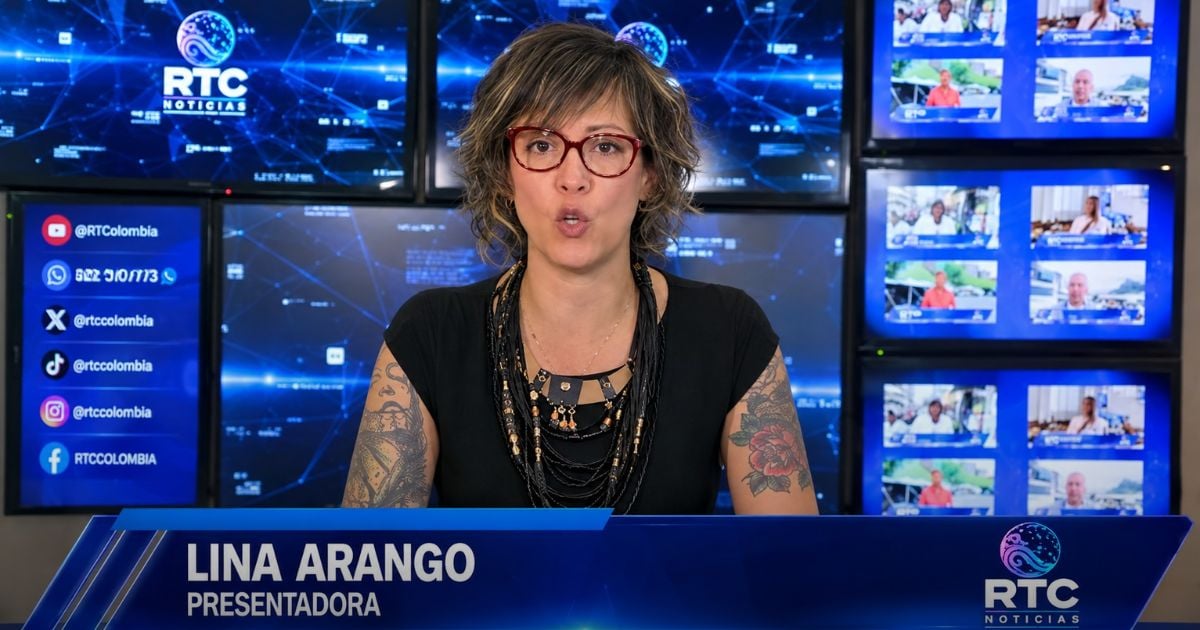
RTVC has demanded that the SIC order the immediate blocking of the fledgling outlet’s website and the total removal of all digital content that implies a formal connection, institutional lineage, or continuity with the public media system. At the core of the legal dispute are striking similarities: RTC incorporates 11 of the 12 letters comprising the registered trademark “RTVC Noticias,” utilizes a visual identity mimicking the color palette (shades of purple and blue) and geometric design of the public broadcaster, and frequently leans on the slogan, "We were part of RTVC Noticias and today we continue to inform from the territories through RTC Noticias."
Chronology of Events
The unfolding controversy follows a rapid timeline of digital disruption, public positioning, and institutional counter-offensive:
- Pre-September 2026: Journalists Lina Arango, Larry Hoyos, and other regional correspondents depart from their respective roles within the RTVC public media network, setting the groundwork for an independent digital network aimed at regional and territorial reporting.
- September 14, 2026: RTC Noticias goes live with its first official broadcast from its studio in Medellín. Hosted by Lina Arango, the stream garners roughly 900 concurrent online viewers on YouTube and explicitly establishes the network’s identity as a spiritual successor to RTVC’s territorial journalism.
- Mid-September 2026 (Week 1): Following its initial broadcast, the network officially adjusts its name from RTC Noticias to RTCC (Radio y Televisión Comunitaria de Colombia) while scaling up its claims of operating a robust network of over 60 journalists, camerapersons, and regional correspondents. Editorial lines solidify, characterized by fierce opposition to the De la Espriella administration and overt alignment with progressive political ideologies.
- September 15, 2026: The public media network RTVC Noticias, directed by Ángela María Mora Soto, reacts violently to the launch. RTVC officially files a trademark violation lawsuit with the Superintendencia de Industria y Comercio (SIC) and a parallel criminal complaint with the Prosecutor’s Office, citing deceptive branding, copyright misappropriation, and brand dilution.
- Mid-September 2026 (Post-Denunciations): The leadership of RTCC fires back publicly. Lina Arango dismisses the legal maneuvers as a "clumsy" attempt at censorship by the state media apparatus. Larry Hoyos publicly characterizes the legal action as a direct, politically motivated assault orchestrated by the De la Espriella administration, vowing vigorous legal defense.
- Late September 2026: Despite ongoing legal scrutiny from the SIC and attempts by media outlets like Las2Orillas to contact the nascent newsroom for comment—which went unanswered—RTCC pushes forward, successfully executing its second scheduled broadcast and cementing its presence in Colombia’s polarized digital media ecosystem.
Supporting Data and Structural Breakdown
To understand the weight of this controversy, it is essential to analyze the structural composition, audience reach, and specific allegations underpinning the conflict between the state-backed broadcaster and the insurgent digital collective.

Organizational Scale and Digital Footprint
- Initial Viewership: The maiden broadcast on September 14 achieved an audited peak of 901 concurrent viewers on YouTube, demonstrating a foundational digital community.
- Human Capital: According to public statements across their social media channels, RTCC claims a sprawling network of over 60 media professionals, including reporters, camera operators, and local correspondents deployed across Colombia’s diverse geographical regions.
- Key Figures:
- Lina Arango: Former face of RTVC’s morning show “El Calentao”, serving as the primary anchor and public face of RTCC.
- Larry Hoyos: Former Medellín correspondent for RTVC Noticias and veteran independent investigator linked to Tercer Canal.
- Juan Pablo González: Staff journalist and vocal supporter of the Pacto Histórico, whose digital commentary highlights the outlet’s explicit ideological alignment.
The Legal and Trademark Arguments (RTVC vs. RTCC)
The petition submitted by RTVC to the Superintendencia de Industria y Comercio (SIC) rests on tangible visual and semantic proximities designed to mislead consumers:
- Lexical Overlap: The use of "RTC" mirrors 11 out of the 12 letters found in the legally protected trademark "RTVC Noticias."
- Visual Mimicry: The newly minted logo employs striking visual cues—specifically deep purple and blue color schemes alongside spatial layouts—that closely parallel the official branding of the public broadcasting network.
- Narrative Misrepresentation: By explicitly broadcasting statements such as "We were part of RTVC Noticias and today we continue to inform from the territories," the outlet allegedly crosses the boundary from independent commentary into deceptive brand association, tricking audiences into believing RTCC possesses institutional endorsement or operational continuity with the state-run media entity.
Official Responses and Public Posturing
The war of words between the directors of RTVC and the founders of RTCC has transformed a standard intellectual property dispute into a lightning rod for broader debates regarding freedom of speech, political persecution, and state control over information.
The State Media Defense: RTVC Noticias
For RTVC, under the stewardship of Ángela María Mora Soto, the emergence of RTCC is not merely a competitive challenge; it is a blatant infraction of intellectual property law and an unauthorized usurpation of public trust. Public media systems operate under strict regulatory frameworks, and their trademarks represent years of state investment and public goodwill. By adopting a near-identical nomenclature, visual identity, and historical narrative, RTCC threatens to dilute the brand equity of Colombia’s official public broadcaster. Consequently, RTVC’s dual strategy—filing civil actions through the SIC to demand website blocking and content takedowns, alongside criminal complaints through the Prosecutor’s Office—signals a zero-tolerance policy toward entities perceived as leveraging state assets or reputations for private or factional political advantage.
The Insurgent Counter-Attack: RTCC Leadership
The leaders of RTCC have framed the legal actions not as a legitimate defense of intellectual property, but as an authoritarian assault designed to silence critical journalism.
Lina Arango did not mince words when addressing the media landscape, publicly asserting that RTVC possessed little legal foundation for its aggressive posture and characterizing the state media’s moves as heavy-handed, clumsy, and politically transparent given the volatile national context.
Echoing these sentiments, Larry Hoyos elevated the rhetoric, explicitly framing the SIC complaint as an extension of political censorship originating from the highest levels of the current administration. For Hoyos and his colleagues, the legal pressure is proof that their reporting poses a genuine threat to the political establishment, reinforcing their resolve to fight the litigation in both the courts and the court of public opinion.
Broader Implications for Colombian Journalism
The collision between RTVC and RTCC carries profound implications for the future of journalism, public communication, and political polarization in Colombia:
1. The Weaponization of Administrative Law in Media Disputes
The heavy reliance on the Superintendencia de Industria y Comercio (SIC) to settle media disputes sets a dangerous or transformative precedent. While trademark protection is vital for commercial entities, utilizing intellectual property law to neutralize digital native newsrooms risks weaponizing state institutions against alternative and emergent forms of journalism. If the SIC rules in favor of RTVC and mandates website blocks, it could establish a legal mechanism where administrative agencies wield sweeping powers over digital speech and domain names.
2. The Fragmentation of Public-Trust Journalism
The migration of seasoned public television journalists into independent, partisan, or ideologically driven digital channels reflects a deeper fracturing of the Colombian media ecosystem. As institutional trust shifts away from traditional legacy media—both public and private—digital platforms born out of labor disputes or ideological splits are capturing niche audiences. However, when these alternative outlets lean heavily on the brand equity of their former employers, it blurs the line between public service broadcasting and partisan political messaging.

3. Political Polarization and the "Information Wars"
With RTCC openly staking out a position against the De la Espriella administration and aligning itself with leftist political currents, and with RTVC acting under the administrative direction of the current institutional hierarchy, the dispute exemplifies the broader ideological warfare playing out across Colombian society. Journalism is increasingly treated as a combat zone where administrative bodies, criminal courts, and digital broadcast channels are deployed as instruments of political offense and defense.
As the legal proceedings grind forward at the Superintendencia de Industria y Comercio and the Prosecutor’s Office, and as RTCC presses ahead with its broadcasting schedule despite being locked out of official communication channels with its critics, the outcome of this case will send shockwaves through Colombia’s independent digital media landscape. It will ultimately test the boundaries of intellectual property protection, corporate identity, and the extent to which independent digital journalists can challenge state-backed media infrastructure without facing crippling legal retribution.


Leave a Reply