

BOGOTÁ — For decades, the phrase “the City of Light” carried a weight for generations of Latin American creators that transcended tourism or postcards. To be a painter in mid-20th-century Colombia meant that Paris was a necessary pilgrimage. It was a crucible where stylistic identities were forged, where young artists traded the conservative confines of their home country for smoky bohemian cafes, freezing attic studios, and the towering halls of European museums.
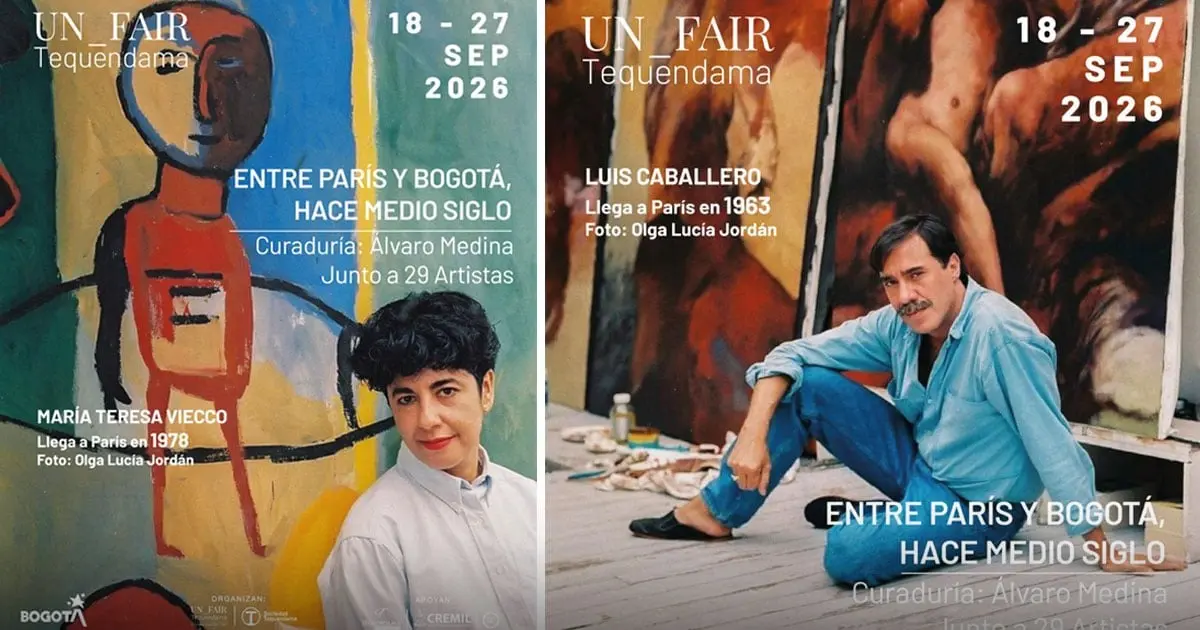
Half a century later, that pivotal era is being brought back to life in the Colombian capital. The historical exhibition Between Paris and Bogotá, Half a Century Ago, curated by renowned historian and critic Álvaro Medina, anchors the cultural programming of the 2026 edition of UN_FAIR. Running from September 18 to 27 at the iconic Centro Internacional Tequendama, the exhibition unites the works and trajectories of 29 foundational Colombian artists.
Rather than resting in the sterile, white-cube isolation of a traditional museum, these works reclaim history inside an unorthodox venue. Following UN_FAIR’s signature format, the art spills across hotel suites, public spaces, and repurposed commercial units, turning the Tequendama complex into a vibrant, multi-disciplinary urban art citadel.
Main Facts: A Transatlantic Awakening
The exhibition gathers 29 distinct artistic paths that intersected in the French capital during a time when crossing the Atlantic was viewed as an essential rite of passage into the global art circuit. Among the luminaries featured are Fernando Botero, Luis Caballero, Darío Morales, Maripaz Jaramillo, Emma Reyes, Lorenzo Jaramillo, Heriberto Cogollo, and Ana María Rueda.

Conceived by gallerist Christopher Paschall—a New Orleans native raised in Paris who has spent two and a half decades shaping Bogotá’s contemporary art scene—UN_FAIR aims to dismantle the barriers of traditional art consumption. The retrospective curated by Medina serves as the intellectual anchor of this year’s fair, offering free public access to a collection that maps how a generation of creators absorbed European modernism and injected it back into Colombian culture.
Chronology: The Journey to the City of Light
The relationship between Colombian modern art and Paris did not happen overnight; it was built across decades through a series of individual migrations, state-sponsored scholarships, and desperate pursuits of creative freedom.
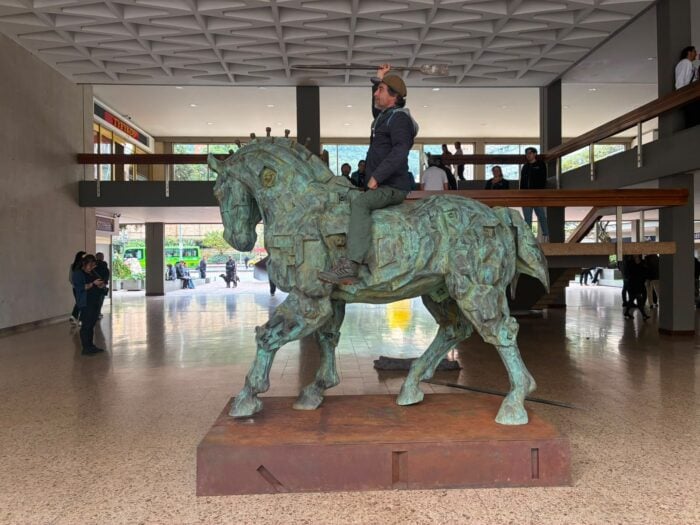
- 1952: A 20-year-old Fernando Botero arrives in Europe with minimal funds, fueled by the prize money from winning second place at the 9th National Salon with his canvas Frente al mar (Facing the Sea). His journey takes him through Madrid, Paris, and Florence, where he meticulously studies the old masters before returning to Colombia in 1955 to forge his distinct artistic voice.
- 1961: Botero’s early international momentum solidifies when the Museum of Modern Art (MoMA) in New York acquires his youthful reimagining, Mona Lisa, Age Twelve.
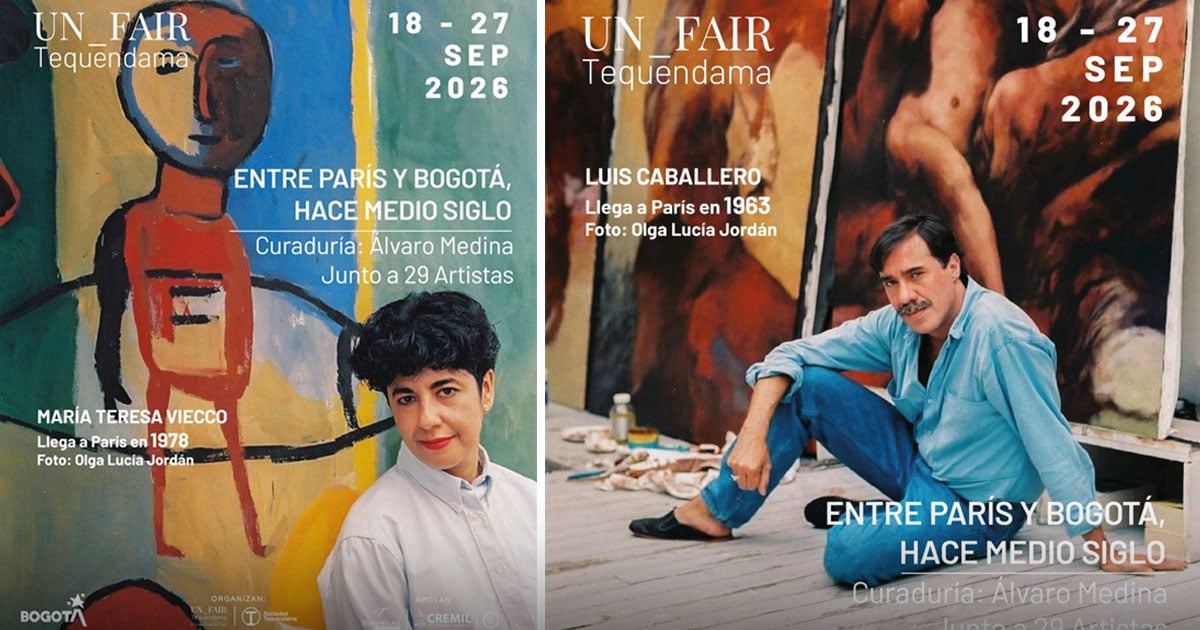
- Late 1960s: A new wave of young Colombians floods Europe. Darío Morales arrives in Paris in 1968 via an ICETEX student credit, eventually enrolling in Stanley William Hayter’s legendary printmaking workshop, Atelier 17. That same year, Luis Caballero relocates to Paris, seeking an artistic environment entirely absent from Colombia’s nascent art market.
- The Early 1970s: Maripaz Jaramillo transitions from the world of fashion—having run a miniskirt boutique in Bogotá—to high art after being steered toward the University of Fine Arts at Los Andes by Luis Caballero and director Juan Antonio Roda. Jaramillo later refines her vivid, provocative style in Paris and under the mentorship of Hayter’s workshop circles.
- 1973: Fernando Botero returns to permanently establish a base in Paris, where he spends decades crafting a vast portion of his monumental sculptural legacy.
- September 18–27, 2026: The historic synthesis of this era materializes at UN_FAIR Tequendama in Bogotá, presenting the public with a comprehensive look at how these voyages transformed Colombian aesthetics.
Supporting Data: The Architects of a Movement
The 29 artists highlighted in Medina’s curation did not travel to Paris with a monolithic purpose. Their journeys reflect a mosaic of motivations, institutional supports, and personal reinventions:
- Maripaz Jaramillo: Initially dismissed by faculty as painting "very strangely," Jaramillo graduated in 1973 and turned her eccentric, vibrant chromatic palette into a critique of desire, gender dynamics, and domestic life. Even into her late 70s, she maintained that art remained the only relationship in her life that had never disappointed her.
- Darío Morales: Defined by an obsession with the female form and hyper-realistic interior spaces, Morales settled permanently in Paris after 1968. He built a career characterized by a near-photographic precision before his untimely death in Paris in 1988 at the age of 44.
- Luis Caballero: Rejecting the notion that living in Paris was merely a tool for superficial prestige, Caballero found in the French capital a sanctuary for his theatrical, highly charged explorations of human anatomy, erotism, and vulnerability. He passed away in Bogotá in 1995.
- María Teresa Vieco: A testament to the early maturation of Colombian talent, Vieco began exhibiting in the avant-garde gallery circuits steered by formidable Argentine art critic Marta Traba when she was only 15 years old, proving that artistic awakening was occurring across multiple age brackets during the period.
Official Responses and Curatorial Vision
The philosophical backbone of the Between Paris and Bogotá retrospective lies in the deliberate deconstruction of institutional exclusivity. Christopher Paschall, the mastermind behind UN_FAIR, emphasizes that the initiative seeks to liberate art from the fortress-like architecture of traditional museums.

"We want to challenge the assumption that encountering world-class art requires stepping inside a conventional white-wall gallery," event organizers note. By colonizing the suites and common areas of the Centro Internacional Tequendama, the fair bridges the gap between historical retrospectives and immersive modern experiences—pairing visual arts with sculpture, live music, and gastronomic showcases.
Curator Álvaro Medina has framed the exhibition not merely as a nostalgic look backward, but as an examination of survival, ambition, and cultural translation. For these 29 artists, Paris was simultaneously a school, a refuge, a professional testing ground, and, for many, a permanent home. The exhibition underscores the sheer grit required to transition from the artistic provinces of mid-century South America into the punishing, highly competitive arena of global modernism.
Implications: A Shift in Contemporary Latin American Art Markets
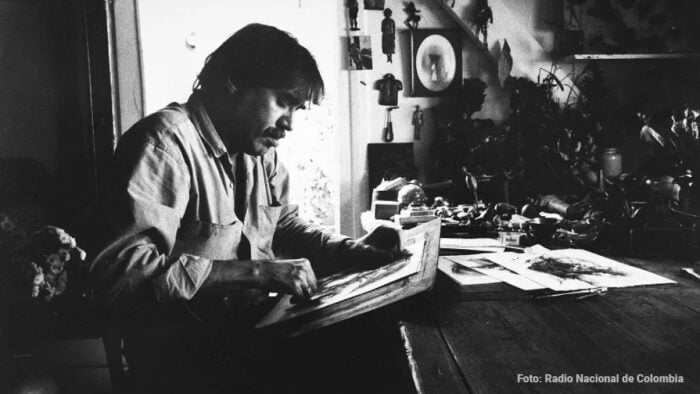
The presentation of Between Paris and Bogotá, Half a Century Ago arrives at a critical juncture for the Latin American art market. As historical retrospectives increasingly look to contextualize the roots of modern masters like Botero, Caballero, and their contemporaries, the conversation has shifted away from mere biographical trivia toward the mechanics of cultural diaspora.
- Decentralizing Exhibition Spaces: The success and scale of UN_FAIR’s hotel-based venue model signal a broader appetite for experiential art curation in Latin America. By weaving historical masterpieces into hospitality and public spaces, the fair democratizes access and shifts audience engagement away from elite exclusivity.
- Re-evaluating the Diaspora: The exhibition prompts a modern re-evaluation of artistic migration. While 20th-century creators fled localized market limitations for European validation, today’s generation of Colombian artists operates in a hyper-connected global digital economy. Yet, the emotional and technical debt owed to institutions like Atelier 17 and the Parisian cafe culture remains indelible.
- Institutional Memory: By bringing these works back into the public eye—free of charge—the exhibition acts as an educational touchstone for a younger generation of Colombian creators, reminding them that international acclaim is often the product of relentless experimentation, cross-cultural dialogue, and an unwavering commitment to personal voice.
Ultimately, the gathering at the Tequendama is more than a retrospective; it is a family reunion of spirits separated by the Atlantic. Half a century after their bohemian adventures in the attics of Europe, these artists are once again reminding Bogotá what it means to look outward at the world while keeping Colombia firmly at the center of the canvas.


Leave a Reply