

By Jhoan Sebastián Salazar
Translated and Enriched Editorial Desk
1. Main Facts
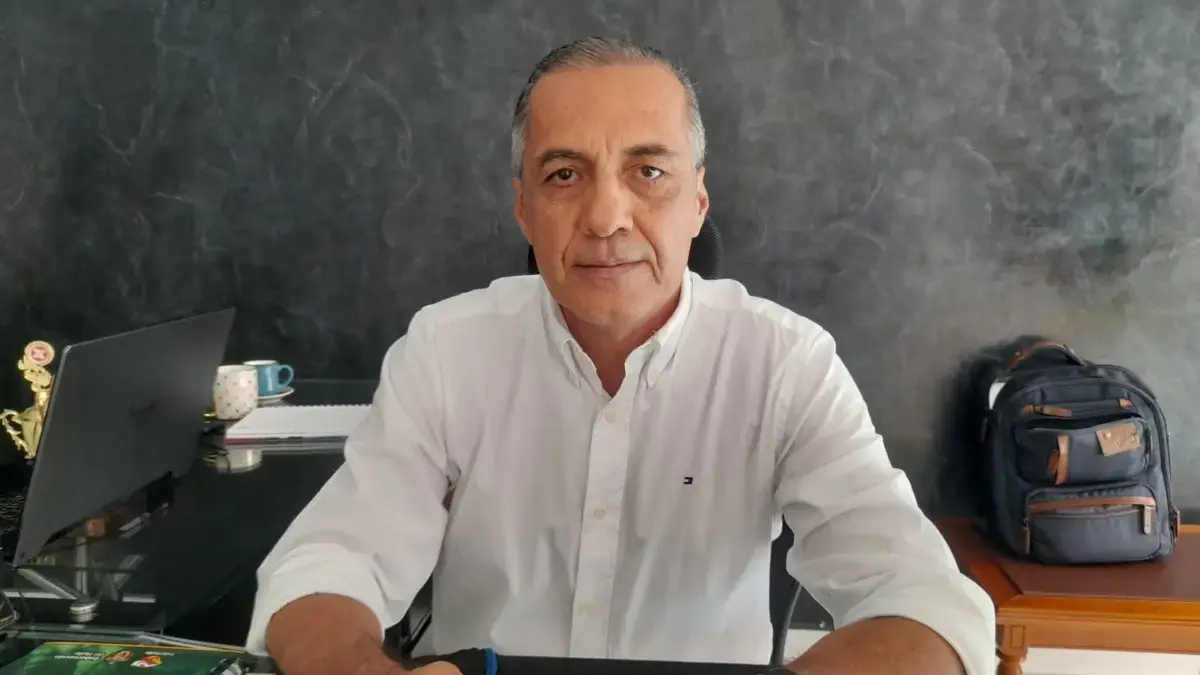
The political and administrative landscape of the Huila Department underwent a strategic shift this week with a series of high-profile cabinet movements ordered by the departmental government. Among the most notable changes is the departure of Felipe Victoria from his post as Director of Inderhuila (the Departmental Institute of Sports, Recreation, and Physical Activity of Huila), transitioning into the crucial role of Departmental Director of Planning. Stepping into the vacancy to lead Inderhuila is seasoned sports administrator Carlos Rodríguez Mora.
This appointment marks Rodríguez Mora’s third tenure at the helm of the institute, bringing a wealth of institutional memory, technical expertise, and historical context to the position. In an exclusive joint interview with LA NACCIÓN and LA NACCIÓN Stereo, the newly instated director outlined his primary strategic objectives for his administration. Foremost among these goals is ensuring seamless continuity with the foundational infrastructure and athletic programs initiated by his predecessor. More importantly, Rodríguez Mora signaled that his monumental challenge will be orchestrating the comprehensive preparation, logistical support, and competitive readiness of Huila’s athletes for the upcoming 2027 National Games.
2. Chronology of Events and Leadership Transition
The administrative transition at Inderhuila did not occur in a vacuum; it is part of a broader realignment within the current gubernatorial administration designed to optimize regional management during the final stretch of the mandate.
- Pre-Transition Phase: Under Felipe Victoria’s leadership, Inderhuila focused heavily on advancing structural projects, most notably the development and operationalization of the long-awaited Departmental Center for Sports Performance (Centro de Rendimiento Deportivo). Victoria’s efforts laid a solid groundwork for individual and collective sports disciplines that had historically suffered from a lack of adequate training facilities.
- The Cabinet Shake-Up (Current Week): Recognizing the need for strategic planning alignment and specialized sports leadership ahead of the upcoming Olympic and national sporting cycles, Governor [Huila Governor’s Name] orchestrated a tactical reshuffle. Felipe Victoria was promoted to Departmental Director of Planning to leverage his administrative acumen across broader regional development portfolios.
- The Appointment of Carlos Rodríguez Mora: To fill the void left at Inderhuila, the administration turned to a trusted and proven figure. Carlos Rodríguez Mora was appointed to direct the institute for his historic third cycle. Given his past tenures, Rodríguez Mora bypassed the typical learning curve, immediately initiating reviews of active contracts, athletic calendars, and methodological projections.
- Immediate Post-Appointment Actions: Upon taking the oath of office, Rodríguez Mora engaged with regional media outlets to articulate his immediate agenda. He committed to auditing ongoing infrastructure projects, meeting with methodological teams, and reinforcing alliances with departmental sports leagues to guarantee that Huila’s delegation is fully equipped for the grueling qualification phases leading directly to the 2027 National Games.
3. Supporting Data and Infrastructure Context
The operational reality facing Carlos Rodríguez Mora in his third term is vastly different from what he encountered during his previous cycles. The most transformative variable in Huila’s sporting ecosystem is the recent establishment of the Departmental Center for Sports Performance—a landmark facility representing the first major sports infrastructure project of its magnitude built in the department in over four decades.
The Infrastructure Gap Closed
For more than 40 years, Huila’s athletic community struggled with a glaring deficit in specialized training environments. The absence of modern facilities severely handicapped individual sports disciplines, forcing athletes and coaches to improvise training schedules in suboptimal conditions. The inauguration of the Center for Sports Performance directly altered this trajectory.
According to internal Inderhuila data highlighted by Rodríguez Mora, the new facility has provided a definitive, high-performance training home for nearly 12 distinct sports disciplines. These athletes now train in environments equipped to meet national and international standards.
The Three Pillars of Athletic Success
Reflecting on his extensive background as a former athlete, trainer, and sports league president, Rodríguez Mora outlined the foundational triad necessary for regional sports excellence:
- Qualified Leadership: Access to experienced, certified coaches and trainers.
- Infrastructure: Dignified, modern sports venues—exemplified by the new Center for Sports Performance.
- Logistical and Financial Support: Comprehensive backing for travel, nutrition, and competitive exposure.
4. Official Responses and Interview Excerpts
During the comprehensive interview with LA NACCIÓN and LA NACCIÓN Stereo, Director Carlos Rodríguez Mora addressed critical questions regarding his vision, upcoming challenges, and methodology for the remaining year and three months of the current governmental mandate.
On the 2027 National Games and Athlete Preparation
Addressing his core mandate, Rodríguez Mora emphasized that continuity and qualification are the immediate priorities:
"First of all, thank you for the space and a special greeting to all the readers of LA NACCIÓN. The main challenge, as you just mentioned, is the continuity of what has to do with the preparation of our athletes for the upcoming National Games next year. It is a massive challenge… The participation of athletes in preparatory competitions will be fundamental. A cycle of qualifying events is approaching, and our job is to be right there, supporting them, helping them travel to qualifying events, and ensuring that the highest possible number of delegations, disciplines, and categories qualify to represent our department."
On Infrastructure Projects and Ongoing Works
When questioned about the management of capital projects for the remainder of the mandate, Rodríguez Mora assured fiscal and operational responsibility:
"In terms of infrastructure, there are processes already underway. The idea is to continue the work, to finish executing the projects currently under construction, while preparing new processes. Following the directives of the Governor, we will continue developing sports infrastructure. Today, what citizens request the most are roofs for multi-sport courts, soccer fields, and so forth. As the incoming director, my first duty is to evaluate what processes and works are currently under construction, what contractual pipelines exist for new projects, and, logically, to ensure that we conclude these initiatives before the end of this administrative period."
On the Relationship with Sports Leagues
Recognizing the vital role played by grassroots organizations, Rodríguez Mora promised unwavering support to league presidents and coaches:
"I consider that, thank God, the relationship with the leagues has always been very good. During the two previous periods God gave me the opportunity to be here, we achieved great work together. I have always stated that the true reason for the institute’s existence is the athlete, and logically, with the athletes come the trainers and league presidents, because they carry out the field work, the practical and operational tasks… The relationship will be one of total, unconditional support for all sports leagues. The goal is to help them secure everything necessary so they can compete under the best possible conditions."
On Athlete Projections for the National Games
Asked about exact delegation numbers, Rodríguez Mora maintained a pragmatic, data-driven approach:
"Right now, Sebastián, I cannot give you an exact figure because I have just assumed the direction. Timely, once I know it, I will share it. I must first meet with the methodological team to review their current projections. Naturally, whatever is determined right now is merely a projection, because once competition arrives, many external factors influence the outcome, and results ultimately depend on the athlete at the exact moment of competition."
On the Center for Sports Performance and Elite Teams
Highlighting the unique advantage of his current tenure compared to past cycles, Rodríguez Mora underscored the impact of the new facility and his vision for athlete welfare:
"Look, Sebastián, the Center for Sports Performance was conceived for a fundamental reason. First, I want to clarify that in the department of Huila, no sports infrastructure project of this magnitude had been built in over 40 years. Second, it solved the problem for nearly 12 individual sports disciplines that lacked a dignified venue to train… I commit, as I told the Governor, to work 24/7 to generate genuine sports development for the department. In the past, we established an ‘Elite Team’ composed of the 20 highest-performing athletes, providing them with a minimum wage subsidy as motivation. We must review that strategy and ensure our athletes are cared for in the best possible way."
5. Implications for the Future of Huila Sports
The return of Carlos Rodríguez Mora to the leadership of Inderhuila carries profound strategic implications for the immediate and long-term future of athletics in the Huila Department.
Administrative Stability vs. Time Constraints
With a little over a year remaining in the current gubernatorial term, Rodríguez Mora faces a compressed timeline. However, his familiarity with the institution mitigates the risks typically associated with leadership changes. By focusing heavily on administrative continuity, he bridges the vision of former director Felipe Victoria with execution-focused pragmatism. This ensures that multi-million-peso infrastructure investments will not stall due to bureaucratic transitions.
Competitive Pressure for the 2027 National Games
The National Games represent the ultimate litmus test for any regional sports director in Colombia. For Huila, the challenge is not merely participation, but podium placement and competitive relevance against traditional athletic powerhouses like Antioquia, Valle del Cauca, and Bogotá. By leveraging the newly operational Center for Sports Performance, streamlining the methodological support teams, and reviving direct financial incentives such as the "Elite Team" stipend, Inderhuila is positioning its athletes to maximize their qualification yields.
Socio-Economic Impact through Grassroots and Elite Sports
Beyond competitive medals, Rodríguez Mora’s holistic focus on sports infrastructure—ranging from neighborhood multi-sport court covers to high-performance facilities—reinforces sports as a powerful tool for social cohesion, youth development, and crime prevention across Huila’s municipalities. By maintaining an open, collaborative dialogue with departmental leagues, the institute ensures that talent identification pipelines remain robust from the grassroots level all the way to elite international representation.
Ultimately, Rodríguez Mora’s third act at Inderhuila is defined by a 24/7 commitment to institutional execution, athlete welfare, and regional pride, setting the stage for what departmental stakeholders hope will be a historic performance at the 2027 National Games.

Leave a Reply