

By Cultural Desk
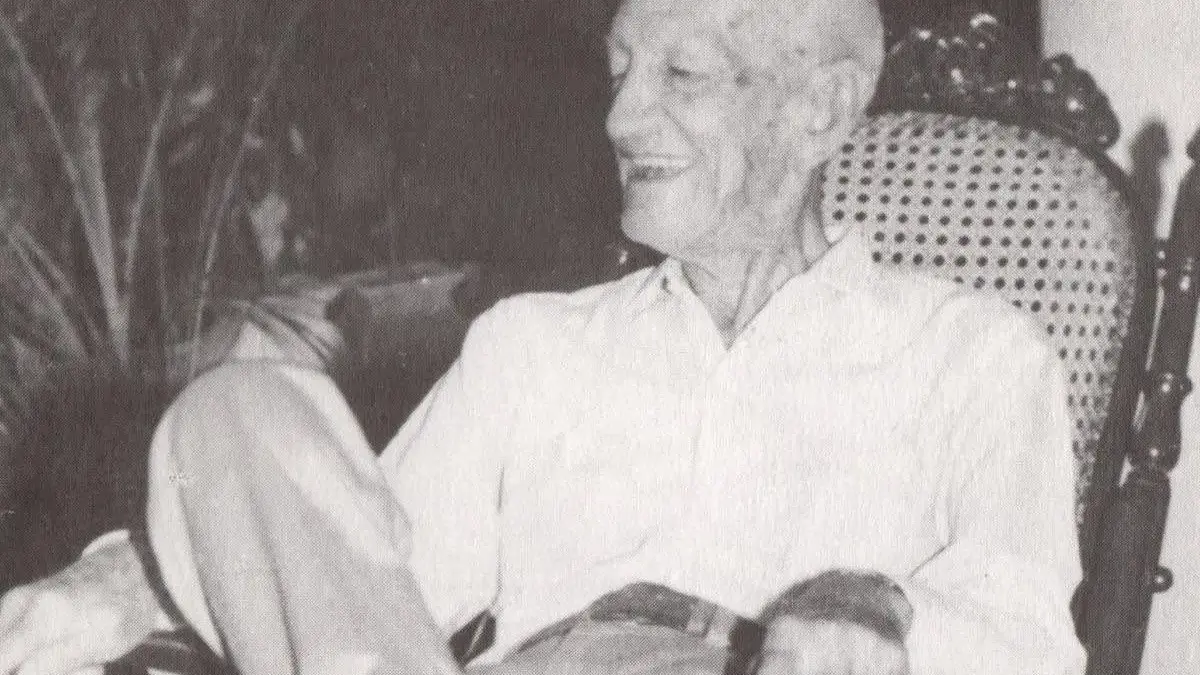
To understand the soul of Colombian vallenato—its deep longing, its vibrant rural imagery, and its romantic lyrical evolution—one must look beyond the stages of Valledupar and trace the footsteps of the men who shaped its foundation. Among them, few figures tower as large, yet remain as charmingly enigmatic, as Tobías Enrique Pumarejo Gutiérrez, universally revered as “Don Toba.”
Described by researcher Julio Oñate Martínez in his seminal book Cuando Matilde camina as a “famous vallenato troubadour, romantic and party-loving, a descendant of landowners, who had a great fondness for bay horses, fine hats, and women with penetrating eyes,” Don Toba was much more than a wealthy hacendado. He was a pioneer who did not know how to play a single instrument, yet he crafted over 150 musical inspirations that helped shape the identity of Caribbean Colombia.
As we reflect on the monumental legacy of this cultural icon—born on August 8, 1906, and passing away on April 8, 1995—we explore the life, art, and enduring cultural impact of the man who gave Colombia the soundtrack to its collective heartbreaks and its most joyous December celebrations.
Main Facts: The Essence of Don Toba
Tobías Enrique Pumarejo Gutiérrez stands as one of the most influential precursors to traditional vallenato music. Born into a prosperous cattle-ranching family in Valledupar (then part of the Magdalena department), Don Toba lived a life that effortlessly bridged the elite social circles of his time with the rustic, earthy authenticity of the accordion-driven folklore.
Several defining pillars encapsulate his monumental contribution to Colombian culture:
- The Unlikely Maestro: Despite possessing an extraordinary ear for melody and poetry, Pumarejo could not play a single musical instrument. Instead, he composed by humming melodies and dictating verses, relying on master accordionists and interpreters to bring his visions to life.
- The Architect of Holiday Tradition: In 1948, he handed legendary singer Guillermo Buitrago a composition that would become an immortal fixture of Colombian culture: the vallenato merengue "La víspera de año nuevo" (New Year’s Eve). To this day, the song serves as the ultimate auditory backdrop for Latin American holiday festivities.
- A Precursor to Romantic Vallenato: Long before the genre transitioned into its globally recognized romantic era, Don Toba’s lyricism infused traditional storytelling with deep emotional vulnerability, paving the way for disciples like Rafael Escalona and Gustavo Gutiérrez.
- Cultural Gatekeeper: Leveraging his prominent social standing, Pumarejo broke local class barriers by opening the exclusive Club de Valledupar to accordion music, which was previously looked down upon by the local aristocracy. He also served as a distinguished juror in the inaugural edition of the Festival de la Leyenda Vallenata in 1968.
Chronology: The Life and Times of Tobías Enrique Pumarejo
Early Years and Academic Sojourns (1906–1920s)
Born on August 8, 1906, in Valledupar, young Tobías grew up surrounded by the vast cattle estates and rich cultural melting pot of the Magdalena department. Recognizing his privileged background, his family sent him away during his youth to complete his secondary education at the prestigious Liceo Antioqueño of the University of Antioquia in Medellín.
It was during his time in the Andean hub of Medellín that Pumarejo’s longing for his coastal homeland catalyzed his artistic expression. Alongside fellow coastal intellectuals—including future governor Pedro Castro Monsalvo—he formed a pioneering amateur ensemble known as the Orquesta Magdalenense. This group was dedicated to spreading the folklore of Colombia’s Caribbean coast to Andean audiences, marking Pumarejo’s first formal steps into musical composition and cultural promotion.
The Hacienda “El Otoño” and the Golden Era of Parrandas (1930s–1940s)
Upon returning to his native region, Pumarejo took over the administration of El Otoño, the family’s sprawling estate located near El Copey in the modern-day Cesar department. If his passion for music was fierce, his love for horses was its only true rival. He immortalized his equine companions in songs such as "Los tres caballos" (The Three Horses), "Mi potrerito" (My Little Pasture), and "El alazanito" (The Little Bay Horse)—the latter famously recorded by the legendary Alfredo Gutiérrez.
El Otoño quickly became legendary throughout the region not only for its cattle production, but for hosting epic, multi-day vallenato parrandas (parties) that could famously last up to two weeks. It was under the shade of the estate’s trees that Don Toba nurtured the next generation of musical giants, personally mentoring and teaching the fundamentals of composition to luminaries like Rafael Escalona and Gustavo Gutiérrez.
National Stardom and International Reach (1948–1968)
The year 1948 marked a watershed moment in Colombian musical history. Pumarejo collaborated with cantor Guillermo Buitrago, gifting him "La víspera de año nuevo." The song transcended regional boundaries to become a cross-class, international anthem of transition, reflection, and celebration.
As his catalogue grew to include more than 150 songs—spanning vallenato airs, rancheras, valses, and pasillos—Don Toba solidified his status as a master craftsman of words. In 1968, his authority within the genre was officially recognized when he was invited to sit on the jury for the very first Festival de la Leyenda Vallenata, cementing his status as a living legend.
Final Chapter and Legacy (1995)
Tobías Enrique Pumarejo passed away in Barranquilla on April 8, 1995, at the age of 88. Though he left the physical world, his compositions continued to echo across the plazas, radios, and living rooms of Colombia, ensuring that the spirit of “Don Toba” would never fade.
Supporting Data: The Catalogue of a Master
Don Toba’s artistic output is staggering when considering he approached music purely from a poetic and auditory standpoint. His extensive catalogue includes over 150 registered compositions. Among them, several titles stand out as crown jewels of Colombian folklore:
- "La víspera de año nuevo": Recorded by Guillermo Buitrago; the undisputed anthem of December 31st across Colombia and various parts of Latin America.
- "Mírame Fijamente": Features verses directly inspired by a cuplé song Pumarejo heard in a cinematic production starring the iconic Spanish actress and singer Sarita Montiel.
- "Muchacha patillalera"
- "La cita"
- "Nueve de mayo"
- "Alma de Valledupar"
- "Desolación"
- "Sabana sanjuanera"
- "Ojos penetrantes"
- "La Muerte de Pedro Castro" (also widely known as "Tres de marzo").
- "Mala suerte"
Cultural scholar José I. Pinilla Aguilar famously captured the sociological weight of Pumarejo’s work in his text Cultures de la Colombian Music, writing:
"Conflicting sentiments pour into every heart upon hearing the bursts of firecrackers that, like giant fireflies, streak across the skies on joyous nights when one year dies and another is born (…). Superstitions of traveling with suitcases, circling the house, grapes, glasses of wine, feasts, drinks, and a thousand other things intermingle across all social fabrics that populate the universe, alongside the singing of ‘La víspera de año nuevo’."
Official Responses and Cultural Recognition
Cultural institutions, historians, and folklorists continue to revere Pumarejo as a transitional figure who saved vallenato from being sidelined as mere subaltern entertainment.
In academic and governmental circles, Don Toba is frequently cited as a master bridge-builder. By using his high-society lineage to legitimize accordion music within elite spaces like the Club de Valledupar, he dismantled deep-seated class prejudices.
Furthermore, contemporary vallenato artists and historians continuously emphasize that without Don Toba’s transition toward introspective, deeply emotional storytelling, the modern "vallenato romántico" movement of the late 20th century might never have found its footing. His disciples, particularly Gustavo Gutiérrez, frequently credit Pumarejo’s patience and informal backyard tutorials at El Otoño as the foundational academy of modern Colombian songwriting.
Implications: Why Don Toba Still Matters Today
As generations shift and digital platforms redefine how music is consumed, the legacy of Tobías Enrique Pumarejo offers vital lessons about cultural preservation, class mobility, and artistic authenticity.
- Democratization of Art: Don Toba proved that artistic genius does not require formal technical training in an instrument. His genius lay in observation, emotional intelligence, and poetic rhythm—elements that resonate universally.
- The Binding Power of Tradition: Songs like "La víspera de año nuevo" demonstrate how a single regional composition can weave together disparate social classes, turning a local folk expression into an unbreakable thread of national unity.
- Preservation of Rural Heritage: In an increasingly urbanized world, Pumarejo’s dedication to his bay horses, his ranch life at El Otoño, and his vivid portrayals of provincial life serve as a vital historical archive of Caribbean Colombia’s 20th-century agrarian soul.
More than a century after his birth, Don Toba’s spirit still walks the dusty roads of Valledupar, lingers in the festive air of every December night, and looks out upon the world with the "penetrating eyes" of a man who understood the human heart better than anyone else.


Leave a Reply