

Introduction: The Sound of the New Bogotana Tropicalia
Armed with a high-sounding name that instantly signals both high-cost aesthetic irony and an irrepressible sense of humor, Los Cotopla Boyz have been shaping the contours of the nueva tropicialia bogotana (new Bogotá tropicalia) since their inception in 2018. Coming together in the high-altitude, often melancholic Andean capital of Colombia, this quintet of formally trained, academy-bred musicians chose not to pursue traditional jazz, classical repertoires, or standard indie-rock iterations. Instead, they dove headfirst into the sweaty, hypnotic realms of psychedelic cumbia and the fierce, eclectic energy of "tropicanibal" soundscapes.
Through their infectious rhythms and deeply relatable lyrical content, Los Cotopla Boyz have managed to mirror the daily trials, tribulations, absurdities, and mundane triumphs of the generation universally known as the millennials. They are a product of a hyper-connected yet deeply isolated era—young adults navigating the precariousness of modern labor markets, housing crises, and digital burnout, yet refusing to surrender their collective need for joy, dance, and community.
Rather than positioning themselves as standard-bearers of historical folkloric preservation, they treat traditional genres as living, malleable raw materials. They stretch, bend, distort, and supercharge tropical rhythms with psychedelic guitar riffs, vintage synthesizers, and theatrical flair, creating a bridge between the classic sounds of the Colombian Caribbean and the modern, urban anxieties of the interior highlands.
Main Facts: Who Are Los Cotopla Boyz?
To understand Los Cotopla Boyz is to understand a unique intersection of academic musical precision and street-level countercultural revelry. The core facts defining the project include:
- Formation and Origins: Founded in Bogotá, Colombia, in 2018 by a collective of professional musicians with formal academic training.
- Musical Style: A hybrid genre fusion heavily influenced by psychedelic cumbia, tropicanibalism, and Cuban charanga, filtered through an indie-alternative sensibility.
- Lyrical Themes: The mundane, everyday realities, existential quirks, and digital-age frustrations of the millennial generation, transformed into epic narratives of pseudo-heroic proportions.
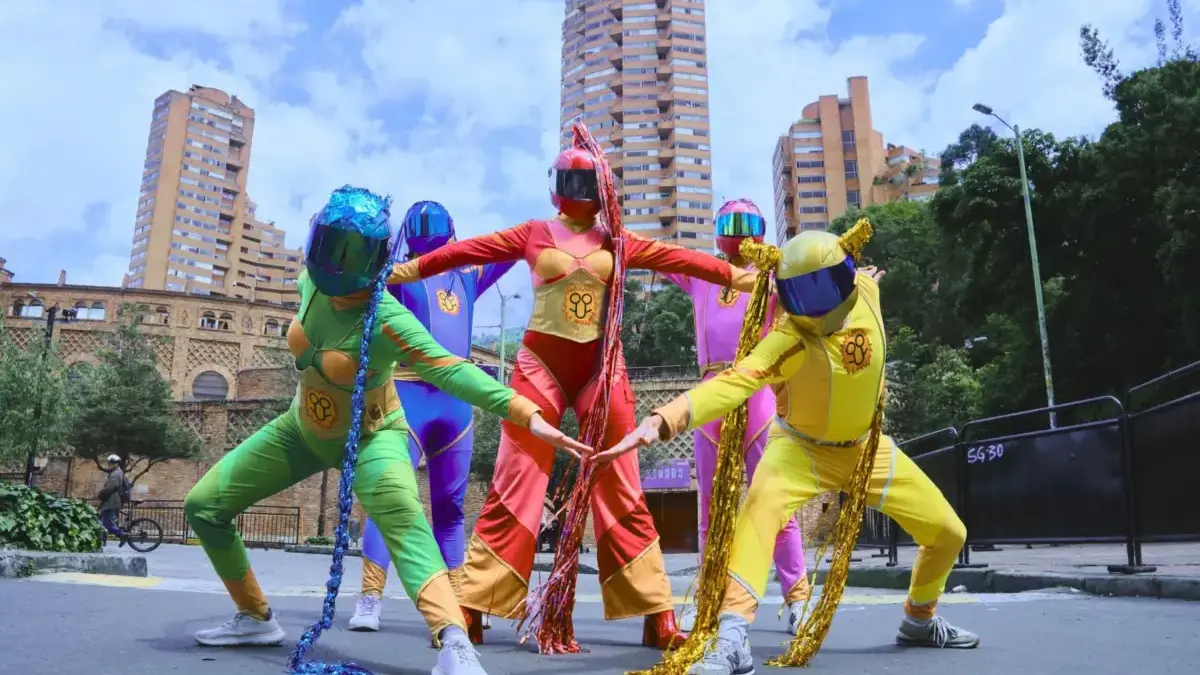
- Visual Aesthetic and Concept: The band operates within a self-described "post-pandemic dystopian multiverse," presenting themselves during live performances as a frenetic, vibrant squad akin to satirical Power Rangers whose ultimate mission is singular and non-negotiable: saving the party.
- Discography: Their debut LP, Mamarrón vol. 1 (2022), made waves by being released in a physical vinyl format—a nod to analog warmth in a streaming-dominated world—followed by their sophomore release, Guau, no joda.
- Radio Breakthrough: Their tracks have found a key incubator in specialized underground and emerging artist programming, such as Demo Estéreo on Radio Nacional de Colombia, catapulting their unique brand of tropical subversion to national audiences.
Chronology: From Academic Halls to the Post-Pandemic Multiverse
2018–2019: The Genesis in the Cold Capital
Los Cotopla Boyz did not emerge in a vacuum; they were born out of the vibrant, interconnected music scenes of Bogotá, where artists frequently cross-pollinate between jazz ensembles, salsa orchestras, and indie-rock bands. Recognizing a mutual love for the golden age of Colombian tropical music—as well as its weirder, more lysergic edges—the founding members began jamming.
In a city defined by its cool weather, frequent gray skies, and bustling metropolitan rhythm, the creation of high-energy tropical music served as an antidote to urban alienation. Early rehearsals focused on mastering the syncopated rhythms of cumbia, porro, and gaita, while injecting them with the improvisational freedom learned in academic jazz and contemporary composition classes.
2020–2021: The Dystopian Pivot and the Birth of the "Party Saviors"
When the global COVID-19 pandemic ground live music to a halt, Los Cotopla Boyz, like countless other artists, faced an existential crossroads. However, rather than succumbing to creative paralysis, the band leaned heavily into the surrealism of the era.
It was during this period of isolation that the concept of their "dystopian post-pandemic multiverse" solidified. Deprived of dance floors, sweaty clubs, and live audiences, the members conceptualized their project not just as a band, but as a conceptual resistance movement. They framed themselves as sonic superheroes—a kaleidoscopic squad wearing vibrant, matching outfits reminiscent of tokusatsu action heroes like the Power Rangers. Their mandate was clear: when the world feels like it is falling apart, the most radical act of defiance is to keep the party alive.
2022: Mamarrón Vol. 1 and the Vinyl Renaissance
By 2022, the world had cautiously re-opened, and Los Cotopla Boyz were primed to unleash their accumulated energy. They released their debut studio album, Mamarrón vol. 1.
In an era where most emerging acts release music strictly via decentralized streaming platforms for algorithmic digestion, the band made a bold statement by releasing the album in physical vinyl format. This move underscored their commitment to tactile, ritualistic music consumption. Mamarrón vol. 1 established their signature sound: razor-sharp arrangements, witty lyricism, and relentless groove that immediately caught the attention of music critics and alternative radio programmers across Colombia.
2023–Present: Guau, no joda and Expanding Horizons
Building on the momentum of their debut, the band turned their attention toward their second major release, Guau, no joda. The album represents a maturation of their sound—deeper grooves, sharper production, and an even more refined sense of narrative storytelling.
It is within this sophomore project that the band explores hyper-specific cultural references, such as artisanal spirits from the northern regions of Colombia, blending traditional rhythms with contemporary studio wizardry. Their presence on platforms like Radio Nacional de Colombia’s Demo Estéreo has cemented their transition from a well-kept secret of the Bogotá underground to a nationally recognized cultural phenomenon.
Supporting Data: Musical Architecture and Cultural Artifacts
To appreciate Los Cotopla Boyz, one must examine the sonic machinery behind their tracks. Their music is built on a foundation of dualities: high-brow academic execution paired with low-brow, joyous thematic material.
The Anatomy of "Tropicanibalism" and Psychedelic Cumbia
While traditional cumbia relies on the acoustic interplay of the caña de millo, the alegre drum, and the guacharaca, Los Cotopla Boyz expand this instrumentation with electric guitars drenched in delay and tremolo, pulsating synthesizer basslines, and brass sections that evoke both big-band salsa and garage rock.
Their rhythmic palette draws heavily from cross-cultural adaptations. For instance, their exploration of Cuban charanga—particularly as it was re-interpreted and localized by Colombian accordion and tropical music legends like Calixto Ochoa—serves as a primary blueprint. They take historical templates, inject them with a modern urban pulse, and re-deliver them with a tongue-in-cheek swagger.
Guau, no joda and Regional Craftsmanship
A prime example of their lyrical and musical ethos is encapsulated in tracks slated for Guau, no joda. One standout composition serves as an ode to a traditional, artisanal alcoholic beverage hailing from the department of Norte de Santander.
As the band members playfully note, this regional drink "carries its trap" (lleva su trampa)—a colloquial way of acknowledging its deceptive strength, smooth going down but potent in its aftermath. By dedicating a song to a hyper-local, rustic elixir, Los Cotopla Boyz bridge the gap between rural Colombian traditions and urban youth culture, turning a regional drinking ritual into an anthem for weekend escapism across the country.
Official Responses and Critical Reception
The cultural impact of Los Cotopla Boyz has not gone unnoticed by Colombia’s institutional and independent cultural curators. Music journalists, folklorists, and broadcasting networks have increasingly championed the band as vital voices of a new generation redefining what "tropical music" means in the 21st century.
Radio Play and Independent Validation
Programs dedicated to uncovering underground talent, such as Demo Estéreo on Radio Nacional de Colombia, have played a pivotal role in amplifying the band’s reach. Broadcasters and curators have praised the group for their ability to balance technical musicianship with unpretentious humor.
In interviews, members of the band have consistently emphasized that their humorous approach should not be mistaken for a lack of seriousness regarding their craft. "We studied music to understand the rules so we could break them intelligently," one band member noted in a recent cultural forum. "The joke is the vehicle, but the vehicle has to be a high-performance engine; otherwise, the trip isn’t worth taking."
Critical Acumen
Music critics have frequently highlighted Los Cotopla Boyz as standard-bearers for a broader movement in Latin American alternative music—one that rejects the false dichotomy between "serious art" and "dance music." By treating cumbia as a vehicle for existential commentary, psychological release, and sci-fi world-building, they have earned respect from both traditional folklorists and cutting-edge electronic and indie scenes.
Implications: What Los Cotopla Boyz Mean for Modern Latin American Music
The trajectory of Los Cotopla Boyz offers several profound implications for the future of contemporary music in Colombia and Latin America at large:
1. Deconstructing the Authenticity Trap
For decades, Latin American alternative music scenes have grappled with the burden of "authenticity"—the unwritten rule that traditional rhythms must be preserved in amber, untouched by modern irony or external genre influences. Los Cotopla Boyz shatter this paradigm. By fusing academic training with psychedelic rock textures and millennial irony, they demonstrate that the most authentic way to honor a tradition is to let it evolve, mutate, and converse with the realities of the present day.
2. Music as Coping Mechanism in the Post-Industrial Age
The band’s framing of themselves as "party saviors in a dystopian multiverse" resonates deeply with a generation facing economic uncertainty, ecological anxiety, and the psychological toll of hyper-digitization. In this light, the dance floor is no longer just a place for mindless leisure; it is a space for psychological reclamation, community building, and joyful resistance.
3. The Decentralization of Tropical Tropes
While Caribbean coastal cities like Barranquilla and Cartagena have historically held a monopoly on the narrative of Colombian tropical music, acts like Los Cotopla Boyz prove that the high-altitude Andean interior—specifically Bogotá—has become a vital laboratory for tropical experimentation. By looking at Caribbean and regional rhythms through the lens of city dwellers living in cold, concrete environments, they add a fresh, cosmopolitan chapter to the rich history of Colombian music.
Conclusion: The Continuing Mission
As Los Cotopla Boyz prepare to roll out Guau, no joda and continue their crusade across stages throughout Colombia and beyond, their mission remains deceptively simple yet culturally monumental. They are proof that even when the world feels increasingly fragmented, dystopian, and exhausted, the human impulse to gather, dance, laugh, and lose oneself in a hypnotic cumbia beat remains entirely undiminished.
Armed with their instruments, their sci-fi superhero ethos, and an encyclopedic knowledge of tropical rhythm, Los Cotopla Boyz are not just playing music—they are actively safeguarding the joy of a generation.

Leave a Reply