

Main Facts
The Colombian delegation continues to project excellence, resilience, and athletic prowess at the XIII South American Games Santa Fe 2026. After several days of intense, high-stakes competition across multiple venues in Argentina, Colombia has firmly established its presence near the top of the continental standings. As of the latest update, the national team has accumulated an impressive total of 125 medals, comprising 45 golds, 44 silvers, and 36 bronzes.
These figures reinforce Colombia’s status as a powerhouse in South American sports, consistently fighting for podium supremacy against regional giants. In the overall medal standings, Brazil currently leads the charge with an imposing 204 total medals, followed closely by Argentina in second place with 184. Colombia holds strong in the prestigious third position, holding off challenges from other advancing nations and proving that its investment in grassroots and elite sports infrastructure continues to yield dividends.
The latest jornada (competition day) provided a cascade of emotional victories, historic records, and inspiring performances from established stars and rising talents alike. From the lightning-fast tracks of athletics to the velodromes of track cycling and the field events of throwing disciplines, Colombian athletes left an indelible mark on the Santa Fe 2026 Games.
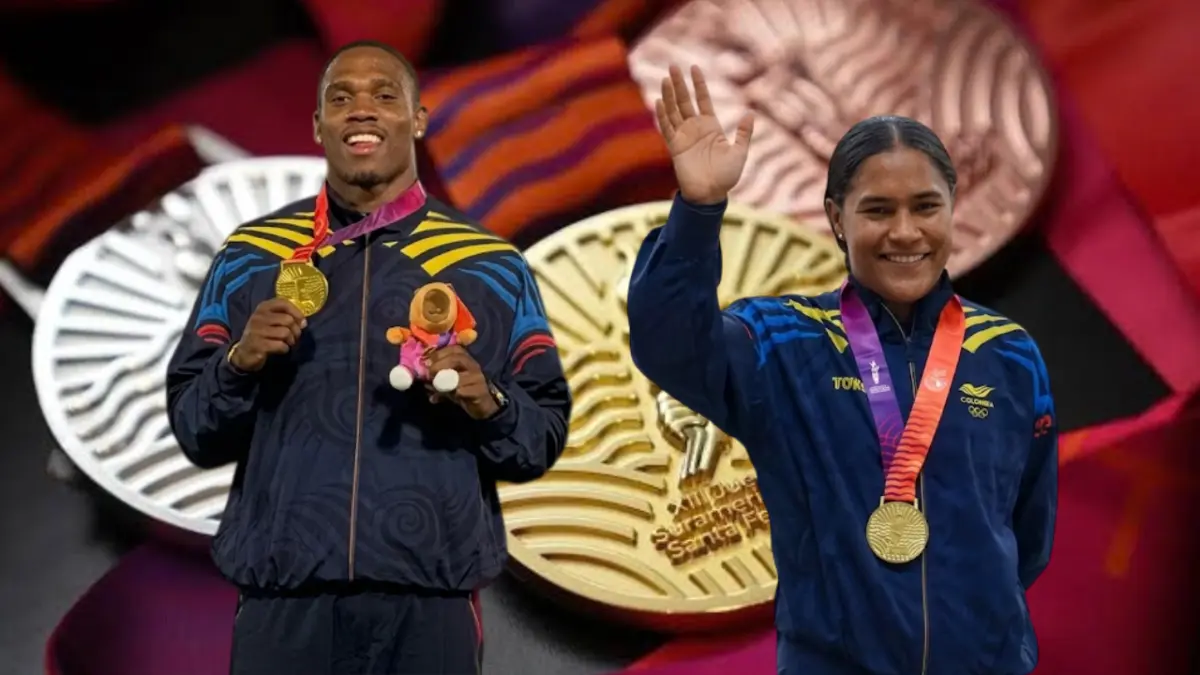
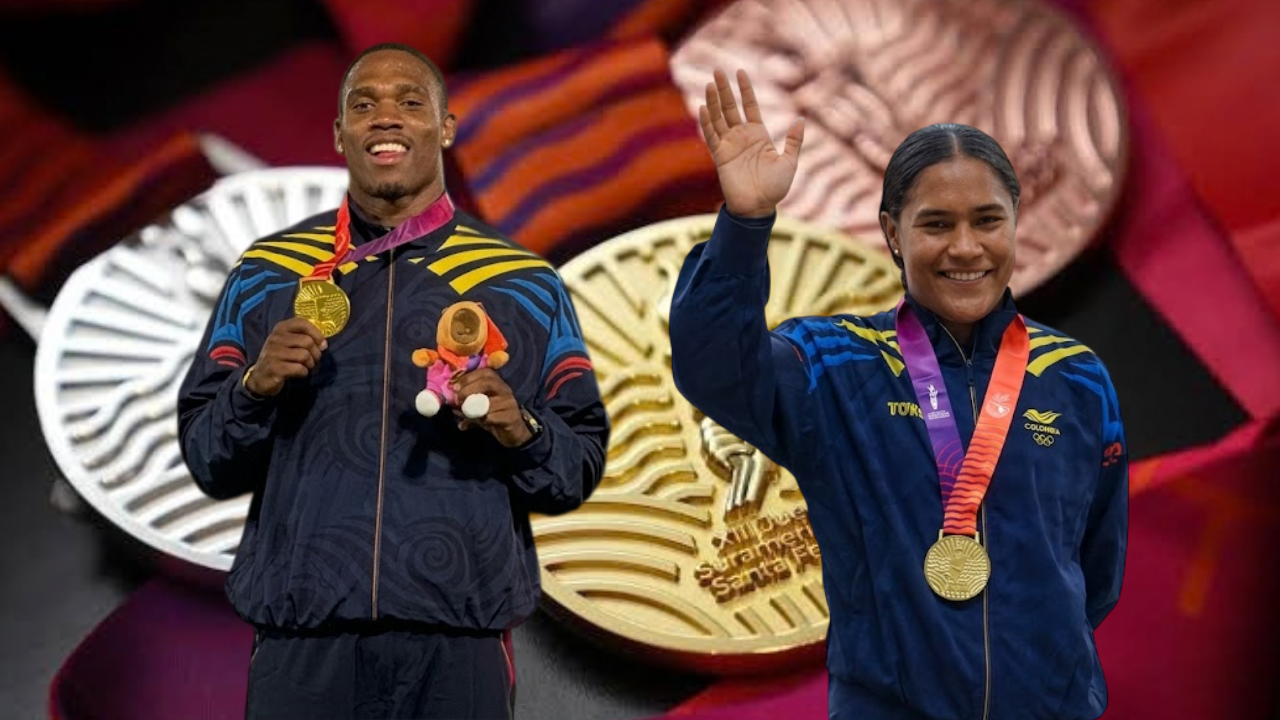
At the forefront of this medal haul was sprinter Ronal Longa, who stunned spectators with a blazing performance in the men’s 100-meter dash. Not to be outdone, cycling sensation Stefany Cuadrado demonstrated tactical brilliance and raw power to conquer the women’s individual sprint. Meanwhile, field athlete Yerlin Mesa secured a hard-earned silver in the discus throw, and the nation’s young sprinting quartet secured a dramatic bronze in the mixed 4×100-meter relay. Together, these performances encapsulate the diverse athletic capabilities of Colombia’s delegation on the international stage.
Chronology of the Latest Jornada
The timeline of success for the Colombian athletes unfolded across multiple venues, showcasing a non-stop wave of competitive triumphs throughout the day.
Morning Session: Track and Field Brilliance
The day’s competition commenced with high anticipation in athletics, where the nation’s sprinters looked to make an early statement. The pinnacle of the morning track events arrived with the men’s 100-meter dash final. Ronal Longa, the pride of Istmina, Chocó, stepped onto the track bearing the expectations of a nation. When the starting gun fired, Longa exploded out of the blocks, executing a flawless acceleration phase. As he approached the final thirty meters, his stride lengthened, leaving his international competitors struggling to keep pace. Longa crossed the finish line in a blistering time of 10.10 seconds, capturing the gold medal and cementing his status as the fastest man in South America for these Games.
Following Longa’s golden run, the attention shifted to the field events, where throwers put their technique and explosive power to the test. In the women’s discus throw, Yerlin Mesa displayed remarkable composure under pressure. Competing against a fierce international field, Mesa steadily built momentum throughout her series of throws. It all culminated in her sixth and final attempt, where she unleashed a tremendous throw measuring 55.49 meters. This clutch performance propelled her into the silver medal position, rewarding her dedication and meticulous training regimen.
Afternoon Session: Velodrome Dominance and Relay Drama
As the sun rose higher, the action transitioned to the velodrome, where Colombian cycling has historically excelled. Stefany Cuadrado, hailing from Caucasia, Antioquia, entered the track cycling arena for the women’s individual sprint tournament. Cuadrado navigated the qualifying rounds and tactical heats with surgical precision. In the decisive showdown against Chile’s Daniela Colilef, Cuadrado showcased superior endurance, tactical cunning, and explosive sprinting power in the final straightaways. By crossing the line ahead of her opponent, Cuadrado secured the gold medal, officially crowning herself the South American champion in individual sprint and adding another prestigious title to her growing career palmarès.
The day concluded back on the athletics track with the high-octane drama of the mixed 4×100-meter relay. The Colombian quartet—comprising Carlos Flórez, Angélica Gamboa, Carlos Palacios, and Danna Banquez—faced a formidable lineup of regional sprinting powerhouses. Executing clean baton exchanges and running with fierce determination, the team pushed through fatigue to stop the clock at 42.37 seconds. Their unified effort earned them a hard-fought bronze medal, bringing a roaring conclusion to another successful day of competition for the yellow, blue, and red flag.
Supporting Data and Athlete Profiles
To truly understand the magnitude of Colombia’s success at the Santa Fe 2026 South American Games, it is essential to examine the individual profiles of the athletes who brought glory to the country, as well as the broader statistical context of the medal table.
Detailed Breakdown of Recent Medalists
-
Ronal Longa (Athletics – Men’s 100m)
- Hometown: Istmina, Chocó.
- Result: Gold Medal.
- Time: 10.10 seconds.
- Podium Context: Longa outperformed Venezuela’s Bryant Álamo, who took silver with a time of 10.24 seconds, and Alexis Nieves, who claimed bronze with 10.33 seconds. Longa’s time reflects world-class acceleration and exceptional top-end speed, signaling a bright future for Colombian sprinting on the global stage.
-
Stefany Cuadrado (Cycling – Women’s Individual Sprint)
- Hometown: Caucasia, Antioquia.
- Result: Gold Medal.
- Discipline: Track Cycling (Sprint).
- Podium Context: Cuadrado defeated Chile’s Daniela Colilef in a tactical and physical masterclass. Her victory underscores the enduring dominance of the Antioquian cycling school, particularly in sprint disciplines where power-to-weight ratio and split-second decision-making are paramount.
-
Yerlin Mesa (Athletics – Women’s Discus Throw)
- Result: Silver Medal.
- Mark: 55.49 meters.
- Podium Context: Mesa’s silver-winning throw came on her sixth and final attempt. This dramatic clutch performance highlights her mental toughness and ability to adjust her technique when the stakes are at their highest.
-
Mixed 4x100m Relay Team (Athletics)
- Athletes: Carlos Flórez, Angélica Gamboa, Carlos Palacios, and Danna Banquez.
- Result: Bronze Medal.
- Time: 42.37 seconds.
- Podium Context: This multidisciplinary quartet combined youth and speed to secure a podium finish in a notoriously volatile and technically demanding event, proving the depth of Colombia’s sprinting pool.
Overall Medal Standings Context
The broader context of the XIII South American Games reveals a highly competitive landscape:
- Brazil: 204 total medals (Dominating multiple aquatic, gymnastics, and combat sports).
- Argentina: 184 total medals (Leveraging home-field advantage and strong team sports).
- Colombia: 125 total medals (45 Gold, 44 Silver, 36 Bronze), securely positioned in third place.
This distribution demonstrates that Colombia remains a dominant force, outperforming many neighboring nations through strategic investments in high-performance athletic programs.
Official Responses and Stakeholder Reactions
The wave of victories in Santa Fe generated immediate, enthusiastic reactions from sports authorities, government officials, and the athletes themselves across Colombia.
The Colombian Olympic Committee (COC) released an official statement praising the delegation’s resilience and competitive spirit. Leadership within the COC emphasized that maintaining third place in a continental event of this magnitude is no small feat; it requires rigorous planning, sports science integration, and unwavering institutional support. Officials noted that performances like Ronal Longa’s record-breaking sprint and Stefany Cuadrado’s velodrome masterclass validate the multi-year cycle investments made in these athletes.
Ministry of Sport representatives echoed these sentiments, highlighting the regional diversity of the medalists. With champions hailing from regions like Chocó, Antioquia, and beyond, government sports agencies pointed out that athletic talent is flourishing across every corner of the country. Programs designed to scout and nurture talent in historically underrepresented departments are clearly bearing fruit, providing equitable pathways for young athletes to reach elite international status.
Furthermore, the athletes themselves took to social media and post-competition press conferences to express their gratitude. Ronal Longa dedicated his gold medal to his family and the community of Istmina, noting the hardships and sacrifices required to reach the pinnacle of South American athletics. Stefany Cuadrado emphasized the rigorous training camps she endured in Antioquia, thanking her coaches, mechanics, and federation staff for providing top-tier equipment and guidance. The collective sentiment among the delegation is one of immense pride, shared camaraderie, and a relentless hunger for even more podium finishes as the Games progress toward their closing ceremonies.
Implications for Colombian Sports
The success witnessed at the XIII South American Games Santa Fe 2026 carries profound implications for the future trajectory of Colombian athletics and national sports policy.
First and foremost, these Games serve a critical transitional purpose in the Olympic cycle. Success in Santa Fe acts as a vital stepping stone toward upcoming continental and global championships, most notably the Pan American Games and the subsequent Olympic Games. By testing young talents against elite regional competition, sports federations can accurately gauge which athletes possess the psychological fortitude and physical ceiling required to compete at the absolute highest tier of world sport.
Second, the triumph of regional athletes from areas outside major metropolitan hubs—such as Chocó and Antioquia—reinforces the urgent necessity of decentralizing sports infrastructure and funding. When talents like Longa and Cuadrado rise from their respective hometowns to conquer South America, it sends a powerful message to youth across the country: dedication, backed by proper institutional support, can bridge geographical and economic divides. This visibility is expected to inspire a new generation of children to take up track and field, cycling, and throwing events.
Finally, maintaining a secure third place behind sports giants like Brazil and Argentina validates the current high-performance model implemented by Colombian sports authorities. However, it also highlights areas for growth. To narrow the gap with the top two nations, ongoing investments must be funneled into sports science, nutritional science, psychological coaching, and international competition exposure.
As the XIII South American Games Santa Fe 2026 march toward their final days, the Colombian delegation has already etched its name into the history books. With 125 medals and counting, the nation looks forward to the remaining events with high hopes, knowing that its athletes have once again proven themselves to be among the finest ambassadors of Colombian pride, passion, and perseverance.


Leave a Reply