

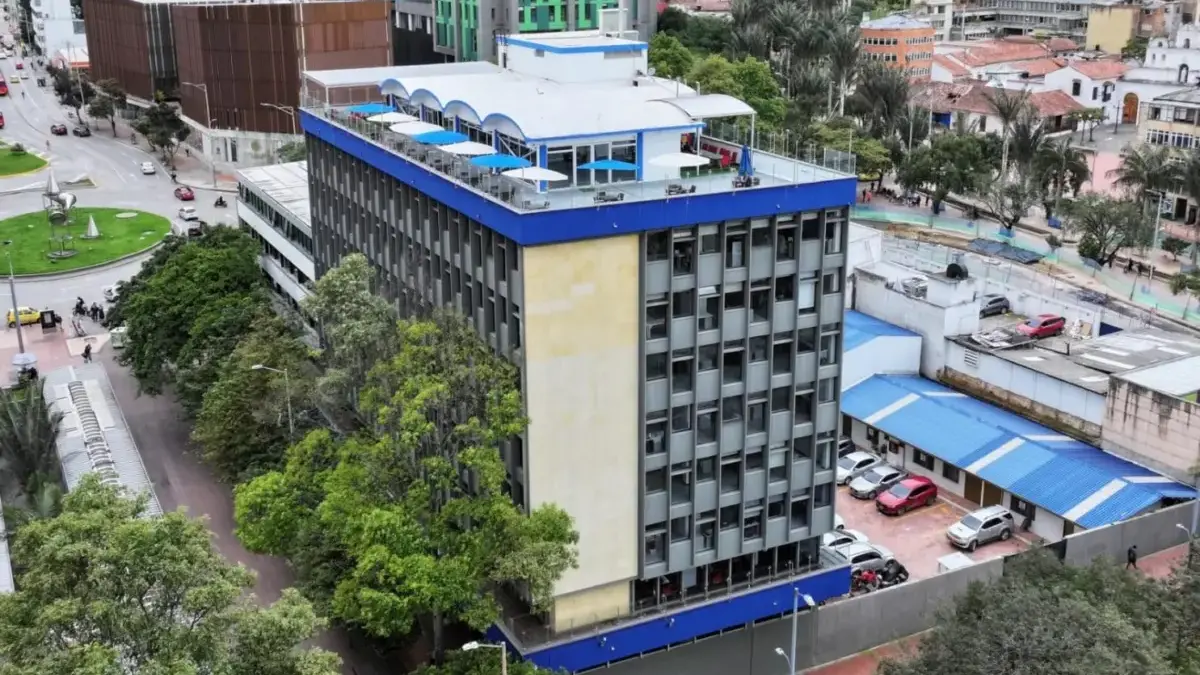
BOGOTÁ, COLOMBIA — In a major financial relief initiative aimed at easing the burden of higher education debt, the Colombian Institute for Educational Credit and Technical Studies Abroad (ICETEX), in coordination with the Ministry of Education, has officially announced a temporary interest rate subsidy. The program is designed to directly benefit approximately 170,000 active borrowers who are currently in the repayment, or amortization, phase of their educational loans.
The nationwide measure, backed by an allocation of $51.605 billion pesos, is structured to alleviate the compounding pressures of macroeconomic fluctuations on middle- and lower-income families. By temporarily recalibrating how interest is accumulated, the government aims to reward consistent payment histories while preventing defaults. The initiative is set to roll out in October, offering an immediate, tangible reduction in monthly financial obligations for thousands of professionals striving to stabilize their economic futures.
Main Facts
The core of the newly announced relief package centers on a restructuring of interest rates for qualifying educational loans managed through ICETEX.
- Target Population: Approximately 170,000 ICETEX beneficiaries currently in the amortization (repayment) phase.
- Financial Mechanism: During the validity of the subsidy, targeted loans will be liquidated using a baseline formula of IPC + 0 points (where IPC stands for the Índice de Precios al Consumidor, or the Consumer Price Index, which measures national inflation).
- Elimination of Spreads: Under this temporary adjustment, borrowers will not be charged the additional percentage points (spreads) normally stipulated in their original contracts—spreads that typically range anywhere from IPC + 7% to IPC + 12%, depending on the specific credit line.
- Total Investment: The government has earmarked a dedicated fund of $51.605 billion pesos to finance the interest rate differential.
- Duration: The benefit is not bound by a strict calendar end date; rather, it will remain active until the total pool of $51.605 billion pesos is fully exhausted.
- Prerequisites: To qualify, participants must be completely up to date with their loan installments and demonstrate a consistent, positive payment history.
The subsidy will appear automatically as a direct reduction on the monthly payment receipts of eligible beneficiaries, minimizing administrative hurdles and ensuring that the relief is felt immediately by the consumer.
Chronology: The Path to the New Subsidy
Understanding the implementation of this latest relief effort requires looking back at the broader timeline of economic interventions, fiscal adjustments, and policy shifts that have characterized ICETEX’s management of student portfolios over recent years.
The Post-Pandemic Credit Crisis (2021–2023)
As Colombia emerged from the global disruptions of the COVID-19 pandemic, inflation rates began an aggressive upward trajectory, driven by global supply chain shocks and domestic currency devaluation. Because a vast majority of ICETEX loans are tied directly to the Consumer Price Index (IPC), beneficiaries watched in alarm as their monthly payments escalated rapidly. The high inflation of 2022 and 2023 placed unprecedented strain on families who had leveraged educational debt to secure social mobility.
Prior Adjustments and Intermittent Relief (2024–2025)
In response to growing public outcry and rising default rates, the Ministry of Education and ICETEX began exploring stabilization mechanisms. However, fiscal constraints led to an irregular rollout of support. Historical records from the institution indicate that interest rate subsidies experienced a complete suspension during the first semester of 2025 due to budgetary reallocations.
The 2026 Resurgence and Depletion
By early 2026, limited relief windows were briefly reopened between April and August. These temporary programs offered short-term respites but were quickly overwhelmed by the sheer volume of applicants, resulting in the rapid depletion of allocated funds. Recognizing the inadequacy of short-term, stop-gap measures, the administration structured the current $51.605 billion peso package to provide a more sustainable, targeted approach for the latter half of 2026.
The October 2026 Rollout
Set to launch formally in October 2026, the current initiative represents the most structured execution of the IPC + 0 framework in recent years. It marries fiscal responsibility—capping the benefit at a precise budgetary limit—with direct, automated consumer relief.
Supporting Data and Financial Mechanics
To fully grasp the financial impact of the ICETEX subsidy, it is necessary to examine the underlying mathematics of educational loan amortizations in Colombia.
Understanding IPC + 0 vs. Original Contracts
Under normal market conditions, an educational credit issued by ICETEX is indexed to inflation to preserve the real value of the portfolio over time. A typical contract might read IPC + 7% or IPC + 12%.
- The IPC Component: Reflects the annual cost-of-living adjustments calculated by the national statistics department (DANE). If annual inflation sits at 5%, the IPC component adds 5% to the principal balance annually.
- The Spread Component: The fixed percentage points (e.g., 7% to 12%) added on top of the inflation rate represent the administrative cost, risk premium, and operational sustainability margin of the lending institution.
By reducing the formula to IPC + 0, the government effectively absorbs or eliminates the spread component for the duration of the subsidy.
Standard Formula:  [ Annual Inflation (IPC) ] + [ Risk/Admin Spread (7% - 12%) ] = Total Interest Rate
Subsidized Formula: [ Annual Inflation (IPC) ] + [ 0% ]                         = Subsidized Interest Rate
Budgetary Parameters and Depletion Dynamics
The $51.605 billion peso fund is a finite pool of capital. Unlike a permanent structural reform, this subsidy operates on a first-come, first-served budgetary consumption model.
- As 170,000 users make their monthly payments, the difference between the standard contractual interest rate and the subsidized IPC rate is paid out of the $51.605 billion reserve to cover the financial shortfall for ICETEX.
- Because the rate of fund depletion depends directly on macroeconomic indicators (such as fluctuating inflation rates) and the total volume of active payments, financial analysts note that the exact expiration date of the subsidy remains fluid.
- Once the reserve hits zero, accounts will automatically revert to their baseline contractual terms (IPC + 7% to IPC + 12%).
Official Responses and Stakeholder Perspectives
The announcement has triggered a wave of commentary from government officials, educational advocates, and economic analysts, highlighting both the immediate benefits and the systemic challenges facing Colombia’s higher education financing model.
Government Leadership
Richard Caicedo, President of ICETEX, emphasized the administration’s commitment to social welfare and economic recovery during the official press briefing.
"We are achieving new benefits so that Colombians who are currently paying off their educational credits experience a significant reduction in their interest rates, translating into a direct, positive impact on their personal economy and the well-being of their families," stated Caicedo.
The Ministry of Education echoed these sentiments, framing the subsidy not merely as financial assistance, but as a crucial public investment in human capital. By ensuring that young professionals are not economically suffocated by early-career debt, the government hopes to stimulate workforce participation, encourage formal employment, and foster consumer confidence.
Critique and Industry Reception
While the announcement has been warmly welcomed by debtor collectives and student unions, financial analysts have raised important questions regarding the long-term sustainability of ICETEX’s funding model.
- The Inclusion Filter: Requiring borrowers to be completely up to date with their payments has drawn mixed reviews. While economists argue this rewards fiscal discipline and protects institutional liquidity, social advocates point out that it may inadvertently exclude the most vulnerable borrowers—those who have fallen behind precisely because of high interest rates.
- The Temporary Nature of Relief: Consumer rights groups have underscored that while IPC + 0 provides welcome breathing room, the eventual return to standard rates (IPC + 7% to 12%) means borrowers must prepare for a future financial readjustment once the $51.605 billion fund is exhausted.
Implications for Borrowers and the National Economy
The implementation of the ICETEX interest rate subsidy carries profound implications across multiple tiers of Colombian society, touching individual households, commercial banking trends, and national educational policy.
1. Relief for Household Budgets
For the average Colombian family, educational debt often represents one of the largest monthly liabilities outside of housing mortgages. By stripping away the spread component of the interest rate, monthly quotas will see a noticeable drop. This margin of disposable income can be redirected toward essential living expenses, savings, or investments in small businesses, thereby injecting liquidity back into the domestic consumer market.
2. Incentivizing Formal Credit Compliance
By conditioning the subsidy on a clean payment record, ICETEX has created a powerful incentive for borrowers to prioritize their educational debt over other informal or commercial obligations. This behavioral nudge helps stabilize ICETEX’s internal cash flow, reducing delinquency rates and preserving institutional health during periods of economic volatility.
3. Broader Lessons for Educational Reform
The recurring need for emergency interest rate interventions highlights the structural vulnerability of tying higher education financing directly to inflationary shocks without robust, permanent safety nets. As Colombia continues to debate comprehensive reforms to its student loan architecture, the success—and eventual expiration—of this 170,000-beneficiary program will serve as an essential case study for policymakers looking to balance institutional solvency with social equity in the decades to come.
As October approaches, eligible borrowers are encouraged to review their account statuses through official ICETEX channels to ensure they meet all criteria required to automatically capture the benefits of this milestone financial relief program.




Leave a Reply