

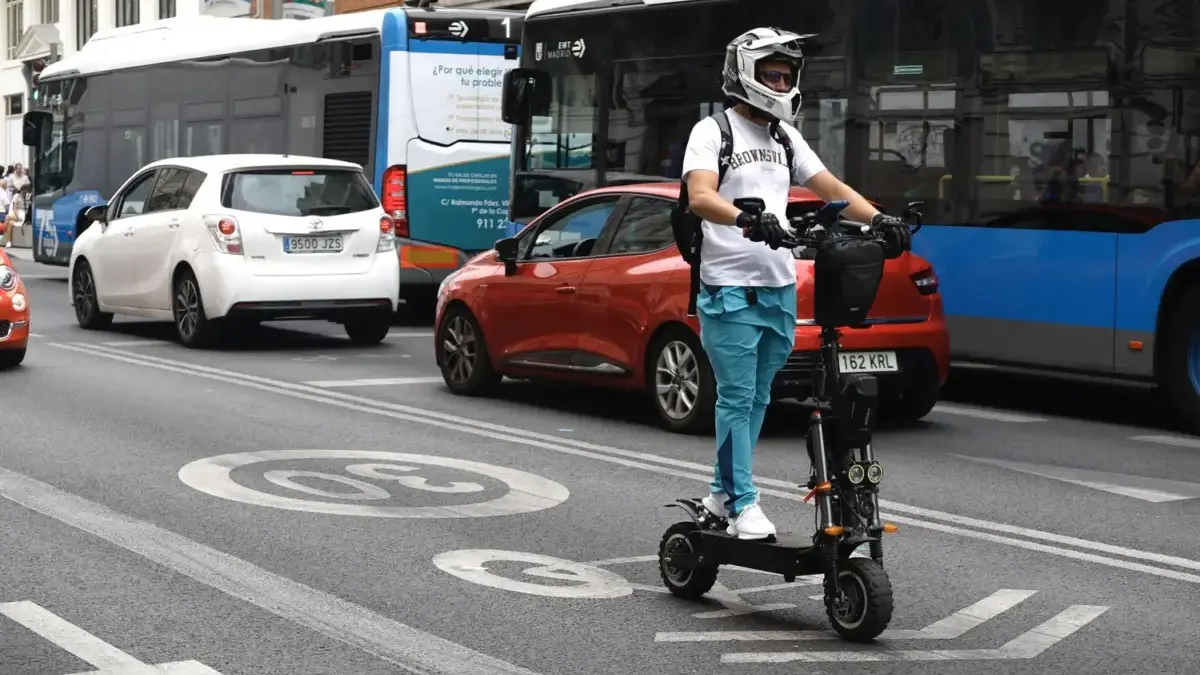
As the European Mobility Week draws to a traditional close, cities across Spain have once again thrown off the shackles of urban congestion to celebrate Car-Free Day. Mobilizing thousands of citizens from the northern coast of Cantabria to the sun-drenched shores of Andalusia and the Atlantic islands, the annual event successfully transformed major thoroughfares into vibrant pedestrian zones. By curbing the reliance on private motor vehicles and elevating the profile of sustainable transport, municipal governments aimed to offer a tangible glimpse into what a cleaner, more breathable urban future could look like.
Operating under the overarching European campaign slogan “Shared Public Space,” local councils seized the opportunity to champion accessibility, equity, and environmental stewardship. From Santander and Vitoria-Gasteiz to Alicante, Valladolid, Málaga, and Santa Cruz de Tenerife, urban spaces traditionally dominated by the roar of engines and the exhaust of combustion engines were handed back to pedestrians, cyclists, and families.
Main Facts
Car-Free Day serves as the symbolic climax of the European Mobility Week, a continent-wide initiative designed to alter travel behavior and promote cleaner urban mobility. In Spain, the response from municipalities was both comprehensive and coordinated.
- Public Transit Incentives: Major cities eliminated or heavily discounted fares across municipal bus networks, trams, and regional transit systems, allowing citizens to test public alternatives without financial friction.
- Radical Pedestrianization: Historic city centers, major boulevards, and waterfront avenues were systematically closed to private vehicular traffic for varying durations, typically restricted only to emergency vehicles, residents, and low-emission fleets.
- Civic and Educational Engagement: Far from simply blocking cars, local administrations utilized the reclaimed spaces to host health workshops, road safety simulations, cycling obstacle courses, and historical transport exhibitions.
- Environmental Focus: The initiative heavily emphasized measuring and improving air quality, highlighting the direct correlation between reduced internal combustion vehicle usage and drops in urban particulate matter.
Chronology of Events: How the Day Unfolded
The mobilization followed a carefully orchestrated timeline, blending logistical planning with public festivities that spanned the morning hours well into the evening.
Morning Hours: The Great Lockdown and Transit Shifts
- 07:00 – 08:30 AM: Public transit networks initiated their free-fare or heavily discounted services. In Santander, municipal buses (TUS) welcomed their first morning commuters without charging fares, requiring only the standard validation of travel cards for data collection purposes. Similarly, Vitoria-Gasteiz activated free access across its Tuvisa urban buses, regional Alavabus lines, and the city’s iconic tram network. In Alicante, the TRAM system opened its gates to the public free of charge.
- 08:30 – 10:00 AM: Municipal police forces and traffic management teams enforced strategic vehicular cordons. In Málaga, the bustling Paseo del Parque was sealed off to general traffic starting at 8:30 AM, with municipal officers diverting vehicles onto peripheral arteries. Shortly thereafter, Valladolid implemented a comprehensive traffic ban across its historic quarter, which remained airtight against standard automobiles until late evening.
Midday: Reclaimed Streets and Public Activities
- 10:00 AM – 02:00 PM: With asphalt spaces successfully cleared of private cars, public squares and boulevards came alive. In Santa Cruz de Tenerife, the wide expanse of Avenida Francisco La Roche became a pedestrian sanctuary where citizens enjoyed organized sports, including mini-golf, hockey, and pickleball circuits.
- 12:00 PM: Educational and safety workshops kicked into high gear. In Málaga, Civil Protection teams established active stations along pedestrianized corridors to teach cardiopulmonary resuscitation (CPR) and the proper deployment of automated external defibrillators (AEDs), alongside bicycle repair tutorials managed by local volunteers.
Afternoon and Evening: Awareness, History, and Wind-Down
- 02:00 – 06:00 PM: Educational outreach targeted younger demographics. The Spanish Directorate-General for Traffic (DGT) deployed simulation booths in Málaga to vividly demonstrate the impairing effects of alcohol and fatigue on reaction times behind the wheel. Concurrently, specialized senior walking tours visited urban air-quality monitoring stations to evaluate neighborhood pollution levels firsthand.
- 06:00 – 10:00 PM: Festivities wound down as historical reflections took center stage. Málaga’s EMT showcased a fascinating fleet exhibition juxtaposing vintage historical buses alongside modern, zero-emission hydrogen and electric models. By 10:00 PM, Valladolid lifted the restrictions on its historic core, officially concluding a day where urban acoustics had been defined by footsteps and chatter rather than horns and engines.
Supporting Data: By the Numbers
The logistical scale of Car-Free Day in Spain required extensive municipal cooperation, yielding notable statistical impacts across participating regions:
- 100% Free Transit: Systems like Santander’s TUS, Vitoria’s Tuvisa, and the Alicante TRAM operated completely free of charge for the entirety of the operational day, encouraging thousands of skeptical motorists to sample public transit.
- 50% Subsidies: Vitoria-Gasteiz introduced deep price cuts, slashing the rental rates for municipal bicycles (MugiBike) by half while distributing subsidized three-euro taxi vouchers to bridge the first-and-last-mile connectivity gap.
- Multi-Hour Road Closures: Valladolid enforced a strict 12-hour vehicle ban across its historic center (10:00 AM to 10:00 PM), while Málaga managed a targeted six-hour closure of the Paseo del Parque (8:30 AM to 2:30 PM) to minimize disruption to commercial logistics while maximizing public exposure.
- Diverse Fleet Integration: Málaga’s EMT displayed dozens of vehicles spanning decades of public transport evolution, contrasting diesel-era relics with modern green fleets.
Official Responses and Municipal Perspectives
Local authorities across the country lauded the initiative, framing the day not merely as a temporary environmental stunt, but as a proof-of-concept for permanent urban transformation.
"We have demonstrated today that our streets do not belong exclusively to iron and combustion engines; they belong to the people who inhabit them," stated a municipal mobility spokesperson during the Valladolid pedestrianization rollout. “When we remove the noise and the pollution, we uncover a social fabric that has long been suppressed by traffic congestion.”
Transport authorities in the Basque Country emphasized the socio-economic dimension of the European theme, “Movilidad para todas las personas” (Mobility for all people). By pairing free transit with discounted municipal cycling schemes and accessible taxi vouchers, cities actively targeted populations who often face barriers to modern mobility—including the elderly, youth, and lower-income families.
In the Canary Islands, municipal organizers in Santa Cruz de Tenerife highlighted the enthusiastic participation of schools and older demographics. Officials noted that safety education—such as teaching the PAS protocol (Proteger, Avisar, Socorrer / Protect, Warn, Help) to school children—creates a generational shift in how future drivers view road sharing and pedestrian priority.
Implications for the Future of Spanish Cities
While Car-Free Day is celebrated for only 24 hours each September, its broader implications ripple across urban planning debates throughout the year. The massive public turnout and positive reception underscore a growing cultural appetite for calmer, less polluted urban environments.
- Accelerated Low-Emission Zones (LEZs): The success of temporary traffic bans strengthens the political mandate for municipalities to enforce and expand permanent Low-Emission Zones, a legal requirement now mandated for all Spanish cities with over 50,000 residents.
- Infrastructure Investment: High public utilization of municipal bike-share programs, like Vitoria’s MugiBike, reinforces the necessity for continuous municipal investment in protected cycling infrastructure and wider pedestrian corridors.
- Cultural Shift Toward Public Transit: By removing the financial barrier to entry via free-fare days, transit agencies capture vital data on commuter capacity while convincing habitual drivers that buses, trams, and trains are viable, comfortable alternatives for daily commutes.
- Long-Term Habit Formation: As urban planners frequently point out, the ultimate objective of Car-Free Day is not to create a single day of utopian relief, but to seed habits that persist year-round.
Ultimately, Spain’s observance of Car-Free Day serves as a temporary living laboratory. It offers urban dwellers a compelling preview of what cities could achieve if sustainable mobility policies transition from annual celebrations into permanent, everyday realities.



Leave a Reply