

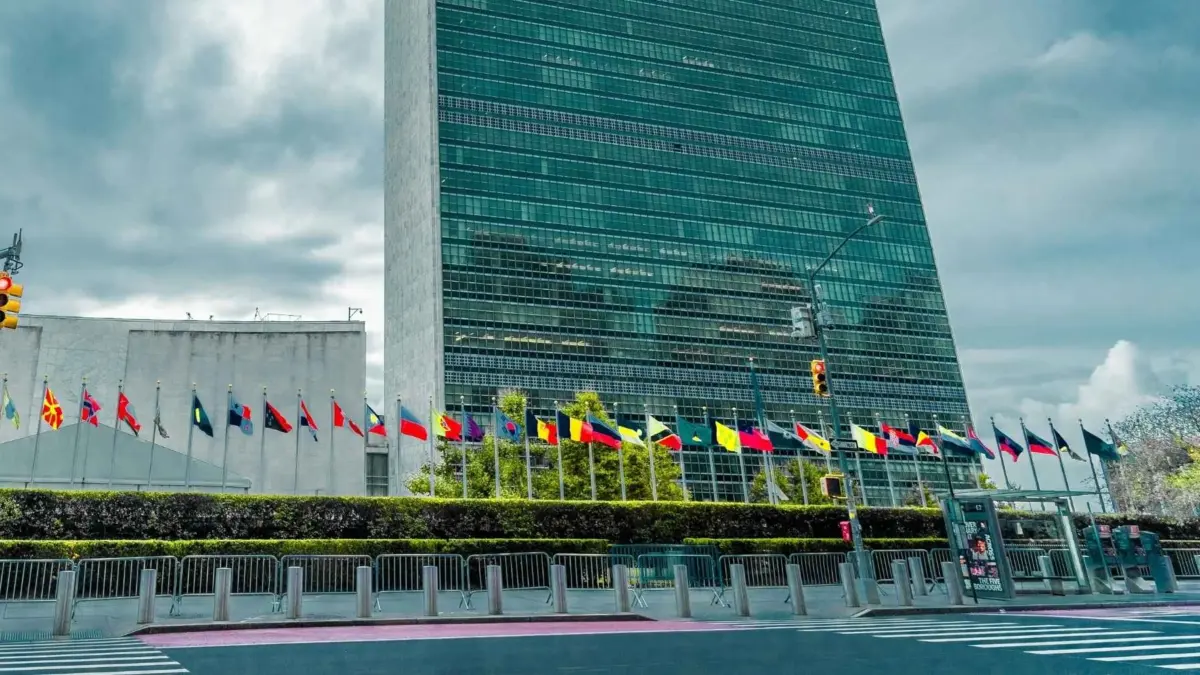
NEW YORK — As world leaders converged at United Nations Headquarters for the high-level General Debate of the 81st session of the General Assembly, the global stage became a battleground of contrasting realities, urgent pleas, and polarized ideologies. While small island developing states and vulnerable nations sounded the alarm over an escalating climate catastrophe, others championed technological innovation, while a distinct minority pushed back against what they termed "environmental extremism."
Throughout the proceedings, the environment dominated the discourse. The central pillars of debate revolved around the accelerating pace of global warming, the geopolitical and economic scramble for clean energy, the urgent need to phase out fossil fuels, and the deteriorating health of the world’s oceans. Yet, beneath the diplomatic veneer of consensus lay profound divisions regarding how the international community should finance the green transition, regulate emerging technologies like artificial intelligence, and balance economic sovereignty with planetary survival.
Main Facts
The second day of the General Assembly’s high-level week crystallized the existential dread facing frontline nations, juxtaposed against the varying political commitments of major and middle-income powers. The core takeaways from Wednesday’s session underscore a fractured global approach to sustainability:
- The 1.5°C Threshold Breached: Citing recent findings from the United Nations Environment Programme (PNUMA), leaders were starkly reminded that the critical global warming threshold of 1.5°C is virtually locked in, regardless of immediate mitigation efforts. Adaptation, therefore, is no longer optional—it is a matter of survival.
- The Vulnerable Frontline: Island nations from the Caribbean and the Pacific, alongside African states, united in demanding fast-acting financial mechanisms to cope with climate-induced disasters, including increasingly ferocious hurricanes, prolonged droughts, and rising sea levels.
- Divergent National Strategies: While countries like Paraguay touted a 100% renewable electricity matrix and nations like Namibia pioneered green hydrogen economies powered by youth, others charted a fiercely divergent path. Argentine President Javier Milei openly criticized the UN’s environmental agenda, labeling it "environmental extremism" and advocating for continued investment in fossil fuels.
- Ecological Crimes and Illicit Networks: Ecuador’s leadership sounded the alarm over organized crime syndicates financing illegal fishing operations around the fragile Galápagos Islands and illegal mining within the Amazon rainforest, intertwining environmental degradation with transnational security threats.
- The AI Paradox: Estonia credited artificial intelligence with slashing its emissions by 66% in recent years, presenting a blueprint for tech-driven energy transformation. Conversely, Czech leadership warned that humanity’s capacity to control AI technologies is lagging dangerously behind their rapid deployment.
Chronology of the Second Day
The rhythm of Wednesday’s proceedings reflected the sheer geographic and thematic breadth of the United Nations, moving rapidly from the existential cries of the Global South to the technological strategies of Europe and the counter-narratives of the Americas.
Morning Session: The Cry from the Oceans
The day’s agenda was effectively anchored by maritime nations and island states bearing the immediate brunt of climatic shifts. President Surangel Whipps Jr. of Palau opened the floodgates of urgency, presenting grim projections regarding the inevitability of a 1.5°C warmer world. His address set a somber tone, shifting the diplomatic debate away from whether climate change can be entirely prevented, and toward how humanity must manage its devastating impacts.
Shortly thereafter, Dominican Republic President Luis Abinader brought regional focus to the Caribbean. Abinader highlighted his administration’s diplomatic efforts to spotlight rising sea levels and introduced the escalating crisis of sargassum seaweed proliferation—an ecological menace that has finally achieved formal recognition on the agenda of the United Nations Environment Assembly.
Midday: Technological Solutions Versus Ideological Resistance
As the day progressed, the debate widened to encompass technological adaptation, energy matrices, and governance.
Paraguayan President Santiago Peña seized the platform to present his nation as a clean-energy beacon, declaring that Paraguay operates on a fully renewable electricity grid. However, the diplomatic harmony of the green transition was abruptly disrupted by Argentine President Javier Milei. In a sharp ideological departure from the prevailing consensus, Milei lambasted international climate directives, rejecting what he termed "environmental extremism" and defending capital investments in traditional hydrocarbon extraction.
Simultaneously, Ecuadorian President Daniel Noboa shifted the assembly’s focus toward ecologic-security nexus issues. Noboa detailed how transnational criminal syndicates are driving ecological collapse through illegal Amazonian mining and industrial-scale poaching around the Galápagos marine reserve.
In Europe, Estonia’s President Alar Karis offered a counter-narrative of technological optimism, demonstrating how data-driven governance and artificial intelligence have successfully optimized energy consumption and reduced national emissions by two-thirds. Yet, this optimism was tempered by Czech representatives who cautioned that the ethical and practical containment of AI remains an unresolved global risk.
Afternoon Session: Pathways to a Just Transition
The afternoon sessions pivoted back to actionable roadmaps for renewable energy and financing. Palau reinforced its long-term decarbonization commitments, demanding a "just and inclusive transition" that protects developing economies as they sever ties with fossil fuels.
Rounding out the day, Namibian President Netumbo Nandi-Ndaitwah captured the assembly’s attention by spotlighting her nation’s burgeoning green hydrogen sector. By leveraging youth employment and coupling industrial development with fully subsidized university education and technical training, Namibia offered a compelling case study on how the green transition can simultaneously drive economic empowerment and educational reform.
Supporting Data and Scientific Metrics
The political rhetoric delivered from the General Assembly podium was underpinned by sobering scientific data and institutional metrics presented by international bodies:
- 1.5°C Commitment Reality: According to data from the UN Environment Programme (PNUMA) highlighted during the debates, historical emissions have virtually guaranteed a baseline global temperature increase of 1.5°C. This forces vulnerable states into an immediate phase of adaptation and loss-and-damage mitigation.
- Palau’s Decarbonization Roadmap: Demonstrating definitive national targets, the government of Palau committed to a medium-term goal of slashing its consumption of polluting fossil fuels by 44% by the year 2035, aiming for a fully renewable energy grid despite severe financial constraints.
- Estonia’s AI-Driven Efficiency: Estonia reported a staggering 66% reduction in national greenhouse gas emissions achieved over recent years, heavily credited to the implementation of smart-grid technologies, digitized public administration, and AI-optimized energy distribution systems.
- Namibia’s Demographic Dividend: Namibia’s emerging green hydrogen economy is anchored by targeted investments in human capital, utilizing state-sponsored university tuition fee waivers and specialized vocational subsidies to prepare a young labor force for careers in sustainable energy industries.
Official Responses and Stakeholder Positions
The polarization of the 81st General Assembly was defined by starkly contrasting governmental philosophies regarding climate action, sovereignty, and development.
The Vulnerable States: A Demand for Justice
For small island developing states (SIDS) and African nations, the overarching message was clear: those who contributed the least to the climate crisis are suffering the most. Leaders from the Caribbean, Pacific, and African blocs unified around demands for streamlined, bureaucratic-free financing mechanisms. These nations argued that accessing funds to recover from climate-fueled natural disasters—such as hurricanes, prolonged droughts, and catastrophic flooding—remains far too slow and conditional. They called for international financial architecture reform to ensure survival funds are disbursed with urgency.
The Clean Energy Champions
Paraguay and Namibia positioned themselves as proactive models for the developing world. Paraguay emphasized its historical advantage in hydropower and clean energy infrastructure, framing its 100% renewable grid as an achievable standard. Namibia, meanwhile, looked to the future, presenting green hydrogen as an industrial vehicle that combines climate mitigation with youth employment and educational advancement.
The Dissenters: Sovereignty and Fossil Fuels
Conversely, the assembly witnessed vocal pushback against multilateral climate governance. Argentine President Javier Milei mounted a vigorous defense of free-market capitalism and traditional energy sectors, explicitly rejecting regulatory frameworks imposed by international bodies that he characterized as economically destructive. By championing investments in oil and gas fields, Milei represented a faction of leaders prioritizing short-term economic stimulation and national sovereignty over collective climate targets.
Security and Ecological Protection
Ecuador broadened the environmental debate by framing ecological destruction as an issue of national security and international law enforcement. President Noboa’s warnings regarding the intersection of organized crime, illegal Amazonian mining, and unlawful fishing in marine sanctuaries highlighted the reality that environmental degradation is frequently propelled by transnational criminal syndicates that operate with impunity across porous borders.
Implications for Global Policy and the Future
The divergences on display during the second day of the UN General Assembly carry profound implications for international diplomacy, climate negotiations, and global economic stability.
First, the formal acknowledgment that the 1.5°C warming threshold is virtually inevitable marks a psychological and strategic turning point for the United Nations. Future climate summits (such as the upcoming Conference of the Parties, COP) will likely see an intense reallocation of diplomatic capital away from purely preventative measures and toward adaptation finance, climate-resilient infrastructure, and loss-and-damage frameworks. For island nations and low-lying coastal economies, the failure of major emitters to curb trajectories effectively means that the international community must prepare for unprecedented human displacement and territorial loss.
Second, the ideological friction introduced by leaders like Argentina’s Javier Milei demonstrates that the global consensus on climate action remains fragile. While European and island nations push for aggressive decarbonization and strict regulatory compliance, populist and resource-dependent administrations may increasingly challenge multilateral climate directives, prioritizing domestic hydrocarbon exploitation. This tension threatens to stall global emissions-reduction targets and complicate negotiations over international climate finance contributions.
Third, the integration of technology—exemplified by Estonia’s embrace of AI and Namibia’s focus on green hydrogen and youth education—suggests that the future of environmental management will rely heavily on digital transformation and localized human capital development. However, the concurrent warnings regarding unregulated artificial intelligence underscore a dangerous governance gap. As nations race to deploy tech-driven environmental solutions, international regulatory bodies lag behind, struggling to establish ethical and security guardrails for technologies whose systemic impacts remain poorly understood.
Finally, Ecuador’s intervention linking environmental crimes to transnational criminal networks redefines the parameters of conservation. By treating illegal mining in the Amazon and poaching in the Galápagos as security crises rather than merely ecological infractions, the international community is being forced to integrate law enforcement, intelligence sharing, and financial tracking into global environmental preservation strategies.
As the General Assembly moves forward, the road ahead is fraught with paradoxes: a world possessing the technological tools to achieve sustainability, yet politically fragmented over how to deploy them; a planet hurtling past critical climatic tipping points, while debates rage over the very existence of a climate crisis; and frontline populations demanding immediate survival funds while major economic players debate the cost of compliance. The resolutions forged—or failed to be forged—in the wake of these debates will determine not only the health of the global environment, but the geopolitical stability of the coming decades.




Leave a Reply